“History is a dream from which we are trying to awaken.”
— A philosophical reflection on the nature of history and its impact on the present.

William Gibson (1990)
Genre
Fantasy / Historical Fiction / Science Fiction
Reading Time
429 min
Key Themes
See below
Sign in to track this book
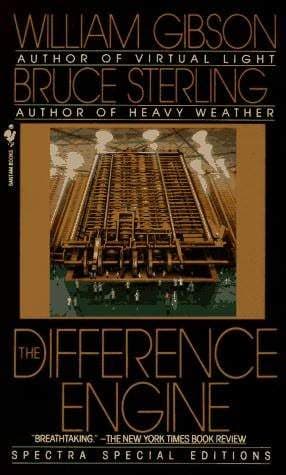
In an alternate 1855 London where steam-powered computers ignite an early information age, a disgraced woman, a fossil hunter, and a spy are drawn into a deadly conspiracy surrounding mysterious punched cards that could reshape a technologically advanced Victorian world.
In a steam-powered, industrialized London of 1855, Sybil Gerard, a 'clacker' (prostitute), receives a package containing a stack of punch cards, known as a 'Modus,' from a dying client. These cards are valuable and hold a dangerous secret. Soon after, authorities, led by Inspector Swing, raid Sybil's flat, searching for the Modus. She escapes, but her life is changed. She seeks refuge with her estranged family, particularly her Luddite father, who distrusts the omnipresent Engines and the industrial society they represent. Sybil realizes that the Modus is more than just a set of instructions; it is a key to a powerful secret many factions want.
Edward 'Leviathan' Mallory, an explorer and paleontologist, is on an expedition in the Arctic, searching for evidence of prehistoric life. His team unearths unusual geological formations and fossilized remains, suggesting a radical reinterpretation of Earth's past, possibly an earlier, more severe Ice Age. Mallory is a man of science and adventure, driven by knowledge. His work is supported by powerful patrons, including Lord Byron, a figure in British politics and science. Mallory's discoveries, while seemingly unrelated to Sybil's situation, hint at a deeper shift in the world's understanding of its history and future, a shift the Modus may also connect to.
Laurence Oliphant, a diplomat, spy, and agent for the British government, investigates the spread of powerful Modus cards. He travels to Paris, a city under Emperor Napoleon III, to uncover the source of these dangerous programs. Oliphant navigates the complex political landscape of France, meeting various factions also interested in the Modus. He uses his wit and connections to gather information, suspecting that the cards are not merely advanced programs but could destabilize international power dynamics. His investigation reveals a clandestine network involved in the creation and distribution of these revolutionary punch cards, hinting at a conspiracy that spans national borders.
After her escape, Sybil seeks help from her Luddite father, who lives in defiance of the Engine-driven world. She learns about his past as a radical agitator and his animosity towards the industrial revolution. Sybil meets Luddite sympathizers who provide her with shelter and assistance. This period allows her to reflect on her place in this rapidly changing world and to understand different perspectives on technological progress. She begins to grasp the implications of the Modus, realizing it is not just instructions but a blueprint for a different kind of society, one that could empower or oppress the working class. The Luddite underground becomes a temporary sanctuary, but the danger of discovery is ever-present.
Through his investigations in Paris and London, Laurence Oliphant uncovers the true nature of the Modus. It is not merely an advanced program for a single Analytical Engine, but instructions for a 'Great Game' simulator – a meta-program capable of modeling and predicting historical outcomes, and potentially influencing them. This revelation elevates the Modus from a technological marvel to a tool of strategic power. Oliphant realizes that control over the Great Game would grant foresight and influence over global events, making it the ultimate prize in the ongoing geopolitical struggle. He understands that various powers, including the British Empire, the French, and rogue elements, are vying for its possession, each with their own vision for its use.
Edward Mallory returns to London, his Arctic discoveries causing a stir in the scientific community. He presents his findings to the Royal Society, challenging conventional geological theories. His patron, Lord Byron, a key figure in the novel's alternate history as Prime Minister and a visionary scientist, takes an interest in Mallory's work, seeing its implications for the Great Game. Byron, who helped perfect Babbage's Analytical Engine, understands the power of information and its manipulation. Mallory finds himself drawn into the political intrigue surrounding the Modus, his scientific endeavors aligning with the clandestine struggle for control over the future. He begins to suspect that his geological research might hold clues to the Modus's purpose and origin.
Driven by a desire for justice for her murdered client and a growing understanding of the Modus's significance, Sybil Gerard forms an alliance with a cynical but resourceful journalist named Richard Tench. Together, they investigate the criminal underworld and political machinations surrounding the punch cards. Their investigation leads them through the underbelly of London, exposing a network of spies, assassins, and power brokers. Sybil uses her street smarts and connections, while Tench uses his journalistic instincts to piece together the puzzle. They discover that the murder of Sybil's client was not random, but an attempt to acquire the Modus, pointing to a larger, organized conspiracy involving powerful individuals.
The narrative threads of Sybil, Mallory, and Oliphant intertwine at the climactic Great Exhibition in the Crystal Palace. This grand display of technological prowess and imperial might becomes the stage for the various factions vying for the Modus. Here, the implications of the Modus as a historical simulation device, capable of running multiple timelines and predicting outcomes, are fully revealed. Characters from different backgrounds and motivations find themselves in close proximity, each pursuing their own objectives related to the cards. The Exhibition, a symbol of the Engine-powered future, becomes the battleground where the fate of this future, and potentially the past, will be decided, leading to confrontations and revelations that impact all three protagonists.
A tense and violent confrontation erupts at the Great Exhibition as various parties, including British agents, French spies, and rogue elements, attempt to seize control of the Modus. Sybil, Mallory, and Oliphant find themselves caught in the crossfire, each playing a role in the chaos. The fight is not just for the physical cards, but for the power and knowledge they represent – the ability to rewrite history or dictate the future. The struggle reveals the depth of the conspiracy and the lengths to which individuals and nations will go to control such a potent tool. Casualties are high, and allegiances are tested as the true nature of the Modus's power and its potential for global disruption becomes clear to all involved.
After the struggle, the Modus's influence is woven into the fabric of the world. Its ultimate fate and control remain ambiguous, but its impact on the timeline is undeniable. The Great Game has been played, and history has been subtly, yet profoundly, altered. Sybil, Mallory, and Oliphant navigate this new reality, each changed by their involvement. The novel suggests that the Modus, even if not fully controlled, has set in motion forces that will continue to shape the future. The protagonists must come to terms with a world where history is no longer fixed, and computational thought can redefine reality itself, leaving uncertainty and endless possibilities.
The Protagonist
Sybil transforms from a street-wise survivor to an active participant in shaping her own destiny, finding agency in a world that often seeks to control her.
The Protagonist
Mallory moves from purely scientific pursuits to understanding the broader societal and political implications of his discoveries, recognizing the link between knowledge and power.
The Protagonist
Oliphant's understanding of the Modus evolves from a mere tool of espionage to a profound force capable of altering history, challenging his own perceptions of control and destiny.
The Supporting
Byron's arc is less about personal change and more about his unwavering pursuit of power and control through technological and political means, representing the driving force of the new British Empire.
The Supporting
Ada's arc explores the ethical and philosophical dimensions of advanced technology, as she grapples with the profound implications of the Modus and its ability to manipulate reality.
The Supporting
Babbage's arc is largely historical; his key work is already done, and his presence serves as a reminder of the foundational technological shift that defined the world.
The Supporting
Tench moves from detached observer to active participant, his journalistic pursuit of a story evolving into a commitment to justice and truth alongside Sybil.
The Antagonist
Swing's arc primarily serves as a persistent antagonist, embodying the forces of state control and the lengths to which they will go to secure powerful technology.
The novel explores the impact of advanced technology on society and individual lives. The ubiquitous Analytical Engines shape everything from politics and warfare to daily existence, raising questions about whether humanity controls technology or is controlled by it. Characters like Sybil, a Luddite's daughter, resist this technological tide, while others like Byron embrace it as a tool for progress and power. The Modus, with its ability to simulate and potentially alter history, represents this theme, forcing characters to confront the extent to which their destinies are predetermined by algorithmic forces versus their own choices. The Great Game challenges the notion of a fixed future.
“The world was Engine-driven, and if you didn't have an Engine, you were nothing.”
A central theme is the malleability of history and reality. The Modus, as a historical simulator, allows characters to 'play' with past events and predict alternate futures. This raises philosophical questions: Is history a fixed narrative, or a dynamic, open-ended process? If one can simulate different pasts, which one is 'real'? Mallory's geological discoveries also challenge established historical timelines, further blurring the lines between accepted truth and potential alternatives. The novel suggests that control over the narrative of history is control over reality, making the Modus the ultimate prize in a struggle for epistemic power.
“The past was not a fixed thing, but a series of probabilities, constantly being re-calculated.”
The struggle for the Modus is a struggle for power and control, specifically control over information. In an Engine-powered world, information is currency, and the Modus provides an ability to generate, analyze, and manipulate it. Lord Byron and Laurence Oliphant represent the state's desire for centralized control, using technology to maintain imperial dominance. Sybil and the Luddites represent resistance to such control, highlighting the dangers of unchecked power in the hands of a few. The novel demonstrates how access to and manipulation of information can shape political outcomes, economic systems, and individual freedoms, creating a tension between transparency and secrecy.
“Knowledge was power, and the Engine was the greatest engine of knowledge ever conceived.”
The novel portrays the class divisions and social upheavals brought about by the Industrial Revolution. London is depicted as a city of technological advancement but also extreme poverty and social stratification. Sybil's background as a 'clacker' and her Luddite father's activism highlight the plight of the working class and those displaced by machines. The contrast between the opulent Crystal Palace and the grimy streets of the East End underscores the uneven distribution of the benefits of progress. The Modus, while offering power, also poses a threat to social stability, with different factions seeing it as a tool for either liberation or further oppression of the masses.
“The Engines had built a new world, but they hadn't built it for everyone.”
A set of highly advanced punch cards for an Analytical Engine, capable of running complex simulations.
The Modus is the central MacGuffin and plot driver of the novel. Initially presented as a mysterious set of punch cards, its true nature is gradually revealed to be a program for a 'Great Game' simulator. This simulator can model historical events, predict future outcomes, and even suggest interventions that could alter the timeline. The Modus represents the ultimate power in an Engine-driven world: the ability to understand, predict, and potentially control history and reality itself. Its pursuit by various factions fuels the entire plot, driving the characters' actions and leading to numerous confrontations and revelations.
The foundational premise of the novel, depicting a Victorian era where Babbage's Engine succeeded.
The entire novel operates as an alternate history, where Charles Babbage's Analytical Engine was successfully developed and widely adopted a century ahead of its time. This single deviation from our timeline creates a cascading effect, leading to a steam-powered, cybernetic Victorian Britain. This device allows Gibson and Sterling to explore the social, political, and technological implications of a fully industrialized, computer-driven society in a historical context, rather than a futuristic one. It grounds the fantastical elements in a recognizable, yet distinctly different, past, enabling commentary on contemporary issues through a historical lens.
A meta-simulation run on the Analytical Engines, capable of modeling and influencing history.
The 'Great Game' is not just a metaphorical term but refers to the advanced historical simulation program that the Modus operates. It's a computational model of geopolitics and historical causality, allowing its users to test different scenarios and understand the intricate web of cause and effect. This device elevates the stakes beyond mere technological superiority, turning the struggle for the Modus into a battle for control over the very fabric of history. The Great Game functions as a powerful metaphor for the desire to control destiny and the complex interplay of human actions and their unforeseen consequences within a deterministic system.
The visual and technological style of the world, combining Victorian-era technology with advanced cybernetics.
While not a plot device in the traditional sense, the steampunk aesthetic is crucial to the novel's world-building and narrative tone. It visually and functionally defines the alternate history, presenting a world of intricate brass machinery, steam-powered vehicles, and clanking Engines that are both archaic and incredibly advanced. This aesthetic creates a unique atmosphere that is both familiar and alien, highlighting the blend of historical and science fiction elements. It serves to immerse the reader in the unique technological reality of 1855, emphasizing the pervasive influence of the Engines on every aspect of life, from fashion to warfare.
“History is a dream from which we are trying to awaken.”
— A philosophical reflection on the nature of history and its impact on the present.
“The future is already here – it's just not evenly distributed.”
— A widely recognized quote, implying that advanced technologies or social changes exist but are not universally accessible.
“The world was a machine, and it was running on a program that had been written by someone else.”
— A character's realization about the deterministic nature of their world, driven by unseen forces or historical trajectories.
“Information wants to be free, but it also wants to be expensive.”
— A paradox about the dual nature of information's value and accessibility.
“Every age has its own particular brand of madness.”
— A commentary on the inherent irrationality or unique challenges of different historical periods.
“The past is a foreign country; they do things differently there.”
— A classic observation, highlighting the distinct cultural and social norms of previous eras.
“Sometimes the most revolutionary act is simply to survive.”
— A reflection on the resilience and quiet defiance of individuals in oppressive or challenging circumstances.
“The machine had a will of its own, and it was a will that transcended human understanding.”
— Describing the emergent complexity and autonomy of the Babbage Engine, almost as a living entity.
“Steam, brass, and logic. The very sinews of empire.”
— Summarizing the core elements that drive the alternate Victorian society and its technological advancements.
“To invent the future, you must first understand the past.”
— Emphasizing the cyclical nature of innovation and the importance of historical knowledge.
“Reality is a consensus hallucination.”
— A speculative idea that shared perceptions create what we understand as reality.
“The only constant is change, and the only certainty is the unexpected.”
— A truism about the unpredictable nature of life and history.
“The world was a vast, intricate clockwork, and every gear had its purpose.”
— A metaphor for the interconnectedness and mechanistic order of the world, reflecting the steampunk aesthetic.
Ready to see how well you understood this book? Take our interactive quiz with 10 questions.
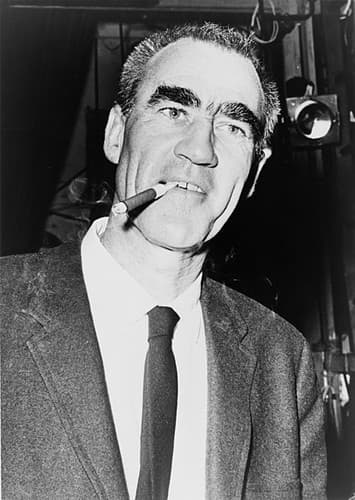
William Ford Gibson is an American-Canadian speculative fiction writer and essayist widely credited with pioneering the science fiction subgenre known as cyberpunk. Beginning his writing career in the late 1970s, his early works were noir, near-future stories that explored the effects of technology, cybernetics, and computer networks on humans—a "combination of lowlife and high tech"—and helped to create an iconography for the information age before the ubiquity of the Internet in the 1990s. Gibson coined the term "cyberspace" for "widespread, interconnected digital technology" in his short story "Burning Chrome" (1982), and later popularized the concept in his acclaimed debut novel Neuromancer (1984). These early works of Gibson's have been credited with "renovating" science fiction literature in the 1980s.







