“I am the only one of my sex. I am the first woman, and I am the last. I am the only one. It is a sad destiny, but I must make the best of it.”
— Eve reflecting on her unique existence early in the Garden of Eden.

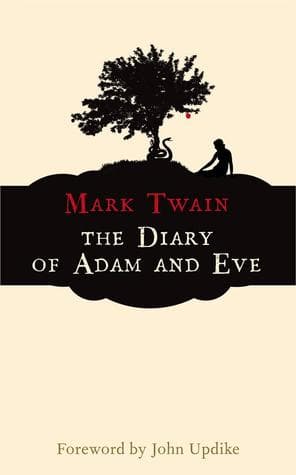
Mark Twain (1953)
Genre
Fantasy / Historical Fiction / Spirituality
Reading Time
90 min
Key Themes
See below
Sign in to track this book
Adam's quiet, fog-bound life changes when Eve arrives, naming animals, discovering fire, and teaching him to talk, all while subtly advocating for gender equality.
Adam, alone in the Garden of Eden, begins his diary by noting the pleasant quiet of his life. He describes the Garden as a peaceful place, free from noise. However, his peace is soon disturbed by a 'new creature,' which he first sees as an annoyance. This creature, Eve, is very curious and talkative, always questioning Adam and exploring their surroundings. Adam is confused by her constant chatter and her habit of naming everything, a task he finds unnecessary. He prefers to watch her from a distance, often regretting the loss of his quiet life.
Eve, with great curiosity, takes it upon herself to name all the animals and places in the Garden. She is especially fascinated by the waterfall, which she names 'Niagara.' She also experiments with natural things, watching animal behavior and object properties. Adam, meanwhile, remains mostly uninterested in her efforts, often making fun of her 'scientific' pursuits. He finds her constant need for company and conversation tiring, preferring to be alone. Eve's observations lead her to understand basic ideas like cause and effect, and she loves sharing her discoveries, much to Adam's frustration.
Eve's adventurous spirit leads her to the Tree of Knowledge of Good and Evil, which Adam was told to avoid. She is drawn to the serpent, a creature she finds captivating and smart. The serpent talks to Eve, subtly tempting her to taste the fruit. Adam, watching from a distance, feels a vague unease but does not fully grasp the seriousness of the situation. Eve, driven by her desire for knowledge and not understanding the consequences, gives in to the serpent's persuasion and eats the forbidden fruit, then offers it to Adam.
After Eve convinces Adam to eat the forbidden fruit, they immediately realize their nakedness and feel shame. They try to cover themselves with fig leaves. Their Creator's voice calls out, and they are forced to admit their mistake. Because they disobeyed, they are expelled from the beautiful Garden of Eden. Adam is very upset by this, blaming Eve for their situation and regretting the loss of their comfortable home. Eve, though sad, approaches their new reality with a more practical and resilient attitude.
Life outside Eden is harsh, a sharp contrast to their easy existence before. Adam struggles with the physical demands of work and the constant threat of danger. Eve, however, adapts faster, finding purpose in making a home and raising their children. She gives birth to their first son, Cain, an event that changes their relationship. Adam is initially confused by the baby, seeing it as a 'new kind of animal' and struggling to understand its needs. Eve, on the other hand, embraces motherhood with great love and dedication, finding joy and meaning in her new role.
Soon after Cain, Eve gives birth to their second son, Abel. Their children's presence slowly softens Adam's initial aloofness. While he still struggles to show his feelings, he begins to feel a growing sense of responsibility and affection for his family. He sees Eve's constant love for their children and her tireless efforts to care for them, which slowly changes his detached view. The shared experience of parenthood, though hard, begins to build a deeper bond between Adam and Eve, moving past their initial disagreements.
As their children grow, Eve remains the family's emotional center, often sharing deep thoughts about love, sacrifice, and human nature. She observes the world with wonder and compassion, often remarking on the beauty she finds even in their changed state. Her understanding of love deepens daily, especially through motherhood. She acknowledges the pain that comes with love, particularly the fear of loss, but believes the joy and meaning it brings outweigh the sorrow. Her perspective often differs greatly from Adam's more practical and less emotional views.
Over time, Adam's diary entries show a clear change in his feelings toward Eve. He moves from seeing her as a bother to recognizing her value. He observes her resilience, her nurturing nature, her intelligence, and her steady love for him and their children. He begins to understand that the 'new creature' he once found so annoying is the source of his greatest joy and comfort. He realizes his life would be empty without her, acknowledging that she brings warmth, color, and purpose to his existence.
The story ends with Eve's death. This event deeply affects Adam, showing the depth of his love and reliance on her. His diary entries fill with raw grief and a great sense of loss. He reflects on their shared life, their early disagreements, and their journey together. He gives a moving elegy at her graveside, expressing his deep affection and the huge void her absence creates. He confesses that he has learned to love her more than anything, recognizing that 'Wheresoever she was, there was Eden.'
In his final diary entries, Adam's love for Eve goes beyond death. He continues to speak of her, remember her, and feel her presence. He acknowledges that she brought beauty, meaning, and love into his life. His early complaints about her talkativeness and curiosity are replaced by a deep appreciation for her spirit and mind. He realizes that the 'new creature' he once disliked became his beloved companion, his teacher, and his reason for living. His last words emphasize that his love for her lasts beyond the physical world, showing their unbreakable bond.
The Protagonist
Adam transforms from a solitary, somewhat grumpy observer into a deeply loving and appreciative husband and father.
The Protagonist
Eve remains consistently curious, loving, and resilient, serving as the catalyst for Adam's emotional development.
The Supporting
Represents the continuation of humanity and the early challenges of parenthood.
The Supporting
Represents the expansion of the family and further emotional growth for Adam.
The Mentioned
Serves as the catalyst for the Fall and the subsequent events.
The Mentioned
Establishes the initial paradise and sets the rules that lead to the Fall.
The main theme explores how love grows between two very different people. Adam first sees Eve as an intrusion, but through shared experiences, parenthood, and her steady presence, he realizes her value. Eve, from the start, shows a more open and loving nature. The story ends with Adam's deep elegy for Eve, showing that true companionship changes annoyance into an irreplaceable bond, making 'Wheresoever she was, there was Eden.' This theme is clear as Adam's diary entries change from complaints to expressions of deep affection.
“Wheresoever she was, there was Eden.”
Twain skillfully changes traditional biblical stories to argue for gender equality. Eve is the more intelligent, curious, and innovative of the two, naming creatures, discovering fire, and understanding nature. Adam, in contrast, is often complacent, resistant to change, and initially less aware. Eve's emotional intelligence and nurturing spirit are consistently shown as strengths. The story suggests that Eve's 'flaws' (curiosity, talkativeness) are actually virtues that drive progress and connection, making a strong case for the equal, if not greater, value of feminine traits.
“I perceive now that the world was not a solitude when she was in it.”
The story deals with the results of gaining knowledge, specifically through the forbidden fruit. While being expelled from Eden is a punishment, it also leads to a deeper, more complex understanding of life, love, and humanity. In Eden, Adam and Eve live in innocent ignorance. Outside Eden, they experience hardship, labor, and loss, but also the joys of parenthood and mature love. The narrative suggests that true wisdom and emotional depth come only through experience, even if that experience involves suffering, making the 'fall' a necessary step in human development.
“It is better to live outside the Garden with her than inside it without her.”
Adam's initial contentment in solitude is broken by Eve's arrival, forcing him to move from an isolated life to one of companionship and, eventually, family. This theme explores the challenges and rewards of moving from individual independence to interdependent community. Adam initially dislikes losing his quiet life, but through Eve, he learns the value of shared experiences, conversation, and emotional connection. The birth of their children further strengthens this change, establishing the foundations of human society and family life, showing that true fulfillment lies in connection.
“I was not aware that there was anything to be unhappy about, then; I was not aware that there was anything to be happy about, then.”
Twain uses humor throughout the diaries to address profound theological and philosophical questions, making complex ideas understandable. Adam's dry, often frustrated observations about Eve's quirks, her naming, and her experiments provide comic relief. This lighthearted approach lets Twain criticize traditional biblical interpretations and gender stereotypes without being preachy. The humor highlights the absurdity of initial misunderstandings and emphasizes the endearing nature of their growing relationship, ultimately increasing the emotional impact of their journey and Adam's eventual realization of love.
“The new creature names everything that comes in her way, without excuse. And she does it at night, too. It is a perfect nuisance.”
First-person accounts from Adam and Eve.
The entire narrative is presented as a collection of diary entries, alternating between Adam's and Eve's perspectives (though Adam's are more extensive). This device provides intimate, subjective insights into their thoughts, feelings, and evolving perceptions of each other and their world. It allows Twain to showcase their differing personalities and highlight the 'he said/she said' dynamic, creating a humorous contrast between Adam's detached observations and Eve's enthusiastic discoveries. The diary format also allows for a gradual revelation of character development, particularly Adam's emotional arc.
Contrasting viewpoints of Adam and Eve.
Although Adam's diary dominates, Eve's entries are crucial. This device highlights the inherent differences in their personalities, thought processes, and emotional responses. Adam's entries are often characterized by dry wit, complaints, and a slow, reluctant acceptance, while Eve's are filled with wonder, curiosity, and a deep capacity for love. The juxtaposition of their perspectives creates both humor and pathos, allowing the reader to understand the complexity of their relationship and appreciate how their contrasting natures ultimately complement each other.
A humorous and revisionist take on the Genesis story.
Twain uses the biblical account of Adam and Eve as a foundational framework, but he subverts and reinterprets it through a humorous and humanistic lens. By focusing on their personal experiences, misunderstandings, and emotional growth, he demythologizes the figures, making them relatable. This device allows him to critique traditional religious interpretations, particularly concerning gender roles and the nature of the 'Fall,' while still engaging with profound themes of creation, love, and humanity's origins in a fresh and insightful way.
Eve's act of naming signifies intelligence and ownership.
Eve's incessant need to name everything she encounters—from animals to geographical features like 'Niagara'—serves as a powerful metaphor for her intelligence, curiosity, and her desire to understand and categorize the world around her. Adam, initially annoyed by this, sees it as a frivolous activity. However, Eve's naming is an act of creation and ownership, demonstrating her active engagement with her environment and her role as an intellectual pioneer, contrasting with Adam's more passive observation.
“I am the only one of my sex. I am the first woman, and I am the last. I am the only one. It is a sad destiny, but I must make the best of it.”
— Eve reflecting on her unique existence early in the Garden of Eden.
“The new creature possesses an inordinate partiality for the apple. I am no longer to be trusted alone with the fruit.”
— Adam observing Eve's fascination with the forbidden fruit.
“She has taken to calling herself Eve. I am Adam. It is a good name, but I think she could have done better.”
— Adam's slightly grumpy acceptance of Eve's self-naming.
“It is better to be a human being dissatisfied than a pig satisfied; better to be Socrates dissatisfied than a fool satisfied.”
— Eve contemplating the nature of knowledge and experience after the Fall.
“This new creature, with the long hair and the strange ways, is a good deal of a nuisance. She is always experimenting.”
— Adam's initial, somewhat annoyed, impression of Eve's curiosity.
“I found him good company, though he is not talkative, and he has an odd habit of not answering questions.”
— Eve's early thoughts on Adam's quiet nature.
“Wheresoever she was, there was Eden.”
— Adam's profound realization of his love for Eve after they leave the Garden.
“I think it is a man. If it is, it will be a great comfort. It is not like the other creatures. It has a voice.”
— Eve's first encounter and speculation about Adam.
“After all these years, I see that I was mistaken about Eve in the beginning; it is better to live outside the Garden with her than inside it without her.”
— Adam's ultimate reflection on his love for Eve, transcending the loss of Eden.
“I wish I had died with her. I wish I had died with her. I wish I had died with her.”
— Adam's lament upon Eve's death.
“She was always trying to improve things, and always succeeding, too.”
— Adam's grudging admiration for Eve's industriousness.
“It is my first sorrow. I did not think there could be such a thing.”
— Eve's reaction to the death of a small bird, her first experience with loss.
“She said that the Garden was beautiful, and she was glad to be in it. I thought it was beautiful before, but I did not know it.”
— Adam's realization that Eve's presence and perspective enhance his own experience of the Garden.
“There are some things that are not good for one to know.”
— Adam's reflection on the consequences of forbidden knowledge.
Ready to see how well you understood this book? Take our interactive quiz with 10 questions.
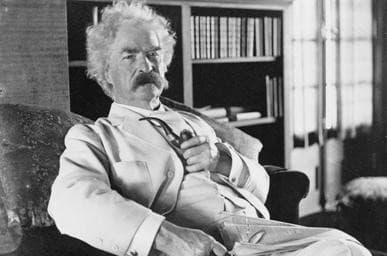
Samuel Langhorne Clemens, best known by his pen name Mark Twain, was an American writer, humorist, entrepreneur, publisher, and lecturer. He was praised as the "greatest humorist the United States has produced", and William Faulkner called him "the father of American literature". His novels include The Adventures of Tom Sawyer (1876) and its sequel, Adventures of Huckleberry Finn (1884), the latter of which has often been called the "Great American Novel". Twain also wrote A Connecticut Yankee in King Arthur's Court (1889) and Pudd'nhead Wilson (1894), and co-wrote The Gilded Age: A Tale of Today (1873) with Charles Dudley Warner.







