“There are some things that are too beautiful to be kept by just one person. They belong to everyone.”
— When the diamond is first discovered and its beauty is admired.

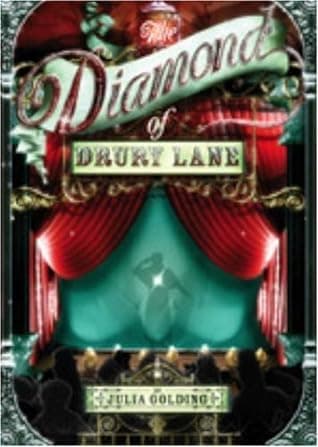
Julia Golding (2005)
Genre
Children's / Historical Fiction / Mystery / Young Adult
Reading Time
420 min
Key Themes
See below
Sign in to track this book
In 1790s Covent Garden, an orphan named Cat Royal must outwit gangs, boxers, and hidden enemies to protect a mysterious treasure in the Drury Lane Theater.
Cat Royal, a twelve-year-old orphan with red hair, lives an unusual life backstage at the Theatre Royal, Drury Lane, in 1790s London. She is cared for by the theatre's manager, Mr. Sheridan. Before leaving for Ireland, he gives her a cryptic mission: protect a hidden 'diamond' in the theatre and trust no one but him and possibly Jonathan, the prompter. Cat, who often feels like an outsider, is confused by this. Soon after, she meets Pedro, a talented Black violinist who comes to the theatre seeking work and safety. Cat quickly connects with Pedro, drawn to his kindness and shared feeling of displacement, and sees him as a possible ally.
Cat, following Mr. Sheridan's vague instructions, starts to search the theatre for clues about the 'diamond.' Her efforts are complicated by Billy Shepherd, a gang leader with a scarred face, who seems to be lurking around the theatre and asking about hidden valuables. Billy's rough manner and criminal past make him a clear threat. Cat and Pedro, sensing danger, decide to work together. They explore hidden passages and dusty corners of the large theatre, trying to figure out what kind of diamond Mr. Sheridan meant—a gem, a person, or something else. Their investigations are often interrupted by the theatre's daily life and the need to avoid Billy's gaze.
Jonathan, the theatre prompter, a quiet and scholarly man, eventually tells Cat his secret. He is involved with a group of revolutionaries planning to use the theatre as a meeting place and base for their activities against the government. He also hints that the 'diamond' is connected to these political movements, not a literal jewel. This makes Cat's mission more complex, linking it with dangerous political intrigue. The revolutionaries' plans lead to a chaotic night when a riot breaks out during a performance, fueled by political unrest and Billy Shepherd's gang. Cat is caught in the middle, seeing the destructive power of mob violence.
After the riot, the need to find the 'diamond' grows. Cat and Pedro carefully examine the theatre, putting together clues Mr. Sheridan left. They find cryptic messages and symbols hidden in props, costumes, and the theatre's structure. These clues lead them to a specific, rarely used part of the theatre—a dusty, forgotten storage room. After much searching, they uncover a hidden compartment behind a loose brick in the wall. They realize they are close to uncovering Mr. Sheridan's secret. However, they remain cautious, knowing Billy Shepherd is still looking for the same treasure.
Inside the hidden compartment, Cat and Pedro find not a jewel, but old, bound documents. These papers are not ordinary scripts; they are political pamphlets, coded messages, and sensitive letters related to the revolutionary movement and its leaders. The 'diamond' is a collection of valuable and potentially damaging information, showing Mr. Sheridan's deeper involvement in the political unrest. This discovery clarifies Jonathan's earlier hints and explains why the 'diamond' needed such protection. Cat understands that the true value is in the information these documents contain, which could either expose or empower the revolutionaries.
Just as Cat and Pedro uncover the documents, Billy Shepherd and his gang burst into the storage room. It becomes clear that Billy was not just looking for a valuable jewel for himself, but was hired by opposing forces—likely government agents or loyalists—to get the revolutionary papers. A tense confrontation follows, with Billy trying to take the documents. He reveals he knows the papers' importance, confirming his role as an enemy aligned with those who want to stop the revolutionary movement. Cat, protective of the 'diamond' and understanding its political weight, refuses to give them up, leading to a struggle for the documents.
In the chaos, Cat, Pedro, and Jonathan work together to outwit Billy Shepherd and his gang. Jonathan, despite his academic appearance, is resourceful, using his knowledge of the theatre's secret passages and traps to create diversions. Cat, with her agility and familiarity with the theatre, leads the escape, while Pedro uses his strength and quick thinking to fight off their pursuers. They scramble through ventilation shafts, backstage corridors, and over the rooftops of Drury Lane, barely avoiding capture. The chase is dangerous, but their combined efforts and knowledge of the theatre's layout allow them to escape Billy and his men, securing the documents.
Mr. Sheridan returns from Ireland, relieved to find Cat safe and the 'diamond' protected. Cat, Pedro, and Jonathan give him the recovered documents, explaining their dangerous journey to safeguard them. Mr. Sheridan confirms the papers' political importance, revealing they contain vital intelligence and plans for the revolutionary movement. He praises Cat's bravery and resourcefulness, acknowledging that she protected the 'diamond' and prevented a blow to the cause he secretly supports. The immediate threat from Billy Shepherd is gone, and the theatre, though still busy, feels safer with the 'diamond' in trusted hands.
With the immediate crisis over, Cat thinks about the adventure. Her bond with Pedro is stronger, and she sees him as a loyal friend. Jonathan, having revealed his political views, remains a trusted confidant. Cat continues to live at the Theatre Royal, now with a deeper understanding of the world and her place in it. While the 'diamond' is safe, some mysteries remain, especially about her own parents and Mr. Sheridan's long-term plans. The adventure has matured Cat, making her more aware of London's political currents and the people who live there, leaving her ready for more adventures and self-discovery.
The Protagonist
Cat transforms from a somewhat naive, curious child to a more mature and politically aware young woman who understands the weight of responsibility and the complexities of the adult world.
The Supporting
Pedro finds a sense of belonging and purpose at the theatre, moving from a position of vulnerability to one of strength and partnership.
The Supporting
Jonathan moves from a secretive figure to an open confidant for Cat, sharing his convictions and risking his safety for the cause.
The Supporting
Mr. Sheridan's role shifts from an absentee guardian to a clear protector and political figure, revealing his true allegiances.
The Antagonist
Billy remains a consistent antagonist, his role evolving from a simple thug to an agent of the opposing political faction, solidifying his role as a direct threat.
The Supporting
Lord Francis serves as a foil to Cat, showing her that kindness can exist across social classes.
Cat Royal, an orphan with an unknown past, struggles with her identity and where she belongs. Living in the theatre, she feels both at home and an outsider. Her search for the 'diamond' mirrors her search for her own origins. Pedro, a former slave, also seeks safety and belonging, finding it in his friendship with Cat and his role at the theatre. The theatre itself is a small version of society where different people find their place, or struggle to, as Cat considers her unique position and desire to understand her own story.
“Perhaps that was what being an orphan was all about, always having to make up your own stories because no one else would tell them to you.”
The 'diamond' is not a gem, but a collection of political documents. This shows the power of information, especially during social and political unrest. Secrets drive much of the plot, from Mr. Sheridan's cryptic instructions to Jonathan's hidden revolutionary activities and Billy Shepherd's true motives. The danger of these secrets highlights their potential to either cause change or keep things as they are, making Cat's role as protector of these documents important.
“A diamond could be a stone, or a person, or something else entirely. But whatever it was, it was important enough to risk everything for.”
The novel clearly shows the social inequalities of 18th-century London. Cat, despite being resourceful, is an orphan with no social standing, aware of the privileges of characters like Lord Francis. Pedro's background as a former slave shows the racial injustice of the time. The revolutionary plot is a direct response to perceived government oppression and the struggles of common people. The contrast between the rich theatre and the dangerous streets of Covent Garden emphasizes the class divide and the harsh realities many faced.
“The streets of London were a different kind of stage, and the audience was far less forgiving.”
At its heart, the story is about friendship and loyalty. Cat, initially alone, forms strong bonds with Pedro and Jonathan. Their loyalty to each other is tested as they face danger and deception. Pedro's constant support for Cat, despite his own vulnerability, is a key part of their relationship. Jonathan's decision to trust Cat with his revolutionary secrets shows his faith in her. These relationships give Cat the emotional and practical support she needs to navigate her dangerous mission, showing that chosen family can be as strong as blood ties.
“A true friend was a treasure more precious than any diamond.”
The 'diamond' serves as the mysterious object driving the plot.
The 'diamond' initially functions as a classic MacGuffin. Its true nature is unknown for much of the story, but its protection is the primary goal given to Cat by Mr. Sheridan. This mystery compels Cat, and by extension the reader, to search for clues and unravel its identity. The ambiguity allows for various interpretations (a jewel, a person, a secret) and keeps the narrative momentum high. When it's finally revealed to be political documents, its specific content becomes crucial, but the initial 'diamond' served its purpose in initiating the quest and bringing characters together.
The initial belief that the 'diamond' is a literal jewel misdirects characters and readers.
The widespread assumption, both by Cat and Billy Shepherd, that the 'diamond' is a literal, valuable gem acts as a significant red herring. This misdirection is reinforced by the typical association of 'diamond' with precious stones. This belief leads characters down false paths and creates a sense of expectation that is ultimately subverted. The revelation that the 'diamond' is actually a collection of political documents shifts the stakes and the genre slightly, from a treasure hunt to a political thriller, making the discovery more impactful and surprising.
Mr. Sheridan's timely return resolves the immediate threat, but his prior planning makes it less arbitrary.
Mr. Sheridan's return at a critical juncture, just after Cat and Pedro have secured the documents and evaded Billy Shepherd, might appear to be a Deus ex Machina. However, it is subtly subverted because his return is not entirely unexpected given his prior instructions and his role in setting up the entire 'diamond' protection scheme. His timing is convenient for the plot's resolution, but it also confirms his long-term planning and involvement, making it feel less like an arbitrary intervention and more like the culmination of his carefully laid plans, albeit with Cat's unexpected heroism. He validates Cat's efforts rather than simply fixing everything.
Subtle hints about Jonathan's political leanings and the nature of the 'diamond' appear early on.
Foreshadowing is used to build suspense and provide clues about the true nature of the 'diamond' and the political undercurrents. Jonathan's scholarly demeanor and occasional cryptic remarks about 'truth' and 'freedom' hint at his revolutionary involvement long before he explicitly reveals it. Similarly, Mr. Sheridan's vague instructions to Cat, emphasizing the 'importance' of the 'diamond' beyond its monetary value, subtly prepare the reader for the revelation that it's not a literal gem. These early hints enrich the re-reading experience and make the later revelations feel earned rather than abrupt.
“There are some things that are too beautiful to be kept by just one person. They belong to everyone.”
— When the diamond is first discovered and its beauty is admired.
“The truth is like a cat; it will always find its way out, no matter how tightly you try to keep it in a bag.”
— As the mystery unfolds and secrets are revealed.
“Even the smallest light can banish the greatest darkness, if only you are brave enough to light it.”
— A moment of courage in a difficult situation.
“A promise is a heavy thing, even when it's whispered. It weighs on the heart until it's kept.”
— Reflecting on a promise made to a friend.
“Sometimes the most valuable things are not made of gold or jewels, but of trust and friendship.”
— Realizing the importance of her companions.
“The past is like a long shadow, always behind you, but sometimes it can reach out and trip you.”
— Grappling with past events that affect the present.
“It's not where you come from that defines you, but where you're going and what you choose to do along the way.”
— A character overcoming their background.
“London has a way of swallowing people whole, if you're not careful. But it can also spit them out, shining.”
— Describing the city's dual nature.
“Fear is a clever thief; it can steal your courage before you even know it's gone.”
— Facing a dangerous situation.
“Every lock has a key, and every secret has a way of being found, if you look hard enough.”
— During the investigation of the mystery.
“A proper lady knows when to be quiet, and when to speak her mind, even if it shakes the chandeliers.”
— A character asserting herself in a patriarchal setting.
“The stage is a place of magic, where ordinary people can become extraordinary, and secrets can be hidden in plain sight.”
— Reflecting on the nature of theatre and performance.
“Sometimes, the greatest adventures begin with the smallest glint of something extraordinary.”
— The initial discovery that sets off the plot.
“The whispers of the past can be louder than any shout, if you only stop to listen.”
— Uncovering historical clues.
Ready to see how well you understood this book? Take our interactive quiz with 10 questions.

Biography coming soon.

Dan Gemeinhart
4.5

Kate O'Hearn
4.4

Jeanne Birdsall
4.4

Jen Wang
4.4

Wendelin Van Draanen
4.3

John Marsden
4.3

Chris Van Allsburg
4.3

Jennifer A. Nielsen
4.2