“There are some things in this world that are better left unknown.”
— Ishigami's internal thoughts on his actions and the truth.

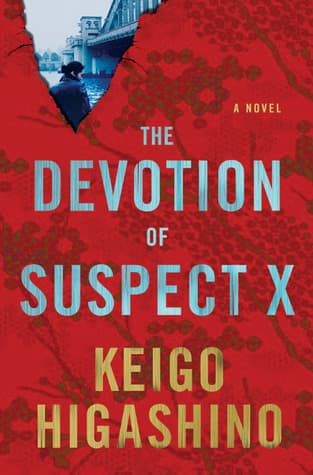
Keigo Higashino (2011)
Genre
Thriller / Mystery
Reading Time
360 min
Key Themes
See below
Sign in to track this book
A brilliant mathematician's unwavering devotion to a single mother entangled in murder forces a genius detective into a mind-bending battle of wits where the truth is a carefully constructed illusion.
Yasuko Hanaoka, a divorced single mother, works at a bento shop in Tokyo. Her peaceful life with her daughter, Misato, is interrupted when her abusive ex-husband, Shinji Togashi, tracks her down and demands money. During an argument in Yasuko's apartment, Togashi physically attacks Yasuko and Misato. In self-defense, Misato strikes Togashi with a kotatsu cord, killing him. Overwhelmed, Yasuko is about to call the police when her reclusive neighbor, Ishigami, a brilliant high school math teacher, knocks on her door. Having overheard the commotion, Ishigami offers to help Yasuko and Misato cover up the crime, planning every step to ensure they are not implicated.
Ishigami immediately takes charge, telling Yasuko and Misato how to clean the apartment and dispose of Togashi's body. He plans the timing and method, stressing the importance of their alibi. They wrap the body in a futon and move it to a location Ishigami chose. He then tells Yasuko and Misato to spend the next day establishing a public alibi, going to a movie theater and an arcade, making sure they are seen by witnesses. Ishigami's calm manner and precise instructions give Yasuko a fragile sense of security, even as she deals with the horror of their actions.
A badly decomposed body is found in a riverside park. Because of the lack of identifying features, the police struggle to identify the victim initially. Through fingerprints and dental records, the body is identified as Shinji Togashi. Detective Kusanagi, a seasoned investigator, takes the case. His inquiries lead him to Togashi's past and, to Yasuko Hanaoka, his ex-wife. Kusanagi learns about Togashi's history of violence and his recent attempts to get money from Yasuko, making her a main suspect. He begins to observe Yasuko, finding her outwardly calm but sensing a hidden tension.
Stumped by the lack of direct evidence and Yasuko's solid alibi, Kusanagi asks for help from his old university friend, Manabu Yukawa, a brilliant physicist known as 'Detective Galileo.' Kusanagi explains the case details, including Yasuko's alibi and the crime scene's unusual nature. Yukawa, with his analytical mind, quickly sees that the case is more complex than it appears. He is interested when Kusanagi mentions Yasuko's neighbor, Tetsuya Ishigami, a former classmate of Yukawa's from university, also known for his mathematical genius. Yukawa immediately realizes that if Ishigami is involved, the crime would be perfectly constructed.
Yukawa visits Ishigami at his high school, posing as Kusanagi's friend. Their reunion is cordial, but an intense intellectual duel begins. Yukawa asks Ishigami about his life and his relationship with Yasuko, trying to find any hint of involvement. Ishigami, expecting Yukawa's suspicions, stays calm and detached, giving seemingly harmless answers. However, Yukawa senses Ishigami's hidden brilliance and his unusual interest in Yasuko. He realizes that Ishigami is not just a neighbor but a deeply involved architect of the cover-up, setting the stage for a battle of wits.
As Kusanagi investigates, he notices subtle differences in Yasuko's and Misato's alibi accounts, especially regarding their exact movements and timings. While the alibi generally holds up, the minor inconsistencies bother Kusanagi. Yukawa, applying his scientific rigor, also examines the alibi, finding that it is almost too perfect, almost too rehearsed. He begins to suspect that the alibi is a carefully constructed deception, designed to mislead investigators. The pair realize that they are dealing with a cunning individual who has meticulously planned every detail of the cover-up.
Yukawa continues to observe Ishigami and Yasuko, piecing together the subtle clues. He notices Ishigami's quiet devotion to Yasuko, a lonely man finding purpose and happiness in her and Misato's presence. Yukawa realizes: Ishigami is in love with Yasuko and has designed the entire cover-up, not just to protect her, but to take the fall himself if needed. He understands that Ishigami's plan is not just about hiding a murder, but about creating an elaborate, seemingly unsolvable puzzle that would protect Yasuko at any cost, even his own freedom and life.
After analysis and dealing with the alibi's impossibility, Yukawa has a sudden insight. He confronts Ishigami, revealing his deduction: the body found in the park was *not* Shinji Togashi. Ishigami had killed a different homeless man around the same time Togashi was murdered by Yasuko, carefully altering the body to resemble Togashi and planting false evidence to misdirect the police. This explains the perfect alibi and the seemingly contradictory evidence. Ishigami's true genius is in this misdirection, sacrificing an innocent life to create a shield for Yasuko.
Confronted by Yukawa's logic, Ishigami confesses to killing the homeless man and orchestrating the entire deception to protect Yasuko. He details how he found a suitable homeless man, murdered him, disfigured the body, and staged the scene to appear as Togashi's murder, even removing the victim's fingertips and teeth to delay identification. However, upon hearing of Ishigami's sacrifice and the lengths he went to for her, Yasuko is overcome with guilt. She goes to the police station and confesses to killing Shinji Togashi, unable to bear the weight of Ishigami's devotion.
Yasuko's confession shatters Ishigami's plan. When Ishigami learns of Yasuko's confession, he is devastated, his carefully constructed protection crumbling. He lets out a scream of despair, realizing that his ultimate sacrifice was in vain because Yasuko could not live with the lie. Both Ishigami and Yasuko are arrested. The case concludes with the police understanding the full, tragic scope of Ishigami's devotion and the terrible choices made. Ishigami, the genius mathematician, realizes that even his perfect logic could not account for human emotion and conscience, especially love and guilt.
The Protagonist/Antagonist
From a reclusive genius finding purpose in protecting Yasuko, he becomes a tragic figure whose perfect plan is undone by the very human emotion he sought to shield.
The Protagonist
Starts as a victim of circumstance, then becomes complicit in a cover-up, and ultimately chooses moral truth over continued deception, accepting the consequences.
The Supporting
Serves as the primary intellectual force unraveling the mystery, demonstrating his unparalleled analytical prowess and understanding of Ishigami's mind.
The Supporting
From a frustrated investigator facing a seemingly perfect crime, he gains a deeper appreciation for the depths of human intellect and emotion.
The Supporting
From a traumatized victim, she becomes a silent participant in a crime, eventually influencing her mother's moral choice.
The Mentioned
His re-emergence into Yasuko's life leads to his death, initiating the complex crime and cover-up.
The Supporting
Remains a consistent, competent police officer throughout the investigation.
The Mentioned
His life is tragically ended by Ishigami, becoming the ultimate sacrifice in a scheme he knew nothing about.
The main theme is Ishigami's unrequited devotion to Yasuko, which drives him to commit murder and orchestrate an elaborate cover-up. He sacrifices his freedom, his moral compass, and even an innocent person's life, believing he is protecting the only source of happiness he has known. This theme is explored through his careful planning and his willingness to take the fall for Yasuko, showing the extreme lengths to which love (or a twisted form of it) can drive someone. Yasuko's confession, driven by her inability to bear the weight of his sacrifice, also shows the complex nature of devotion and its moral implications.
“What a beautiful and pure heart. If only he had been born in a different world, he could have been a truly great man.”
The story presents a conflict between Ishigami's cold, perfect logic and the unpredictable, often irrational nature of human emotion. Ishigami builds a flawless logical puzzle to protect Yasuko, accounting for every police procedure and investigative technique. However, his plan ultimately fails because he cannot account for Yasuko's conscience and guilt. Yukawa, also a man of logic, understands the emotional reasons that drive people, allowing him to unravel Ishigami's scheme. The book suggests that even the most brilliant logical constructs can be undone by the complexities of the human heart.
“No matter how perfect the logic, if it ignores emotion, it will eventually crumble.”
Deception is central to the plot, starting with the cover-up of Togashi's murder and ending with Ishigami's elaborate misdirection involving the homeless man. The theme explores how identities can be manipulated and hidden, both literally (altering a body to resemble another person) and figuratively (Yasuko and Ishigami living a lie). Ishigami's own identity as a quiet math teacher hides a genius capable of extreme acts. The police deal with false leads and constructed alibis, constantly questioning the true identity of the victim and the perpetrator. The story shows how hard it is to find truth when faced with masterful deception.
“The greatest trick the devil ever pulled was convincing the world he didn't exist.”
The book features the concept of genius, contrasting Ishigami's mathematical brilliance with Yukawa's scientific intuition. Both characters have extraordinary intellects, but they use their genius differently. Ishigami uses his to create a perfect crime and cover-up, while Yukawa uses his to unravel it. The story explores the isolation that can come with such minds, and the ethical questions of using genius for destructive or morally ambiguous purposes. It also questions whether genius alone is enough to navigate the complexities of life and human relationships.
“He was a genius, alright. But geniuses sometimes make the most foolish mistakes.”
A meticulously constructed timeline of events designed to provide an unbreakable alibi for Yasuko and Misato.
Ishigami crafts an incredibly detailed and seemingly airtight alibi for Yasuko and Misato, placing them far from the murder scene at the time of Togashi's death. This involves specific activities like going to a movie and an arcade, ensuring they are seen by multiple witnesses. The perfection of this alibi is what initially stumps the police and forces Kusanagi to seek Yukawa's help. It serves as the primary red herring, drawing the investigation away from the actual time of Togashi's death and towards the time the body was discovered, which was part of Ishigami's ultimate misdirection.
Ishigami murders a homeless man and disguises his body to resemble Togashi, misleading the police.
This is the ultimate twist and the most crucial plot device. Instead of simply disposing of Togashi's body, Ishigami murders an entirely different person—a homeless man—and then mutilates the body (removing fingerprints, altering facial features) to make it appear to be Togashi. He then disposes of this decoy body at a later date, making it seem as though Togashi was killed then. This brilliant and horrifying misdirection provides the perfect cover for Yasuko's original crime, making the time of death for the discovered body entirely irrelevant to Yasuko's actual actions and her alibi.
The narrative structure pits the genius of Ishigami against the genius of Yukawa.
The entire plot functions as an intellectual chess match between Ishigami and Yukawa. Ishigami, the 'creator' of the puzzle, meticulously designs every detail to be logically sound and impenetrable. Yukawa, the 'solver,' uses his scientific and deductive reasoning to systematically dismantle Ishigami's perfect crime. This device elevates the mystery beyond a simple 'whodunit' to a 'howdunit' and 'whydunit' at the highest intellectual level, engaging the reader in the process of logical deduction and problem-solving alongside Yukawa. Their shared background as mathematical/scientific geniuses makes the duel particularly compelling.
The limited perspective of the police and Yasuko initially obscures the full truth of Ishigami's plan.
While not a first-person narrator, the story largely follows the perspective of Kusanagi and, to some extent, Yasuko. This means the reader only knows what the investigators know, or what Yasuko experiences. Ishigami's true actions and motivations are hidden from the reader until Yukawa's final revelation, creating a powerful sense of dramatic irony and surprise. The initial focus on Yasuko as the primary suspect, and the focus on her alibi, subtly misdirects the reader, mirroring the police's own misdirection within the story.
“There are some things in this world that are better left unknown.”
— Ishigami's internal thoughts on his actions and the truth.
“To solve a problem, you must first understand the problem.”
— Manabu Yukawa's approach to scientific and criminal investigation.
“The most beautiful proof is one that requires no words, only a single glance.”
— Ishigami's philosophy on mathematical elegance, which he applies to his plan.
“It’s not enough to just catch the criminal. You have to prove it beyond a shadow of a doubt.”
— Detective Kusanagi discussing the legal requirements of an arrest.
“Humans are creatures of habit. They tend to do things the way they always have.”
— Yukawa observing human behavior patterns, useful for predicting actions.
“Love can make a person do extraordinary things, both good and bad.”
— A reflection on Ishigami's extreme devotion to Yasuko.
“Sometimes, the simplest explanation is the correct one, but not always.”
— Yukawa's nuanced view on Occam's Razor in complex cases.
“A perfect alibi is like a perfect mathematical proof. It leaves no room for doubt.”
— Ishigami's internal monologue about constructing his elaborate alibi.
“Even the most brilliant mind can be blinded by emotion.”
— Yukawa's understanding of how personal feelings can affect judgment.
“To truly hide something, you must make it invisible in plain sight.”
— Ishigami's method of misdirection and concealing the truth.
“The world is full of unsolved puzzles. Some are meant to remain that way.”
— A philosophical thought on the nature of mysteries, especially criminal ones.
“Sacrifice is not always about giving up something, but sometimes about becoming something else.”
— A profound statement reflecting Ishigami's transformation and ultimate act.
“The truth has a way of revealing itself, no matter how deeply it's buried.”
— Kusanagi's belief in the eventual triumph of justice and discovery.
“A lie, no matter how well constructed, still needs to be maintained.”
— Yukawa considering the difficulty of upholding a complex deception.
“There’s a difference between what is possible and what is probable.”
— Yukawa distinguishing between theoretical possibilities and practical likelihoods in an investigation.
Ready to see how well you understood this book? Take our interactive quiz with 10 questions.







