“What is the use of a good intention unless it is carried out?”
— The Water-rat's cynical view on good intentions without action.

Genre
Fantasy / Children's
Reading Time
15 min
Key Themes
See below
Sign in to track this book
A manipulative miller takes advantage of his devoted gardener, Hans, leading to Hans's death under the guise of friendship.
The story starts with a Linnet telling the tale of Hans and the Miller to a Water-rat, who initially dislikes the idea of friendship, preferring practical matters. The Linnet, however, insists on friendship's beauty and importance, contrasting it with the Water-rat's cynical view. The Linnet's story aims to show true devotion, even if it is later used. The Water-rat remains unconvinced, finding the Linnet's romanticized view impractical, which sets the stage for the sad tale and foreshadows his later criticism of the Miller's actions.
Hugh the Miller is introduced as a seemingly kind and rich man who constantly claims to be a good friend to Little Hans, a poor but hardworking gardener. The Miller often visits Hans's garden, admiring his flowers and taking bouquets. Despite his apparent affection, the Miller never helps Hans, saying that true friendship means not bothering friends with requests. He justifies his constant taking by promising to give Hans his old wheelbarrow, a gift always put off. Hans, simple and loyal, believes the Miller and continues to give freely.
When winter comes, Hans's garden has no flowers, and he becomes very poor. The Miller, despite his wealth, does not visit Hans or help him. He claims it would be wrong to bother a friend in trouble and that true friendship means leaving someone alone during hardships. He also fears that helping Hans would make Hans jealous of his own wealth. Hans endures the cold and hunger alone, selling his few remaining things to survive. His loyalty to the Miller, however, stays strong, as he expects the Miller to return in spring.
As spring arrives and Hans's flowers bloom again, the Miller quickly reappears, praising Hans's garden and reaffirming his 'friendship.' He immediately asks Hans for a large plank of wood, saying he needs it for his barn. Hans, eager to please his 'best friend,' readily agrees, even though he has to carry the heavy plank a long way. The Miller again mentions the old wheelbarrow, promising it to Hans as a reward for his help, which strengthens Hans's belief in his generosity and the eventual repayment of his kindness.
After the plank incident, the Miller continues to use Hans's good nature with many requests. He asks Hans to run errands, carry sacks of flour to market, and do various chores, always promising the wheelbarrow in return. Hans, being simple and loyal, never refuses, even when these tasks interfere with his own gardening and livelihood. He believes that by helping the Miller, he is making their friendship stronger and will eventually get the promised gift, unaware that he is being used.
One day, the Miller finally 'gives' Hans the long-promised wheelbarrow. However, it is old, broken, and missing a wheel. He makes Hans promise to repair it himself, claiming he has no time. Hans, though disappointed by its condition, is still grateful, believing the Miller has finally kept his promise. This act shows the Miller's manipulative nature, as he appears generous while giving Hans a burden and getting even more labor from him.
Late one stormy night, the Miller's son gets sick. The Miller's wife suggests getting the doctor, but the Miller, not wanting to get wet or ruin his boots, immediately thinks of Hans. He sends Hans out into the dark, heavy rain to get the doctor, despite the dangerous conditions. Hans, always loyal and trusting, immediately leaves, believing he is performing an important act of friendship, unaware of the Miller's selfish reasons and the danger he is in.
Hans bravely goes out into the storm, walking many miles to get the doctor. On his way back, because of the darkness and flooded roads, he falls into a ditch and drowns. His body is found the next morning. This sad event results directly from the Miller's selfish refusal to go himself and his exploitation of Hans's loyalty. Hans, the devoted friend, dies while doing a service for someone who never truly cared for him.
At Hans's funeral, the Miller appears prominently, crying loudly and claiming to be Hans's 'best friend.' He pretends to be very sad, but his real concern shows when he complains about the trouble of Hans's death, especially losing his old, broken wheelbarrow that Hans was supposed to fix. He also worries about who will do all the favors Hans used to do. His act clearly shows his hypocrisy, demonstrating his complete lack of real affection for Hans.
After hearing the whole story, the Water-rat calls it a terrible tale with no moral, as he cannot understand why the Miller didn't give Hans something for all his help. He criticizes the Linnet for telling such a sad story. The Linnet tries to explain the moral about true friendship, but the Water-rat remains focused on the transactional aspect, reinforcing his earlier cynicism. He waddles off, convinced that the story only proves his point about how impractical selfless devotion is, completely missing the deeper criticism of exploitation.
The Protagonist
Hans remains consistently devoted and trusting, never learning from the Miller's exploitation, leading to his tragic death.
The Antagonist
The Miller's selfishness and hypocrisy are consistent throughout the story, culminating in his fake grief at Hans's funeral.
The Supporting
The Linnet consistently advocates for genuine friendship, attempting to educate the Water-rat.
The Supporting
The Water-rat remains stubbornly cynical, failing to grasp the deeper moral of the story.
The Mentioned
Her character is static, serving to reinforce the Miller's self-serving household.
The Mentioned
Not applicable as the character is not directly involved.
The story sharply contrasts real, selfless loyalty with manipulative, self-serving pretense. Little Hans shows true friendship through his steady loyalty, generosity, and willingness to help, even at personal cost. The Miller, in contrast, represents false friendship, using flattery and empty promises to exploit Hans's good nature for his own gain. His 'friendship' is about what he can get, as seen when he avoids Hans in winter but quickly reappears in spring to demand favors. The tragedy highlights how true devotion can be vulnerable to such exploitation.
“What is the good of having a friend, if one is not to get anything out of him?”
A main theme is the terrible impact of exploitation driven by selfishness. The Miller constantly uses Hans's kindness, labor, and resources, giving nothing substantial in return. His excuses for not helping Hans during winter or for sending Hans into the storm are thin reasons for his own comfort. The story criticizes those who act like benefactors or friends while systematically draining others for personal gain, which leads to Hans's death and the Miller's fake sadness, tinged with annoyance over losing his 'free labor.'
“Really, I don’t think that I should tell you to trouble about it. You had much better mend your own wheelbarrow, and I will mend mine, for I am sure I should not like you to get into any trouble on my account.”
Hans's steady, almost childlike trust in the Miller's good intentions is a key part of the story. Despite many times the Miller took advantage of him and never kept his promises, Hans continues to believe in their 'friendship' and the eventual reward of the wheelbarrow. This naive trust makes him very open to exploitation. His failure to see the Miller's true character leads to his sad death, showing the dangers of blind faith and devotion when given to someone unworthy.
“He was so devoted to the Miller, that he would do anything that the Miller asked him to do.”
The story acts as a strong social critique, especially clear in the Miller's character and the Water-rat's reaction. The Miller represents the materialistic person who values possessions and convenience more than human connection. His hypocrisy is exposed at Hans's funeral, where his loud crying is quickly followed by complaints about losing his wheelbarrow and free labor. The Water-rat's inability to see a 'moral' beyond transactional gain further emphasizes this critique, suggesting that society often puts practical, self-serving outcomes before selflessness and real affection.
“I will give you my old wheelbarrow. It is not a very pretty wheelbarrow, but it will be a comfort to you.”
A story within a story, used to introduce and comment on the main plot.
The tale of Little Hans and the Miller is embedded within a conversation between a Linnet and a Water-rat. This framing device allows for an external commentary on the events, highlighting different perspectives on friendship and morality. The Linnet tells the story to illustrate the true meaning of devotion, while the Water-rat's cynical reactions provide a foil, emphasizing the story's critique of superficiality and materialism. It also serves to distance the author slightly, allowing the philosophical debate to unfold naturally.
The juxtaposition of stated intentions or appearances with actual actions and outcomes.
The story is rich with ironic contrast. The Miller constantly professes to be Hans's 'best friend' while systematically exploiting him. His claims of fostering true friendship by not burdening Hans with help during winter stand in stark contrast to his immediate demands for favors in spring. The most poignant irony is his performative grief at Hans's funeral, immediately followed by complaints about losing his old wheelbarrow and his free labor, exposing the hollowness of his declared affection.
A promised gift that represents false hope and the transactional nature of the Miller's 'friendship'.
The wheelbarrow functions as a central symbol. It is the Miller's perpetually promised 'gift' to Hans, a tangible representation of the Miller's manipulative generosity. It offers Hans false hope and serves as a constant justification for his continued labor. When it is finally 'given,' it is old, broken, and requires Hans to fix it himself, symbolizing the Miller's ultimate self-interest and the worthlessness of his 'gifts.' It underscores how the Miller gives only what is convenient and still extracts more from Hans.
Hints or clues about future events, particularly Hans's tragic end.
Foreshadowing is subtly used throughout the narrative to hint at Hans's eventual demise and the Miller's unchanging selfishness. The Miller's repeated neglect of Hans during winter, coupled with his constant demands for favors, gradually builds a sense of Hans's vulnerability. The final, dangerous errand in the storm, explicitly initiated by the Miller's refusal to go himself, clearly points towards the tragic outcome, making Hans's death feel inevitable due to the Miller's callousness.
“What is the use of a good intention unless it is carried out?”
— The Water-rat's cynical view on good intentions without action.
“Real friendship, like real poetry, is extremely rare—and even more rare is the real devoted friend.”
— The Linnet's initial reflection on the rarity of true friendship.
“I am quite sure I shall be very happy with him. He is so thoughtful of others, and so fond of flowers.”
— Little Hans's naive perception of the Miller's 'kindness'.
“It is not at all a bad thing that he should work. All good citizens should work.”
— The Miller's justification for letting Hans do all the work.
“I will certainly come and see you, and you will give me a large basket of primroses, and we will talk about what a pleasure it is to be a friend.”
— The Miller's promise to Hans, always tied to a request.
“He was so devoted to him that he never once went to see him, even when he was ill.”
— The narrator's ironic description of the Miller's 'devotion' to Hans.
“Your only object in life should be to give pleasure to others.”
— The Miller's 'philosophy' shared with Hans, which he applies only to Hans.
“It is quite a different thing to be a friend of someone who is poor.”
— The Linnet's observation on the complexities of friendship across social classes.
“I am so glad to hear you are rich, for I am very fond of rich people.”
— The Miller's blatant admission of his preference for wealthy friends.
“I am quite sure that when he is rich he will remember me.”
— Hans's persistent, misplaced hope in the Miller's future gratitude.
“A good example is always worth more than a good lecture.”
— The Linnet's advice to the Water-rat, contrasting with the Miller's actions.
“He was such a devoted friend that he would not let Hans do anything for him.”
— Another ironic statement about the Miller's 'devotion', meaning he took everything.
“I have a great many friends, but I have no devoted friend.”
— The Water-rat's final lament, misunderstanding the story's true meaning.
Ready to see how well you understood this book? Take our interactive quiz with 10 questions.
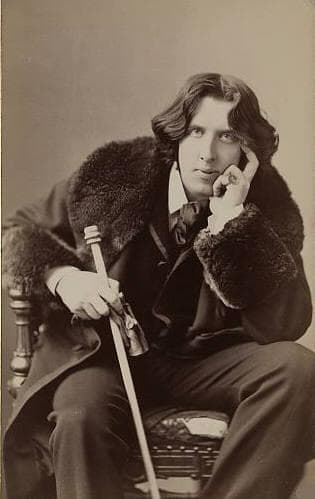
Oscar Fingal O'Fflahertie Wills Wilde was an Irish poet and playwright. After writing in different forms throughout the 1880s, he became one of the most popular playwrights in London in the early 1890s. He is best remembered for his epigrams and plays, his novel The Picture of Dorian Gray, and the circumstances of his criminal conviction for gross indecency for consensual homosexual acts in "one of the first celebrity trials", imprisonment, and early death from meningitis at the age of 46.







