“The world is changed by your example, not by your opinion.”
— A reflection on how actions, not words, drive real transformation in society.

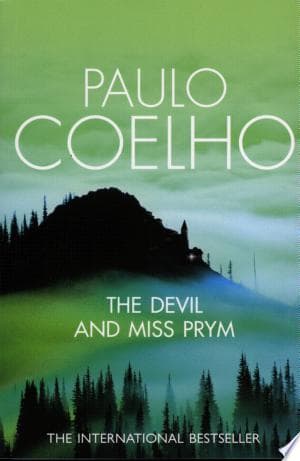
Paulo Coelho (2005)
Genre
Fantasy / Spirituality / Philosophy
Reading Time
240 min
Key Themes
See below
Sign in to track this book
A mysterious stranger offers a secluded village a difficult choice: kill someone for riches or stay poor, as a young woman tries to guide their moral decisions.
A stranger, later known as Carlos, arrives in the isolated mountain village of Viscos. His family was murdered by terrorists, and his wife later died by suicide. Carlos now wants to know if people are good or evil. He buries eleven valuable gold bars near the village. He finds Chantal Prym, a young woman working at the local hotel, and tells her his plan: he will give the gold to the villagers if they kill someone within a week. If they refuse, he will take the gold and leave, convinced of humanity's goodness. Chantal is horrified but agrees to keep it secret, becoming part of his experiment.
Chantal Prym is deeply troubled by Carlos's idea. She struggles with the ethics of murder but also sees Viscos's poverty and how the gold could change their lives. She imagines the improvements: better buildings, chances for young people, an end to their stagnant life. The stranger, a clever manipulator, suggests that sometimes bad acts can lead to good. Chantal spends her nights in torment, debating the situation's morality and the huge responsibility she has to keep this secret and possibly influence her village's fate.
Unable to keep the secret and wanting to test the villagers, Chantal subtly shares information. She tells Father Cornelio, the local priest, that a stranger has arrived with a lot of money for the village. She leaves out the murder condition. Her goal is to see how villagers react to the promise of wealth. The news spreads quickly through Viscos. The people, used to hard, routine lives, start dreaming of a better future, already thinking about how to get such wealth.
Bertha, the oldest woman in the village, has a vision of a saint and says it means good fortune is coming to Viscos. This 'miracle' increases the villagers' hopes for wealth. A public meeting is called to discuss the mysterious donor. At this meeting, Chantal, influenced by the group's excitement and the stranger's subtle hints, finally reveals Carlos's full offer: the gold will be theirs if they commit a murder within seven days. The news shocks the community, turning their joy into horror, disbelief, and a growing temptation.
The initial shock turns into a disturbing discussion among the villagers. Led by the practical Mayor and the conflicted Priest, they start to justify the act, debating who would be 'least missed' and whose death would help the most people. They choose Fátima, an old, reclusive shepherd who lives on the village outskirts and is seen as an outcast due to her perceived madness and solitary life. The group decision shows their moral compromise, with each person finding ways to justify their part in the crime for the village's prosperity.
Chantal feels despair and guilt as she sees the villagers agree to murder Fátima. The reality of their choice crushes her, making her realize how low people can go when tempted by greed. She tries to warn Fátima, running to her secluded hut. But the villagers, expecting this, stop Chantal from reaching Fátima, keeping their plan on track. Chantal faces her role in starting this evil, feeling unable to stop the coming tragedy.
Under cover of darkness, a group of villagers goes to Fátima's hut to carry out the murder. They hesitate and are afraid. But driven by their agreement and the promise of wealth, they continue. The details of the murder are vague, focusing on the group's guilt rather than individual responsibility. Afterward, a heavy silence falls over Viscos. The villagers are left to deal with their conscience and their actions, their excitement replaced by the chilling reality of what they did for their future.
Carlos, believing his experiment proved humanity's evil, prepares to leave Viscos, having gotten his desired result. He confronts Chantal, expecting her to be broken. But Chantal, having seen the act and gone through her own moral struggle, has a final move. She tells Carlos that Fátima was not actually murdered. Chantal, after being stopped from warning Fátima, had convinced the villagers to fake the murder, using a tranquilizer and a staged scene to trick Carlos. This revelation questions Carlos's whole idea.
Chantal leads Carlos to Fátima, who is alive and well, hidden by the villagers after the staged event. The villagers, though they had agreed to the murder, ultimately did not do it. They found a way to deceive the stranger while still claiming the gold. This group deception, born from a desire for wealth but softened by a last-minute refusal to commit real evil, makes Carlos rethink his experiment. He sees that while people can be tempted by greed, they also have compassion and are unwilling to cross the ultimate moral line.
Carlos, his view of the world changed, acknowledges human nature's complexity. He leaves the gold to the villagers, understanding that their choice, though morally unclear, was not purely evil. He leaves Viscos, his search for a definite answer unfinished, but with a new appreciation for the grey areas in human morality. Chantal, having navigated this difficult moral situation, becomes stronger. She decides to stay in Viscos, taking on the role of a guide, ready to help her community rebuild and think about the choices they made, forever changed by the devil's visit.
The Protagonist
She transforms from a passive observer dreaming of escape to an active agent of moral decision, ultimately becoming the village's unexpected savior and moral leader.
The Antagonist/Catalyst
He begins as a cynical judge of humanity but leaves with a more nuanced, albeit still complex, understanding of good and evil.
The Supporting
She remains a figure of wisdom and tradition, her faith tested but ultimately reaffirmed by the village's final choice.
The Supporting
He struggles with his faith and moral authority, ultimately compromising his principles for the perceived good of his flock, but is later given a chance at a form of redemption.
The Supporting
He leads the charge for a pragmatic, albeit morally corrupt, solution for the village's future, highlighting the dangers of utilitarianism.
The Mentioned/Symbolic
Initially chosen as a sacrifice, her survival becomes the key to the village's moral redemption and a symbol of humanity's reluctance to commit ultimate evil.
The Supporting
He is considered for the role of executioner, symbolizing the village's willingness to commit the act, but is ultimately part of the deception.
The Supporting
She reinforces Carlos's initial cynicism about humanity, representing a common, resigned perspective on human nature.
The main theme explores if people are good or evil, or if it's a constant fight between the two. Carlos's experiment aims to answer this, but the villagers' actions and Chantal's trick show a more complex truth. The book suggests that while temptation and greed are strong, there is also a human unwillingness to commit absolute evil, and a capacity for group moral compromise and even redemption. The villagers' choice to stage the murder rather than do it shows this complex balance.
“In the end, everyone is good, just as everyone is evil. It's the choices we make every day that determine which part of us is stronger.”
The eleven gold bars are a huge temptation for the poor villagers of Viscos. The promise of wealth quickly breaks down their moral limits, leading them to consider, and even agree to, murder. This theme explores how money can corrupt individuals and groups, pushing them to justify terrible acts. The idea of a better life, free from hardship, is a strong motivator, showing how fragile morality is when faced with extreme temptation. The book shows how greed can blind people to their actions' results.
“The devil is not a person, but a force that tempts us to stray from the path of good.”
The novel looks at individual versus group responsibility. No single villager is solely responsible for deciding to murder Fátima, but they all take part in the discussion and agreement. This creates a sense of shared guilt, where the decision's weight is spread out, making it easier for individuals to justify their part. Chantal, however, feels a deep personal responsibility as the first person told. The villagers' final decision to stage the murder shows a group moral awakening, demonstrating that shared responsibility can also lead to group redemption.
“Evil exists not in what we do, but in what we are capable of doing, and how we justify it.”
The book is a deep look at human choice. Each character, especially Chantal and Carlos, must make hard decisions that show their core beliefs and values. The villagers also face a clear choice between poverty and wealth at the cost of a life. The story emphasizes that true morality comes from choices made when tempted, and that even a 'good' outcome can come from morally unclear choices. Chantal's decision to trick Carlos, for example, is a choice to avoid evil rather than give in to it.
“Every human being has a choice between good and evil. And it is in that choice that we define who we are.”
Viscos's isolated setting is important to the story. Its remoteness adds to the villagers' desperation for change and their openness to the stranger's offer. The close-knit community also plays a big role, as decisions are made together, and individuals can be swayed by the group. The isolation makes the moral problem bigger, as the villagers feel their choice will stay within their world, without outside judgment. The community's eventual unity in deception shows both their flaws and their strength.
“In a small village, everyone knows everyone's secrets, and everyone is complicit in everyone's choices.”
Carlos embodies the classic 'devil' figure who tempts a community.
Carlos functions as an archetypal 'devil' or tempter. He arrives from outside the community, offers a seemingly irresistible bargain (the gold), and sets a moral challenge that forces the villagers to confront their darkest impulses. His name, 'Carlos,' is a common one, making him seem both ordinary and universally symbolic. He doesn't possess supernatural powers but uses psychological manipulation and a profound understanding of human weakness to achieve his goal. His role is to test humanity's limits, much like the devil in religious parables, making the story a modern morality play.
A potent symbol of temptation, wealth, and corruption.
The eleven gold bars are not just a plot device to motivate the villagers; they are a powerful symbol. They represent immense wealth, the promise of a better life, and the ultimate temptation that can corrupt even the most devout. The gold acts as a physical manifestation of the 'devil's bargain,' making the abstract concept of greed tangible. Its presence quickly erodes the villagers' moral scruples, highlighting how easily material desires can override ethical considerations. The gold is the bait, and the murder is the price, illustrating the high cost of unchecked ambition.
A microcosm for humanity, cut off from external moral influence.
Viscos serves as a symbolic microcosm of humanity. Its isolation means that the moral experiment unfolds without external interference, allowing the characters' true natures to emerge under pressure. The villagers are a small, contained group, making their collective decision-making process more intense and revealing. The poverty of Viscos amplifies the temptation of the gold, making the moral dilemma more acute. The village acts as a stage where universal questions about good and evil are played out, unencumbered by the complexities of a larger society.
A direct challenge to a community's ethical foundations.
Carlos's proposition is a classic moral dilemma presented as an experiment: will a community commit murder for vast wealth? This device is the driving force of the plot, forcing every character to confront their own beliefs about good and evil. It's not just about the outcome (whether they commit the murder) but the process—how they deliberate, rationalize, and ultimately act. The experiment reveals the complexities of human morality, demonstrating that people are not purely good or evil but capable of both, often simultaneously, especially under duress.
A twist that challenges the 'devil's' premise and offers a nuanced resolution.
Chantal's ultimate act of deception, orchestrating the staged murder of Fátima, is a crucial plot device. It serves as a narrative twist that subverts Carlos's entire experiment. Instead of a straightforward choice between good (refusing the gold) and evil (committing murder), Chantal introduces a third, more complex option: appearing to commit evil while secretly upholding a moral boundary. This device allows the story to conclude not with a definitive answer about human nature, but with a nuanced understanding that humans can be cunning, tempted, and flawed, yet still possess a core reluctance to cross the ultimate moral line.
“The world is changed by your example, not by your opinion.”
— A reflection on how actions, not words, drive real transformation in society.
“We can never judge the lives of others, because each person knows only their own pain and renunciation.”
— A villager contemplates the hidden struggles behind people's outward appearances.
“The two hardest tests on the spiritual road are the patience to wait for the right moment and the courage not to be disappointed with what we encounter.”
— A discussion about the challenges of faith and timing in life's journey.
“A stranger arrives in the village offering gold bars in exchange for a murder, to test if people are inherently good or evil.”
— The central plot device that sets the moral dilemma of the story in motion.
“When you want something, all the universe conspires in helping you to achieve it.”
— A reminder of the power of desire and alignment with one's purpose (echoing themes from Coelho's other works).
“People are never satisfied. If they have a little, they want more. If they have a lot, they want still more.”
— An observation on human greed and insatiability in the face of the stranger's offer.
“The devil isn't the prince of matter; the devil is the arrogance of the spirit, faith without smile, truth that is never seized by doubt.”
— A philosophical insight into the nature of evil as rigidity rather than mere temptation.
“Miss Prym, the young barmaid, becomes the moral compass of the village, torn between the stranger's gold and her conscience.”
— Description of the protagonist's role in the ethical conflict.
“In order to find God, you must first lose everything you have.”
— A spiritual teaching about detachment and the path to enlightenment.
“The only way to deal with an unfree world is to become so absolutely free that your very existence is an act of rebellion.”
— A call to inner freedom in the face of external constraints and moral corruption.
“Everyone seems to have a clear idea of how other people should lead their lives, but none about his or her own.”
— A critique of hypocrisy and the human tendency to judge others while avoiding self-reflection.
“The village of Viscos symbolizes the microcosm of humanity, where every person's true nature is revealed under pressure.”
— The setting as a metaphor for broader human society and its moral tests.
“There is only one thing that makes a dream impossible to achieve: the fear of failure.”
— An encouragement to overcome inner obstacles in pursuit of one's goals.
“When we least expect it, life sets us a challenge to test our courage and willingness to change.”
— A reflection on how unexpected events force personal growth and ethical choices.
Ready to see how well you understood this book? Take our interactive quiz with 10 questions.

Paulo Coelho de Souza is a Brazilian lyricist and novelist and a member of the Brazilian Academy of Letters since 2002. His novel The Alchemist became an international best-seller and he has published 30 more books since then.







