“The mind is like a garden. You can plant flowers or you can plant weeds. What you plant will grow.”
— Arlen reflecting on mental discipline and focus.

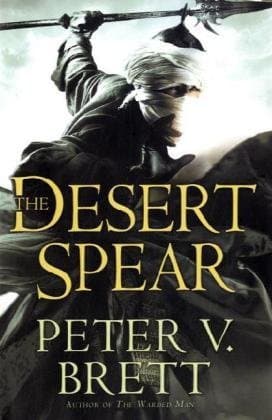
Peter V. Brett (2010)
Genre
Fantasy
Reading Time
10-12 hours
Key Themes
See below
Sign in to track this book
As humanity shrinks under demon attacks, two former friends, now rival 'Deliverers' with ancient artifacts and armies, fight over who will save the world, unaware of a new, terrifying demon breed emerging.
The novel begins with Ahmann Jardir, having united the Krasian desert tribes, leading his army across the desert. He calls himself the Shar'Dama Ka, the prophesied Deliverer, and carries the Desert Spear and Crown of the Kaji. His journey north is a holy war against the corelings, meant to fulfill the prophecy of uniting all humanity. Jardir's forces are skilled against demons, showing the Krasian life that values combat and faith. He believes his destiny is to save the world, even if it means taking control of the northern people, whom he sees as weak and unfaithful.
In the Northern lands, Leesha Paper is important in Cutter's Hollow. Her knowledge of herbs and wards, along with her intelligence and kindness, has made her a respected healer and ward mistress. She takes on students and teaches townsfolk basic warding and first aid, greatly improving their chances against nightly coreling attacks. Her reputation spreads to other settlements and to the powerful Duke of Miln. Leesha struggles with her responsibilities and the constant threat of corelings, but her dedication to her people remains strong, even as she deals with her feelings for Rojer and the memory of Arlen.
Rojer, the jongleur, continues his journey, affected by the loss of his family to corelings and his encounter with a mind demon. He struggles with his own problems, fighting sadness and a lack of purpose despite his growing skill with his fiddle. His music, however, becomes a strong tool, not just for entertainment but for keeping corelings away and lifting spirits. He forms a bond with Abban, the shrewd merchant, and gets involved in the politics of the Northern dukes. Rojer often feels overshadowed by Arlen, the Warded Man, and fights his own insecurities, trying to find his place in a world increasingly run by powerful figures and old prophecies.
Throughout the story, there are many flashbacks detailing Ahmann Jardir's early life in Krasia. These parts show his upbringing in the warrior culture, his rivalry and friendship with Arlen (then Kaji), and their intense training. Readers learn about Jardir's ambition, his strong belief in Krasian prophecies, and the moment he claimed the Desert Spear and Crown of the Kaji, believing himself to be the prophesied Shar'Dama Ka. The flashbacks give important background for Jardir's actions, his deep conviction, and his complex relationship with Arlen, explaining why they are now enemies.
Renna Tanner, a young woman from Cutter's Hollow, first appears as a quiet character. However, as the coreling threat grows and more defenders are needed, Renna starts to find a strong, hidden power within herself. She watches Leesha's warding techniques and the fighting styles of skilled warriors, slowly developing her own courage and combat ability. She joins patrols and fights, surprising herself and others with how well she fights demons. Renna's growth shows that ordinary people can face extraordinary challenges, suggesting a new generation of defenders in the North, separate from the Warded Man or Jardir.
A frightening new event affects both the North and Jardir's army: the arrival of a very intelligent and manipulative mind demon. Unlike other, more animalistic corelings, this demon shows strategic thinking, the ability to communicate, and a chilling capacity for psychological warfare. It targets key people, causing conflict and fear, and is much harder to defeat than weaker demons. Its appearance means a major increase in the war against the corelings, forcing both human groups to face a threat that challenges their usual defenses and understanding of their enemy, suggesting a more organized coreling society.
Jardir's Krasian army continues its march north, meeting less organized but strong resistance from Northern towns and dukedoms. His forces, superior in discipline and experience against corelings, quickly overcome most local defenses. Jardir establishes his power through military strength and religious belief, demanding tribute and obedience from the Northerners, whom he sees as weak in faith and defense against demons. His campaign is met with fear, resentment, and some admiration as Northerners see how effective his methods are, even if they dislike his authoritarian style and foreign culture.
Seeing the dual threat from increasing coreling attacks and the approaching Krasian army, Leesha Paper asks Duke Miln for help. She travels to his stronghold, arguing for the protection of Cutter's Hollow and other vulnerable settlements. Despite her initial dislike of politics, Leesha clearly explains the serious situation and the need for unified action. Duke Miln, impressed by her intelligence and resolve, agrees to help, providing resources and men, and recognizing her growing influence as a leader and a vital source of knowledge in the fight for survival.
As Jardir's forces interact with the Northerners, the deep cultural and ideological differences between them become clear. The Krasian focus on strict faith, social hierarchy, and the Shar'Dama Ka's absolute power clashes with the Northerners' more individualistic, practical, and less religious way of life and demon fighting. These differences lead to misunderstandings, conflicts, and deep mistrust. Jardir sees the Northerners as weak and immoral, while the Northerners see the Krasians as fanatical conquerors. This ideological divide makes it harder for humanity to unite against the corelings, despite the shared enemy.
Later in the book, Arlen, the Warded Man, reappears. His presence is felt more than seen for a time, as rumors and his unique wards come before him. When he finally shows himself, he is a figure of great power and grim determination, more warded and formidable than ever. His return is a sign of hope for many Northerners, who see him as their true Deliverer, a clear opposite to Jardir's claim. Arlen's return sets the stage for the inevitable conflict between the two men who once shared a strong bond, now competing for the title of humanity's savior and representing two very different paths forward.
Jardir's campaign ends with the siege of Angiers, a major Northern city. The battle is shown in great detail, displaying the strength of the Krasian army against the desperate, less organized, defenses of the Northerners. The conflict is brutal, with many casualties on both sides, showing the terrible cost of human fighting amidst the constant threat of corelings. This battle is a major turning point, showing Jardir's military dominance and strengthening his control over parts of the North, while also increasing Northern resistance and confirming the need for a strong counterforce.
Rojer, using his unique connection to music and his experiences with the mind demon, tries to understand and fight this new, intelligent threat. He finds that his music, especially tunes from the Hollow, has an unexpected effect on the mind demon, allowing him to sense its thoughts and even influence it somewhat. This confrontation is less about physical fighting and more about a battle of wills and understanding, providing important insights into the corelings' changing nature and their ability for complex thought. Rojer's role grows beyond a jongleur, making him a unique asset in the ongoing war.
Driven by the growing threats, Leesha goes on a dangerous journey to the Hollow, a place rumored to hold ancient knowledge about wards and corelings. Her quest is full of danger, facing both corelings and the uncertain loyalties of human settlements. She seeks not only stronger wards but also a deeper understanding of the world's history and the true nature of the demons, hoping to find a way to unite humanity against their common enemy, or at least protect her people. Her journey shows her growing courage and her resolve to find solutions beyond the immediate battlefield.
The book's climax shows Arlen, the Warded Man, finally confronting Ahmann Jardir in Angiers. This long-awaited meeting is filled with their complex history, their opposing beliefs, and their shared claim to be the Deliverer. The confrontation is not just a physical battle but a clash of wills and ideas, with each man convinced he is on the right path to save humanity. Their reunion is explosive, leaving the fate of the North, and all humanity, uncertain as their personal conflict mixes with the larger war against the corelings and the approaching threat of the mind demon.
The book ends with humanity in a dangerous state. Jardir has gained control in the North, but many resent his rule. Arlen has returned, but his methods are often harsh and isolating. The human world remains divided, not just between North and South, but within itself, struggling to find a unified path forward. The intelligent mind demon means that the corelings are changing, becoming a more sophisticated and dangerous enemy. The ending leaves many questions unanswered, showing that the war for humanity's survival is far from over and that the true Deliverer's identity and path are still uncertain.
The Protagonist/Antagonist
Jardir rises from a respected warrior to the Shar'Dama Ka, expanding his influence and challenging the North, believing his destiny is to lead humanity.
The Protagonist
Arlen continues his solitary war against the corelings, eventually returning to the North to confront Jardir and the evolving demon threat.
The Protagonist/Supporting
Leesha evolves from a local healer to a respected leader and a key strategic mind in the Northern defense, seeking ancient knowledge for survival.
The Protagonist/Supporting
Rojer confronts his past trauma, harnesses the unique power of his music, and grows into a more confident and essential contributor to humanity's fight.
The Supporting
Invevera continues to serve Jardir as a strategic advisor and spiritual guide, deepening her understanding of the prophecies and her influence.
The Supporting
Abban transitions from a merchant following Jardir's army to an independent operator, forming a strong bond with Rojer.
The Supporting
Renna transforms from a timid villager into a capable and courageous coreling fighter, finding her purpose in defending her home.
The Supporting
Wonda remains a steadfast and capable warrior, serving Jardir with unwavering loyalty throughout his Northern campaign.
The Supporting
Duke Miln shifts from a self-interested ruler to a more responsible leader, recognizing the gravity of the coreling threat and supporting Leesha.
The Antagonist
The Mind Demon emerges as a new, more dangerous type of coreling, demonstrating evolving intelligence and strategic capabilities.
The novel explores what it means to be a leader and a 'Deliverer' of humanity. Both Arlen and Jardir believe they are the prophesied savior, but their methods and beliefs are opposite. Jardir's leadership is based on strict faith, conquest, and absolute authority, shown in his unification of Krasia and his invasion of the North. Arlen's leadership, in contrast, is solitary, harsh, and practical, focused on direct demon combat with less concern for political unity. The book asks if salvation requires unity under one leader, or if different approaches are needed, and if a true Deliverer must be a messiah or a grim protector. Leesha also becomes a different kind of leader, one who unites through knowledge and kindness.
“A Deliverer is not someone who gives you what you want, but someone who gives you what you need.”
This theme is central to the conflict between Jardir and Arlen, and also to the larger cultural clash between Krasia and the North. Jardir and the Krasians are driven by strong faith in their prophecies and the Creator, believing that following their religious laws will defeat the corelings. Their actions, including harsh punishments and strict social structure, come from this faith. In contrast, the Northerners, especially Arlen, are more practical, relying on wards, combat skills, and scientific understanding. Leesha shows this Northern practicality, always seeking new knowledge and practical solutions. The story explores if faith alone is enough, or if practical, often harsh, actions are necessary for survival.
“Faith is a shield, but a sword is needed for the fight.”
The novel clearly shows the deep cultural gap between the desert Krasians and the Northern people. The Krasian society, which is structured, faith-driven, and warrior-focused, clashes sharply with the Northerners' more individualistic, democratic, and less religious way of life. This cultural difference causes misunderstanding, mistrust, and ultimately, war between the two human groups, even as a common enemy threatens them all. Jardir sees the Northerners as weak and immoral, while the Northerners see the Krasians as fanatical conquerors, highlighting the sad irony of humanity fighting itself while demons attack.
“The desert teaches you to fight. The North teaches you to hide.”
A key theme is how the demon threat changes and humanity's need to adapt. The intelligent Mind Demon's arrival is a frightening escalation, as demons are no longer just mindless beasts but strategic, manipulative beings. This forces characters like Rojer to find new ways to understand and fight them, going beyond simple wards and physical combat. Leesha's search for ancient knowledge also reflects this need for adaptation. The human characters must not only fight the demons they know but also anticipate and prepare for new, more dangerous forms, pushing the limits of their understanding and survival strategies.
“The demons are learning. And if we do not learn faster, we will die.”
Many characters, especially Arlen, Jardir, and Leesha, carry the heavy burden of responsibility for humanity's survival. Arlen takes on the role of the Warded Man, making harsh, often isolating choices for the greater good. Jardir carries the responsibility of the Shar'Dama Ka, believing he must unite all humans, even through conquest, to save them. Leesha, despite her youth, becomes responsible for her community's well-being and defense, always seeking knowledge and solutions. The theme explores the mental cost of leadership in a world near extinction and the personal sacrifices required.
“The weight of the world is a heavy thing, even for a Deliverer.”
Interspersed chapters detailing Jardir's past and his relationship with Arlen.
The novel frequently uses extensive flashback sequences, primarily focusing on Ahmann Jardir's youth in Krasia and his complex, evolving relationship with Arlen (then Kaji). These flashbacks serve to deepen the reader's understanding of Jardir's motivations, his unwavering faith, and the origins of the bitter rivalry between the two supposed Deliverers. They provide crucial context for their current actions and beliefs, revealing the shared history that binds and divides them, and explaining the cultural nuances of Krasia. Without these, Jardir might seem a one-dimensional antagonist, but the flashbacks lend him depth and a sympathetic, if ruthless, drive.
An ancient prophecy foretelling a savior who will unite humanity against the corelings.
The prophecy of the Deliverer (Shar'Dama Ka in Krasian) is a central driving force for many characters, especially Jardir. It establishes the ultimate goal for humanity – unification against the corelings – and creates the core conflict between Arlen and Jardir, both of whom believe they are the prophesied figure. The prophecy dictates much of Jardir's actions, from unifying Krasia to invading the North. It provides a framework for the narrative, offering hope but also acting as a source of division and conflict, as its interpretation and fulfillment are fiercely contested.
Ancient, powerful artifacts claimed by Jardir as symbols of his authority.
The Desert Spear and the Crown of the Kaji are powerful, ancient artifacts that serve as potent symbols of authority and the Deliverer's claim. Jardir wields them, giving credence to his proclamation as the Shar'Dama Ka and inspiring his Krasian army. These items are not merely symbolic; they are imbued with power, further solidifying Jardir's status and providing tangible evidence for his divine mandate. They are visual representations of the Krasian prophecies and a constant reminder of Jardir's perceived destiny, contrasting with Arlen's more self-made, warded power.
A new, intelligent breed of coreling that poses a psychological and strategic threat.
The introduction of the Mind Demon is a significant plot device that elevates the coreling threat beyond brute force. This intelligent demon, capable of communication and psychological manipulation, forces humanity to confront a more sophisticated enemy. It acts as a catalyst for characters like Rojer to develop new, non-physical ways of combating corelings and for Leesha to seek deeper understanding. The Mind Demon signifies an evolving world and raises the stakes, suggesting that humanity's old methods of defense may no longer be sufficient and that a new kind of war is emerging.
“The mind is like a garden. You can plant flowers or you can plant weeds. What you plant will grow.”
— Arlen reflecting on mental discipline and focus.
“Fear is a weapon. The demons use it, and so must we. But it is a weapon that cuts both ways.”
— Krasian philosophy on fear as a tool in war.
“A man who cannot protect his own is no man at all.”
— Krasian cultural saying about a man's duty.
“The greatest battles are not fought with swords, but with words and will.”
— Leesha reflecting on the power of influence and determination.
“It is not enough to simply survive. We must live. We must thrive. We must fight back.”
— Renna's defiant spirit against the demon threat.
“Sometimes, the only way to save someone is to let them go.”
— Arlen grappling with difficult choices and their consequences.
“Knowledge is power, but power without wisdom is a dangerous thing.”
— Abban's perspective on the balance between information and sound judgment.
“There are no heroes, only men who do what needs to be done.”
— Jardir's pragmatic view on leadership and duty.
“The world is full of monsters, but the worst ones often wear human skin.”
— Leesha's observation on the cruelty of humans.
“Even the smallest act of defiance can spark a revolution.”
— The growing unrest and hope among the common folk.
“A man's worth is not measured by the scars on his body, but by the strength of his heart.”
— Inevera's internal thoughts on true strength.
“The past is a chain, but it is one we can choose to break.”
— Characters struggling to overcome past traumas and societal expectations.
“To lead, one must first learn to serve.”
— Krasian lesson on the path to true leadership.
“Every choice has a price, and some prices are paid in blood.”
— The harsh realities of war and difficult decisions.
Ready to see how well you understood this book? Take our interactive quiz with 10 questions.

Biography coming soon.







