“Human natur' is a curious thing, and can't be accounted for by all the calculations of a Philadelphia lawyer.”
— Deerslayer reflecting on human nature and its unpredictability.

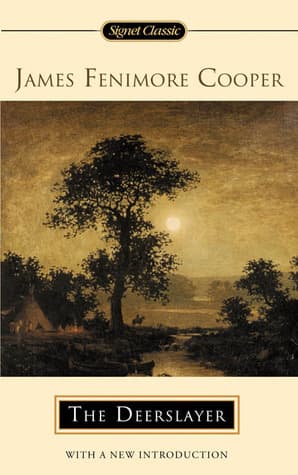
James Fenimore Cooper (1841)
Genre
Historical Fiction
Reading Time
1140 min
Key Themes
See below
Sign in to track this book
A young frontiersman raised by Native Americans faces tribal warfare, the ruthlessness of 'civilized' men, and a woman's will, shaping his spirit into a moral compass in the wilderness.
The story begins with Natty Bumppo, known as Deerslayer, a young white man raised by the Delaware Indians, traveling with the rough frontiersman Henry March, or Hurry Harry, through the forests of colonial New York. They are headed to the Glimmerglass (Lake Otsego), where they plan to meet Hurry Harry's friend, the trapper Tom Hutter, and his two stepdaughters, Judith and Hetty. Hurry Harry wants to hunt beaver and possibly marry Judith, while Deerslayer, true to his upbringing, cares more about the moral implications of their actions and the beauty of the untouched wilderness. Their journey shows the difference between Hurry Harry's materialistic view of nature and Deerslayer's respectful, almost spiritual connection to it, setting the stage for future conflicts.
At the Glimmerglass, Deerslayer and Hurry Harry find Tom Hutter living on a floating dwelling called the 'ark' and a fortified structure known as the 'muskrat castle.' They meet Hutter's stepdaughters, the beautiful, worldly, but morally complex Judith, and the simple, innocent Hetty. Hutter, a former pirate, is a practical and often ruthless individual, driven by self-preservation and profit from hunting and trapping. Hurry Harry is clearly interested in Judith, while Deerslayer navigates the complexities of their unusual domestic situation. The meeting reveals the various moral viewpoints at play, from Hutter's practicality to Hetty's strong faith, and Judith's internal conflict about her past and future.
Learning that Mingo (Iroquois) Indians are in the area due to the French and Indian War, Hutter, always opportunistic, decides to try to scalp some of them for the bounty offered by the colonial government. Deerslayer, following his Delaware principles, objects to this practice as dishonorable. Despite his warnings, Hutter and Hurry Harry go out in a canoe, hoping to ambush the Mingoes. Their plan fails, and the Mingoes capture them. This event forces Deerslayer, Judith, and Hetty to retreat to the safety of the muskrat castle, leaving them isolated and vulnerable to the Mingo threat. It also highlights Hutter and Hurry Harry's reckless greed.
After Hutter and Hurry Harry's capture, Deerslayer is alone with Judith and Hetty on the lake. While paddling the ark, a Mingo warrior hidden in a tree ambushes Deerslayer. After a tense standoff and a warning, Deerslayer must shoot the warrior in self-defense, his first time taking a human life. The warrior dies with dignity, and Deerslayer thinks deeply about the act, struggling with the moral implications of killing another man, even for a good reason. This moment solidifies his character as a man of principle who respects life, even that of an enemy, and sets him apart from the more brutal frontiersmen.
Deerslayer, showing his understanding of Indian customs, goes to the Mingo camp under a flag of truce to negotiate for Hutter and Hurry Harry's release. He offers to exchange two ivory chess pieces found in Hutter's possessions (which Judith believes belonged to her mother) for the captives. The Mingoes, initially interested in the unusual items, agree to a temporary exchange. This negotiation shows Deerslayer's courage, diplomatic skill, and honorable conduct, contrasting sharply with the Mingoes' cunning and the white men's often treacherous behavior. The truce is fragile, and tension remains high as the exchange is planned.
During the prisoner exchange, the Mingoes try to capture Deerslayer and Judith through treachery. In the struggle, a tomahawk thrown by a Mingo mortally wounds Hutter. Deerslayer manages to escape with Judith and Hetty back to the ark, but Hutter dies shortly after. Before his death, Hutter reveals that he is Hetty's biological father, but Judith is not his child, further complicating the girls' parentage and Hutter's mysterious past. Hutter's death removes one of the more morally complex characters and intensifies the conflict, leaving Deerslayer, Judith, and Hetty to face the Mingo threat with one less protector.
After Hutter's death, Judith, using her beauty and intelligence, tries to negotiate with the Mingoes. She dresses elaborately and tries to appeal to their sense of honor, hoping to secure their safety. During these interactions, the wise Mingo chief, Rivenoak, becomes a significant figure. Rivenoak, though an enemy, is portrayed as a man of honor and intelligence, capable of respecting Deerslayer's virtues even as he seeks to defeat him. His presence raises the conflict from a simple fight for survival to a clash of different moral codes and cultures, with Judith's attempts at diplomacy highlighting her complex character.
Hetty, in her simple innocence and strong faith, believes she can reason with the Mingoes and convince them to stop fighting. She goes alone into the Mingo camp, carrying her Bible, hoping to preach peace. While her intentions are pure, her actions accidentally lead to Deerslayer's capture. Deerslayer, seeing Hetty's dangerous situation, tries to rescue her or at least ensure her safety, but in doing so, he is himself taken prisoner by the Mingoes. This event shows Hetty's vulnerability and the impact of her innocence on the narrative, while also putting Deerslayer in the greatest danger yet.
Deerslayer, now a captive, faces the Mingo gauntlet and torture at the stake. True to his character and Delaware upbringing, he endures the torment with stoicism and courage, refusing to cry out or show weakness. This earns the respect of some of his captors, especially Rivenoak. Just as his ordeal reaches its peak, a colonial military force, led by Captain Warley, arrives on the lake, guided by Hurry Harry and an Indian scout. The soldiers fight the Mingoes in a fierce battle, leading to a dramatic rescue of Deerslayer and the surviving women, bringing a temporary end to the immediate Mingo threat.
After the battle and the Mingoes' defeat, Judith, deeply affected by Deerslayer's courage, integrity, and shared experiences, confesses her love for him and proposes marriage. She reveals her past mistakes and hopes for a new life with him. Deerslayer, while acknowledging her beauty and good qualities, gently but firmly refuses. He explains that their paths are too different; her past and desire for a more 'civilized' life conflict with his commitment to the wilderness, his moral principles, and his Indian-trained sense of propriety. This refusal solidifies Deerslayer's identity as a man of the wilderness, unsuited for the complexities of settled society.
Hetty, wounded during the Mingo attack or simply weakened by the ordeal and her simple nature, dies peacefully shortly after the rescue. Her death is mourned, especially by Deerslayer, who admired her pure heart and strong faith. With the immediate danger passed and Hutter and Hetty gone, the remaining characters prepare to leave the Glimmerglass. Judith, heartbroken by Deerslayer's refusal and with no other ties, decides to join Captain Warley's company, likely to pursue a life in the colonial settlements or even return to England. Deerslayer prepares to return to his life in the wilderness, having faced and overcome significant challenges.
Deerslayer, having endured his 'initiation' into human conflict, violence, and the complexities of human relationships, leaves the Glimmerglass. He has killed his first man, faced torture, and navigated the moral ambiguities of both 'civilized' and 'savage' societies. While he has been exposed to the world's temptations and Judith's affections, he remains true to his core values and his identity as a man of the forest. He leaves a more mature, resolute individual, his moral compass strengthened, and his bond with the wilderness reaffirmed. The Glimmerglass, once a pristine paradise, has become a place of personal growth and loss for him.
The Protagonist
Deerslayer transforms from an untested youth into a mature, morally resolute man of the wilderness, solidifying his identity and principles in the face of conflict and temptation.
The Supporting
Judith moves from a state of moral ambiguity and self-awareness of her past to a desperate yearning for redemption and a new life, ultimately choosing a path away from the wilderness.
The Supporting
Hetty remains steadfast in her pure faith and innocence throughout the trials, eventually succumbing to the harsh realities of the wilderness, serving as a symbol of vulnerable purity.
The Supporting
Hurry Harry remains largely unchanged, serving as a foil to Deerslayer's moral development, demonstrating the contrasting values of the frontier.
The Supporting
Hutter's arc is cut short by his death, serving to reveal some truths about his past and further complicate the lives of his stepdaughters.
The Antagonist/Supporting
Rivenoak remains a consistent, honorable Mingo chief, representing the noble aspects of the 'savage' culture.
The Mentioned
Not present in the narrative, but serves as a moral and cultural touchstone for Deerslayer.
The Supporting
Captain Warley's role is primarily functional, representing external intervention and a different societal order.
This theme explores the inherent goodness and moral purity of individuals raised in the natural wilderness (like Deerslayer and, to some extent, the 'good' Indians like Chingachgook and even Rivenoak in his own code) in contrast to the moral decay and greed often found in 'civilized' society. Deerslayer's refusal to scalp, his respect for his Mingo adversary, and his deep connection to the untouched forest highlight his 'noble' qualities. Characters like Tom Hutter and Hurry Harry, who embody the destructive aspects of civilization's intrusion—greed, opportunism, and a disregard for nature—show its corrupting influence. The novel suggests that true virtue is more readily found in the uncorrupted state of nature.
“''I am a man without a cross, and my gifts are white. The Great Spirit has given me a white heart, and I will not do a red man's wickedness.''”
The novel is a coming-of-age story for Deerslayer, an 'initiation' into the complexities of human conflict and moral choice. He begins as an untested youth, pure in his principles, but is forced to confront violence, treachery, and temptation. His 'first kill' is a key moment, forcing him to reconcile his peaceful nature with the necessity of self-defense. Despite these experiences, he maintains his moral integrity, refusing to adopt the ruthless ways of other frontiersmen or compromise his values for love or societal acceptance. Hetty's character also embodies moral purity, though her innocence ultimately proves vulnerable in the harsh world.
“''I have done nothing to be ashamed of, nor have I anything to mourn over.''”
The Glimmerglass and the surrounding forests are not just a setting but an active force that shapes characters and reflects their inner states. For Deerslayer, the wilderness is a sacred space, a source of moral guidance and spiritual connection, where 'God is present.' For Hutter and Hurry Harry, it is a resource to be exploited for profit, leading to conflict and destruction. The lake's pristine beauty contrasts sharply with the violence and moral compromises that occur on its shores. The wilderness acts as a crucible where character is tested and true nature is revealed, often stripping away the pretenses of 'civilization.'
“''The Glimmerglass is a lake that the Lord has made, and not man; and it is a fit place for a man to think of Him.''”
The novel explores different forms of justice and law: the natural law of the wilderness, the unwritten codes of honor among Indians, and the formal laws of colonial society. Deerslayer adheres to a natural sense of justice and fair play, guided by his Delaware upbringing, which emphasizes honor in warfare and respect for life. This clashes with Hutter's opportunistic scalping for bounty, which colonial authorities sanction but Deerslayer finds morally wrong. The Mingo chief Rivenoak, despite being an enemy, also operates under a complex code of honor. The narrative questions which 'law' is truly just and whether human-made laws always align with fundamental moral principles.
“''There is a law for the white man and a law for the red man; but there is a law for all, that is the law of God.''”
The female characters, Judith and Hetty, represent contrasting aspects of womanhood on the frontier. Judith, with her beauty, intelligence, and mysterious past, embodies the complexities and potential moral ambiguities of women who navigate a harsh world. She seeks love and redemption but struggles with her reputation. Hetty, on the other hand, represents pure, uncorrupted innocence and strong faith, often making her vulnerable. Their presence highlights the unique challenges and limited roles for women in this wilderness setting, from being objects of desire to symbols of virtue or vulnerability, and how their choices are shaped by their circumstances.
“''A woman's will is a law to herself, and sometimes to others.''”
Floating dwellings providing both sanctuary and isolation.
These two unique structures—a floating house and a fortified hut built on stilts—serve as both a refuge and a trap for the characters. They symbolize humanity's attempt to create a secure, 'civilized' space within the untamed wilderness. While they offer protection from the Mingoes, they also isolate the inhabitants, forcing them to confront their moral choices and the harsh realities of their situation without immediate outside interference. The structures become central to the siege, representing the limited options and vulnerability of the white settlers.
A pristine lake symbolizing unspoiled nature and a testing ground for character.
Lake Otsego, known as the Glimmerglass, is more than just a setting; it is a character in itself. Its pristine, untouched beauty symbolizes the ideal of unspoiled nature and the moral purity that Deerslayer embodies. It acts as a serene backdrop that highlights the violence and moral degradation brought by human conflict. The lake is also a testing ground, reflecting characters' true natures and forcing them to confront their deepest fears and principles. Its eventual 'desecration' by warfare foreshadows the inevitable encroachment of civilization.
A pivotal event marking Deerslayer's loss of innocence and moral awakening.
Deerslayer's act of taking a human life, even in self-defense, is a crucial turning point. It shatters his innocence and forces him to grapple with the moral implications of violence. Unlike other frontiersmen who kill without remorse, Deerslayer reflects deeply on the act, demonstrating his unique moral compass and respect for life. This event solidifies his character as a man of principle who can adapt to the harsh realities of the wilderness without losing his soul, distinguishing him from characters like Hurry Harry and Hutter.
Mysterious objects hinting at Judith's past and Hutter's secrets.
These finely crafted chess pieces, found among Hutter's possessions, serve as a tangible link to Judith's unknown past and Hutter's mysterious origins. They suggest a connection to a more refined, possibly aristocratic European background, contrasting sharply with their current rustic existence. The pieces become a point of negotiation with the Mingoes, further highlighting their perceived value and the cultural clash. They are a subtle plot device that adds intrigue to the characters' backstories and underscores the theme of hidden identities and the impact of the past.
“Human natur' is a curious thing, and can't be accounted for by all the calculations of a Philadelphia lawyer.”
— Deerslayer reflecting on human nature and its unpredictability.
“There's a time for all things, and a place for all things, and a reason for all things.”
— Deerslayer often uses this philosophy to guide his actions and decisions.
“The gifts of God are not to be despised, and that which comes from His hand is always good, though it may not always seem so to our erring judgments.”
— Deerslayer expressing his deep faith and acceptance of divine will.
“The law of the wilderness is to do as you would be done by.”
— Deerslayer explaining his moral code, a variation of the Golden Rule adapted to frontier life.
“A man must be a man, and not a woman, or a child, to stand up ag'in the trials of this life.”
— Harry Hutter, a rougher frontiersman, expressing a more traditional view of masculinity.
“Every man has his gifts, and it's best to use 'em accordin' to the will of Him that gave 'em.”
— Deerslayer emphasizing the importance of recognizing and utilizing one's natural talents.
“The Mingoes are a nation of vipers, and their ways are the ways of the serpent.”
— A common sentiment among the white settlers regarding the Huron (Mingo) tribe.
“There's a pleasure in a canoe that no other craft can give.”
— Deerslayer expressing his love for his preferred mode of transport on the lake.
“A good name is better than riches, and a clear conscience better than a crown.”
— Deerslayer reflecting on the true values in life.
“The creatur' is oncommon for sagacity, and sartinly oncommon for beauty.”
— Deerslayer admiring Judith Hutter's beauty and intelligence.
“It's nat'ral for a man to wish to live, and it's nat'ral for him to wish to die in peace.”
— Deerslayer contemplating the universal human desires for life and peaceful death.
“The bullet has its arr'nd, and it will do its work.”
— Deerslayer acknowledging the inevitability of fate in battle.
“The great difficulty is to find a path that will lead us to the right place.”
— Deerslayer pondering the challenges of making correct moral choices.
“God made us all, white, red, and black, and He meant us to live in peace and good fellowship.”
— Deerslayer expressing his belief in universal brotherhood, often at odds with others.
“The forest has its own laws, and they are as fixed as the stars.”
— Deerslayer acknowledging the immutable rules and rhythms of the wilderness.
Ready to see how well you understood this book? Take our interactive quiz with 10 questions.
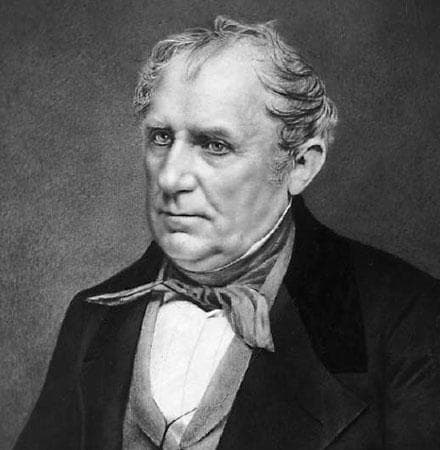
James Fenimore Cooper was an American writer of the first half of the 19th century, whose historical romances depicting colonial and indigenous characters from the 17th to the 19th centuries brought him fame and fortune. He lived much of his boyhood and the last fifteen years of life in Cooperstown, New York, which was founded by his father William Cooper on property that he owned. Cooper became a member of the Episcopal Church shortly before his death and contributed generously to it. He attended Yale University for three years, where he was a member of the Linonian Society.