BookBrief
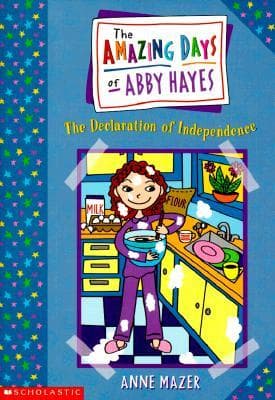
The Declaration Of Independence cover
Archivist's Choice

The Declaration Of Independence

Anne Mazer (2000)

Genre

Children's / Young Adult

Reading Time

90 min

Key Themes

See below

Track Your Reading

Sign in to track this book

Abby, a young girl, turns a ban from the Fall Festival into a quest to prove her maturity, tackling household chores and sibling care with unexpected determination.

Synopsis

Twelve-year-old Abby is upset when her parents forbid her from attending the annual Fall Festival with her friends, saying she is not mature enough to go alone. Determined to prove them wrong, Abby writes a "Declaration of Independence," outlining her plan to show responsibility. Her plan involves cleaning the entire house and taking sole charge of her younger brother, Leo, for a whole day. Abby starts the tasks, but Leo's energy and knack for creating messes quickly push her to her limits, turning her planned day into a series of mishaps. A conversation with her mother helps Abby understand that maturity is not just about doing tasks, but about understanding consequences and accepting help. When she presents her declaration to her parents, they acknowledge her efforts and her desire for independence. This leads to a new understanding in the family and a compromise that allows Abby to enjoy the festival, with a slightly different arrangement.
Reading time
90 min
Difficulty
Easy
Pacing
Moderate
Mood
Heartwarming, Humorous, Reflective
✓ Read this if...
You enjoy heartwarming stories about navigating family dynamics and the challenges of growing up.
✗ Skip this if...
You prefer complex plots or adult themes.

Plot Summary

The Fall Festival Dilemma

Abby, a young girl, looks forward to the annual Fall Festival, an event she plans to attend with her friends, Sarah and Emily. However, her parents, Mr. and Mrs. Miller, tell her she is too young to go without adult supervision and deny her permission. Abby feels devastated and unfairly treated, believing she is mature enough to handle herself. This rejection makes her want to show her parents her responsibility and independence, hoping to change their minds about future outings and prove she is no longer a 'little kid.' She sulks in her room, feeling misunderstood and determined to make a plan.

A Grand Plan Takes Shape

While doing homework, Abby sees her older brother, Sam's, history textbook open to a page about the American Declaration of Independence. The idea of declaring independence from rules resonates with her situation. A spark ignites, and Abby decides to create her own 'Declaration of Independence' from her parents' rules. She sees this document as a statement of her maturity and an argument for greater freedom. She plans to outline her complaints and propose her own 'laws' for her life, believing this formal approach will impress her parents and make them see her point of view.

Drafting the Declaration

Abby spends several evenings drafting her 'Declaration.' She uses colorful markers and glitter to make it look official. In it, she lists all the 'tyrannical acts' her parents have committed, such as setting bedtimes, restricting TV, and, most recently, denying her the Fall Festival. She writes about her desire for more freedom, including making her own choices about what to wear, when to play, and where to go with friends. Her brother, Sam, occasionally peeks over her shoulder, offering sarcastic comments but also some amusement. Abby feels a sense of power as she writes her feelings and desires.

The First Attempt at Maturity: House Cleaning

To further prove her maturity before presenting her declaration, Abby decides to deep clean the house while her parents are out. Her intentions are good, but her execution is messy. She attempts to vacuum, but the cord gets tangled and she knocks over a vase. Dusting leads to a cloud of particles and a broken knick-knack. When her parents return, they find a house that looks more disheveled than before, with cleaning supplies spread about. Instead of praise, Abby receives a lecture about being careful and not making more work for others. This setback frustrates Abby, making her feel her efforts are not being recognized.

Taking Care of Little Brother, Leo

Not discouraged by the cleaning mishap, Abby decides to try a different approach: taking care of her younger brother, Leo, for an afternoon. She sees this as a chance to show her parents she can be responsible. She prepares snacks, sets up games, and tries to keep Leo entertained. However, Leo, being an energetic toddler, proves difficult. He spills juice, draws on the walls, and refuses to nap. Abby, despite her efforts, struggles to maintain control, and the afternoon quickly becomes a series of minor disasters.

Leo's Mischief and Abby's Frustration

Leo’s behavior continues to test Abby’s patience. He hides her favorite doll, tries to climb the bookshelves, and throws a tantrum when she tries to get him to eat his vegetables. Abby finds herself yelling and feeling overwhelmed, realizing that taking care of a young child is much harder than she imagined. The house becomes a disaster zone again, with toys scattered everywhere and crayon marks on the walls. When her parents arrive home, they find a stressed-out Abby and a very active Leo amidst the chaos. Abby feels like a failure, her attempts to prove maturity seemingly backfiring.

A Heart-to-Heart with Mom

After the disastrous babysitting attempt, Abby is close to tears. Her mom, Mrs. Miller, sensing her daughter's distress, sits down with her for a talk. Abby, feeling defeated, explains how much she wants to go to the Fall Festival and how she feels her parents don't trust her. She expresses her frustration about being treated like a 'baby' and her desire for more independence. Mrs. Miller listens patiently, acknowledging Abby's feelings and explaining that their rules come from love and concern for her safety, not a lack of trust. This conversation opens a line of communication that Abby had not experienced before.

The Declaration is Presented

Encouraged by her talk with her mom, Abby decides to finally present her 'Declaration of Independence.' She gathers her courage and, with trembling hands, gives the decorated document to her parents. Mr. and Mrs. Miller read through it, initially surprised and then a little amused by her formal language and the 'complaints' she has listed. Abby nervously watches their expressions, unsure how they will react to her bold statement. She has poured all her feelings into this document, and its reception will determine if her efforts to be seen as mature have any impact.

Parents' Reaction and a New Understanding

Mr. and Mrs. Miller finish reading Abby's declaration. Instead of dismissing it, they praise her creativity and the effort she put into expressing her feelings. They explain that while they appreciate her desire for independence, maturity also involves understanding the responsibilities that come with freedom. They acknowledge that Abby is growing up and that some rules can be reevaluated over time. They propose a compromise: while she cannot go to the Fall Festival alone this year, they will work on a plan to give her more responsibilities and opportunities for independence in the future, with the goal of more freedom next year.

A Step Towards Independence

Abby, initially disappointed about the Fall Festival, begins to understand that her parents are not trying to hold her back but are guiding her. She realizes that maturity is not just about demanding freedom but also about earning trust and demonstrating responsibility consistently. Her parents suggest she can start by being more responsible for her chores and helping with Leo more regularly. Abby agrees, feeling a sense of hope and a clearer path forward. She understands that her 'Declaration' was a significant step in communicating her feelings, and while it did not grant her immediate independence, it opened the door for future growth.

The Family Festival Outing

Despite not going with her friends, Abby attends the Fall Festival with her parents and Leo. She still sees Sarah and Emily there, but instead of feeling left out, she feels a different kind of joy. She helps her mom push Leo in his stroller, participates in family games, and enjoys the festive atmosphere. She observes how her parents interact with her and Leo, seeing their care and love in a new light. This experience, while not what she initially envisioned, helps Abby appreciate her family and understand that there is value in shared experiences, even as she continues her journey toward greater independence.

Principal Figures

Abby Miller

The Protagonist

Abby evolves from a frustrated child demanding immediate independence to a more mature individual who understands that freedom comes with responsibility and that growth is a process.

Mr. Miller

The Supporting

He maintains his role as a responsible parent but shows flexibility and understanding towards Abby's growing need for independence.

Mrs. Miller

The Supporting

She maintains her supportive role, guiding Abby towards self-understanding and facilitating communication within the family.

Leo Miller

The Supporting

Leo remains a playful and demanding younger sibling, serving as a catalyst for Abby's learning.

Sam Miller

The Mentioned/Supporting

Sam remains a minor, static character, serving as a plot device for Abby's inspiration.

Sarah

The Mentioned

Sarah remains a background character, symbolizing Abby's social aspirations.

Emily

The Mentioned

Emily remains a background character, symbolizing Abby's social aspirations.

Themes & Insights

The Journey to Maturity and Independence

The main theme explores Abby's desire to grow up and gain more freedom, and the realization that maturity involves responsibility and understanding. Initially, Abby believes independence means freedom from rules, as seen in her 'Declaration.' However, her attempts to clean the house and care for Leo show that freedom comes with responsibilities and challenges. Through these experiences, and conversations with her parents, Abby learns that maturity is a gradual process of earning trust and understanding the impact of one's actions, rather than simply demanding autonomy. Her parents' compromise reflects this understanding of growth.

“I'm not a baby anymore! I should be able to make my own choices and go where I want!”

Abby Miller

Communication and Understanding

The story highlights the importance of open communication between children and parents. Abby's initial frustration comes from feeling unheard. Her 'Declaration of Independence,' though dramatic, is her attempt to express her feelings. The key moment occurs during her talk with Mrs. Miller, where both parties listen and share their views. This open dialogue allows Abby to understand her parents' concerns for her safety, and for her parents to acknowledge her growing need for autonomy. The resolution is reached through mutual understanding, not just a parental order.

“We understand you want more freedom, Abby, but with freedom comes responsibility. We just want to make sure you're safe and ready.”

Mrs. Miller

The Nature of Responsibility

Abby's cleaning and babysitting misadventures are key to developing the theme of responsibility. She initially sees responsibility as a simple task to complete to gain a reward (going to the festival). However, her messy attempts reveal that true responsibility requires careful planning, attention to detail, and patience. Her struggle with Leo teaches her the constant demands and unpredictable nature of caring for others. These experiences force Abby to see the difference between her idea of maturity and its practical application, showing her that responsibility is an ongoing commitment, not a one-time display.

“It's not just about doing things, Abby, it's about doing them well and thinking about the consequences.”

Mr. Miller

The Meaning of Family

While Abby wants independence from her family, the story ultimately reinforces the importance and value of family support. Even when Abby is frustrated, her parents are consistently present and caring, though strict. The resolution involves a family compromise, and Abby ultimately attends the Fall Festival with her family, finding joy in their shared experience. This shows that while individual growth is important, it does not mean a complete break from family; rather, it is about evolving within that supportive structure. The family unit provides the foundation for Abby's journey of growth.

“Being part of a family means we look out for each other, and we grow together.”

Narrator (implied)

Plot Devices & Literary Techniques

The 'Declaration of Independence'

A literal document written by Abby to express her desire for freedom.

This is the central symbolic and literal plot device. Abby's 'Declaration' is inspired by American history and serves as a tangible manifestation of her frustration and her desire for autonomy. It functions as a catalyst for her actions, giving her a concrete goal and a framework for her grievances. When presented to her parents, it forces a direct confrontation and opens a crucial dialogue, moving the plot from internal frustration to external communication. It represents her youthful, dramatic approach to a serious desire.

Misguided Attempts at Responsibility

Abby's well-intentioned but disastrous efforts to clean the house and babysit Leo.

These two sequences function as comedic relief but also as crucial learning experiences for Abby. They are plot devices that allow Abby to practically test her understanding of 'maturity' and 'responsibility.' Instead of immediately granting her demands, these events provide a realistic demonstration of the challenges and complexities involved in adult tasks. They serve to humble Abby and provide concrete evidence for her parents' arguments about why she isn't quite ready for full independence, pushing her towards a deeper understanding of responsibility.

The Fall Festival

The highly anticipated event that Abby is denied permission to attend.

The Fall Festival acts as the primary inciting incident and the central object of desire for Abby. It represents the freedom, social connection, and 'grown-up' experiences that Abby believes she is ready for. The denial of permission to attend without supervision sets the entire plot in motion, fueling Abby's determination to prove herself. Its importance diminishes slightly by the end, as Abby finds a different kind of satisfaction, but it remains the initial catalyst for her journey of self-discovery and negotiation with her parents.

Critical analysis

Notable Quotes

We hold these truths to be self-evident, that all men are created equal, that they are endowed by their Creator with certain unalienable Rights, that among these are Life, Liberty and the pursuit of Happiness.

The opening statement of the Declaration's core philosophy.

That to secure these rights, Governments are instituted among Men, deriving their just powers from the consent of the governed.

Explaining the purpose and legitimate source of government authority.

That whenever any Form of Government becomes destructive of these ends, it is the Right of the People to alter or to abolish it, and to institute new Government.

Justifying the right of revolution when government fails its purpose.

Prudence, indeed, will dictate that Governments long established should not be changed for light and transient causes.

A cautionary note, suggesting revolution should not be undertaken lightly.

But when a long train of abuses and usurpations, pursuing invariably the same Object evinces a design to reduce them under absolute Despotism, it is their right, it is their duty, to throw off such Government.

Explaining the conditions under which revolution becomes a duty.

The history of the present King of Great Britain is a history of repeated injuries and usurpations, all having in direct object the establishment of an absolute Tyranny over these States.

Introducing the list of grievances against King George III.

He has refused his Assent to Laws, the most wholesome and necessary for the public good.

A specific grievance, highlighting the King's obstruction of colonial legislation.

For imposing Taxes on us without our Consent.

A famous grievance directly challenging 'taxation without representation'.

He has kept among us, in times of peace, Standing Armies without the Consent of our legislatures.

A grievance about the presence of British troops in the colonies.

Nor have We been wanting in attentions to our Brittish brethren.

Showing that the colonists had attempted peaceful reconciliation.

We, therefore, the Representatives of the united States of America, in General Congress, Assembled, appealing to the Supreme Judge of the world for the rectitude of our intentions, do, in the Name, and by Authority of the good People of these Colonies, solemnly publish and declare, That these United Colonies are, and of Right ought to be Free and Independent States.

The formal declaration of independence and separation from Britain.

And for the support of this Declaration, with a firm reliance on the protection of divine Providence, we mutually pledge to each other our Lives, our Fortunes and our sacred Honor.

The powerful closing statement, emphasizing the commitment and sacrifice of the signers.

He has plundered our seas, ravaged our Coasts, burnt our towns, and destroyed the lives of our people.

A vivid grievance detailing the King's destructive actions against the colonies.

A Prince whose character is thus marked by every act which may define a Tyrant, is unfit to be the ruler of a free people.

A strong condemnation of King George III, declaring him unfit to rule.

Quiz

Test Your Knowledge

Ready to see how well you understood this book? Take our interactive quiz with 10 questions.

10
Questions
~5
Minutes
?
Best Score

Key Questions (FAQ)

Abby's primary conflict arises when her parents deny her permission to attend the Fall Festival with her friends, citing her perceived immaturity. This rejection sparks her determination to prove her independence and responsibility, setting the stage for her ambitious plan.

About the author

Anne Mazer

Anne Mazer is a contemporary fiction author. Her notable work, 'The Declaration of Independence,' is a young adult novel exploring themes of freedom and societal structures. Mazer's writing often delves into complex ethical questions within accessible narratives.