“Yo soy el que soy. ¿Pero quién soy yo?”
— Artemio Cruz's internal monologue as he reflects on his identity and past.

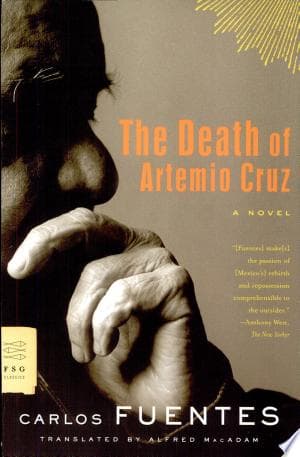
Carlos Fuentes (2013)
Genre
Historical Fiction
Reading Time
10-12 hours
Key Themes
See below
Sign in to track this book
On his deathbed, a powerful Mexican magnate confronts the spectral kaleidoscope of his ruthless rise, reliving revolutionary battles and betrayals that forged his empire and scarred his soul.
The novel begins with Artemio Cruz, a very wealthy and powerful Mexican industrialist and newspaper owner, on his deathbed in Mexico City. He has a severe, undiagnosed illness, likely a ruptured ulcer, and his body is failing. His mind moves between the present — the hospital room, doctors, and his estranged family (daughter Teresa, grandson Lorenzo, and ex-wife Catalina) watching him — and clear, broken memories of his past. He is mostly paralyzed and cannot speak, so his internal thoughts are the main way the story is told. This first part sets up the non-linear, stream-of-consciousness style of the whole novel, immediately putting the reader into Artemio's fractured view of his life as it ends.
Artemio's earliest memories show a hard, lonely childhood on a hacienda in Veracruz. He recalls being an illegitimate child, raised by his uncle, Lunero, and a black servant woman named Ludivina. His mother, Isabel, is a distant, almost mythical figure. He is a 'natural' son, born outside of marriage, and this status gives him a strong sense of being different and a drive to overcome his beginnings. He experiences poverty, neglect, and the racial prejudices of the time. These early years, marked by a fight for survival and deep loneliness, are important for understanding the ruthless ambition and self-preservation that will define his adult life and his later rise to power.
Artemio's memories shift to his time as a young, idealistic soldier in the Mexican Revolution. He fights with Pancho Villa's forces and experiences the brutality and chaos of war. During this time, he falls deeply in love with a young woman named Regina, a camp follower. Their relationship is passionate and short, ending tragically when Regina is captured and executed by federal forces. This loss, along with the disappointment he feels as revolutionary ideals are corrupted, hardens Artemio. He starts to see the world cynically, learning that power and survival often need ruthlessness and opportunism, a lesson he will use in his life after the revolution.
After the Revolution, Artemio is captured and imprisoned. In prison, he meets Gonzalo Bernal, a fellow revolutionary from a wealthy, landowning family. Artemio, seeing a chance, manipulates Gonzalo, learning about his family's property and influence. After their release, Artemio causes Gonzalo's death, either directly or indirectly, and then marries Gonzalo's sister, Catalina Bernal. This strategic marriage gives Artemio access to the Bernal family's vast lands and resources, especially a valuable lumber mill, starting his career as a land baron and building the base for his great wealth and power, all built on a calculated act of betrayal.
Artemio's marriage to Catalina Bernal is purely for business, without love or affection. Catalina, still mourning her brother Gonzalo and resenting Artemio for his perceived role in his death, remains cold and hostile towards him throughout their lives. Despite the emotional emptiness of their relationship, this marriage is key to Artemio's rise. He systematically acquires and consolidates land, exploits natural resources, and builds a vast business empire. His ruthless methods, combined with his clever understanding of political opportunism in post-revolutionary Mexico, allow him to become one of the wealthiest and most influential men in the country, a true cacique, or political boss.
During his cold marriage to Catalina, Artemio has a son, Lorenzo. Lorenzo is the one person Artemio truly loves. He sees in Lorenzo a reflection of his own lost idealism and hope for a more honorable legacy. He tries to protect Lorenzo from the corrupting influence of his own life and the moral compromises he has made. Artemio sends Lorenzo to live in Spain with his mother's family, hoping he will grow up with a stronger moral compass. However, Lorenzo later returns to Mexico and, like his father's revolutionary past, joins the Republican forces in the Spanish Civil War, where he is tragically killed. Lorenzo's death is a deep blow to Artemio, showing the loss of his last chance at redemption and a connection to genuine love.
Among Artemio's many relationships, his affair with Laura is important. Laura represents a different kind of love than he had with Regina or the business-like nature of his marriage to Catalina. Their affair is passionate and intense, but also marked by Artemio's possessiveness and eventual cruelty. He manipulates and dominates Laura, eventually driving her away. This relationship shows Artemio's complex nature: capable of deep passion and affection, yet ultimately unable to escape the patterns of control and self-interest that have defined his life. It further illustrates his inability to maintain healthy, reciprocal relationships, instead reducing others to instruments of his own desires.
Artemio's ambition goes beyond land and industry to media. He starts a major newspaper, which he uses to strengthen his political and economic power. Through his newspaper, Artemio controls information, shapes public opinion, and attacks his rivals, becoming a key player in Mexico's political scene. This shows his understanding of communication's power and his willingness to use any means to maintain his dominance. The newspaper becomes a symbol of his ability to rewrite history and control narratives, much as he tries to control his own legacy even on his deathbed.
As Artemio lies dying, his estranged family — his ex-wife Catalina, their daughter Teresa, and their grandson Lorenzo (named after his deceased son) — gather around him. Their presence is cold and calculating, driven more by their desire to secure their inheritance than by genuine affection or concern for Artemio himself. Catalina's lasting resentment is clear, while Teresa and young Lorenzo (the grandson) represent the legacy of his wealth but also the emptiness of his personal life. This scene highlights Artemio's isolation in his final moments, surrounded by people who are both products and victims of his ruthless ambition, reflecting the ultimate price of his relentless pursuit of power.
In his final hours, Artemio's mind splits into three distinct narrative voices, represented by 'I,' 'You,' and 'He.' The 'I' voice represents Artemio's immediate, painful present; the 'You' voice is a prophetic, accusing, and judging internal monologue; and the 'He' voice recounts his past in the third person. These voices intertwine, creating a complex mix of memory, self-reflection, and judgment. Artemio revisits key moments of his life – his poverty, his loves, his betrayals, his triumphs – in a desperate attempt to understand his existence. He confronts the moral compromises he made, the people he hurt, and the ultimate emptiness of his accumulated wealth and power.
A recurring, almost mythical memory in Artemio's dying mind is that of a jaguar hunt from his youth. This memory is deeply symbolic, representing his primal connection to the land, his predatory instincts, and his ruthless will to survive and dominate. The jaguar embodies untamed power and cunning, qualities that Artemio himself cultivated throughout his life. This memory serves as a metaphor for his relentless pursuit of power and his willingness to eliminate any obstacle in his path. It highlights the raw, untamed force that drove him from an impoverished orphan to an all-powerful magnate, revealing the animalistic core of his ambition.
As Artemio's life fades, there is a clear sense of a man dealing with his past and wishing for some redemption or understanding. He revisits his moments of genuine love and idealism, especially with Regina and his son Lorenzo, contrasting them with the betrayals and ruthless decisions that built his empire. Despite his great wealth and power, he dies isolated and unloved, haunted by his choices. The novel suggests that while he may want forgiveness, his life's actions have created an impassable barrier to it. His death is not peaceful but a final, agonizing confrontation with the lasting results of his own making.
Artemio Cruz's life story is a small version of Mexico's post-revolutionary history. His initial idealism as a young revolutionary gives way to practicality, opportunism, and outright corruption as he navigates the turbulent political landscape. His rise to power, built on betrayal, exploitation, and manipulation, mirrors the broader path of the Mexican Revolution, which, despite its noble beginnings, eventually led to a system of entrenched power, wealth inequality, and moral compromise. Artemio embodies the 'new' Mexico, where revolutionary ideals were taken over and corrupted by those seeking personal gain, leaving a legacy of cynicism and unfulfilled promises for the nation.
In the novel's final moments, Artemio's fragmented mind finally gives out. The 'I,' 'You,' and 'He' voices merge and then disappear as his body fails. His final thoughts are a jumble of memories, regrets, and perhaps a brief moment of peace or acceptance. The story ends with the finality of death, leaving the reader to think about the meaning of Artemio's life, his impact on those around him, and his symbolic representation of modern Mexico. His death marks the end of an era, but also leaves behind the lasting legacy of the system he helped create – one of great power and wealth, but also deep moral compromise and human cost.
The Protagonist
Artemio's arc is one of initial idealism giving way to profound cynicism and corruption, culminating in a deathbed reckoning with the emptiness of his accumulated power.
The Supporting
Catalina remains largely static, defined by her unwavering resentment and moral condemnation of Artemio, never reconciling with him.
The Supporting
Teresa's arc is largely undeveloped, serving more as a symbol of the family's fractured legacy and the material benefits of Artemio's success.
The Supporting
Lorenzo's arc is cut short by his death, but his memory serves as a constant reminder to Artemio of his own moral compromises and lost innocence.
The Supporting
Regina's arc is brief and tragic, serving as a catalyst for Artemio's emotional hardening and the loss of his early idealism.
The Supporting
Gonzalo's arc is one of betrayal and martyrdom, serving as the first major victim of Artemio's ruthless ambition.
The Supporting
Laura's arc shows her initially drawn to Artemio's power and charisma, but ultimately leaving due to his controlling and manipulative nature.
The Supporting
Lunero's role is primarily to establish Artemio's difficult origins, remaining a static figure in Artemio's fragmented memories.
The Mentioned
Ludivina is a static character, appearing only in Artemio's childhood memories to contextualize his origins.
The Supporting
The grandson Lorenzo's arc is unformed, representing the uncertain future of the Cruz legacy.
The novel shows the Mexican Revolution not as a pure, transformative event, but as a time when noble intentions quickly turned into opportunism, greed, and violence. Artemio Cruz, at first an idealistic young revolutionary fighting for justice, embodies this corruption. His rise to power relies on betraying comrades like Gonzalo Bernal and exploiting the chaos after the revolution for personal gain. His vast wealth and influence are built on land seizures, political manipulation, and the ruthless removal of rivals, showing how the promise of a new, fair Mexico became a system ruled by powerful, self-serving bosses. The story consistently contrasts the youthful idealism of Artemio's revolutionary days with the cynical practicality of his later life.
“''You knew the world was made of money and power, and you didn't want to be left out. You knew that the Revolution, like all revolutions, would devour its children, and you didn't want to be one of them.''”
Artemio Cruz's life is a constant pursuit of power, driven by a desire to overcome his illegitimate and poor origins. The novel explores the psychological cost and moral compromises that come with this ambition. Artemio's power is not just economic but also political and social, allowing him to manipulate people, control information through his newspaper, and shape the destiny of regions. However, this power comes at the cost of real human connection and personal happiness. On his deathbed, surrounded by his estranged family, Artemio confronts the ultimate emptiness of his achievements, suggesting that unchecked ambition, while bringing worldly success, leads to deep isolation and a lack of spiritual fulfillment. His memories of betrayals and lost loves highlight the price of his relentless climb.
“''He had learned that to survive, one must dominate; that to dominate, one must destroy.''”
The novel's non-linear structure, fragmented memories, and shifting narrative voices ('I,' 'You,' 'He') are central to how it explores how memory shapes identity and self-perception. As Artemio dies, his past, present, and even a prophetic future merge, creating a kaleidoscope of his life. He revisits key moments – his childhood, his loves, his betrayals – not in order but as they surface in his dying mind. This fragmented recall reflects the subjective and often unreliable nature of memory, and how one builds their own life story. The interwoven voices suggest an internal struggle for self-understanding and a final attempt to reconcile the different parts of his identity, ultimately demonstrating that one's true self is a complex, often contradictory, mix of remembered experiences.
“''But you remember, don't you? You remember the sound of the wind in the palms, the taste of salt, the smell of the earth after the rain. You remember, and you are what you remember.''”
Despite his great power and many relationships, Artemio Cruz dies a deeply isolated man. His marriage to Catalina is loveless and full of resentment; his relationships with mistresses like Laura are ultimately manipulative and destructive. The only person he truly loves, his son Lorenzo, dies tragically. On his deathbed, he is surrounded by family members who care more about his wealth than his well-being, highlighting the emotional barrenness of his life. This theme suggests that the relentless pursuit of power and the moral compromises made along the way inevitably lead to a deep spiritual and emotional solitude, leaving the individual ultimately alone to face the consequences of their choices. Artemio's wealth cannot buy him genuine connection or comfort in his final moments.
“''He would die alone, as he had lived, surrounded by those who hated him, those who merely tolerated him, and those who only wanted his money.''”
Artemio Cruz's past is not just a series of events but a living, inescapable force that constantly intrudes on his present. His dying mind is a battleground where memories of betrayal, love, and violence clash. Every decision he made, every person he wronged, every opportunity he took, comes back to haunt him. The novel emphasizes that the past is not something that can be simply left behind or outrun; it shapes character, determines fate, and demands a final reckoning. Artemio's inability to escape his memories, even in his final moments, underscores the idea that one's actions have lasting consequences that define a life, making true redemption or peace difficult to attain.
“''The past, like a jaguar, stalked him, even in his final hours.''”
The story jumps between Artemio's past, present, and a prophetic future.
The novel does not follow a chronological timeline. Instead, it constantly shifts between Artemio's agonizing present on his deathbed, fragmented memories of his past (from childhood to the Revolution and his rise to power), and a speculative, almost prophetic future. This non-linear structure mirrors Artemio's fractured consciousness and the disorganized nature of memory. It allows Fuentes to reveal Artemio's character and the history of Mexico in a complex, multi-layered way, creating suspense and forcing the reader to piece together the narrative, much like Artemio himself is trying to make sense of his life.
Artemio's story is told through 'I,' 'You,' and 'He' perspectives.
Fuentes employs three distinct narrative voices for Artemio: 'I' (first-person, representing Artemio's immediate, dying thoughts and physical sensations), 'You' (second-person, an accusatory, judgmental, and sometimes prophetic internal monologue addressing Artemio directly), and 'He' (third-person, recounting events from Artemio's past). This device creates a rich psychological portrait of Artemio, highlighting his internal conflicts, self-judgment, and the various ways he perceives his own life. It blurs the lines between subjective experience and objective history, making the reader privy to Artemio's deepest thoughts and self-recriminations as he faces death.
The narrative flows directly from Artemio's dying thoughts and perceptions.
The novel heavily utilizes stream of consciousness, immersing the reader directly into Artemio Cruz's thoughts, sensations, and memories as he lies dying. This technique creates a sense of immediacy and intimacy, allowing access to his pain, confusion, and the chaotic jumble of his past. It reflects the subjective and internal reality of a man confronting his end, where external events are filtered through his failing body and mind. This device is crucial for conveying the psychological depth of Artemio's final reckoning and the fragmented nature of his identity.
The jaguar represents Artemio's primal instincts and predatory nature.
The recurring memory of a jaguar hunt from Artemio's youth serves as a powerful symbol throughout the novel. The jaguar embodies raw, untamed power, cunning, and predatory instincts. For Artemio, it symbolizes his own ruthless will to survive and dominate, his connection to the wild, untamed aspects of Mexico, and his capacity for violence. This memory underscores the primal force that drove him from his humble origins to become a powerful, unyielding figure, suggesting that beneath the veneer of civilization and wealth, a more ancient, predatory instinct guides his actions.
“Yo soy el que soy. ¿Pero quién soy yo?”
— Artemio Cruz's internal monologue as he reflects on his identity and past.
“La vida es una mentira que se repite, una mentira que se cree.”
— Artemio's cynical view on life, reflecting his disillusionment.
“El poder es la soledad. Cuanto más poder tienes, más solo estás.”
— Artemio's realization about the isolating nature of the power he accumulated.
“México ha sido siempre un país de caudillos, de hombres fuertes que se creen dueños de la voluntad de los demás.”
— A commentary on Mexican political history and the nature of its leaders, embodied by Artemio.
“Uno muere como ha vivido: solo.”
— Artemio's final thoughts on his impending death, emphasizing his isolation.
“La memoria es el único paraíso del que no podemos ser expulsados.”
— A reflection on the enduring nature of memory amidst loss and regret.
“El tiempo no pasa, se acumula.”
— Artemio's understanding of time as a layering of experiences rather than a linear progression.
“Todo lo que amé lo perdí, o lo corrompí.”
— Artemio's bitter assessment of his relationships and their outcomes.
“La revolución… ¿para qué? Para que otros se sirvan de ella, para que otros se enriquezcan.”
— Artemio's disillusioned perspective on the Mexican Revolution and its ultimate beneficiaries.
“Los hombres no cambian, se revelan.”
— A commentary on human nature, suggesting that true character eventually emerges.
“Lo que importa es tener el poder, no para qué lo uses.”
— Artemio's pragmatic and amoral approach to the acquisition of power.
“La justicia es un lujo que pocos pueden permitirse.”
— Artemio's cynical view on justice, reflecting the inequalities of his society.
“Uno nunca sabe quién es hasta que está a punto de dejar de serlo.”
— Artemio's realization about self-discovery occurring at the precipice of death.
“La soledad es el precio de la ambición.”
— A concise summary of Artemio's life, where his drive for ambition led to isolation.
Ready to see how well you understood this book? Take our interactive quiz with 10 questions.
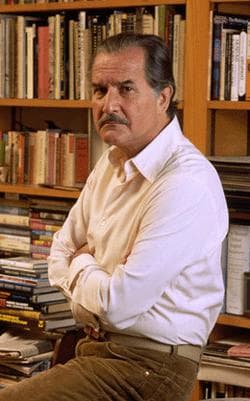
Carlos Fuentes Macías was a Mexican novelist and essayist. Among his works are The Death of Artemio Cruz (1962), Aura (1962), Terra Nostra (1975), The Old Gringo (1985) and Christopher Unborn (1987). In his obituary, The New York Times described Fuentes as "one of the most admired writers in the Spanish-speaking world" and an important influence on the Latin American Boom, the "explosion of Latin American literature in the 1960s and '70s", while The Guardian called him "Mexico's most celebrated novelist". His many literary honors include the Miguel de Cervantes Prize as well as Mexico's highest award, the Belisario Domínguez Medal of Honor (1999). He was often named as a likely candidate for the Nobel Prize in Literature, though he never won. His parents were both Mexicans.







