“The future is a dead zone. A place where nothing will grow.”
— Johnny Smith's chilling realization about his prophetic visions.

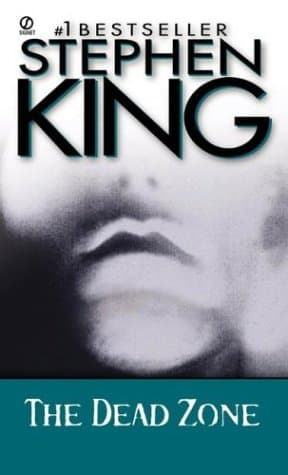
Stephen King (1979)
Genre
Thriller / Fantasy / Mystery / Science Fiction
Reading Time
10-12 hours
Key Themes
See below
Sign in to track this book
A man awakens from a coma with the psychic ability to foresee the future, forcing him to decide whether to assassinate a presidential candidate to prevent an apocalypse.
In 1970, Johnny Smith, a high school teacher in Pownal, Maine, is in love with his colleague, Sarah Bracknell. After a night at a carnival where he wins big, Johnny drives Sarah home. On the way back to his own house, an incident with a deer causes him to swerve, leading to a car accident. Johnny sustains a severe head injury and falls into a deep coma. Sarah visits him frequently, but as months turn into years, she moves on, marrying Walt Hazlett and starting a family.
Four and a half years later, in 1975, Johnny awakens from his coma. He finds his body is weak, and his life has changed: Sarah is married with a child, and his mother has become very religious. More surprisingly, Johnny begins to experience vivid visions when he touches people or objects. His doctor, Sam Weizak, dismisses these as hallucinations, but Johnny quickly realizes they are glimpses into the past or future. His first clear vision is of Sam's deceased mother, revealing a hidden detail that convinces Sam of Johnny's new ability.
As Johnny tries to adapt to his new life and his 'gift,' he moves to Castle Rock, Maine. The town is afraid because of a serial killer known as the 'Castle Rock Strangler.' Sheriff George Bannerman, initially doubtful, asks for Johnny's help after many dead ends. Johnny touches a victim's scarf and experiences a vision that leads him to a local deputy, Frank Dodd. Dodd, a seemingly good citizen, is shown through Johnny's visions to be the killer. Dodd is cornered and commits suicide, leaving a note confessing his crimes. The experience leaves Johnny emotionally tired and publicly known.
After the Castle Rock incident, Johnny tries to live a quiet life, working as a tutor. During a political rally in New Hampshire, Johnny, encouraged by a friend, shakes the hand of Greg Stillson, a charismatic but volatile congressional candidate. Upon contact, Johnny is overwhelmed by a vision: Stillson, as President, orders a pre-emptive nuclear strike, starting global thermonuclear war. The vision is so vivid that Johnny recoils, realizing the danger Stillson poses to the world. He keeps this vision a secret, dealing with its implications.
Haunted by the vision of Stillson's presidency and the apocalypse, Johnny becomes focused on preventing this future. He discusses the ethical problem with Reverend Purdy, his former high school principal, and even with Sam Weizak, using the idea of killing Hitler as a child to prevent the Holocaust. Both advise caution, stressing the moral difficulties of such an act and the unknown results of altering destiny. Johnny, however, feels a sense of responsibility, believing his gift is meant to avert this specific catastrophe. His health also begins to get worse, a consequence of his powers.
Johnny's visions become more frequent and weakening, causing severe headaches and blackouts. He moves to a secluded cabin, trying to withdraw from society and the demands of his 'gift.' His relationship with Sarah, though platonic, remains a source of comfort and pain. He experiences another tragic vision concerning a student he tutors, revealing that the boy will die in a house fire, which Johnny cannot prevent. This event reinforces his belief that some futures are fixed, but the Stillson vision remains a unique, active threat, pushing him towards a drastic solution.
Convinced that Stillson's presidency will lead to global destruction, Johnny decides to assassinate him. He plans his attack, getting a rifle and researching Stillson's public appearances. He chooses a political rally at a high school gymnasium in Ridgeway, Maine, where Stillson is scheduled to speak. Johnny intends to shoot Stillson from the catwalks above the stage, believing this is the only way to save humanity. He writes letters to Sarah and his father, explaining his motives and expressing his love, fully aware of the consequences.
At the rally, Johnny positions himself on the catwalk. As Stillson begins his speech, Johnny aims. However, Stillson uses a child as a human shield, grabbing the boy and holding him in front of himself. Johnny hesitates, unable to shoot an innocent child. He fires two shots, missing Stillson but hitting a light fixture, causing it to crash down and create a panic. In the chaos, Stillson shoves the child away, clearly more concerned for his own safety and showing his true, uncaring character to the horrified crowd and news photographers. Johnny is then shot multiple times by Stillson's bodyguards.
Mortally wounded, Johnny collapses. Before he dies, he has one final vision: Stillson's political career is destroyed by the widely circulated photographs of him using a child as a shield. The public outrage and media scrutiny lead to Stillson's political ruin. Johnny dies knowing he has prevented the nuclear war. Sarah, who was at the rally, rushes to his side, holding him as he passes away. His sacrifice, though tragic, saves the world by exposing the true nature of a dangerous man.
The Protagonist
From an ordinary man, Johnny transforms into a reluctant prophet, burdened by his gift and ultimately sacrificing himself to prevent global catastrophe.
The Supporting
Sarah moves from a heartbroken fiancée to a supportive friend, finding her own happiness while remaining connected to Johnny.
The Antagonist
Stillson rises from a local politician to a national threat, only to be exposed and fall from grace due to his own depravity.
The Supporting
Sam evolves from a skeptical doctor to a trusted friend and believer in Johnny's unique abilities.
The Supporting
Bannerman moves from a skeptical lawman to a grudging acceptor of Johnny's powers after witnessing their effectiveness.
The Antagonist
Dodd is revealed as a serial killer and meets his end, exposing the hidden evil within the community.
The Supporting
Vera's character remains largely static, entrenched in her religious fervor, which further isolates Johnny.
The Supporting
Herb remains a consistent, supportive figure for Johnny, providing quiet strength.
The Supporting
Walt provides stability for Sarah and her family, accepting Johnny's presence in their lives.
The Supporting
Purdy serves as a moral guide for Johnny, offering counsel on the ethical complexities of his precognition.
The central theme of the novel is whether Johnny can change the future he foresees, or if events are predetermined. Johnny deals with the moral problem of his precognitive abilities: is he an observer, or is he meant to intervene? This is most clear in his struggle with the Stillson vision, where he considers assassinating a man to prevent a global catastrophe. The book explores the ethical difficulties of altering destiny, questioning whether such intervention is right, and if trying to change fate might itself be part of a larger, unavoidable plan. His inability to prevent the house fire tragedy, compared with his success in stopping Stillson, shows the nuanced nature of this theme.
“What if you saw a future that was terrible, a future in which a madman became President and started a nuclear war? What if you knew you could stop it? Wouldn't you have to?”
Johnny's 'gift' is shown less as a blessing and more as a curse. His precognitive abilities bring him suffering, isolation, and physical deterioration. He sees bad events, both personal and global, and often feels powerless to prevent them, or is forced to make difficult moral choices. The knowledge he possesses separates him from ordinary life and relationships, making him a reluctant prophet. This theme is clear in his despair over the house fire and his emotional and physical toll after exposing Frank Dodd and confronting Stillson.
“The dead zone. That was what he had come to call it. That place where the future was not fixed, where it could be changed. But the price of seeing that zone was terrible.”
The novel presents a clear difference between good and evil, shown by Johnny Smith and Greg Stillson. Johnny, despite his flaws and the weight of his burden, tries to do what is right, even at great personal cost. Stillson, on the other hand, shows pure, self-serving malice and a capacity for destruction. The struggle between them is not just political or personal, but a battle for the fate of humanity. The exposure of Frank Dodd also shows this theme, revealing hidden evil within a community.
“He saw a dark and terrible future, a future that could not be allowed to happen. And he knew, with a terrible certainty, that he was the only one who could stop it.”
Johnny's ultimate act is one of self-sacrifice. He knowingly puts his life on the line to prevent Stillson from becoming President and starting a nuclear war. His death, though tragic, is presented as an act that saves countless lives and the world. This theme is woven throughout his journey, as he sacrifices his normal life, his relationships, and his health for the greater good. His final moments, witnessing Stillson's downfall, provide a sense of purpose and closure to his tormented existence.
“He had done it. He had saved them. He had saved the world. And the price… the price was his life.”
The novel explores different forms of power: Johnny's psychic ability, Stillson's political charisma, and the power of the media. Johnny's power is involuntary and destructive to him, yet it allows him to uncover hidden truths and avert disaster. Stillson uses political power, manipulating crowds and rising through the ranks, showing how easily charisma can hide malice. Ultimately, the power of the press, capturing Stillson's act of using a child as a shield, destroys his political career, illustrating the power of public perception and accountability over even the most cunning demagogue.
“The gift. The curse. It was a power, and like all power, it had its price.”
Johnny's ability to see the past and future through touch.
This is the central plot device, driving the entire narrative. Johnny's 'gift' allows him to experience vivid, often terrifying, visions of past or future events by touching people or objects. These visions are crucial for advancing the plot, from solving the Castle Rock Strangler case to revealing Greg Stillson's apocalyptic future. The device creates suspense, moral dilemmas, and defines Johnny's character arc, transforming him from an ordinary man into a burdened prophet. It also acts as a catalyst for his isolation and physical decline.
The metaphorical and literal space where the future is uncertain or can be changed.
The 'Dead Zone' refers to the part of Johnny's brain that was damaged in the accident, but metaphorically, it represents the unpredictable areas of the future. It's the space where his visions are not fixed and can potentially be altered, particularly in the case of Greg Stillson. This concept introduces the element of free will versus determinism, as Johnny grapples with whether he can or should intervene in the future he perceives. It's a crucial element in establishing the moral stakes of his actions.
A recurring symbol representing fate, chance, and the turning points in Johnny's life.
The wheel of fortune Johnny wins big on just before his accident serves as a powerful symbol. It represents the arbitrary nature of fate and the sudden, unpredictable turns life can take. His 'win' on the wheel leads directly to his accident, coma, and the acquisition of his powers, ironically ushering in a life of suffering rather than fortune. The symbol underscores the theme of fate, suggesting that some events, like his accident and subsequent 'gift,' were predetermined, while others, like Stillson's rise, might be subject to change.
A crucial visual element that exposes Stillson's true nature and leads to his downfall.
The photograph of Greg Stillson using a child as a human shield during Johnny's assassination attempt is a pivotal plot device. It serves as irrefutable proof of Stillson's depravity and callousness, instantly destroying his carefully crafted public image. This visual evidence, captured by the media, becomes the instrument of Stillson's political ruin, effectively preventing the nuclear apocalypse Johnny foresaw. It highlights the power of media and public opinion in shaping destiny, and serves as the ultimate justification for Johnny's sacrifice.
“The future is a dead zone. A place where nothing will grow.”
— Johnny Smith's chilling realization about his prophetic visions.
“God's a comedian, honey, and he's got a show running twenty-four hours a day, seven days a week.”
— Sarah Bracknell's cynical observation about life's ironies.
“The world was a much more dangerous place than he had ever imagined, and much more wonderful.”
— Johnny's expanded perception after waking from his coma.
“You can't fight fate, Johnny. You can only meet it.”
— A recurring theme about the inevitability of destiny.
“The past is a ghost, the future a dream, and all we ever have is now.”
— A philosophical reflection on time and existence.
“Sometimes the things you can't change end up changing you.”
— Johnny's experience of how his powers altered his life.
“He knew, with a certainty that was both chilling and comforting, that he had to do it.”
— Johnny's resolve to assassinate Greg Stillson.
“A man who would let himself be led by a ghost is a man who has already lost his way.”
— A warning about being consumed by past events or visions.
“The dead zone was the place where the future had been murdered.”
— Johnny's profound understanding of the implications of his visions.
“No one ever really knows what's in another person's heart.”
— A reflection on the hidden depths of human nature.
“Power corrupts, and absolute power corrupts absolutely.”
— A classic adage applied to Greg Stillson's political ascent.
“There are no accidents. There is only destiny.”
— A fatalistic view on the sequence of events in life.
“He was a man who saw too much, and because of it, he had to do too much.”
— Johnny's burden of knowledge and the resulting moral imperative.
Ready to see how well you understood this book? Take our interactive quiz with 10 questions.
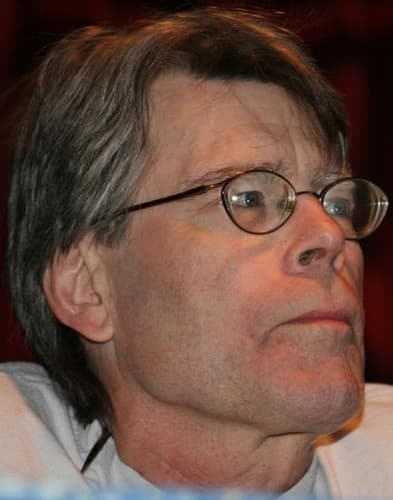
Stephen Edwin King is an American author of horror, supernatural fiction, suspense, crime, science-fiction, and fantasy novels. Described as the "King of Horror", his books have sold more than 350 million copies as of 2006, and many have been adapted into films, television series, miniseries, and comic books. King has published over 65 novels/novellas, including seven under the pen name Richard Bachman, and five non-fiction books. He has also written approximately 200 short stories, most of which have been published in book collections.







