“There are some things you can't undo, no matter how much you wish you could.”
— Rosie reflecting on past events and their irreversible consequences.

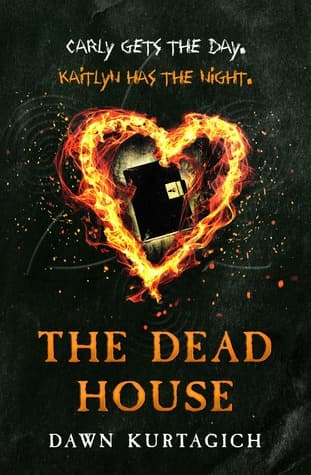
Dawn Kurtagich (2015)
Genre
Thriller / Fantasy / Mystery / Young Adult
Reading Time
450 min
Key Themes
See below
Sign in to track this book
A chilling diary found in the ashes of a burned-down high school unravels the mystery of a missing girl and her twin sister who never existed, blurring the lines between reality, delusion, and a sinister past.
Twenty-five years after the fire at Elmbridge High School, which killed three people and left student Carly Johnson missing, a discovery reopens the cold case. A diary, seemingly belonging to Kaitlyn Johnson, is found in the charred remains of the school. This discovery is puzzling, as Carly Johnson was officially known to be an only child. The diary entries, written in a distinctive voice, hint at a secret life and a shared existence, suggesting that Kaitlyn was Carly's identical twin, a fact never before acknowledged by authorities or Carly's family. This finding sets the stage for a re-examination of 'the Johnson Incident,' challenging the established narrative and raising questions about identity, memory, and the supernatural.
The narrative quickly establishes Carly and Kaitlyn Johnson, identical twins whose lives are intertwined in an unsettling way. Through Kaitlyn's diary entries, supplemented by psychiatric reports and police transcripts, readers learn that Kaitlyn is a mysterious figure who appears mostly at night or when Carly is in distress. Carly often dismisses Kaitlyn's existence or attributes her behavior to a psychological condition, adding to the ambiguity surrounding Kaitlyn's reality. Their mother, Mrs. Johnson, seems aware of Kaitlyn but struggles to cope, often medicating Carly. The twins' relationship is marked by dependency, jealousy, and a shared history of trauma, which begins to unfold through the fragmented evidence presented.
Elmbridge High School is a troubled institution, far from a typical learning environment. The school has severe bullying, especially targeting Carly, and becomes a breeding ground for dark, illicit rituals involving a group of students led by the charismatic and manipulative 'King' – David Miller. These rituals, often described in Kaitlyn's diary, involve the occult and a fascination with death, creating a sinister atmosphere. The isolation felt by the Johnson twins is worsened by this hostile environment, pushing them further into their own world and making them targets for the malevolent forces at play within the school. Teachers and staff seem largely unaware or complicit, failing to provide a safe space for the students.
Kaitlyn's diary entries increasingly describe a terrifying entity she calls the 'Shadow Man.' This figure appears to her in moments of vulnerability, whispering dark suggestions and exerting a malevolent influence. The 'Shadow Man' is a source of immense fear and a catalyst for some of Kaitlyn's more disturbing actions. The narrative cleverly leaves the reader questioning whether this entity is a genuine supernatural presence, a manifestation of Kaitlyn's deteriorating mental state, or a symbolic representation of the abuse and manipulation she endures. This ambiguity is central to the novel's psychological horror, as the 'Shadow Man' becomes a recurring motif, intensifying the dread and confusion surrounding the events at Elmbridge High.
As the school year progresses, the illicit rituals orchestrated by David Miller and his followers escalate in frequency and severity. These rituals, often involving a secluded part of the school grounds or the abandoned 'dead house' nearby, begin to focus more on the Johnson twins, particularly Carly. The bullying she experiences from her peers becomes more targeted and cruel, often with a psychological dimension. Kaitlyn's diary entries detail the twins' growing involvement with these dark practices, hinting at forced participation and a loss of agency. The lines between victim and accomplice begin to blur as the twins are drawn deeper into the cult-like atmosphere, making their escape seem increasingly impossible.
The main mystery of the novel is Carly Johnson's disappearance during the Elmbridge High fire. The fragmented evidence—police reports, witness statements, and Kaitlyn's diary—offers conflicting accounts of that night. While the official record states Carly vanished, Kaitlyn's entries suggest a more complex scenario, hinting at a deliberate act or a tragic accident intertwined with the rituals. The narrative meticulously pieces together the hours before the fire, revealing the heightened tensions, the culmination of the bullying, and the final, desperate ritual that took place. The question of whether Carly was a victim, a participant, or somehow transformed, remains at the forefront, driving the unfolding mystery.
The night of the Elmbridge High fire is the terrifying culmination of all the preceding events. The fire itself is a chaotic and destructive force, consuming the school and taking lives. The narrative pieces together various accounts: fire department reports, police interviews with survivors, and Kaitlyn's frantic diary entries. These documents reveal the desperate attempts to escape, the confusion, and the tragic loss of life, including David Miller and two other students. Crucially, Carly Johnson is never found in the wreckage, leading to her official designation as 'missing.' The fire effectively erases much of the physical evidence, leaving investigators and readers alike to grapple with the conflicting testimonies and the lingering sense of a truth deliberately obscured.
After the fire, the police investigation struggles to piece together the truth, hampered by conflicting testimonies, destroyed evidence, and the unusual nature of the events. The narrative suggests incompetence or even a deliberate cover-up by authorities, particularly concerning the strange details surrounding the Johnson twins and the occult rituals. Psychiatric reports on Carly are dismissed or misinterpreted, and Kaitlyn's existence is largely ignored or attributed to Carly's mental illness. The official conclusion is unsatisfying, leaving the fates of Carly and Kaitlyn unresolved, contributing to the enduring mystery and the sense that justice was never fully served for the victims of Elmbridge High.
Despite the official narrative downplaying or denying Kaitlyn's existence, her presence continues to permeate the story even after the fire. The discovery of her diary decades later is proof of her material, if not physical, impact. Furthermore, fragmented accounts and psychological analyses hint at a deep-seated connection between the twins that transcends conventional understanding. The book subtly suggests that Kaitlyn may not have been merely a delusion or an alter ego, but a distinct entity, perhaps even a supernatural one, whose fate is inextricably linked to Carly's. This lingering presence reinforces the novel's exploration of identity, memory, and the blurred lines between reality and the supernatural.
As the various documents are cross-referenced and analyzed, the horrifying truth behind 'the Johnson Incident' slowly emerges. It becomes clear that Carly and Kaitlyn were not just victims of bullying but were deeply involved in the occult rituals at Elmbridge High, particularly those orchestrated by David Miller, who sought to exploit their unique bond. The fire was not merely an accident but a chaotic event connected to a final, desperate ritual. The central revelation is that Carly, in an act of psychological or even supernatural transformation, merged with or became Kaitlyn, or vice-versa, as a means of survival or escape from the horrors of Elmbridge. The diary is proof of this merging and the complex identity that emerged from the ashes.
The Protagonist
Carly's arc moves from a bullied, withdrawn individual to a figure whose identity merges with her twin, suggesting a profound transformation or transcendence of her original self.
The Protagonist/Mysterious Figure
Kaitlyn's arc is less about personal growth and more about the revelation of her true nature and her ultimate role in Carly's fate, culminating in a merging of identities.
The Supporting
Her arc reveals the depth of her denial and the tragic consequences of her inability to fully confront the reality of her daughters' situation.
The Antagonist
His arc culminates in his death during the Elmbridge fire, a consequence of his own dangerous manipulations.
The Antagonist/Supernatural Entity
The Shadow Man's arc is less about development and more about the gradual revelation of his pervasive, destructive influence on Kaitlyn and the events leading to the fire.
The Supporting
His arc is presented retrospectively, highlighting the initial investigation's blind spots and the truth that eluded him.
The Supporting
Her arc is presented through her professional reports, showcasing the medical community's attempts to understand the twins' complex psychology.
The Supporting/Mentioned
Their collective actions contribute to the setting and conflict, serving as a backdrop to the central tragedy.
The novel explores the fluid and fragmented nature of identity, particularly through the lens of the Johnson twins. The central question of whether Carly and Kaitlyn are two distinct individuals, an alter ego, or a merged entity challenges conventional understandings of self. Kaitlyn's diary entries often blur the lines, with 'we' and 'I' interchanging, reflecting a shared consciousness. This theme is portrayed in scenes where Carly's actions are attributed to Kaitlyn or vice-versa, suggesting a single, complex identity struggling to manifest. The ultimate merging or transformation at the end of the narrative shows that identity can be forged through trauma and survival, becoming something entirely new and undefinable.
“We are two halves of a terrible whole. One cannot exist without the other, not truly.”
A core tension in the narrative is the ambiguity between genuine supernatural phenomena and severe psychological illness. The 'Shadow Man' could be a demonic entity or a manifestation of Kaitlyn's psychosis. The occult rituals might be genuinely powerful or merely a vehicle for manipulation and group hysteria. Psychiatric reports consistently diagnose Carly with mental health issues, while Kaitlyn's diary insists on the reality of the supernatural. This ambiguity forces the reader to constantly question what is real, what is imagined, and whether the two can even be separated when dealing with profound trauma. The novel never fully resolves this, leaving the unsettling feeling that both explanations might be true.
“They say I'm mad. They say we're mad. But the darkness is real. I feel it, breathing.”
The devastating impact of abuse and bullying is a pervasive theme, particularly on the vulnerable Johnson twins. Carly is relentlessly targeted by her peers, leading to her profound isolation and reliance on Kaitlyn. The occult rituals, orchestrated by David Miller, are a form of psychological manipulation and abuse, trapping the twins in a cycle of fear and exploitation. The school environment itself is depicted as failing to protect its students, contributing to the twins' sense of being utterly alone against malevolent forces. This theme highlights how neglect and cruelty can create a fertile ground for further darkness, pushing individuals to extreme measures for survival.
“They pick at her, like crows at a wound. And I, I watch, and I plot.”
The novel's structure, composed of fragmented documents, emphasizes the unreliable and subjective nature of memory and the elusive quest for truth. Police reports, witness testimonies, and psychiatric evaluations offer differing perspectives, often contradicting each other or overlooking crucial details. Kaitlyn's diary, while intimate, is also filtered through her unique and potentially disturbed perception. The passage of 25 years further distorts memories. The reader is tasked with piecing together the 'truth' from these disparate sources, highlighting how history can be rewritten, forgotten, or deliberately obscured, and that a single, objective truth may not even exist.
“The past is not a straight line, but a shattered mirror, reflecting a thousand different truths.”
The story is told through a collection of fragmented documents.
The novel employs an epistolary format, presenting the story through a dossier of police reports, psychiatric evaluations, fire department records, witness statements, and, most crucially, Kaitlyn Johnson's diary entries. This fragmented structure mirrors the broken memories and conflicting accounts surrounding the Elmbridge High fire. It creates a sense of realism, as if the reader is an investigator piecing together a cold case, and allows for multiple, often unreliable, perspectives on the events. This device also heightens suspense and ambiguity, as no single narrator provides a complete or definitive truth, forcing the reader to actively participate in constructing the narrative.
Kaitlyn Johnson's diary entries are subjective and potentially influenced by mental illness or supernatural forces.
Kaitlyn Johnson serves as a primary unreliable narrator. Her diary entries are vivid and emotionally charged, but her perception of reality is constantly in question. She describes supernatural encounters with the 'Shadow Man' and experiences that could be interpreted as delusions or dissociative episodes. This unreliability is central to the novel's mystery, as the reader must constantly weigh whether Kaitlyn's accounts are literal truths, symbolic representations, or manifestations of a disturbed mind. This device fosters psychological tension and keeps the reader guessing about the true nature of the events at Elmbridge High and the twins' shared identity.
An abandoned, dilapidated house near the school serves as a focal point for dark rituals.
The 'Dead House' is a significant setting and a powerful symbol within the novel. It is an abandoned, dilapidated house located near Elmbridge High School, which becomes the primary site for the occult rituals conducted by David Miller and his followers. Its decaying state and isolated location contribute to the eerie atmosphere of the story. The house acts as a crucible for the dark forces at play, a place where the boundaries between the living and the dead, and reality and the supernatural, become dangerously thin. Its very presence amplifies the sense of dread and foreshadows the tragic events that unfold at the school.
The identical twin sisters, Carly and Kaitlyn, form the core of the novel's mystery and psychological depth.
The motif of identical twins, Carly and Kaitlyn, is central to the novel's exploration of identity, self, and the supernatural. Their shared appearance but distinct personalities, and the ambiguity surrounding Kaitlyn's very existence, drive the main conflict. The twin motif allows for a deep dive into themes of codependency, protective instincts, and the blurring of individual boundaries. It also serves as a vehicle for the supernatural elements, hinting at a connection that transcends normal human understanding, potentially enabling a merging of consciousness or a shared vulnerability to malevolent forces. This device creates a constant tension between individuality and a shared, complex identity.
“There are some things you can't undo, no matter how much you wish you could.”
— Rosie reflecting on past events and their irreversible consequences.
“The house was a living thing, breathing in the darkness, waiting.”
— Rosie's initial impression of the sinister atmosphere of the house.
“We are all broken, some just show it more than others.”
— A character's observation on the hidden struggles people face.
“Memories are not always reliable. Sometimes they lie.”
— Rosie questioning the accuracy of her own recollections.
“Fear has a smell, and it was thick in the air.”
— The palpable sense of dread within the house.
“The truth is a dangerous thing, especially when you don't want to hear it.”
— A character's reluctance to confront a harsh reality.
“Some secrets are better left buried.”
— A warning about the potential repercussions of uncovering hidden truths.
“The past isn't dead. It isn't even past.”
— Rosie realizing the lingering influence of past events on the present.
“Madness is a relative term, isn't it? What's sane to one might be utterly insane to another.”
— A character's philosophical musing on the nature of sanity.
“Sometimes the monster isn't under your bed. Sometimes it's inside you.”
— Rosie's internal struggle with her own darker impulses or hidden truths.
“The silence was heavier than any sound.”
— The oppressive quiet within the house, adding to the tension.
“We build our own cages, sometimes, without even realizing it.”
— A character reflecting on self-imposed limitations or situations.
“There are ghosts, and then there are echoes. And sometimes, the echoes are louder.”
— Rosie distinguishing between literal hauntings and the lingering effects of past events.
“What you don't know can hurt you, but what you do know can hurt you even more.”
— The dilemma of ignorance versus painful knowledge.
Ready to see how well you understood this book? Take our interactive quiz with 10 questions.

Dawn Kurtagich is a British author known for her gripping young adult horror novels. Her debut, "The Dead House," garnered critical acclaim for its unsettling atmosphere and clever narrative structure. Kurtagich's work often explores themes of psychological horror and the darker aspects of human nature, drawing readers into suspenseful and thought-provoking stories.







