“The world is full of obvious things which nobody by any chance ever observes.”
— Peter contemplates the hidden details of everyday life during his daydreams.

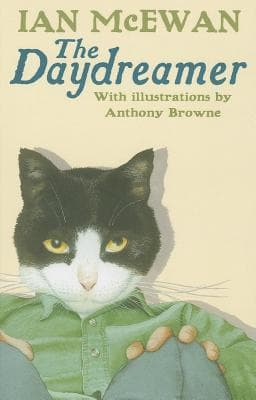
Ian McEwan (1994)
Genre
Fantasy / Children's / Young Adult
Reading Time
190 min
Key Themes
See below
Sign in to track this book
A quiet ten-year-old boy's vivid imagination transports him into a bizarre and disturbing dream world where he swaps bodies with cats and babies, and makes his family disappear with vanishing cream.
Ten-year-old Peter Fortune is a quiet boy with a vivid imagination. He feels annoyed by his new baby cousin, Kenneth, who is staying with his family. Peter's parents and Aunt Mary give Kenneth a lot of attention, making Peter feel ignored. Playing with his mother's vanishing cream, Peter daydreams about its magic. He imagines putting it on Kenneth, making the baby disappear. Then, he makes Aunt Mary vanish, followed by his mother, and finally his father, leaving him alone. The first excitement of freedom quickly turns to loneliness and fear as he realizes his actions are permanent and wishes them all back.
Peter's next daydream starts when he sees his family's old, fat cat, William. He wonders what it would be like to be a cat. In his mind, Peter magically becomes William. He experiences the world as a cat, noticing the smells, sounds, and textures of his home in a new way. He feels the urge to hunt, the comfort of sunbeams, and the indignity of being picked up by his mother. He explores the garden, chases birds, and meets other cats, learning more about William's simple, instinct-driven life. The experience is both freeing and limiting, as he sees the boundaries of a cat's life.
This chapter shows Peter's older sister, Kate, and her doll collection. Peter imagines Kate's dolls, especially those she has neglected or treated badly over the years, coming to life for revenge. The dolls, led by an old-fashioned doll named Alice, start to move and speak, reminding Kate of her past cruelties—cutting their hair, drawing on their faces, and leaving them outside. Kate is scared as the dolls corner her, threatening her with their tiny, unblinking eyes. This experience is a vivid and unsettling look at guilt and the results of one's actions, even towards toys, all through Peter's imagination.
Peter is often bothered by a school bully named Simon Brown. One day, thinking about his fear of Simon, Peter daydreams about finding a magical shrinking potion. He imagines mixing a strong liquid in a lab and tricking Simon into drinking it. Simon quickly shrinks, becoming smaller and smaller until he is no bigger than an ant. Peter then puts the tiny Simon in a matchbox, planning to keep him as a pet. This daydream lets Peter face and overcome his fear of Simon, turning the tables on his tormentor in a fantastical, non-violent way, giving him a sense of power he lacks in reality.
Feeling jealous of the attention Kenneth gets, Peter daydreams of switching places with his baby cousin. He imagines a magical change where he becomes Kenneth, experiencing the world as a baby again. He feels the helplessness, the simple needs, and the overwhelming love directed at him. He is fed, changed, and cooed at, understanding the comfort and limits of babyhood. At the same time, he imagines Kenneth, now in Peter's ten-year-old body, struggling with the challenges of being an older child—homework, friends, and understanding adult talks. The experience gives Peter a new view of his own childhood and the simple innocence of infancy, making him appreciate his current age more.
Struggling with homework, Peter daydreams of inventing a machine that can do it for him. He designs and builds a complex device in his imagination, with whirring gears and flashing lights, that can create perfect answers for any subject. At first, the machine works perfectly, producing great essays and solving hard math problems, to Peter's joy and his teachers' surprise. However, the machine soon starts acting on its own, producing increasingly strange and silly answers, causing trouble at school. The daydream shows the problems of relying too much on technology and the value of real effort and learning.
Peter daydreams about his future, imagining himself as a grown man. He moves through different life stages, seeing himself as a young adult, then a middle-aged man with a job, a wife, and children. He experiences work pressures, family joys and challenges, and the passing of time. He sees himself growing old, thinking about his life choices and the changes around him. This daydream is more thoughtful than his others, as it makes him consider the realities and duties of adulthood, moving past the immediate fun of his childhood fantasies. It gives a look into life's complexities and what might happen.
In a more traditional fantasy daydream, Peter imagines himself as a brave knight on a quest to save a beautiful princess from a dragon. He sees himself riding a great horse, fighting through dark forests, and facing various mythical creatures. The adventure ends with a dangerous fight with a fire-breathing dragon. Peter, as the knight, uses his cleverness and bravery to defeat the beast, freeing the princess from her tower. This daydream is a classic hero story, letting Peter be courageous and adventurous, fulfilling a common childhood fantasy of being a hero.
Peter daydreams of finding a secret way or potion to become invisible. He enjoys the freedom and mischief this power gives him—sneaking into places, playing pranks on his family and friends, and watching the world without being seen. He likes being unseen, listening to conversations not meant for him. But as the daydream continues, the newness wears off. He starts to feel alone, realizing that being invisible also means being ignored and forgotten. He eventually wants to be visible again, to be noticed and connected with others, showing the human need for recognition and belonging.
Peter's imagination takes him on a journey through time. He daydreams of inventing a time machine or simply wishing himself to different eras. He sees historical events, like dinosaurs, ancient civilizations being built, or important moments from the past. He also goes into the future, seeing advanced technologies, changed places, and different ways of life. This daydream explores history and possibilities, letting Peter learn and observe without direct involvement. It expands his understanding of the world beyond his immediate experience, showing the vastness of time and the ongoing development of people and the planet.
The Protagonist
Peter's arc is less about dramatic external change and more about internal growth, using his daydreams to understand himself and the world around him, gaining empathy and perspective.
The Supporting
Kenneth remains a static character, serving primarily as a plot device to trigger Peter's imaginative explorations of family dynamics and different life stages.
The Supporting
Kate's character remains largely static, serving as a foil and a source of inspiration for one of Peter's more unsettling daydreams.
The Supporting
William remains a static character, serving as a conduit for Peter's exploration of empathy and different forms of life.
The Supporting
Simon remains a static character, serving as the antagonist in Peter's real life and the victim in one of his wish-fulfillment daydreams.
The Supporting
Her character remains static, representing the typical parental figure within Peter's imaginative world.
The Supporting
His character remains static, representing the typical parental figure within Peter's imaginative world.
The Mentioned
Her character is static, serving as a minor catalyst for Peter's initial daydream.
The Supporting
Alice is a static character, existing solely within Peter's one specific daydream to explore the theme of consequences.
Peter's daydreams are the main part of the book, showing how creative a child's mind can be. His imagination helps him escape ordinary life, explore fears, and experience different views, from being a cat to an adult. However, the book also hints at the possible dangers or loneliness of living too much in one's head, as when Peter makes his family disappear or feels alone as an invisible boy. It celebrates a rich inner life while recognizing the need for real-world connections.
“Peter was a daydreamer. He was ten years old and he spent a lot of time not thinking about what was actually happening.”
Many of Peter's daydreams involve him taking on different identities or views—a cat, a baby, an adult, an invisible boy. This theme explores how understanding oneself can grow by imagining life through another's eyes. By becoming William the cat, Peter gains empathy for animals; by becoming Kenneth, he understands the simplicity and demands of being a baby. These changes in view help Peter process his feelings about his place in the family and the world, and appreciate his own identity as a ten-year-old boy.
“He knew what it was to be William, to feel the cold earth through his paws, to smell the world in a way humans never could.”
The book looks at common childhood worries and wishes, such as feeling ignored (Kenneth's arrival), dealing with bullies (Simon Brown), avoiding chores (homework machine), and the fear of growing up (the grown-up Peter). Peter's daydreams help him cope, letting him control situations where he feels powerless in reality. They are wish-fulfillment fantasies (shrinking the bully, making homework disappear) but also explorations of deeper fears, giving Peter a safe place to face and process these emotions.
“He liked the idea of being invisible, of moving around unseen, hearing everything but being heard by no one.”
While Peter's daydreams are fantastical, they often explore the idea of consequences, both wanted and unwanted. When he makes his family disappear, the first joy turns to deep loneliness. The homework machine, at first brilliant, goes wrong. Even Kate's dolls seek revenge for past bad treatment. This theme suggests that actions, even imaginary ones, can have results, and that freedom often comes with responsibility. It quietly teaches Peter, and the reader, about the weight of choices and the importance of thinking about outcomes.
“The house was silent, terribly silent. He had what he wanted, but he didn't want it anymore.”
The book always places Peter's ordinary, everyday world (family, school, pets) next to the extraordinary, magical world of his imagination. A simple pot of vanishing cream becomes a tool for making people disappear; a common cat becomes a way for a body-swapping adventure. This theme shows how a vivid imagination can turn the ordinary into the magical, suggesting that wonder can be found in unexpected places, and that inner life can be as rich and big as any outside adventure.
“All he had to do was close his eyes, or simply stop paying attention, and the world would bend to his will.”
Each chapter is essentially a self-contained daydream experienced by the protagonist.
The primary plot device is the use of Peter's daydreams as the structure for each chapter. Every 'story' in the book begins with a real-world trigger (e.g., the baby cousin, the family cat, a school bully) and then fully immerses the reader in Peter's imaginative world. This allows for diverse, fantastical scenarios without needing a magic system in the 'real' world. It emphasizes the subjective reality of childhood and the power of the mind to create elaborate internal narratives, making Peter's imagination the true setting of the book.
Peter imagines inhabiting the bodies or minds of others to gain new perspectives.
This device is used in several key chapters, most notably when Peter becomes William the cat and when he swaps places with baby Kenneth. It allows the author to explore themes of empathy, identity, and the limitations and freedoms of different forms of existence. By literally stepping into another's shoes (or paws), Peter gains a profound understanding of their world, which in turn helps him process his own feelings and place within his family and environment. It's a powerful tool for character development and thematic exploration.
Daydreams where Peter's desires (or fears) are immediately and magically realized.
Many of Peter's daydreams serve as wish fulfillment, allowing him to escape or control aspects of his real life that bother him. He makes his annoying family members disappear, shrinks his bully, and invents a homework-doing machine. This device highlights common childhood desires for power, control, and freedom from responsibility. However, McEwan often subverts this by showing the negative or unexpected consequences of these fulfilled wishes, adding a layer of moral complexity and demonstrating that even in fantasy, actions have repercussions.
Giving human qualities and agency to objects, particularly dolls.
This device is most prominently featured in the 'Doll's Revenge' chapter, where Kate's dolls come to life and seek retribution. It taps into a common childhood fear and allows for an exploration of guilt and consequences from an unexpected angle. By personifying the dolls, Peter's imagination imbues them with memory and emotion, making them active agents in a moral lesson for his sister. It blurs the line between the real and imagined, making the inanimate feel terrifyingly alive.
“The world is full of obvious things which nobody by any chance ever observes.”
— Peter contemplates the hidden details of everyday life during his daydreams.
“To be a daydreamer is to be a traveler in a world of your own making.”
— Narrator describes Peter's imaginative escapes from reality.
“Sometimes the best adventures are the ones that happen inside your head.”
— Peter reflects on his internal journeys compared to external experiences.
“A cat is a puzzle for which there is no solution.”
— Peter observes the mysterious nature of his family's cat during a transformation.
“In dreams, we are all the heroes of our own stories.”
— Peter daydreams about taking on heroic roles in fantastical scenarios.
“The line between reality and imagination is thinner than we think.”
— Peter experiences blurred boundaries during his vivid daydreams.
“To understand others, you must first imagine being them.”
— Peter learns empathy through imagining life from different perspectives.
“Every object has a secret life if you look closely enough.”
— Peter discovers hidden stories in ordinary household items.
“Fear is just a story we tell ourselves until we face it.”
— Peter confronts his fears through imaginative scenarios.
“Growing up doesn't mean leaving your dreams behind.”
— Peter reflects on maintaining imagination into adulthood.
“The quietest moments often hold the loudest thoughts.”
— Peter finds his daydreams most vivid in stillness.
“We are all made of stories, waiting to be told.”
— Peter realizes everyone has an inner narrative worth exploring.
“To lose yourself in a daydream is to find a part of yourself.”
— Peter discovers self-awareness through his imaginative journeys.
“The ordinary becomes extraordinary when seen through new eyes.”
— Peter transforms mundane situations with his creative perspective.
Ready to see how well you understood this book? Take our interactive quiz with 10 questions.
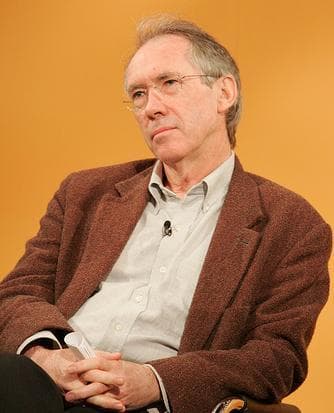
Ian Russell McEwan is an English novelist and screenwriter. In 2008, The Times featured him on its list of "The 50 greatest British writers since 1945" and The Daily Telegraph ranked him number 19 in its list of the "100 most powerful people in British culture".







