“There’s some things a man can’t run from, no matter how fast he rides.”
— Tyrel Sackett reflects on the inevitability of certain conflicts.

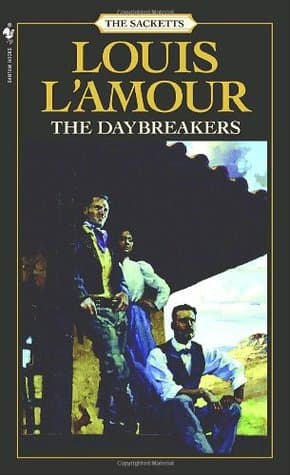
Louis L'Amour (1960)
Genre
Historical Fiction
Reading Time
240 min
Key Themes
See below
Sign in to track this book
Two brothers, one a reluctant lawman and the other a natural fighter, build a life in the untamed West, but their violent past catches up, threatening their dreams and forcing them to return to their instincts.
The story begins in the Tennessee mountains, introducing the Sackett brothers, Orrin and Tyrel. Orrin is more peaceful, while Tyrel, younger and faster, is quick to fight. Their lives change when Tyrel protects Orrin from a bullet, killing a man named Joe Webb. Knowing the Webb family's desire for revenge and the local law's likely bias, the brothers decide to leave home at once. They gather their few things and, with heavy hearts, begin their journey west, leaving their familiar life for an unknown future.
As Orrin and Tyrel head west, they face the harsh realities of frontier travel. They meet different people: experienced trappers, cautious settlers, and dangerous drifters. The brothers learn to rely on each other and improve their survival skills. Tyrel's quick draw and Orrin's steady judgment are very helpful in navigating dangerous lands and avoiding fights, though they remain watchful. Their journey includes long days of riding, small meals, and constant alertness against both natural dangers and human threats. This slowly turns them into tough frontiersmen.
Orrin and Tyrel arrive in Santa Fe, a busy but wild town on the Santa Fe Trail. The town is a mix of cultures—Mexicans, Americans, Native Americans—and a center for trade, gambling, and violence. There is little law, and arguments are often settled with a gun. The brothers immediately notice how different this bustling, dangerous settlement is from their quiet mountain home. They quickly understand that surviving here will require a different kind of watchfulness and a willingness to adapt to its unique, brutal rules.
Troubled by the widespread lawlessness in Santa Fe, Orrin Sackett feels he must bring order, despite his own past of avoiding violence. Important townspeople approach him, seeing his calm manner and inner strength. Orrin accepts the job of town marshal, a dangerous and often unrewarding role where respect is earned through force. He makes this choice because he wants to build a stable community, a stark contrast to the life of constant flight he and Tyrel have lived. Tyrel supports his brother, understanding Orrin's need to settle down and create a safer place.
While Orrin becomes marshal, Tyrel Sackett makes his own place in Santa Fe without official power. His reputation as a fast and accurate shot goes before him, earning him respect from the town's tough characters. Tyrel becomes a strong presence, often acting as an unofficial law enforcer, backing his brother when needed, but preferring to work outside the law. He finds work trading, always watching the town's changing power and ensuring Orrin's safety while keeping his own freedom.
Just as the Sackett brothers settle in Santa Fe, a dangerous shadow from their past appears. Tom Webb, a cousin of Joe Webb, the man Tyrel killed in Tennessee, arrives. He has relentlessly tracked the Sacketts, driven by a deep desire for revenge for his relative's death. Webb's presence immediately increases tension for Orrin and Tyrel, reminding them that their past can never truly be outrun. They know Webb will not rest until he has his revenge, forcing them to prepare for another deadly fight.
Tom Webb does not immediately confront the Sacketts. Instead, he tries to subtly weaken Orrin's authority and spread rumors to turn the town against them. He joins other bad characters in Santa Fe, creating opposition to Orrin's attempts at law and order. The tension in Santa Fe becomes clear, with everyone aware of the coming storm. Orrin, as marshal, finds his position increasingly challenged, while Tyrel remains watchful, knowing Webb's goal is to draw one or both of them into a fatal fight.
The inevitable fight between the Sacketts and Tom Webb finally happens. Webb, with a few hired gunmen, tries to ambush Orrin. However, Tyrel, expecting the move, steps in. A violent gunfight breaks out in the streets of Santa Fe. Tyrel's famous speed and accuracy are tested. Orrin, despite wanting peace, must defend himself and his brother. In the chaos, Webb and his men are defeated, with Tyrel finally killing Tom Webb, ending the old blood feud and securing their fragile peace in Santa Fe.
With Tom Webb and his allies defeated, a tense calm settles over Santa Fe. Orrin Sackett's authority as marshal is strong, as he has shown he can keep order even when personally in danger. The townspeople, seeing the Sacketts' courage and dedication, begin to truly respect and support Orrin's plan for a more lawful community. Tyrel, having again protected his brother, can finally start to let go of their past burden. The brothers, changed by their experiences, can now look forward to building a stable life in the West, their dreams of peace and success seemingly within reach.
The Protagonist
Orrin evolves from a reluctant participant in violence to a principled marshal who actively strives to build a lawful society.
The Protagonist
Tyrel learns to temper his impulsiveness and channel his formidable skills to support his brother's vision for a stable future.
The Antagonist
Webb's arc is one of escalating vengeance, culminating in his defeat.
The Mentioned
N/A (already deceased at story start).
The Supporting
They transition from wary and lawless to supportive of Orrin's efforts to establish order.
This theme looks at the human desire for law and stability in a wild place. Orrin Sackett, despite his past of running from violence, becomes marshal in Santa Fe. He is driven by a deep need to bring order to the lawless town. His efforts to set rules and create a safe community are a direct contrast to the 'might makes right' idea common on the frontier. The townspeople's slow acceptance of his authority, especially after the final fight with Tom Webb, shows a longing for civilization even in the wildest areas.
“A man's got to stand for something, or he'll fall for anything.”
The novel strongly emphasizes how past actions, especially violent ones, can follow people no matter how far or how long they run. The Sacketts' first flight from Tennessee is a direct result of Tyrel killing Joe Webb. This past returns when Tom Webb arrives in Santa Fe, forcing the brothers to face the very conflict they tried to escape. The theme shows that true escape is not just about physical distance, but about dealing with the results of one's history. Only after the final fight with Tom Webb can the Sacketts truly begin to build a future free from this specific burden.
“Some trails you make yourself, and some just follow you.”
The strong bond between Orrin and Tyrel Sackett is a main part of the story. Despite their different personalities – Orrin wanting peace versus Tyrel being ready for conflict – their loyalty to each other is complete. Tyrel always protects Orrin, stepping into dangerous situations for him, and Orrin supports Tyrel's freedom while trying to create a safe place for them both. This theme is clear from the start, when Tyrel saves Orrin's life, to the final fight where they battle side-by-side against Tom Webb, showing the strength of family ties in hard times.
“We ain't just brothers, Orrin. We're Sacketts.”
The story explores the different ways justice appears on the frontier. Orrin tries to establish formal, written justice as marshal, using badges and legal processes. In contrast, Tyrel often shows a more immediate, personal justice, where wrongs are corrected through direct action and gun skill. The conflict with Tom Webb also raises questions about revenge versus justice, and whether the violent pursuit of 'an eye for an eye' can ever truly bring peace. The story suggests that a mix of both formal law and individual bravery is needed to survive and succeed in the untamed West.
“Law ain't much good if it can't be backed by a man who believes in it.”
A long-standing conflict between families driven by revenge.
The blood feud between the Sackett and Webb families serves as the primary external conflict and a driving force for the plot. Initiated by Tyrel's killing of Joe Webb, it forces the brothers to flee their home and ultimately leads to Tom Webb's relentless pursuit. This device creates constant tension and reminds the protagonists that their past is inescapable, delaying their ability to settle down. It represents the brutal, personal justice often found on the frontier, where grievances are settled by violence across generations rather than by law.
A setting that embodies chaos and the need for order.
Santa Fe functions as a crucible for the Sackett brothers' transformation. Its lawless nature provides the perfect environment for Orrin to step into the role of marshal, fulfilling his desire to build a stable community. For Tyrel, it's a place where his skills are respected but also constantly tested. The town's chaos highlights the stark contrast between the brothers' ideals and the harsh reality of the West, creating opportunities for both conflict and character development as they strive to civilize it or find their place within its wildness.
A skill that symbolizes both danger and survival on the frontier.
Tyrel Sackett's legendary quick draw is more than just a skill; it's a symbol of survival, reputation, and the ultimate arbiter of justice in the lawless West. It establishes his character as formidable and dangerous, yet it also carries the burden of past violence. This device is crucial in several confrontations, particularly in the final showdown with Tom Webb, where Tyrel's speed and accuracy are the decisive factors. It represents the raw power and immediate consequences inherent in frontier life, where a fraction of a second can mean life or death.
“There’s some things a man can’t run from, no matter how fast he rides.”
— Tyrel Sackett reflects on the inevitability of certain conflicts.
“The wind was a lonely sound, the sound of all the empty places of the world.”
— Describing the vast, desolate landscape of the American West.
“A man learns to read the land, the sky, the tracks of a deer or a man, or he doesn't live long.”
— Tyrel's survivalist philosophy in the harsh frontier.
“They were men who had come to a new land, men who had left much behind, but had brought with them the old ways, the old grudges, and the old dreams.”
— Reflecting on the motivations and baggage of the early settlers.
“There was a time for talk and a time for action, and the time for talk was past.”
— When a situation escalates beyond negotiation.
“A man’s word was his bond out here, and a broken word could mean a broken life.”
— Highlighting the importance of honor and trust in the frontier.
“The West was a place where a man could make himself, or break himself, and there was little in between.”
— Describing the extreme opportunities and dangers of the West.
“He knew the feel of the wind on his face, the smell of dust and sage, the taste of fear and courage.”
— Tyrel's deep connection to the sensory experiences of his life.
“Justice out here wasn't always what they called justice back East, but it was often quicker, and sometimes, fairer.”
— Contrasting frontier law with established legal systems.
“The past was like a shadow, always following, sometimes catching up.”
— Tyrel's awareness that past actions and family history can't be escaped.
“Every man carried his own measure of loneliness, but some carried more than others.”
— A reflection on the inherent solitude of frontier existence.
“It was a land that bred hard men, and it took a hard man to live in it.”
— Describing the effect of the harsh environment on the people who inhabited it.
“A good horse, a true rifle, and a clear conscience—a man didn’t need much more.”
— Tyrel's simple, practical philosophy for a good life on the frontier.
“There were some fights a man had to finish, not for pride, but for peace.”
— Understanding the necessity of concluding conflicts to achieve lasting peace.
Ready to see how well you understood this book? Take our interactive quiz with 10 questions.
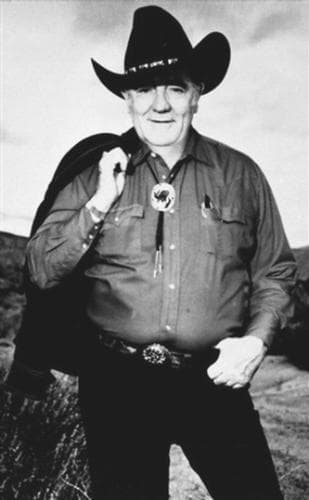
Biography coming soon.







