“The people are like children, easily swayed by a sweet word or a harsh one.”
— Reflecting on the fickleness of public opinion towards political figures.

Genre
Historical Fiction / Romance
Reading Time
90 min
Key Themes
See below
Sign in to track this book
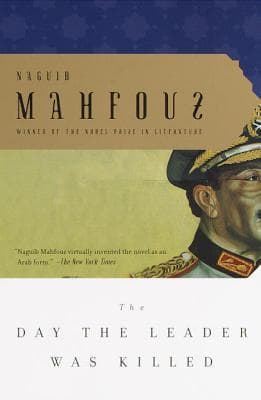
In the politically charged Cairo of 1981, a pious grandfather, his hapless grandson, and his headstrong fiancée navigate love and societal upheaval, all culminating in the shocking assassination of President Sadat.
The novel opens with Elwan, a young man from a traditional Cairene family, narrating his daily routines and anxieties about the future. He loves his cousin Randa, but their engagement faces financial difficulties and differing family aspirations. Elwan works a modest job, feeling the weight of societal expectations and economic pressures in Sadat's Egypt. He sees the growing gap between rich and poor, the rise of consumerism, and political tensions beneath the surface of daily life. His grandfather, Muhtashimi Zayed, a devout and traditional man, often gives him advice rooted in a bygone era, which Elwan finds hard to reconcile with modern realities.
Muhtashimi Zayed, Elwan's grandfather, offers his religious and traditional worldview. He regrets the moral decay he sees in modern society, the abandonment of Islamic principles, and the younger generation's superficiality. He often references the Quran and the Prophet's teachings, believing that faith leads to happiness and order. He focuses on family, respect for elders, and life's simple pleasures, often clashing with Elwan and Randa's more materialistic and secular aspirations. He views the political climate as a symptom of this moral decline, though he rarely discusses politics directly.
Randa, Elwan's fiancée, offers her perspective, showing a modern, independent spirit that often clashes with her family's traditional values and Elwan's cautious nature. She dreams of a comfortable life, free from the financial struggles many Cairene families face. She is pragmatic and ambitious, pushing Elwan to secure a better future for them. Her love for Elwan is genuine, but she also recognizes the limits imposed by their circumstances. She is frustrated by slow change and societal constraints on women, wanting more freedom and opportunities than her grandmother or Muhtashimi ever had.
Financial struggles for both Elwan's and Randa's families cause tension. Elwan's modest income makes it difficult to afford a home and marriage expenses. Randa's family, while not poor, also faces economic pressures, making them question Elwan's ability to provide. These financial anxieties create friction between Elwan and Randa, and between their families, who have different views on what makes a suitable marriage and a stable future. Societal pressure to keep up appearances and follow traditional wedding customs worsens their financial problems, making a simple, happy union seem out of reach.
Throughout the narratives, there are subtle allusions to Egypt's political climate under President Sadat. While direct political commentary is sparse, the characters' anxieties about inflation, corruption, and perceived moral decline indirectly reflect broader political discontent. Muhtashimi occasionally criticizes government policies from a religious standpoint, while Elwan and Randa care more about how these policies affect their personal lives and economic prospects. The growing divide between secular and religious, rich and poor, and traditional and modern points to unrest that foreshadows larger societal upheaval, though the characters largely focus on their personal struggles.
Elwan often expresses feelings of inadequacy and despair. He feels trapped between his love for Randa and his inability to provide for her as he wishes. He is disillusioned with his opportunities and often questions his worth. He struggles to reconcile his traditional upbringing with modern life's demands, feeling lost in a rapidly changing world. His internal monologues show a young man searching for meaning beyond his mundane existence, often finding solace in dreams of a future with Randa, despite obstacles. He longs for a sense of belonging and stability that seems elusive.
Randa's narrative often highlights her frustration with the status quo and her determination to build a better life. She is not content to passively accept her circumstances and actively pushes Elwan to be more ambitious. She challenges traditional expectations for women, advocating for her desires and a more comfortable future. Despite financial difficulties and differing family opinions, Randa remains resolute in her love for Elwan and her belief that they can overcome obstacles. Her modern outlook and strong will contrast with Elwan's more introspective and sometimes melancholic nature.
President Sadat, the 'Leader,' is a pervasive but often unseen presence throughout the novel. His image appears in newspapers and on television, and characters discuss his policies with veiled criticism. His rule indirectly shapes their lives, whether through economic policies, social changes, or the general political atmosphere. While they do not interact with him directly, his leadership forms the backdrop for their personal dramas. His presence is a constant reminder of the broader political context, a silent force influencing their daily struggles and aspirations, setting the stage for the dramatic climax.
The narrative builds towards October 6, 1981, the day of Sadat's assassination. On this day, characters go about their normal routines, each engrossed in personal concerns. Elwan contemplates his future with Randa, Muhtashimi prays and reflects, and Randa perhaps dreams of a better life. Their mundane activities contrast sharply with the momentous event about to unfold. There is no immediate sense of impending doom in their personal lives, highlighting the sudden and shocking nature of the assassination when it occurs, catching them, and the nation, by surprise.
News of President Sadat's assassination breaks, sending shockwaves through Cairo and into the characters' lives. Each reacts differently: Elwan is stunned, grappling with the event's suddenness and implications; Muhtashimi, despite earlier criticisms, expresses a solemn sense of loss and reflects on life's fragility; Randa is also shocked, perhaps thinking how this political upheaval might further affect her and Elwan's future. The assassination immediately shifts focus from personal dramas to the national crisis, forcing them to confront their world's instability. The event reminds them of history's unpredictable nature and its impact on individual lives.
Immediately after the assassination, characters reflect on Sadat's death and its potential consequences for Egypt. Muhtashimi, with his historical and religious perspective, sees it as divine will or a consequence of societal transgressions. Elwan, more pragmatic, worries about the country's future stability and how it will affect his ability to build a life with Randa. Randa, ever forward-looking, considers the potential for change, both positive and negative. The event forces them to confront larger political forces, moving beyond individual concerns to a collective sense of national uncertainty and questioning Egypt's path.
Sadat's assassination connects the personal destinies of Elwan, Randa, and Muhtashimi with Egyptian history. Their individual struggles for love, stability, and meaning are suddenly part of a larger national upheaval and political transition. The event shows Mahfouz's central theme: that even the most personal lives connect to the broader political and social currents of their time. The future of their engagement, their family, and their nation becomes uncertain, showing the fragility of both personal and collective peace.
The Protagonist
Elwan grows from a somewhat passive and anxious young man to someone who, despite his fears, is determined to fight for his love and his future, even as national events threaten to overwhelm him.
The Protagonist
Randa consistently asserts her modern desires and strong will, becoming a driving force for change and progress in her relationship with Elwan.
The Supporting
Muhtashimi remains steadfast in his traditional beliefs, serving as a consistent moral compass and a voice of historical perspective amidst the modern world's turmoil.
The Mentioned
Not applicable, as he is a historical figure whose role is to provide the critical historical context and climax.
The Supporting
Remains a steady, supportive, but pragmatic figure, representing the struggles of the middle class.
The Supporting
His character remains consistent as a loving father navigating the complexities of marriage in modern Egypt.
The Supporting
Her character remains a constant source of maternal support and love for Elwan.
The Supporting
Her character remains focused on ensuring Randa's secure and prosperous future.
This central theme appears in the generational divide between Muhtashimi Zayed's devout, traditional worldview and Elwan and Randa's modern aspirations. Muhtashimi regrets the moral decay and abandonment of Islamic values in contemporary Cairo. Elwan struggles to reconcile his upbringing with economic pressures and changing social norms. Randa actively embraces modern ideals, striving for a comfortable and independent life. The clash is clear in their contrasting views on marriage, finances, and societal values, highlighting Egypt's struggle to balance its heritage with modernization. For example, Elwan's anxieties over affording a modern apartment for Randa conflict with Muhtashimi's emphasis on spiritual wealth.
““The world was changing, and not always for the better, he thought, lamenting the days when faith alone guided men’s hearts.””
The novel shows how national politics, even when not directly discussed, shape characters' intimate lives. Sadat's economic policies, like inflation and the push for consumerism, directly affect Elwan's ability to secure a stable future with Randa, causing him anxiety. Underlying political tensions and societal unrest are subtly part of their daily existence. The dramatic climax, Sadat's assassination, demonstrates this theme, suddenly placing their personal struggles into a national crisis and uncertainty, altering their future perception.
““How could one plan a life when the very ground beneath one’s feet felt so uncertain?””
The love story between Elwan and Randa is consistently overshadowed by financial difficulties. Elwan's modest income and Cairo's high cost of living create immense pressure on their engagement, delaying marriage and causing anxiety. Randa's desire for a comfortable life, while understandable, adds to Elwan's sense of inadequacy. Their love is genuine, but economic realities test it, showing how material circumstances can strain even deep affections. The struggle to afford a home and a wedding is a recurring element.
““Love, he realized, was a powerful force, but it rarely paid the rent.””
Elwan often expresses disillusionment with his life, prospects, and society's state, reflecting wider malaise in Sadat's Egypt. He feels trapped and inadequate, struggling to find meaning. However, his love for Randa and her ambitious spirit often offer hope, pushing him to strive for a better future. Despite challenges and political upheaval, a persistent undercurrent of hope for personal happiness and societal improvement remains, even if uncertain. The characters move between despair and a quiet determination to endure and build a life.
““Perhaps, he thought, hope was not an absence of despair, but rather the courage to continue despite it.””
The story is told through the alternating viewpoints of three main characters.
Mahfouz employs alternating first-person narration, primarily switching between Elwan, Randa, and Muhtashimi Zayed. This device allows for a multifaceted exploration of the novel's themes, providing diverse insights into the same events and societal conditions. Elwan offers a youthful, anxious perspective; Randa provides a modern, ambitious viewpoint; and Muhtashimi contributes a traditional, philosophical lens. This technique enriches the reader's understanding of the characters' internal worlds and the complex societal dynamics of 1980s Egypt, showing how different generations and personalities perceive and react to the same reality, especially the political climate and the assassination.
Hints of societal discontent and political instability precede the climax.
Throughout the narrative, Mahfouz subtly foreshadows the impending political upheaval, particularly the assassination of Sadat. This is achieved through the characters' anxieties about inflation, corruption, and the perceived moral decay of society, as well as occasional, veiled criticisms of the government. These hints create a pervasive atmosphere of underlying tension and instability, even as the characters focus on their personal lives. This builds anticipation and makes the eventual assassination, while shocking, feel like a culmination of the simmering discontent that has been present all along, emphasizing the interconnectedness of personal and national destinies.
A real-world assassination serves as the novel's dramatic turning point.
The assassination of President Anwar al-Sadat on October 6, 1981, is not merely a backdrop but the central climax of the novel. By weaving the fictional lives of his characters around this real and momentous historical event, Mahfouz grounds his narrative in a tangible reality. This device allows him to explore the profound impact of national events on individual lives, demonstrating how personal destinies are inextricably linked to the broader political landscape. The sudden, shocking nature of the assassination dramatically shifts the focus from the characters' personal struggles to a collective national crisis, underscoring the fragility of peace and the unpredictable nature of history.
“The people are like children, easily swayed by a sweet word or a harsh one.”
— Reflecting on the fickleness of public opinion towards political figures.
“Love is a strange thing; it can bloom in the most barren of lands, and wither in the most fertile.”
— A character musing on the unpredictable nature of romantic love amidst societal turmoil.
“History is written by the victors, but the truth often lies buried with the vanquished.”
— A cynical observation about the manipulation of historical narratives after a major political event.
“Even in the darkest night, a single star can offer hope.”
— A moment of quiet reflection amidst despair, seeking solace in small comforts.
“We live in a time where a man's life is worth less than a rumor.”
— Expressing frustration over the spread of misinformation and its dangerous consequences.
“The past is a phantom that haunts our present, dictating our future.”
— Contemplating the inescapable influence of past events and decisions on current lives.
“A leader's death is never just the death of a man; it is the death of an era.”
— Mourning the broader implications of a significant political assassination.
“The greatest prison is not made of bars, but of fear.”
— Discussing the psychological impact of oppressive regimes on individuals.
“To truly know a city, you must walk its streets when it sleeps.”
— An observation about discovering the hidden character of Cairo during its quiet hours.
“Every revolution devours its own children in the end.”
— A somber reflection on the often brutal and self-destructive nature of political upheavals.
“The heart has its own reasons, which reason knows nothing of.”
— Explaining an impulsive or illogical decision made out of strong emotion.
“Silence can be louder than any scream, especially when it carries the weight of unspoken truths.”
— Noting the profound impact of unspoken words and suppressed feelings.
“We build our lives on sand, believing it to be rock, until the tide comes in.”
— A metaphor for the fragility of human plans and the unexpected challenges of life.
“Even the mightiest tree can be felled by a single, well-aimed axe.”
— Commenting on how even powerful figures can be brought down by a decisive act.
Ready to see how well you understood this book? Take our interactive quiz with 10 questions.

Naguib Mahfouz Abdelaziz Ibrahim Ahmed Al-Basha was an Egyptian writer who won the 1988 Nobel Prize in Literature. Mahfouz is regarded as one of the first contemporary writers in Arabic literature, along with Taha Hussein, to explore themes of existentialism. He is the only Egyptian to win the Nobel Prize in Literature. He published 35 novels, over 350 short stories, 26 screenplays, hundreds of op-ed columns for Egyptian newspapers, and seven plays over a 70-year career, from the 1930s until 2004. All of his novels take place in Egypt, and always mentions the lane, which equals the world. His most famous works include The Cairo Trilogy and Children of Gebelawi. Many of Mahfouz's works have been made into Egyptian and foreign films; no Arab writer exceeds Mahfouz in number of works that have been adapted for cinema and television. While Mahfouz's literature is classified as realist literature, existential themes appear in it.