“I'm tired of being used for suns, lemons, and corn. I need a break!”
— Yellow Crayon's complaint about being overused for the same objects.

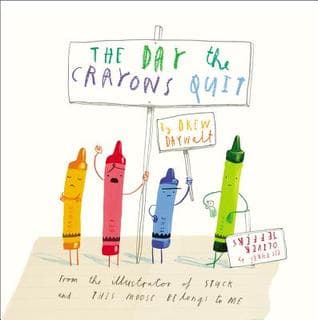
Drew Daywalt (2013)
Genre
Fantasy / Children's / Creativity
Reading Time
5 min
Key Themes
See below
Sign in to track this book
When Duncan's crayons collectively declare their resignation over grievances ranging from overuse to underappreciation, he must find a way to make peace and bring color back to his world.
One day, when young Duncan goes to color, he finds that his crayon box is empty except for a stack of letters. Each letter is from a different crayon, expressing their frustration and announcing their resignation from coloring duty. Red crayon is overworked from coloring too many fire engines, apples, and strawberries. Purple crayon feels unappreciated because Duncan always colors neatly within the lines for purple objects, unlike other colors. Beige crayon feels overlooked and tired of always being a secondary color to Brown. Duncan is left with a pile of colorful complaints, realizing his crayons are not happy with how they are being used.
The first letter Duncan reads is from Red Crayon, who is exhausted. Red lists all the things it is used for: fire engines, apples, strawberries, and even Santa Claus. Red feels it never gets a break and is always expected to be 'on.' The crayon states, 'I work harder than any of your other crayons.' Red demands a vacation, or at least a temporary reprieve from its relentless workload, making it clear that it has quit until its demands are met.
Blue Crayon's letter details its weariness from coloring vast expanses of water and sky. It explains that it has been used to color oceans, lakes, rivers, raindrops, and the endless blue sky, resulting in it being 'so short and stubby, I can't even see over the crayon box anymore.' Blue wants a break from its aquatic and atmospheric duties, feeling worn out from covering such large areas. It expresses its desire for Duncan to consider using other colors for some of these tasks.
Duncan discovers a conflict between Yellow and Orange Crayons. Both have written separate letters, each claiming to be the rightful color of the sun. Yellow insists that it is the sun's true color, while Orange argues that it is the sun's true color and that Yellow is just a 'big fat tattletale.' Their disagreement has escalated to the point where they are no longer speaking to each other, creating a tense atmosphere within the crayon box and making it difficult for Duncan to use either of them for a sun.
Green Crayon's letter stands out as it expresses no complaints, stating, 'I am writing for two reasons. One is to say that I like my workload.' Green enjoys coloring crocodiles, trees, dinosaurs, and frogs. The second reason, however, is to mediate the feud between Yellow and Orange. Green points out that they are both important, but their constant bickering is disruptive. Duncan, seeing their separate letters and Green's observation, recognizes the need to address their disagreement directly to bring peace back to his coloring endeavors.
Pink Crayon's letter reveals its frustration with being typecast. It complains about being relegated to coloring 'girlie' things like princesses, hearts, and little girls' rooms. Pink expresses a desire to be used for more diverse and 'manly' subjects, like dinosaurs or monsters, proving its versatility beyond stereotypical feminine objects. It feels underutilized and wants Duncan to expand his perception of what pink can represent, hoping to escape its limited role.
White Crayon's letter is a plea for visibility. It explains that it feels 'empty' and 'just plain ignored' because it is mostly used on white paper, where its contributions are barely noticeable, like snow or the white spaces in clouds. Black Crayon, on the other hand, complains about its monotonous role. It is tired of only being used to outline other colors or for simple, dark objects like tires and coal. Black wants to color entire pictures and be recognized for its own depth, not just as a border.
Beige Crayon's letter highlights its feeling of being a 'second-class crayon.' It complains that it is always mistaken for Brown or only used for the less exciting parts of drawings, such as 'turkeys (when they're not brown)' or 'wheat.' Beige longs for more prominent and distinctive roles, expressing its desire to be seen as a color in its own right, rather than just a lighter, less important version of Brown, or a background filler.
Gray Crayon's letter expresses its exhaustion from coloring large, often boring, objects. It lists elephants, rhinos, hippos, and whales as its main assignments, which are all 'really BIG animals.' Gray feels these large areas make it tired and stubby. It wishes Duncan would use it for smaller, more intricate things, like tiny pebbles, so it would not have to cover such vast, monotonous spaces, hoping for a more varied and less strenuous workload.
After reading all the letters, Duncan is determined to make his crayons happy. He takes their complaints to heart and begins to draw a picture that addresses each grievance. He uses Red for a small strawberry, Blue for a thin stream, Pink for a monster, White for snow on a black background, and Black for a large, detailed outline of a beach ball. He even draws a yellow and orange sun with both colors, resolving their feud. His new drawing is imaginative, and carefully considers each crayon's wishes, creating a masterpiece that satisfies everyone.
Duncan completes his drawing, an inventive scene that cleverly incorporates all the crayons' requests. He shows the picture to his teacher, who is amazed by its originality and the unusual use of colors. The drawing features a pink monster, a white cat in the snow, a yellow and orange sun, a tiny blue stream, and a red fire engine with purple flames. The teacher gives Duncan an 'A' for his efforts, not only for the artwork but also for his problem-solving skills and creativity in making every crayon feel seen and valued. His crayons are finally happy, and Duncan can color again.
The Protagonist
From a conventional colorer, Duncan transforms into an empathetic and innovative artist who redefines the rules of coloring to satisfy his crayons.
The Supporting
Starts as a disgruntled, overworked crayon and ends up satisfied with a more balanced role in Duncan's final drawing.
The Supporting
Begins as an overworked, stubby crayon and finds contentment when Duncan uses it for smaller, less demanding tasks.
The Supporting
Starts in a feud with Orange Crayon and achieves reconciliation when Duncan uses both colors for the sun.
The Supporting
Begins in a feud with Yellow Crayon and achieves reconciliation when Duncan uses both colors for the sun.
The Supporting
Starts as a frustrated, typecast crayon and finds satisfaction when Duncan uses it for a monster.
The Supporting
Begins feeling ignored and finds purpose when Duncan uses it for a specific, intentional detail.
The Supporting
Starts as an overworked crayon and finds relief when Duncan uses it for smaller, specific details.
The Supporting
Begins feeling invisible and gains visibility when Duncan uses it on a black background.
The Supporting
Starts feeling limited to outlines and finds creative freedom when Duncan uses it to color a whole object.
The book is about Duncan learning to empathize with his crayons. Each letter presents a perspective and a complaint, forcing Duncan to consider how his actions impact others. He moves beyond simply using his tools to understanding their 'feelings' and needs, leading to a more harmonious and creative outcome. This is clear in his final drawing, where he addresses each crayon's specific grievance, like using Pink for a monster or White for snow on a black background.
“You use me to outline the colors, but coloring in the lines is a very important job, too.”
Faced with a 'crayon strike,' Duncan must think creatively to solve the problem. Instead of simply getting new crayons or ignoring the letters, he uses the complaints as a way to color more imaginatively. His final drawing shows his creative problem-solving, as he finds ways to satisfy contradictory demands (like using both Yellow and Orange for the sun) and break stereotypes (Pink coloring a monster). The book celebrates the idea that constraints can lead to unexpected solutions.
“I need a break! Your fire engines, apples, strawberries, everything is RED! I even have to work on holidays coloring all the Santas and Valentines.”
Several crayons express frustration with being typecast. Pink Crayon wants to color more 'manly' subjects, challenging gendered associations with colors. Black Crayon wants to color entire pictures, not just outlines. White Crayon wants to be seen, not just blend in. Duncan's final drawing actively subverts these expectations, using Pink for a monster, White for snow on a black background, and Black for a large part of a beach ball. This theme encourages readers to look beyond conventional uses and embrace versatility.
“I'm tired of being called a 'girl's color.' I want to color dinosaurs and monsters and cowboys!”
Many complaints stem from a perceived lack of fairness. Red Crayon feels overworked, Blue Crayon feels disproportionately used for large areas, and Beige Crayon feels like a 'second-class crayon.' The crayons want a more equitable distribution of work and recognition. Duncan's solution aims to achieve this balance, ensuring each crayon feels valued and gets a fair share of tasks, demonstrating the importance of treating all tools (and people) with consideration.
“I am writing for two reasons. One is to say that I like my workload. I color crocodiles, trees, dinosaurs, and frogs. I have no complaints.”
The narrative is driven by the crayons communicating their grievances through letters. This direct communication, though initially a form of protest, gives Duncan the information to resolve the conflicts. The feud between Yellow and Orange Crayons shows how miscommunication or stubbornness can lead to bigger problems, while Green Crayon's attempt to mediate shows the value of a neutral party. Duncan's success is listening to these communications and acting upon them to achieve resolution.
“I am also writing to tell you that Yellow Crayon and Orange Crayon are no longer speaking to each other. They are both claiming to be the color of the sun.”
The story is told primarily through letters written by the crayons.
The main plot device is the use of letters written by each crayon to Duncan. This epistolary format allows each character (crayon) to directly express their individual grievances and personalities. It provides a unique and personal insight into their 'feelings' and reasons for quitting, making their complaints vivid and humorous. This device also creates a sense of direct communication between the crayons and Duncan, setting up his challenge to address each one.
Inanimate crayons are given human-like emotions and complaints.
The entire premise relies on personification, as the crayons are given distinct personalities, emotions, and the ability to communicate their frustrations. They feel tired, ignored, overworked, and even engage in feuds. This device is crucial for driving the narrative, making the crayons relatable and their 'strike' understandable. It encourages young readers to imagine the inner lives of everyday objects and fosters empathy.
Each crayon's complaint is tied to its conventional color associations.
The complaints of the crayons are directly linked to the common associations and uses of their respective colors. Red is tired of fire engines, Blue of water, Pink of 'girlie' things, and Black of outlines. This device plays on readers' existing knowledge of color roles and then subverts them, making the crayons' desires to break free from these roles more impactful and humorous. It challenges conventional thinking about how colors 'should' be used.
The story follows a clear pattern of conflict (crayons quit) and resolution (Duncan's creative drawing).
The book employs a classic problem-solution narrative structure. The problem is introduced early on: Duncan's crayons quit due to various grievances. The rising action involves Duncan reading each letter and understanding the depth of the problem. The climax is Duncan's creative act of drawing, and the resolution is the crayons' happiness and his teacher's approval. This structure provides a clear, satisfying progression and highlights Duncan's journey of creative problem-solving.
“I'm tired of being used for suns, lemons, and corn. I need a break!”
— Yellow Crayon's complaint about being overused for the same objects.
“I'm not just for coloring inside the lines! I want to be used for something exciting, like a dragon or a volcano!”
— Red Crayon expressing frustration with being limited to mundane tasks.
“I'm so short, I can't even see over the crayon box anymore. It's embarrassing!”
— Green Crayon lamenting being worn down from overuse.
“I'm tired of being the color of boring things like elephants and rhinos. I want to be used for something fun!”
— Gray Crayon's plea for more imaginative use.
“I'm not just for coloring the sky! I want to be used for oceans and lakes too.”
— Blue Crayon feeling underappreciated and limited in its roles.
“I'm tired of being the color of nothing. I want to be used for something important!”
— White Crayon's complaint about being overlooked on white paper.
“I'm so long, I don't even fit in the box anymore. It's uncomfortable!”
— Peach Crayon's humorous grievance about being unused and too tall.
“I'm tired of being the color of sad things. I want to be used for happy things too!”
— Black Crayon expressing a desire for more positive associations.
“I'm not just for coloring grass! I want to be used for monsters and aliens!”
— Green Crayon (again) advocating for more creative applications.
“I'm tired of being broken in half. It hurts!”
— Orange and Yellow Crayons' joint complaint about being mishandled.
“I want to be used for more than just outlines. I have feelings too!”
— Black Crayon (again) seeking deeper engagement in artwork.
“We all have our own special talents. Let's work together to make something amazing!”
— A crayon (often interpreted as Purple) suggesting collaboration at the story's end.
“I'm tired of being the color of poop and dirt. It's not fair!”
— Brown Crayon's humorous lament about its unglamorous uses.
“Why do I always have to be the color of the sun? I want to be something else for a change!”
— Yellow Crayon (again) expressing a desire for variety in its roles.
Ready to see how well you understood this book? Take our interactive quiz with 10 questions.

Drew Daywalt is the acclaimed author of the bestselling children's book "The Day the Crayons Quit" and its sequel, "The Day the Crayons Came Home." His imaginative stories, often characterized by humor and a unique voice, have resonated with young readers and parents worldwide, making him a prominent figure in contemporary children's literature.







