“It was a thing a man could feel, the wind coming off the plains. It smelled of dust and distance, and sometimes, if the rain had been recent, of wet sage.”
— Describing the West Texas landscape and its sensory impact.

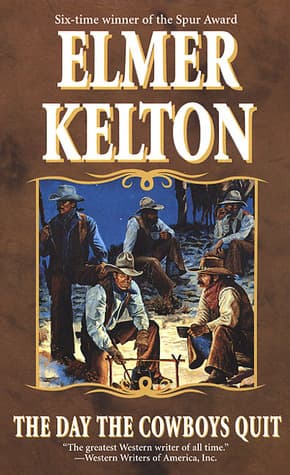
Elmer Kelton (1971)
Genre
Historical Fiction
Reading Time
300 min
Key Themes
See below
Sign in to track this book
In 1883, Texas Panhandle cowboys, labeled as thieves and exploited by powerful ranchers, launch a strike to regain their dignity and the right to own the cattle they tend.
In 1883, in the Texas Panhandle, veteran cowboy Hugh Hitchcock returns to work for wealthy rancher John Chisum. Hugh quickly learns of a new rule from major cattle companies: cowboys cannot own their own cattle. This rule, supported by figures like Chisum and his foreman, Henry Stamps, is presented as a way to stop rustling. However, it takes away the cowboys' last bit of independence and their chance for self-sufficiency. Hugh and other cowboys feel this injustice, seeing it as a direct threat to their livelihood and dignity. Ranch owners also start enforcing stricter moral codes, discouraging drinking and other personal freedoms, which further alienates their workers.
As news of the 'no private cattle' rule spreads, discontent grows among the cowboys. Hugh Hitchcock, despite his age, becomes a reluctant leader and voice for many of the younger, more impulsive men. Campfire conversations shift from ranch talk to discussions about the ranchers' increasing control and the diminishing respect for their labor. The idea of a collective response, a strike, starts to form, fueled by shared grievances and a desire for autonomy. While some, like Hugh, suggest caution and negotiation, others, especially the younger hands, want immediate action.
Under cover of night, away from foremen and ranch owners, cowboys from different outfits begin holding secret meetings. These gatherings, often in remote canyons, allow them to express frustrations and plan a response. Hugh Hitchcock, though initially hesitant, becomes a central figure, offering his experience and wisdom to the new movement. Young, passionate cowboys like Billy and Pete push for immediate action, while Hugh urges a more organized approach. They elect representatives and start drafting demands, mainly focused on the right to own cattle and fair treatment, aiming to present a united front to the powerful cattle barons.
Despite attempts to negotiate and present their demands, the powerful ranchers, led by John Chisum, refuse to compromise. They see the cowboys' demands as disrespectful and an attack on their ownership rights. Faced with this stubbornness, the cowboys, led by Hugh Hitchcock, decide to strike. One by one, then in small groups, they leave the ranches, leaving herds unattended and operations halted. The strike is mostly peaceful but firm, with cowboys gathering in camps, effectively stopping the cattle industry across the Panhandle. The ranchers, initially dismissive, now face a coordinated labor stoppage.
The wealthy ranchers, surprised by the cowboys' unity, quickly use their resources to break the strike. They hire strikebreakers, often inexperienced hands or drifters, to replace the striking cowboys. Foremen like Henry Stamps become enforcers, using intimidation and threats to force cowboys back to work or to prevent others from joining. Food and supplies to the strike camps are cut off. Ranchers use their influence with local law enforcement to harass and arrest striking cowboys on weak pretenses. The striking cowboys face growing hardship and pressure, testing their resolve and unity as resources dwindle and the threat of violence grows.
As the strike continues, the cowboys' initial unity starts to weaken under the strain of dwindling resources and the ranchers' constant pressure. Internal disagreements appear, with younger, more impulsive cowboys suggesting aggressive actions, like stampeding herds or sabotaging ranch property. Hugh Hitchcock, committed to a peaceful and lawful strike, struggles to maintain control and prevent the movement from becoming lawless. His authority is challenged by fiery individuals who believe his methods are too cautious. The hardships of the strike, combined with the ranchers' propaganda, begin to erode the morale and solidarity of the striking men, forcing Hugh to make difficult decisions to protect their cause.
Adding danger to the tense situation, a group of 'Regulators' appears. They claim to maintain order but act as enforcers for the ranchers. These vigilantes, often armed and masked, harass and intimidate striking cowboys, breaking up their camps and making threats. Their presence introduces a constant threat of violence, escalating the conflict beyond a simple labor dispute. Hugh Hitchcock and his men must now deal with not only the ranchers and their hired scabs but also this lawless group, making every move dangerous. The Regulators' actions push the cowboys closer to a violent response, further testing Hugh's commitment to non-violence.
The simmering tensions finally lead to a tragic confrontation. A group of Regulators ambushes a small party of striking cowboys, resulting in a violent shootout. Several cowboys are wounded, and at least one is killed. This brutal event deeply affects Hugh Hitchcock, strengthening his resolve to prevent more bloodshed while also fueling the anger of many younger strikers who now demand revenge. The incident highlights the deadly stakes of the strike and the dangerous direction the conflict is taking. It forces Hugh to rethink his strategies, balancing self-preservation with the strike's original goals, and the safety of his men becomes paramount.
Despite the cowboys' spirit, the ranchers' overwhelming resources, combined with the hardships of the strike and the Regulators' violence, eventually lead to its collapse. One by one, then in larger numbers, cowboys start to leave, seeking work elsewhere or returning to their previous outfits under the ranchers' terms. Hugh Hitchcock, though deeply disappointed, understands that continuing the strike against such odds is futile. However, the strike is not entirely in vain. The collective action, though unsuccessful in its main demand, makes the ranchers acknowledge the cowboys' grievances and leads to some minor concessions regarding working conditions and treatment. The spirit of unity, though tested, leaves a lasting impression.
After the broken strike, Hugh Hitchcock, a weary but determined man, reflects on the events. He sees the end of an era, the fading of the open range and the independent cowboy. While the cowboys did not win their main demand, the strike was a powerful, if unsuccessful, assertion of their dignity and rights. Hugh recognizes that the world is changing, and the days of the free-spirited cowboy are limited. He, along with many others, must now adapt to a new reality, one where corporate interests increasingly dominate. The strike, though a defeat, leaves a legacy of awareness and shows the courage of the common cowboy who dared to stand up against powerful forces.
The Protagonist
Hugh transforms from a cautious observer into a principled leader, demonstrating resilience and a commitment to justice despite the strike's ultimate failure.
The Antagonist
Chisum remains largely static, representing the unyielding force of capital that ultimately triumphs over labor in this specific conflict.
The Supporting
Stamps remains a steadfast enforcer of the rancher's will, serving as a foil to Hugh's more principled approach.
The Supporting
Billy's initial fiery zeal is tempered by the harsh realities and consequences of the strike, though his spirit remains unbroken.
The Supporting
Pete, like Billy, experiences the sobering effects of the strike's challenges, leading to a more nuanced understanding of resistance.
The Antagonist
The Regulators act as a destructive force, their actions serving to highlight the desperation and ruthlessness of the opposition.
The novel shows the shift from the romantic era of the independent cowboy and the open range to a more industrialized, corporate-controlled cattle industry. The 'no private cattle' rule symbolizes the taking away of the cowboy's last bits of independence, forcing them into the role of wage laborers. Hugh Hitchcock's thoughts throughout the book highlight this change, regretting the loss of freedom and dignity that defined the cowboy lifestyle. The strike itself is a desperate, though ultimately unsuccessful, attempt to hold onto a disappearing way of life against the march of progress and corporate expansion. The Panhandle, once limitless, is now being fenced and controlled, much like the cowboys themselves.
“The West was changing. The old ways were dying, and men like him were being pushed aside by fences and rules and the power of money.”
At its heart, the novel tells a story of the conflict between labor (the cowboys) and capital (the wealthy ranchers). The ranchers, driven by profit and control, aim to maximize their power by dictating terms and suppressing any independence among their workers. The cowboys, in contrast, demand fair treatment, recognition of their rights, and a living wage that allows for dignity. The strike directly confronts these opposing forces, showing the imbalance of power and the difficult choices faced by those who rely on their labor for survival. The ranchers' ability to hire scabs, cut off supplies, and use vigilante groups demonstrates the overwhelming advantage of capital.
“They want to own us, not just our labor. They want to own every lick of us, hide and hair.”
Beyond wages or land, the strike is about the cowboys' dignity and self-respect. The rule forbidding them from owning cattle is seen as a deep insult, implying they are untrustworthy and unworthy of even a small amount of independence. Hugh Hitchcock and his fellow strikers fight for the right to be seen as more than just interchangeable hired hands. Their refusal to be labeled as drinkers or potential thieves, and their demand for the right to pursue their own modest ambitions, speaks to a deep need for respect. The strike, even in its failure, asserts their human worth against dehumanizing corporate policies.
“A man's got to have something of his own, even if it's just a scrubby cow. It's not about the cow, it's about what it means.”
The novel explores how fragile unity is when facing difficulties. Initially, the cowboys are united by a common grievance, but as the strike continues, internal disagreements emerge. The younger, more impulsive men clash with Hugh Hitchcock's cautious leadership, threatening to split the movement. The ranchers use these divisions, applying economic pressure and violence to erode solidarity. The strike's ultimate failure is partly due to the inability to maintain a completely unified front against a much more powerful and organized opposition. The story shows how shared hardship can create bonds, but also how prolonged suffering and external pressures can break them, highlighting the immense effort needed to sustain collective action.
“A rope's only as strong as its weakest strand, and we got some frayed ones.”
A central conflict-driving decree that strips cowboys of their independence.
This rule is the primary catalyst for the entire plot. It's not just about owning cattle; it symbolizes the ranchers' desire for absolute control over their workforce and the cowboys' last vestige of economic independence. By forbidding cowboys from owning their own stock, the ranchers effectively eliminate any path to self-sufficiency, forcing them into perpetual wage labor. This device immediately establishes the core power imbalance and fuels the cowboys' sense of injustice, directly leading to the strike and all subsequent conflicts.
An older, experienced cowboy's moral compass guides a volatile labor movement.
Hugh Hitchcock serves as the moral and strategic center of the striking cowboys. His reluctance to lead, combined with his deep sense of justice and wisdom, makes him a compelling figure. His struggle to maintain a peaceful, organized strike against the more radical impulses of younger cowboys and the violent tactics of the ranchers creates internal tension within the cowboy ranks. This device allows the narrative to explore the complexities of leadership, the challenges of collective action, and the moral dilemmas faced when fighting for one's rights.
An unofficial, violent force that escalates the conflict and tests the strikers' resolve.
The introduction of the Regulators serves to heighten the stakes and inject a direct threat of violence into the narrative. They act as an unofficial, lawless arm of the ranchers, using intimidation and physical force to break the strike. This device transforms the labor dispute from a peaceful standoff into a dangerous confrontation, forcing the cowboys to contend with not just economic pressure but also the threat of bodily harm. It underscores the ruthlessness of the opposition and the desperate measures employed to maintain control, pushing the cowboys to their limits.
“It was a thing a man could feel, the wind coming off the plains. It smelled of dust and distance, and sometimes, if the rain had been recent, of wet sage.”
— Describing the West Texas landscape and its sensory impact.
“A man could learn more from a horse than from a lot of people. A horse didn't lie, and it didn't pretend.”
— Hugh Brady's reflections on the honesty of animals compared to humans.
“Seems like a man spends his whole life tryin' to get somewhere, and when he gets there, he finds out it ain't what he was lookin' for.”
— A cowboy musing on the elusive nature of contentment and ambition.
“The wind was a constant companion out here, sometimes a friend, sometimes an enemy, but always there, shaping everything.”
— The pervasive influence of the wind on the characters and environment.
“There were two kinds of men in this world: them that was born to give orders, and them that was born to take 'em.”
— A reflection on social hierarchy and the natural order of things in the cowboy world.
“A man's word was supposed to be his bond, but sometimes the bond broke under the weight of too much money or too much fear.”
— Hugh Brady's observation on the erosion of trust and integrity.
“You couldn't fight progress, not really. It was like tryin' to hold back the tide with a pitchfork.”
— Characters grappling with the inevitability of change and modernization.
“The West was changing, and not always for the better. The fences were going up, and the open range was shrinking.”
— Lamenting the loss of the traditional cowboy way of life.
“There was a loneliness to the plains that could get inside a man and settle there, quiet and deep.”
— Describing the emotional impact of the vast, isolated landscape.
“Sometimes the right thing to do wasn't the easy thing to do.”
— Hugh Brady facing difficult moral choices during the strike.
“A good horse could take you where you needed to go, but it couldn't tell you why you were going there.”
— A metaphor for the limitations of tools and the importance of purpose.
“He had seen too many men die for too little, and he didn't want to be one of them.”
— Hugh's weariness with violence and the futility of conflict.
“The future was a thing you couldn't see, only guess at, and mostly you guessed wrong.”
— A character's philosophical outlook on the unpredictability of life.
“He knew the feel of a good rope in his hand, and the sound of a branding iron sizzling, and the smell of dust and cattle. Those were the things that made up his world.”
— Hugh Brady's deep connection to the practical realities of cowboy life.
Ready to see how well you understood this book? Take our interactive quiz with 10 questions.

Biography coming soon.