BookBrief
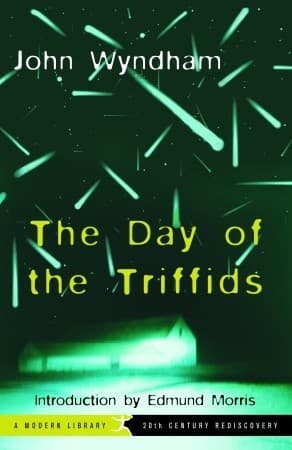
The Day of the Triffids cover
Archivist's Choice

The Day of the Triffids

John Wyndham (1951)

Genre

Fantasy / Science Fiction

Reading Time

270 min

Key Themes

See below

Track Your Reading

Sign in to track this book

Amidst a world blinded by a celestial event, a sighted few must navigate the ruins of civilization while fending off towering, carnivorous plants that now freely stalk the Earth.

Synopsis

Bill Masen, a hospital patient, awakens to find most of humanity blinded by a mysterious meteor shower. He navigates a chaotic, sightless London, eventually meeting Josella, another sighted survivor. Together, they escape the city, facing the reality of a world overrun by triffids – mobile, carnivorous plants that can kill with a venomous sting. As society collapses, Bill and Josella join different groups attempting to rebuild, each with conflicting ideas on how to survive. Bill experiences forced labor under a ruthless leader named Coker, escapes, and eventually reunites with Josella at a protected estate. They establish a new community, struggling to maintain order and defend against the triffid threat. The novel explores themes of societal breakdown, human adaptability, and the ethical dilemmas of survival, ultimately concluding with Bill, Josella, and their community finding a new existence on an island, constantly watching for triffids, while contemplating the long-term future of humanity.
Reading time
270 min
Difficulty
Medium
Pacing
Moderate
Mood
Bleak, Suspenseful, Thought-provoking, Eerie
✓ Read this if...
You enjoy classic post-apocalyptic stories with a focus on societal collapse and unique ecological threats.
✗ Skip this if...
You prefer fast-paced action over philosophical exploration of survival and societal rebuilding.

Plot Summary

A World Plunged into Darkness

Bill Masen, a triffid expert, wakes in a London hospital with his eyes bandaged. He missed a spectacular meteor shower. The next morning, he removes his bandages to find the hospital eerily silent and deserted. Venturing out, he discovers a city filled with blind, disoriented people stumbling through the streets. They cannot see the devastation. He quickly realizes that the meteor shower, which many people stared at directly, caused widespread, instantaneous blindness. The few sighted individuals are overwhelmed by the number of helpless people. Society collapses almost immediately, leaving Bill to navigate a dangerous new reality where most basic human functions are now impossible for the majority.

First Encounters and Escape from London

Bill encounters Josella Playton, a young, sighted woman being harassed by a blind man. After rescuing her, they join forces. They recognize the immediate danger of being sighted in a world of the blind, where they are seen as either a resource or a threat. They see society quickly fall apart, with blind individuals dying from accidents, starvation, or the increasingly bold triffids. As London descends into anarchy, Bill and Josella decide to escape the city, realizing that staying would mean certain death or enslavement to the helpless. They gather supplies and plan their departure, seeking a safer place away from the immediate chaos and the growing triffid threat.

The University Group and Conflicting Ideologies

Bill and Josella reach the University of London, where a group of sighted survivors has gathered. Professor Beadley, a practical leader, heads the group. Beadley wants to establish a self-sufficient, sighted colony in the countryside, prioritizing the survival of humanity's genetic future. However, another group, led by Wilfred Coker, who is charismatic but morally unclear, argues for integrating the blind into their society. Coker believes it is their duty to care for them. Bill initially aligns with Beadley's group, but the debate shows the deep ethical problems facing the survivors, as resources are scarce and the future uncertain. The group's different ideas create tension and threaten to split their efforts.

Coker's Folly and Forced Labor

Coker, unable to agree with Beadley's harsh practicality, splits off with his followers. He plans to establish a network of sighted individuals guiding and caring for groups of blind people across London. Bill, despite his doubts, is forced to join Coker's initiative, as Coker's group captures sighted individuals and makes them serve. This plan quickly proves unsustainable and dangerous. The sighted 'guides' are overworked, vulnerable to attacks from desperate blind individuals, and increasingly exposed to the roaming triffids. Bill sees firsthand how useless and dangerous Coker's approach is, realizing that compassion without planning leads only to greater suffering.

Escape from Coker and Reunion

As Coker's plan falls apart into chaos and starvation, Bill escapes during a triffid attack. He then searches for Josella, fearing for her safety. His journey takes him through deserted and dangerous places, showing the scale of the catastrophe. He eventually finds her at a country estate, where she has joined another group of survivors led by Miss Durrant, a morally good woman who wants a more traditional, 'family unit' approach to rebuilding society. Bill is relieved to find Josella alive, but the differences in ideas within Miss Durrant's group, especially about the role of women and reproduction, become clear.

The Tynsham Experiment

Bill and Josella leave Miss Durrant's rigid community. They find it too focused on maintaining old social structures rather than practical survival. They journey to Tynsham, a well-organized and successful settlement established by Beadley and his followers. Tynsham represents a practical approach to survival, with a strong focus on self-sufficiency, defense against triffids, and the careful selection of individuals for genetic propagation. Bill, with his knowledge of triffids, becomes a valuable member of the community. Here, they find purpose and relative safety, but the constant threat of the triffids and the need to protect their resources remain important.

The Triffid Threat Escalates

The triffid population, with no human control, grows rapidly. They begin to move in organized, predatory groups, drawn to human settlements. Their poisonous stingers and ability to walk make them strong adversaries. Tynsham, despite its defenses, faces constant attacks. Bill and other members of the community often fight the plants, using fire and other methods to keep them away. The triffids are no longer just a background threat but an active, intelligent, and relentless enemy. This forces the survivors to use significant resources and people for defense, showing humanity's uncertain position in this new ecosystem.

A New Life and a Difficult Choice

Bill and Josella, wanting more control and a secure future for their potential children, decide to leave Tynsham. They, along with a few others, establish their own self-sufficient farm on the Isle of Wight, which they believe will be naturally protected from the triffids. They work hard to grow food and build defenses. During this time, Josella becomes pregnant. Their isolation ends when they encounter a blind family held captive by a single sighted man, Stephen, who is trying to exploit them. Bill faces a moral problem: help the blind family and risk his own safety, or focus on his immediate family's survival.

Stephen's Arrival and the New Society

Bill and Josella's peaceful existence on the Isle of Wight is broken by the arrival of Stephen, a sighted survivor. Stephen reveals that he has been part of a larger, more organized community on the mainland. Stephen, having escaped the mainland group, warns them of its strict, almost totalitarian structure, where individuals are assigned roles and relationships for the 'greater good' of rebuilding society. He describes a society that values collective survival and genetic purity over individual freedom. Bill now faces the choice of remaining isolated with his family, or joining this growing, but potentially oppressive, new human civilization.

Confrontation and the Future of Humanity

Stephen, now allied with Bill, reveals that the mainland community plans to 'cleanse' the Isle of Wight of its triffids. This would mean confronting Bill and his family. Bill prepares for a confrontation, not just with the triffids, but potentially with other human survivors. He realizes that the future of humanity will not just be about fighting the plants, but also about defining what kind of society will emerge from the ashes. The novel ends with Bill, Josella, and their small group continuing to defend their farm against the triffids. They know that the fight for survival, both against the plants and for human values, is far from over. The future remains uncertain, but their determination to protect their way of life is strong.

Principal Figures

Bill Masen

The Protagonist

From an isolated survivor, Bill evolves into a leader and protector, constantly weighing moral choices against the harsh realities of a new world.

Josella Playton

The Supporting

Josella transforms from a sheltered young woman to a resilient partner and mother, adapting to the brutal realities of survival.

Professor Beadley

The Supporting

Beadley remains a consistent figure of pragmatic leadership, focused on the long-term survival of the human race.

Wilfred Coker

The Antagonist

Coker's idealism leads to a tragic downfall, as his plans to help the blind ultimately fail and cause more harm.

Miss Durrant

The Supporting

Miss Durrant remains steadfast in her rigid beliefs, highlighting the clash between old world values and new world necessities.

Stephen

The Supporting

Stephen moves from being part of a larger collective to seeking individual freedom, influencing Bill's choices.

The Triffids

The Antagonist

From a contained agricultural commodity, the triffids evolve into the planet's dominant, predatory species, besieging human settlements.

Susan

The Supporting

Susan's arc is one of survival and integration into Bill and Josella's new family unit, symbolizing hope.

Themes & Insights

The Collapse of Civilization and Social Order

The novel shows how quickly and brutally society falls apart after mass blindness. Wyndham explores how fast social norms, infrastructure, and morality disappear when most people are unable to function. The initial chaos in London, Coker's group's struggles to maintain order, and the constant threat of violence from desperate blind individuals all show how fragile civilization is. This theme asks what truly holds society together and how quickly it can unravel under extreme pressure, forcing survivors to redefine what it means to be human.

A world of people, of which only one in a thousand was able to see. And the other nine hundred and ninety-nine blind. Blind, helpless, and starving.

Narrator

Survival of the Fittest vs. Moral Obligation

A main conflict in the book is the ethical problem of prioritizing the survival of the sighted (and thus the human race) versus the moral duty to care for the majority of the population who are now blind and helpless. Beadley represents the harsh practicality of 'survival of the fittest,' wanting selective breeding and the abandonment of the blind. Coker, on the other hand, supports compassion and integration, a path that proves disastrous. Bill Masen constantly deals with this tension, trying to balance ensuring his own and his family's survival with keeping his humanity.

The blind could not be helped. There were too many of them. The sighted must survive, for the sake of the future.

Professor Beadley

Humanity's Hubris and Bio-Engineering

The triffids are a direct result of humanity's unchecked scientific ambition. Originally engineered for commercial purposes, these plants become the main enemy, turning against their creators. This theme warns against the dangers of changing nature without fully understanding the long-term consequences. It foreshadows modern worries about genetic engineering and bio-weaponry. The triffids symbolize nature's revenge against human interference, suggesting that humanity's attempts to control and use the natural world can lead to its own downfall.

It was we who had developed them, we who had brought them to their present pitch of efficiency, and we who had scattered them world-wide.

Bill Masen

The Nature of Community and Governance

The novel explores various ways to rebuild society. These include Coker's chaotic, compassionate but unsustainable approach, Beadley's organized and practical Tynsham community, and Miss Durrant's rigid, traditionalist group. Each community reflects different ideas about government, social structure, and individual freedom. The conflict between these approaches shows the problems of establishing order and purpose in a world without established laws or institutions. Bill and Josella's decision to establish their own independent farm shows a desire for self-determination among these competing visions of a new society.

The important thing was not to save humanity, but to save a nucleus of humanity that was worth saving.

Professor Beadley

Adaptation and Resilience

Despite the great disaster, the surviving sighted individuals show remarkable adaptability and resilience. Characters like Bill and Josella quickly learn new skills, develop ways to survive against the triffids, and form new social bonds. The establishment of communities like Tynsham shows humanity's ability to organize and innovate even in the worst circumstances. This theme emphasizes the human spirit's ability to endure, evolve, and rebuild when the old world is gone, finding new ways to live and thrive in the face of threats.

Adapt or perish. It's the law of life, and it's doubly the law now.

Bill Masen

Plot Devices & Literary Techniques

The Meteor Shower

The catalyst for widespread blindness and societal collapse.

The meteor shower serves as the inciting incident, a seemingly beautiful natural phenomenon that tragically causes universal blindness. It is a 'deus ex machina' that instantly removes humanity's dominant sense, rendering them vulnerable and paving the way for the triffids to become the dominant species. This device allows Wyndham to explore a sudden, catastrophic shift in the power dynamic between humans and nature, without resorting to traditional warfare or disease. It's an external, arbitrary event that throws the world into chaos, highlighting humanity's fragility.

First-Person Narrative (Bill Masen)

Provides an intimate, subjective perspective on the apocalypse.

The story is told from the perspective of Bill Masen, a scientist with specific knowledge of triffids. This narrative choice immerses the reader directly into Bill's experiences, thoughts, and moral dilemmas. It allows for a more personal and immediate understanding of the unfolding catastrophe, as the reader discovers the new world alongside Bill. His scientific background also provides credible explanations for the triffids' behavior and the challenges of survival, grounding the fantastical elements in a sense of realism.

The Triffids (as a Symbol)

Symbolize humanity's hubris and nature's retaliation.

Beyond their literal role as antagonists, the triffids symbolize the dangers of unchecked scientific advancement and humanity's exploitation of nature. They are a product of human engineering that ultimately turns against its creators, representing a form of poetic justice. Their ability to walk and hunt after the blindness event further solidifies them as a symbol of nature reclaiming its dominance, highlighting the precariousness of human control over the environment and the potential for unintended consequences.

Contrasting Communities

Explores different ideological approaches to rebuilding society.

Wyndham uses the contrasting communities (Coker's compassionate but doomed group, Miss Durrant's rigid traditionalists, and Beadley's pragmatic Tynsham settlement) as a plot device to explore various philosophies on how humanity should rebuild itself. Each community represents a distinct ideological stance on survival, morality, and social structure in the post-apocalyptic world. This allows the author to examine the strengths and weaknesses of different approaches to governance and societal reconstruction, providing a multifaceted view of humanity's struggle for a future.

Critical analysis

Notable Quotes

We're a social animal, and the product of a social past. We've been shaped by a need to live in communities, and what we call human nature has been molded by the needs of the group.

Josella discusses human nature and society's role in shaping it, reflecting on the breakdown of civilization.

When you're trying to cope with the end of the world, you don't waste time on trivialities.

Bill Masen reflects on the immediate and stark priorities that emerge in a post-apocalyptic world.

It was as though the whole world had been re-drawn by a child.

Bill observes the eerily silent and changed landscape of London after most of humanity is blinded.

Civilization, I realized, is a far more fragile thing than we are accustomed to believe.

Bill Masen's internal monologue as he witnesses the rapid collapse of societal structures.

The triffid, of course, was an evolutionary anomaly, a botanical sport of a particularly virulent kind.

The narrator describes the unusual and dangerous nature of the triffids, setting the stage for their threat.

It is one of the paradoxes of the human species that we are at our most inventive when we are at our most desperate.

Discussing the ingenuity and resourcefulness that emerges in times of crisis.

The silence was not empty, but full of the unspoken, of the things that had been and were no longer.

Bill experiences the profound quiet of a world largely devoid of human activity and sound.

We are still, at heart, a primitive people, and the veneer of civilization is very thin.

Reflecting on how quickly people revert to basic instincts when society breaks down.

There is a kind of freedom in the absolute destruction of everything you ever knew.

A character muses on the strange sense of liberation that can accompany total societal collapse.

The tragedy of the blind was not merely their blindness, but their utter dependence.

Bill observes the helplessness of the newly blinded population and the moral dilemmas it creates.

Hope, like fear, can be a great motivator.

Characters discuss the psychological forces driving their actions in the new world.

Life, when stripped to its essentials, is a very simple thing. It is just a matter of staying alive.

Bill's stark realization about the basic purpose of existence in a survival situation.

The greatest danger lay not in the triffids themselves, but in the choices we made in response to them.

A character posits that human decisions and societal breakdown are more perilous than the direct threat.

We were learning that the world, even without us, was still a place of beauty, but a beauty that no longer cared for us.

Observing the natural world reclaiming its space, indifferent to human suffering.

Quiz

Test Your Knowledge

Ready to see how well you understood this book? Take our interactive quiz with 10 questions.

10
Questions
~5
Minutes
?
Best Score

Key Questions (FAQ)

'The Day of the Triffids' is a post-apocalyptic science fiction novel where a majority of humanity is blinded by a mysterious meteor shower. The protagonist, Bill Masen, a triffid expert, navigates this new world alongside other sighted survivors, battling the predatory, walking, carnivorous plants known as triffids that now freely roam and prey on the helpless.

About the author

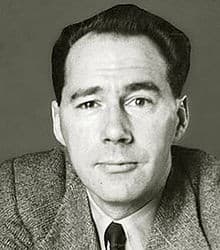
John Wyndham

John Wyndham Parkes Lucas Beynon Harris was an English science fiction writer best known for his works published under the pen name John Wyndham, although he also used other combinations of his names, such as John Beynon and Lucas Parkes. Some of his works were set in post-apocalyptic landscapes. His best known works include The Day of the Triffids (1951), filmed in 1962, and The Midwich Cuckoos (1957), which was filmed in 1960 as Village of the Damned, in 1995 under the same title, and again in 2022 in Sky Max under its original title.