“In Sicily, the truth is not always the truth.”
— Captain Bellodi reflects on the elusive nature of truth in Sicilian society.


Leonardo Sciascia (1961)
Genre
Thriller / Mystery
Reading Time
180 min
Key Themes
See below
Sign in to track this book
In a sun-drenched Sicilian town, a determined captain, new to the job, battles an insidious wall of silence and an unseen network of power to expose the Mafia's ruthless hold after a seemingly random murder.
In a small Sicilian town, the day begins with a murder. Salvatore Colasberna, a building contractor, is shot dead in the piazza while running to catch a bus. The bus driver, Pizzuco, and a passenger, Mariano Arena, claim not to have seen anything, despite the clear view. Captain Bellodi, a Carabinieri officer from Parma, is assigned to the case. He quickly sees the omertà, the code of silence, as witnesses either feign ignorance or deny seeing anything. Bellodi, an outsider unfamiliar with the deep-rooted Mafia presence, is determined to uncover the truth, which he senses is tied to the local criminal organization.
Bellodi begins by questioning the bus driver, Pizzuco, and the passenger, Arena. Both men offer vague, contradictory, or false testimonies, claiming to have been distracted or to have seen nothing. Bellodi's frustration grows as he encounters the fear and complicity of the townspeople. He learns that Colasberna had recently refused to use materials from a specific supplier, suggesting a Mafia protection racket. This refusal, Bellodi deduces, was likely the motive for the murder. He also discovers that Colasberna had been a member of a cooperative, suggesting a conflict of interest with established Mafia operations.
Amidst the silence, Bellodi receives an anonymous letter. It is from Rosa Nicolosi, the wife of a lime kiln worker named Paolo Nicolosi. The letter states that Paolo had seen the murder and knew the killer, but was too scared to speak. Bellodi immediately sends his men to find Paolo. However, before they can reach him, Paolo Nicolosi disappears. This disappearance confirms Bellodi's belief that he is dealing with an organized and ruthless criminal network, capable of silencing witnesses before they can even be interviewed.
Bellodi's fears are confirmed when Paolo Nicolosi's body is found, shot, in a nearby lime kiln. The discovery of Nicolosi's murder sends a message to anyone considering cooperating with authorities. Bellodi realizes that the Mafia's reach extends beyond the immediate crime scene, and that they are actively working to obstruct his investigation. This second murder, linked to the first, provides Bellodi with evidence of a sophisticated criminal organization at play, capable of eliminating potential threats. He understands that the stakes have been raised.
Under intense questioning, the bus driver, Pizzuco, breaks. He confesses to having seen the murder and identifies the two perpetrators: Diego Spina and Rosario Pizzuco (a distant relative of his). Pizzuco reveals that Spina was the shooter and that Rosario Pizzuco was an accomplice. Armed with this testimony, Bellodi orders the arrest of both men. This breakthrough is a victory against the omertà, and Bellodi feels hope that he can dismantle the criminal enterprise operating in the town.
Captain Bellodi personally questions Diego Spina, the alleged killer. Spina, a man with a known criminal past, remains silent, refusing to confess or implicate anyone. Bellodi uses psychological tactics, presenting Spina with the evidence and Pizzuco's testimony. While Spina says nothing, Bellodi observes his physical reactions — a slight tremor, a flicker in his eyes — which, to the experienced investigator, show hidden guilt and fear. Despite the lack of a verbal confession, Bellodi is convinced he has the right man, and that Spina is a key player in the local Mafia structure.
As Bellodi's investigation gains traction, the local Mafia boss, Don Mariano Arena, mobilizes his network. Arena, a respectable figure, operates behind the scenes, pulling strings and influencing various levels of society and government. He subtly begins to create doubt about Bellodi's methods and the credibility of his witnesses. Anonymous letters and rumors circulate, questioning Pizzuco's reliability and suggesting Bellodi is overstepping his authority. The Carabinieri headquarters in Palermo also starts receiving calls and veiled threats, showing the Mafia's far-reaching influence.
The political pressure on Bellodi increases. His superiors, influenced by Don Mariano Arena's connections, begin to subtly discourage his zealous pursuit of the case. They suggest that the evidence is circumstantial, that Pizzuco is unreliable, and that Bellodi is creating unrest. Bellodi, however, remains firm, refusing to yield to these veiled threats and hints of transfer. He understands that his career, and perhaps his life, are at stake, but his sense of justice and duty compels him to continue his fight against the criminal organization.
Despite Bellodi's evidence, the political machinery orchestrated by Don Mariano Arena achieves its goal. Due to 'insufficient evidence' and 'unreliable testimony' — excuses manufactured by corrupt officials — Diego Spina and Rosario Pizzuco are released from custody. This decision is a blow to Bellodi, who sees his hard work and the pursuit of justice undermined. He realizes the Mafia's power, capable of manipulating the legal system and ensuring their operatives remain free, even with strong evidence.
As anticipated, Captain Bellodi is transferred out of Sicily, removing him from the investigation. Before his departure, he has a final encounter with Don Mariano Arena, who subtly asserts his power and the futility of Bellodi's efforts. Bellodi reflects on the Mafia, a 'straight line' connecting all aspects of Sicilian society, from the lowest peasant to the highest levels of government. Though defeated, Bellodi's resolve remains. He understands that while he lost this round, the fight against the Mafia is far from over, and he carries with him a deeper understanding of its power.
The Protagonist
Bellodi transforms from an eager, somewhat naive investigator into a disillusioned but resolute figure, gaining a profound understanding of the Mafia's systemic power.
The Antagonist
Don Mariano Arena maintains his powerful and untouchable status throughout the novel, successfully thwarting Bellodi's efforts.
The Mentioned
Colasberna's story is static, as he is the initial victim, but his death acts as the catalyst for the entire narrative.
The Supporting
Pizzuco moves from a terrified, silent witness to a reluctant informant, briefly challenging the omertà.
The Supporting
Nicolosi's brief arc highlights the immediate and brutal consequences for those who threaten to expose the Mafia.
The Supporting
Rosa's brief but courageous act of informing Bellodi sets a critical plot point in motion, despite its tragic outcome.
The Supporting
Spina remains a silent, unyielding figure, ultimately escaping justice due to external pressures.
The Supporting
Rosario Pizzuco is arrested and subsequently released, demonstrating the Mafia's influence over the justice system.
The Supporting
His role is limited to the initial investigation, demonstrating the immediate challenge of the omertà.
The novel shows how the Mafia is not just a criminal gang but a systemic force in all levels of Sicilian society. From the initial murder over a building contract, through the silencing of witnesses like Paolo Nicolosi, to the political interference that leads to the release of suspects, the Mafia's 'straight line' of influence is evident. Don Mariano Arena, the respectable boss, shows how power is used through fear and corruption, making it nearly impossible for an outsider like Bellodi to challenge effectively.
“''The straight line,' he thought, 'the straight line that links the first murder to the second, that connects the small contractor to the head of the Mafia. It's all one and the same thing, a single, vast, intricate network.'”
The code of silence, omertà, is a central theme, acting as the primary barrier to justice. From the bus driver Pizzuco and passenger Mariano Arena who claim to see nothing, to the general terror that prevents anyone from speaking out, the novel shows how this cultural norm protects the Mafia. The murder of Paolo Nicolosi, a potential witness, is a reminder of the consequences of breaking this code. Bellodi's struggle is largely against this wall, showing the psychological and social control the Mafia exerts over the community.
“''They saw nothing, they heard nothing, they know nothing.' It was the usual litany, the litany of silence, of fear, of complicity.”
The core conflict of the novel is the struggle between Captain Bellodi's pursuit of justice and the Mafia's power. Bellodi, representing the law, uses logic and evidence, but these are not enough against an organization that can manipulate political structures and instill fear. The release of Diego Spina and Rosario Pizzuco, despite Bellodi's strong case, symbolizes the triumph of entrenched power over legal justice. The theme explores the disillusionment that comes from realizing the limits of the law in the face of such corruption.
“''One day,' Bellodi thought, 'justice will prevail.' But that day seemed very far off, lost in the mists of a Sicily that refused to change.”
Captain Bellodi, from Parma in northern Italy, is an outsider to the Sicilian context. His initial naivety about the Mafia's true power and his shock at the omertà allow the reader to experience the frustrating reality of fighting such an organization. His perspective shows the cultural differences and the historical factors that make the Mafia so resilient. Through Bellodi's eyes, the reader gains a clearer, often disheartening, understanding of the challenges faced when confronting a criminal enterprise intertwined with a region's identity.
“He was an outsider, a northerner, and he understood that the silence around him was not just fear, but a way of life, an ancient, impenetrable wall.”
The novel exposes the corruption within the political and judicial systems that gives the Mafia impunity. Don Mariano Arena's ability to influence high-ranking officials leads directly to the release of arrested suspects and Bellodi's transfer. This demonstrates that the Mafia's power is not solely based on violence, but on its capacity to infiltrate and manipulate legitimate institutions. The theme shows the tragic reality that justice can be bought, twisted, or denied when powerful figures are involved, leaving common people vulnerable and the law ineffective.
“He understood then that the threads of the web reached far beyond the town, touching the highest levels, making justice a mere word.”
A cultural and criminal code that silences witnesses and protects the Mafia.
Omertà is not just a plot element but a fundamental narrative device that drives the conflict. It creates the primary obstacle for Captain Bellodi, as nearly every witness he encounters adheres to this code, refusing to speak or actively lying to protect the Mafia. The breaking of omertà by Pizzuco is a momentary triumph, while the subsequent murder of Paolo Nicolosi reinforces its deadly power. This device immerses the reader in the suffocating atmosphere of fear and complicity that defines the Mafia's control, making Bellodi's investigation a slow, arduous battle against an unseen enemy.
Captain Bellodi's perspective highlights the alien nature of the Mafia's world.
Captain Bellodi's role as an outsider from Parma is a crucial narrative device. His fresh perspective, initially unburdened by the ingrained fear and cultural norms of Sicily, allows him to question what others accept as normal. This device serves to explain the intricacies of the Mafia's operations and the omertà to the reader, as Bellodi himself slowly learns and grapples with them. His shock and disillusionment mirror the reader's own potential reactions, making the pervasive corruption and the Mafia's power more impactful and understandable.
A recurring image representing the Mafia's interconnectedness and pervasive reach.
The metaphor of the 'straight line' is used by Captain Bellodi to describe the Mafia's seamless connection between seemingly disparate events and individuals. It signifies the organization's overarching structure, where a small murder, a local boss, and high-level political corruption are all linked in a continuous, unbroken chain of influence and control. This device helps the reader grasp the systemic nature of the Mafia, illustrating that it is not a series of isolated crimes but a unified, powerful entity operating with strategic intent, making it incredibly difficult to dismantle.
The Mafia's influence is largely exerted indirectly, through political and social manipulation.
This device emphasizes that the Mafia's true power lies not in overt violence, but in its ability to manipulate institutions and individuals from behind the scenes. Don Mariano Arena rarely acts directly but orchestrates events through his vast network of connections, applying political pressure, spreading rumors, and influencing judicial decisions. This subtle, pervasive control makes the Mafia an elusive and formidable adversary, as Bellodi often finds himself fighting against forces he cannot directly confront, leading to the ultimate frustration of his efforts.
“In Sicily, the truth is not always the truth.”
— Captain Bellodi reflects on the elusive nature of truth in Sicilian society.
“The mafia is not a criminal organization; it is a state of mind.”
— A character explains the pervasive influence of the mafia beyond mere crime.
“Silence is the first law of the mafia.”
— Describing the code of omertà that protects criminal activities.
“Justice is a luxury that not everyone can afford.”
— Commentary on the inaccessibility of justice for ordinary people.
“Fear is the currency of power.”
— Observing how fear maintains control in a corrupt system.
“In this land, every man is an island, and every island is a fortress.”
— Metaphor for the isolation and defensiveness in Sicilian communities.
“The owl sees in the dark, but it cannot see the truth.”
— Alluding to the book's title and the limitations of perception.
“Corruption is not a vice; it is a necessity.”
— A cynical view of how corruption is ingrained in daily life.
“To understand Sicily, you must first unlearn everything you know.”
— Advice given to an outsider trying to navigate the complex social fabric.
“The dead speak only through the living, and the living are afraid to listen.”
— Reflecting on the difficulty of uncovering crimes due to fear.
“Power does not corrupt; it reveals.”
— A philosophical insight into how power exposes true character.
“In the shadow of the law, the mafia grows.”
— Describing how legal loopholes and inefficiencies enable criminality.
“A man's word is his bond, but in Sicily, bonds are made to be broken.”
— Critiquing the unreliability of promises in a corrupt environment.
“The investigation is a mirror, and in it, we see only ourselves.”
— Captain Bellodi contemplates the introspective nature of his work.
Ready to see how well you understood this book? Take our interactive quiz with 10 questions.
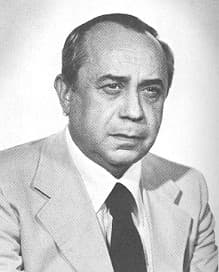
Biography coming soon.







