“Few things are sadder than the truly monstrous.”
— Narrator reflecting on the grotesque characters and decay in Hollywood.

Nathanael West (2022)
Genre
Literary Fiction / Historical Fiction
Reading Time
180 min
Key Themes
See below
Sign in to track this book
In 1930s Hollywood, a young artist sees the desperation and violence beneath the city's glamour, leading to an explosive riot.
Tod Hackett, a Yale School of Fine Arts graduate, arrives in Hollywood to design sets for a studio. He quickly dislikes the artificial and strange nature of the film industry and its surroundings. His art goal changes from designing sets to painting 'The Burning of Los Angeles,' a work meant to capture the despair and violence he sees in the city's people. He moves into the San Bernardino Arms, an apartment building with a mix of aspiring performers, hustlers, and older dreamers. Tod's first observations make him feel uneasy, as he sees the 'locusts' — the many displaced, bored, and frustrated people who came to Hollywood with unfulfilled dreams — gathering for a destructive event.
Tod soon meets Faye Greener, an aspiring actress and his neighbor, and immediately falls for her. Faye is very beautiful, cool, and wants to be a star, though she has no clear talent. She lives with her father, Harry Greener, a former vaudeville performer who now sells patent medicines door-to-door. Tod is drawn to Faye's superficial charm, even though he knows she is shallow and uses men. He often visits her apartment, usually finding other men trying to get her attention. Faye's lack of interest only makes Tod more obsessed, feeding his art vision for his painting, which starts to include her as a main, destructive figure.
Harry Greener, Faye's aging and sick father, has a severe heart attack. This event briefly breaks Faye's detached attitude, showing a small bit of real concern. Tod, along with other residents like Homer Simpson, helps Harry recover. During this time, Tod spends more time with Faye, hoping to connect more deeply, but she stays focused on her own goals and other men's attention. Harry's illness reminds them of how fragile life is and the unfulfilled dreams in Hollywood. Despite his declining health, Harry keeps his theatrical charm from his vaudeville past, which further shows how everyone in Los Angeles performs.
Homer Simpson, a quiet, repressed man from Iowa who retired to Hollywood, also falls deeply in love with Faye. Homer is very shy and dislikes physical touch; he has a nervous tic and deep loneliness. He first seeks a quiet life but gets involved with the Greeners. After Harry's heart attack, Homer starts giving Faye money, hoping to win her love. He buys her expensive gifts and lets her move into his house, where she hosts parties and entertains other men, causing Homer silent pain. His house becomes a center for Faye's various admirers, turning his once-peaceful home into a chaotic, emotionally draining place.
Harry Greener eventually dies from his illness. His funeral is strange, with a mix of truly sad people and opportunistic Hollywood types. After Harry's death, Faye moves more permanently into Homer's house, increasing her exploitation of his feelings and money. She uses his home for her social life, bringing over various acquaintances, including cowboys and gamblers, who further disrupt Homer's life. Faye stays focused on becoming a movie star, holding onto the idea of quick success despite her lack of talent. Homer's passive nature stops him from speaking up, leaving him more miserable and alone in his own home, while Tod watches the growing problems with a sense of dread, seeing it all as material for his apocalyptic painting.
Tod often goes to the parties Faye hosts at Homer's house, and other Hollywood gatherings, which show him the city's strange and often ugly social scene. These parties are full of minor actors, aspiring artists, and drifters, all on the edges of the film industry. Tod sees their desperate attempts to look glamorous and successful, often leading to small fights, exaggerated acts, and empty boasts. He meets characters like Earle Shoop and Miguel, two cowboys who become Faye's friends, showing her superficiality and how brief her relationships are. Tod's observations at these parties strengthen his belief that Hollywood is a place of unfulfilled desires and hidden anger, adding depth to his vision of the city's eventual destruction.
Tod's unrequited love for Faye becomes a main source of pain in his life. He keeps trying to win her over, offering real friendship and artistic insight, but she always rejects him, preferring the superficial attention of other men. His despair over Faye fuels his art project, 'The Burning of Los Angeles,' which becomes a grand vision of the city's collapse. He sees Faye as a symbol of Hollywood's attractive yet destructive power, a siren leading men to ruin. Despite his emotional suffering, Tod's art becomes more focused and intense, as he puts his observations of the city's desperate people and his own pain into the painting, which he believes will be his masterpiece and a true picture of the era's madness.
Homer Simpson's gentle, passive nature slowly breaks down under the constant stress of Faye's presence and the chaos she brings into his home. His nervous tic gets worse, and he becomes more agitated and withdrawn. He silently endures the parties, the strangers, and Faye's open flirting, but his inner turmoil grows. Homer's inability to express his desires or control his own life leads to deep humiliation and powerlessness. He wants a quiet, orderly life, but Faye's endless search for excitement and attention completely takes over his world, pushing him closer to a mental breakdown. Tod watches Homer's silent suffering, seeing him as another victim of Hollywood's misleading charm and the 'locusts' who harm the vulnerable.
Tod goes to a big movie premiere at the fictional 'Pantages' theater, an event that brings together a large crowd of spectators, many of whom are the 'locusts' he has been watching. These are the bored, the disappointed, and the angry, who came to Hollywood seeking fame, money, or just a distraction, only to find themselves ignored. The crowd's excitement quickly turns into tension, a hidden anger beneath their forced enthusiasm. Tod observes their faces, their movements, and their collective energy, recognizing the explosive potential of their unfulfilled desires. This scene is important for Tod's painting, as it gives him the final, raw details he needs to show the coming fire of Los Angeles, a city built on broken dreams.
The tension at the movie premiere finally explodes. A small incident involving a young boy throwing a stone at a celebrity's car quickly turns into a full riot. The crowd, driven by years of pent-up frustration, anger, and a need for release, becomes a destructive mob. Homer Simpson, pushed past his limit by the crowd's aggression and a perceived insult, snaps and attacks the boy, leading to his own brutal assault by the mob. Tod, caught in the middle of the chaos, is overwhelmed by the violence and despair. As the ambulance carries him away, he screams, not from pain, but trying to imitate the siren, a desperate, almost artistic expression of the apocalyptic vision that has now fully appeared in his mind for 'The Burning of Los Angeles.' The painting, he realizes, is no longer just a vision; it is a prophecy come true.
The Protagonist
Tod transforms from a detached observer to a participant overwhelmed by the chaos, ultimately finding his artistic vision fully realized amidst the city's destruction.
The Supporting
Faye remains largely unchanged, continuing her pursuit of stardom and exploiting others, highlighting the static nature of her self-centered ambition.
The Supporting
Homer's repression steadily increases under Faye's exploitation, culminating in a violent outburst and his ultimate destruction.
The Supporting
Harry's physical and professional decline ends in his death, a poignant representation of unfulfilled dreams.
The Supporting
Earle remains a static character, a transient figure on the fringes of Hollywood's dream factory.
The Supporting
Miguel remains a static character, symbolizing the transient and often ignored population of Hollywood's underbelly.
The Supporting
Claude remains a largely static character, embodying the cynical, entrenched Hollywood insider.
The Supporting
Abe remains a static, symbolic character, representing the grotesque and marginalized elements of Hollywood.
The Mentioned
Adore's brief appearance culminates in his role as the catalyst for the riot, fulfilling his symbolic function.
The novel closely examines the corrupted American Dream, especially in Hollywood. Characters like Harry Greener, Faye Greener, and Homer Simpson arrive in Los Angeles hoping for fame, money, or a peaceful retirement, but find only disappointment, exploitation, and despair. Hollywood, presented as full of opportunity, is instead a deceptive illusion where dreams are broken and replaced by bitter emptiness. The 'locusts' — the many unfulfilled people — gather in the city, drawn by its false appeal, showing the failure of this dream. Their collective frustration over their unfulfilled desires eventually leads to violence, a direct result of this grand illusion.
“Behind him an imitation Spanish house was going up. They were making a great effort to give it character, but it remained a sham, as impermanent as a movie set.”
Unfulfilled desire and obsessive love drive much of the story and characters. Tod Hackett's consuming, unrequited love for Faye Greener paralyzes him emotionally but also fuels his art. Homer Simpson's desperate desire for affection and companionship leads him to a pathetic obsession with Faye, letting her exploit him financially and emotionally. Faye herself is driven by a relentless, almost pathological desire for fame and attention, which she pursues with cold detachment, using anyone who can help her ambition. These desires, far from leading to fulfillment, lead to misery, violence, and destruction, showing the destructive power of unchecked longing in a superficial world.
“He knew that he would never marry her, never even make her, but he would go on being obsessed by her.”
Hollywood is shown as a place of widespread artificiality, where everything from buildings to emotions is a facade. Tod Hackett, as a set designer, directly helps create these illusions, but he also notices how they affect daily life. Characters like Harry Greener constantly perform, unable to stop acting. Faye Greener's beauty and charm hide her emotional emptiness. The landscape of Hollywood itself is described as a mix of imitation styles, without realness. This theme shows that nothing in this world is genuine, leading to deep alienation and a lack of real connection, which sets the stage for the eventual violent breakdown.
“He saw that behind their make-up, which was as thick as masks, they were all waiting for a sign.”
The novel is full of grotesque and absurd elements, reflecting West's satirical and cynical view of Hollywood. Characters often seem like caricatures, with their physical and mental flaws emphasized: the dwarf Abe Kusich, the child actor Adore Loomis, and the emotionally stunted Homer Simpson. The events themselves often seem farcical, such as Harry Greener's theatrical funeral or the strange parties at Homer's house. This widespread sense of the grotesque highlights the underlying horror and despair of the setting, suggesting that pursuing superficial dreams in Hollywood inevitably twists human nature, creating a world that is both comical and deeply unsettling.
“Every object, every person, was a caricature, a grotesque, as though the city had been designed by a madman and peopled by his creations.”
A strong sense of coming violence and apocalypse underlies the whole story. Tod Hackett's main artwork, 'The Burning of Los Angeles,' literally shows this theme, developing as he watches the city's residents. The 'locusts' — the frustrated, bored, and angry masses — are shown as a volatile force, ready to explode. The novel builds towards a climactic riot at a movie premiere, where years of suppressed anger and unfulfilled desires finally erupt into a destructive frenzy. This violence is not random; it is presented as an inevitable result of the artificiality, exploitation, and broken dreams that define Hollywood, a cathartic release of collective despair.
“He saw a crowd of people at the corner of Hollywood and Vine. They were the people who had come to California to die. They were the 'locusts.'”
Tod Hackett's evolving masterpiece, serving as a symbolic prophecy of the city's destruction.
Tod Hackett's painting, 'The Burning of Los Angeles,' functions as a central symbolic and structural device. It is not merely a piece of art but a prophetic vision that evolves throughout the novel, paralleling Tod's increasing understanding of Hollywood's inherent decay and violence. Each observation Tod makes – the grotesque characters, the superficiality, the simmering resentment of the 'locusts' – adds a new detail to his apocalyptic canvas. The painting serves as a constant reminder of the novel's dark trajectory, foreshadowing the inevitable eruption of chaos and violence. By the end, the riot at the premiere directly mirrors and completes Tod's artistic vision, blurring the lines between art and reality, prophecy and fulfillment.
A metaphor for the displaced, disillusioned masses drawn to Hollywood.
The term 'locusts' is a powerful metaphor used by Tod Hackett to describe the masses of bored, frustrated, and unfulfilled people who have migrated to Hollywood, seeking a dream that never materializes. These are the retired, the aspiring, the drifters – all drawn by the siren call of the film industry but left on its fringes. This device highlights their collective anonymity, their destructive potential, and their eventual swarming, which culminates in the riot. The 'locusts' symbolize the collective failure of the American Dream in Hollywood, their pent-up resentment representing a natural disaster waiting to happen. Their presence creates a pervasive sense of dread and foreshadows the novel's violent climax.
A literary technique that emphasizes distorted and exaggerated physical and psychological traits.
West employs grotesque realism to portray the characters and setting of Hollywood. This device involves exaggerating physical deformities (like Abe Kusich's dwarfism) and psychological distortions (like Homer Simpson's tic or Faye Greener's emotional emptiness). The descriptions of the architecture and social interactions also lean towards the bizarre and unnatural. This technique serves to highlight the underlying ugliness and despair beneath Hollywood's glamorous facade. By presenting characters and situations as grotesque, West underscores the dehumanizing effects of the city's superficiality and the corruption of human nature, contributing to the novel's satirical and critical tone, and emphasizing the absurdity of the characters' lives.
Repeated hints and portents of the impending violence and destruction.
Foreshadowing is a dominant plot device throughout 'The Day of the Locust,' creating a pervasive sense of dread and inevitability. From Tod Hackett's initial artistic vision of 'The Burning of Los Angeles' to his observations of the 'locusts' and their simmering resentment, the narrative constantly hints at an impending catastrophe. Descriptions of the crowds as a 'flood' or 'swarm,' and the recurrent imagery of fire and destruction, all build towards the climax. Even minor incidents of aggression or frustration serve as mini-foreshadows. This device ensures that the final riot feels not like a sudden event, but the inevitable culmination of all the preceding tensions and unfulfilled desires, making the ending both shocking and entirely predictable.
“Few things are sadder than the truly monstrous.”
— Narrator reflecting on the grotesque characters and decay in Hollywood.
“They were savage and bitter, especially the middle-aged and the old, and had been made so by boredom and disappointment.”
— Describing the disillusioned crowd at a movie premiere.
“All their lives they had slaved at some kind of dull, heavy labor, behind desks and counters, in the fields and at tedious machines of all sorts, saving their pennies and dreaming of the leisure that would be theirs when they had enough.”
— Narrator on the background of the masses drawn to Hollywood.
“Nothing could ever be violent enough to make taut their slack minds and bodies.”
— Commenting on the crowd's need for sensationalism.
“He had always been a solitary and had learned to amuse himself with his own dreams.”
— Describing Tod Hackett, the protagonist artist.
“The sun is a joke. Or an insinuation.”
— Tod's cynical thought about the artificiality of Hollywood.
“He was really a very complicated young man with a whole set of personalities, one inside the other like a nest of Chinese boxes.”
— Narrator describing Homer Simpson, a character in the novel.
“It is hard to laugh at the need for beauty and romance, no matter how tasteless, even horrible, the results of that need are.”
— Reflecting on the characters' desperate pursuit of glamour.
“They realize that they've been tricked and burn with resentment.”
— On the anger of the crowd when their Hollywood dreams fail.
“Every day of their lives they read the newspapers and went to the movies. Both fed them on lynchings, murder, sex crimes, explosions, wrecks, love nests, fires, miracles, revolutions, wars.”
— Describing the media diet that shapes the crowd's desires.
“He knew that he had nothing to worry about. He was an artist.”
— Tod Hackett's thought about his detachment from the chaos.
“The people who come to California to die, the cultists of all sorts, economic as well as religious, the wave, the airplane, the talkie—all have this in common: they have come to the end of the rope.”
— Narrator on the desperate individuals flocking to Hollywood.
“It was a mistake to think them harmless curiosity seekers. They were savage and bitter.”
— Reiterating the dangerous potential of the disillusioned crowd.
Ready to see how well you understood this book? Take our interactive quiz with 10 questions.
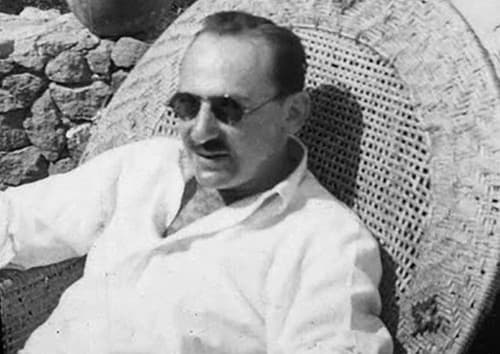
Nathanael West was an American writer and screenwriter. He is remembered for two darkly satirical novels: Miss Lonelyhearts (1933) and The Day of the Locust (1939), set respectively in the newspaper and Hollywood film industries.







