“The future is a mirror, reflecting only what we choose to see.”
— A philosophical musing by the protagonist about the nature of fate and human agency.

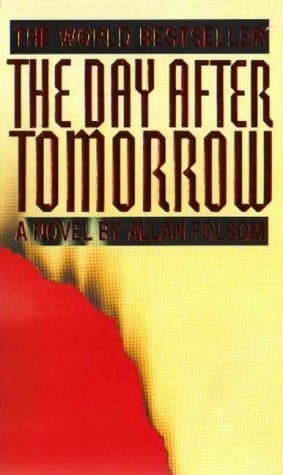
Allan Folsom (1994)
Genre
Thriller / Mystery / Science Fiction
Reading Time
1150 min
Key Themes
See below
Sign in to track this book
A relentless doctor, a haunted detective, and a shadowy cabal collide in a globe-spanning race to unravel a terrifying doomsday plot that blurs the lines between personal vengeance and global annihilation.
Dr. Virgil Cole, a brilliant but troubled neurosurgeon in Paris, receives devastating news: his estranged father, Dr. Marcus Cole, a renowned geneticist, has been brutally murdered in his remote Oregon home. The official report calls it a botched robbery, but Virgil suspects otherwise. Among his father's belongings, Virgil discovers a hidden safe containing a heavily encrypted data chip. This, along with his father's last known research into an obscure genetic disorder, convinces Virgil that Marcus's death is linked to something far more sinister than a simple robbery. He begins to question everything he thought he knew about his father and the mysterious circumstances surrounding his death, starting his dangerous investigation.
In rural Oregon, Detective John Kross is assigned to a series of horrifying and seemingly unrelated murders. The victims, all ordinary citizens, are found mutilated in a ritualistic manner, with their bodies drained of blood and strange symbols carved into their skin. Kross, a seasoned but cynical detective, initially struggles to find any common thread or motive. Local authorities are baffled, and the lack of forensic evidence makes the cases even more perplexing. As the body count rises, Kross realizes he is dealing with a highly intelligent and meticulous killer, or possibly a group of killers, whose methods suggest a deep-seated purpose. His investigation leads him down a dark path, hinting at a conspiracy far beyond local crime.
Meanwhile, a clandestine international organization known as 'The Consortium' is finishing 'The Genesis Project,' a terrifying biological weapon designed to selectively target and eliminate a significant portion of the global population based on specific genetic markers. Led by the enigmatic and ruthless 'Director,' The Consortium believes humanity has overpopulated and is destroying the planet, and their project is a necessary 'reset.' Their operations are global, involving high-level scientists, powerful politicians, and vast financial resources. The Director, a cold and calculating individual, oversees the final stages of the weapon's development, ensuring its absolute lethality and untraceability, all while maintaining complete secrecy about their apocalyptic agenda.
Back in Paris, Virgil Cole, aided by his former colleague and friend, Dr. Lena Hansen, a brilliant geneticist, begins to decrypt the data chip left by his father. The process is arduous, revealing layers of sophisticated encryption. As they slowly unlock its contents, they discover Marcus Cole's secret research: a groundbreaking but ethically questionable study into a rare genetic marker that makes individuals susceptible to a specific, highly aggressive pathogen. The data also contains fragmented notes and warnings, hinting at a global threat and his father's desperate attempts to expose it. Virgil realizes his father was not just researching a disease; he was uncovering a weapon, and his death was no accident.
Detective John Kross's relentless investigation in Oregon finally yields a breakthrough. He discovers a connection between the victims and a secretive, ancient cult known as the 'Children of the Serpent,' which has roots in the region's history. This cult practices bizarre rituals and believes in a coming cleansing of the world. Kross learns that the cult has been systematically targeting individuals, performing ritualistic sacrifices that mirror the murders. He also finds evidence suggesting the cult is not merely a local phenomenon but has ties to a much larger, more powerful organization, hinting at a global conspiracy that transcends simple fanatical worship. The cult's motives, however, remain shrouded in mystery.
To refine their weapon and assess its efficacy, The Consortium initiates a localized test run of 'The Genesis Project' in a remote, densely populated region. The chosen area experiences a sudden, inexplicable outbreak of a highly contagious and lethal illness, causing mass panic and overwhelming medical facilities. Governments struggle to contain the spread, and the scientific community is baffled by the pathogen's unique characteristics and rapid mutation. This test demonstrates The Consortium's power and the devastating potential of their weapon, confirming its ability to selectively target and eradicate its victims while remaining untraceable. The Director observes the chaos with cold satisfaction.
Through his decryption efforts, Virgil Cole uncovers the full scope of The Consortium's plan: a global pandemic designed to wipe out a genetically predetermined portion of humanity. He realizes his father was attempting to create a counter-agent. Simultaneously, Detective John Kross, following the trail of the Children of the Serpent, unearths evidence linking the cult to a much larger, global network and a plot involving a manufactured disease. Independently, both men begin to understand the apocalyptic scale of the conspiracy. Their separate investigations, driven by personal tragedy and professional duty, start to reveal overlapping details, hinting that their seemingly disparate cases are two sides of the same terrifying coin.
Armed with his father's research, Virgil Cole and Lena Hansen realize that Marcus Cole had been working on an antidote or a vaccine to counteract The Consortium's pathogen. They dedicate themselves to completing his work, understanding that the fate of humanity rests on their success. Working in a makeshift lab, they race against the clock, deciphering complex genetic sequences and experimenting with potential compounds. The challenge is immense, as The Consortium's pathogen is designed to be highly resilient and adaptive. They face numerous setbacks and dangers, knowing that The Consortium will stop at nothing to prevent them from succeeding, as an antidote would completely undermine their catastrophic plan.
Detective John Kross, after a dangerous infiltration, finally confronts the enigmatic leader of the Children of the Serpent. During a tense standoff, the cult leader, a fanatical figure driven by twisted ideology, reveals that their ritualistic murders were not just sacrifices but a means to identify and 'purify' individuals genetically predisposed to certain 'weaknesses,' aligning with The Consortium's eugenics agenda. The cult leader also confirms their direct involvement with The Consortium, acting as an enforcement arm and intelligence network. Kross realizes the depth of the conspiracy and the horrifying implications of this alliance, understanding that the cult is merely a cog in a much larger, more dangerous machine.
The Consortium, confident in their weapon's efficacy after the successful test run, initiates the final preparations for the global launch of 'The Genesis Project.' Their plan involves simultaneous releases of the pathogen in major population centers worldwide, ensuring a rapid and irreversible spread. The Director oversees the deployment logistics, utilizing a vast network of sleeper agents and advanced delivery systems. The world remains oblivious to the impending catastrophe, while Virgil and Kross, now aware of the imminent threat, feel the crushing weight of their responsibility. The countdown to global annihilation has begun, and the window for intervention is rapidly closing.
Through a series of desperate maneuvers and the intervention of a rogue intelligence contact, Virgil Cole and Detective John Kross finally connect. They share their findings, piecing together the full, terrifying picture of The Consortium's plan and the role of the Children of the Serpent. Virgil provides the scientific understanding of the pathogen and the potential antidote, while Kross offers crucial intelligence on The Consortium's operatives and their methods. Their combined knowledge creates a formidable, albeit desperate, force against the powerful organization. They realize that to stop The Consortium, they must not only develop an antidote but also expose and dismantle the entire global network.
With the global launch hours away, Virgil Cole, Lena Hansen, and John Kross embark on a perilous mission to prevent the pathogen's release. Kross, using his detective skills and contacts, tracks down key deployment sites and operatives, leading to intense confrontations. Virgil and Lena, meanwhile, refine the antidote, knowing it must be distributed globally in an impossibly short timeframe. They face direct attacks from Consortium agents, who are determined to eliminate them and ensure their plan proceeds unimpeded. The stakes are unimaginably high, with every second bringing humanity closer to the brink of extinction. Their desperate efforts lead them across continents, confronting danger at every turn.
The climax sees Virgil Cole and John Kross infiltrating The Consortium's central command, leading to a direct confrontation with the enigmatic Director. The Director, a chillingly intelligent and utterly convinced ideologue, reveals their full motivation: a twisted vision of a purified humanity, achieved through mass culling. A brutal struggle ensues, both physical and ideological. Virgil uses his scientific knowledge to outwit the Director, while Kross employs his combat skills to neutralize the Director's security. The fate of the antidote and the prevention of the global pandemic hang in the balance, as the heroes face their ultimate adversary in a high-stakes battle for the future of the world.
In a climactic effort, Virgil Cole and Lena Hansen manage to synthesize and initiate the global distribution of the antidote, narrowly averting a full-scale apocalypse. The world breathes a collective sigh of relief, but the near-catastrophe leaves deep scars. Governments and international organizations are forced to confront the existence of such powerful, clandestine groups. While The Consortium's immediate plan is foiled and many of its operatives captured or neutralized, the organization's deeper roots and ideology prove harder to eradicate. The heroes, though victorious, are left changed by their ordeal, forever haunted by the day the world almost ended. The future remains uncertain, with the lingering threat of similar plots.
The Protagonist
Transforms from a detached scientist into a driven hero, embracing his father's legacy to save humanity.
The Protagonist
Starts as a local detective, evolving into a global protector as he uncovers the vast conspiracy.
The Antagonist
Remains steadfast in their genocidal conviction until their ultimate defeat.
The Supporting/Mentioned
His legacy is posthumously redeemed as his research becomes the key to saving the world.
The Supporting
Develops from a supportive scientist into a frontline combatant against global catastrophe.
The Supporting
Remains a fanatic, leading their cult until their confrontation with Kross and the exposure of their alliance.
The Supporting
Helps bridge the gap between the two protagonists, then fades back into the shadows.
The novel explores the dangerous consequences when scientific advancement is divorced from ethical considerations. The Consortium's 'Genesis Project' is the ultimate manifestation of this, as brilliant scientific minds create a weapon of mass extinction based on a flawed, eugenicist ideology. Dr. Marcus Cole's initial, ethically ambiguous research into genetic markers also hints at this theme, showing how even noble intentions can lead to dangerous knowledge. The story suggests that unchecked scientific power, especially when wielded by those with a messianic complex, can lead humanity to the brink of self-destruction.
“"They believed they were gods, playing with the very fabric of life, but all they created was death on an unimaginable scale."”
The book contrasts pure evil, embodied by The Director's cold, calculating desire for global culling, with the inherent goodness and resilience of humanity, represented by Virgil and Kross. The Consortium believes their actions are a 'greater good,' a necessary evil to save the planet, highlighting the seductive nature of misguided ideologies. Conversely, the protagonists fight not for personal gain but for the survival of all, demonstrating selflessness and courage. The narrative questions whether any end can justify such horrific means, ultimately affirming the value of individual life and the collective human spirit.
““There are no good intentions when the path you choose leads to the extermination of millions.””
A key theme is that isolated individuals, no matter how brilliant, cannot overcome global threats alone. Virgil Cole, initially a lone wolf, and John Kross, a local detective, only begin to make progress when their paths converge. Their combined knowledge—Virgil's scientific expertise and Kross's investigative skills—is essential in deciphering The Consortium's plan and fighting back. The collaboration with Lena Hansen further emphasizes this, demonstrating how diverse talents working together are necessary to combat a multifaceted, global conspiracy. It highlights that unity and shared purpose are humanity's strongest defense against overwhelming evil.
““We are two pieces of a puzzle, Kross. Neither of us can see the whole picture without the other.””
Virgil Cole's journey is deeply intertwined with the theme of redemption, both for himself and for his father's legacy. He grapples with guilt over his estranged relationship with Dr. Marcus Cole, and his quest to stop The Consortium becomes a way to honor his father's memory and complete his unfinished work. Marcus Cole, though deceased, leaves behind a legacy of both dangerous knowledge and the potential for a cure, forcing Virgil to confront the complexities of his father's life and redeem his name. This theme underscores that one's actions, even posthumously, can have significant impacts and offer opportunities for reconciliation.
““My father may have started this, but I will be the one to finish it. For him, and for everyone else.””
The novel shows how close humanity constantly hovers to the brink of chaos and self-destruction. The Consortium's ability to orchestrate a global pandemic highlights the vulnerability of modern society, where a single, well-executed plan can dismantle civilization. The rapid breakdown of order during the test run of 'The Genesis Project' is a chilling reminder of how quickly societal structures can crumble under extreme pressure. This theme emphasizes the delicate balance that maintains peace and order, and how easily it can be shattered by malevolent forces operating in the shadows.
““One virus, one decision, and the world as we know it could cease to exist.””
A crucial piece of technology left by Dr. Marcus Cole that drives Virgil's investigation.
The encrypted data chip is the primary MacGuffin that propels Virgil Cole's plotline. It contains his father's groundbreaking research on genetic markers and, more importantly, the hidden truth about 'The Genesis Project' and the potential for an antidote. Its complex encryption creates a sense of urgency and mystery, forcing Virgil to apply his intellect and seek help, thereby expanding the narrative. The gradual decryption of the chip mirrors the unfolding revelation of the global conspiracy, giving the reader access to information at the same pace as the protagonist.
A series of bizarre killings that draw Detective Kross into the global conspiracy.
The ritualistic murders serve as the inciting incident for Detective John Kross's storyline. Their gruesome and inexplicable nature immediately establishes a sense of dread and mystery, hinting at something far beyond ordinary crime. The specific, symbolic mutilations and blood drainage are red herrings, designed to mislead local authorities and suggest a cultic motive. However, they ultimately lead Kross to the Children of the Serpent, which in turn reveals their connection to The Consortium, effectively linking his seemingly local investigation to the global threat.
A localized outbreak of the biological weapon that demonstrates its devastating power.
The Consortium's localized test run of 'The Genesis Project' is a powerful plot device that serves multiple functions. It provides concrete evidence of the biological weapon's lethality and selective targeting capabilities, elevating the stakes dramatically. It also serves as a chilling foreshadowing of the global catastrophe, allowing the reader and the protagonists to witness the terrifying potential firsthand. This event creates immense pressure on Virgil and Kross, underscoring the urgency of their mission and demonstrating the Director's unwavering commitment to their apocalyptic vision.
The specific biological key that determines susceptibility to 'The Genesis Project.'
The genetic marker is a central plot device, providing the scientific backbone for The Consortium's plan and the potential for an antidote. It explains how 'The Genesis Project' can selectively target a portion of humanity, making the threat both precise and terrifyingly plausible. Marcus Cole's initial research into this marker is what draws The Consortium's attention, making it the catalyst for his murder and Virgil's subsequent quest. The understanding of this marker is crucial for both developing the weapon and ultimately creating its counter-agent, making it the scientific fulcrum of the entire plot.
“The future is a mirror, reflecting only what we choose to see.”
— A philosophical musing by the protagonist about the nature of fate and human agency.
“Sometimes, the only way to find the truth is to get lost in the lies.”
— An observation made as the protagonist delves deeper into a web of conspiracy.
“Fear is a powerful weapon, but hope is an even stronger shield.”
— A moment of reflection during a perilous situation, emphasizing resilience.
“The world doesn't end with a bang or a whimper, but with a series of quiet, almost imperceptible changes.”
— A character's cynical view on societal collapse and environmental degradation.
“Trust is a luxury few can afford, and even fewer can truly offer.”
— A skeptical remark about alliances in a high-stakes investigation.
“The past is never truly gone; it merely waits for the right moment to re-emerge.”
— As old secrets begin to surface and impact present events.
“Knowledge is power, but the misuse of it can be the greatest destruction.”
— A warning about the dangers of advanced technology falling into the wrong hands.
“Even in the darkest of times, humanity finds a way to surprise you with its capacity for both cruelty and kindness.”
— Witnessing both extreme acts of violence and unexpected moments of compassion.
“The line between genius and madness is often just a matter of perspective.”
— Describing a brilliant but unstable scientist's motivations.
“Sometimes, the biggest threats aren't from outer space, but from within our own species.”
— A commentary on the internal conflicts and self-destructive tendencies of mankind.
“Every choice we make ripples through time, creating a future we can scarcely imagine.”
— Reflecting on the butterfly effect and the consequences of critical decisions.
“The silence was louder than any explosion, pregnant with unspoken truths and impending doom.”
— A tense moment before a major revelation or confrontation.
“To save the world, one must first be willing to lose everything they hold dear.”
— The protagonist grappling with personal sacrifice for a greater cause.
Ready to see how well you understood this book? Take our interactive quiz with 10 questions.
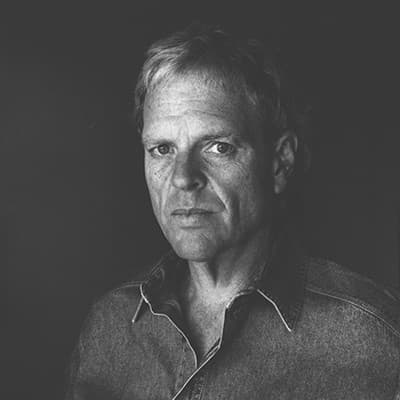
Allan Folsom is an American author known for his bestselling thriller, "The Day After Tomorrow." Published in 1994, the novel gained significant international acclaim and was translated into numerous languages. Folsom's work often explores complex geopolitical themes and historical conspiracies within a fast-paced narrative.







