“The world is not what it is, but what it means.”
— A recurring philosophical idea, often debated by characters like Drusas Achamian and Cnaiür.

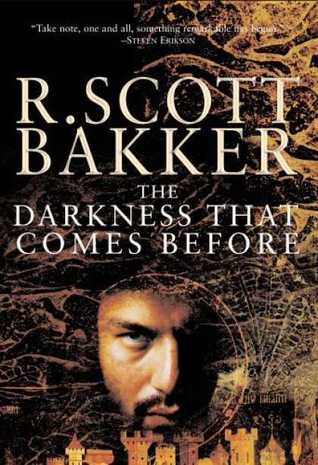
R. Scott Bakker (2003)
Genre
Fantasy / Science Fiction / Philosophy
Reading Time
1200 min
Key Themes
See below
Sign in to track this book
In a world scarred by ancient apocalypse and on the brink of a new holy war, a mysterious sorcerer draws four different people into a conflict that will change history.
Drusus Achamian, a battle-hardened sorcerer and former Mandate Schoolman, has disturbing dreams. He goes to the library of the Imperial Palace in Momemn, the capital, looking for answers in forbidden books. There, he finds ancient prophecies and histories suggesting the Consult, a malevolent, non-human entity behind the First Apocalypse millennia ago, is real and returning. Achamian's discovery is met with doubt, but he becomes convinced the Second Apocalypse is near. He realizes the world is unprepared, and the burden of this knowledge weighs on him.
Cnaiür, a powerful and brutal Scylvendi barbarian chieftain, captures Anasûrimbor Kellhus in the northern wilderness. Kellhus, from the far north, shows an unnerving intelligence and understanding of human behavior and combat. Though Cnaiür's prisoner, Kellhus subtly manipulates those around them with a few words or a glance. He says he wants to go south, towards the Holy War. Cnaiür, despite his initial power, finds himself drawn into Kellhus's plans, held by fear, fascination, and grudging respect. Kellhus's presence immediately unsettles everyone he meets, hinting at his deep, almost alien, understanding of the world.
The Prophet Maithanet, the Fanim spiritual leader, becomes a central figure, uniting the tribes and nations of the Kianene continent under a new Holy War. He preaches a doctrine calling for the purification of the land and the removal of non-believers, especially the Imperial Factions. His sermons create religious fervor among his followers, drawing thousands to his cause. The Holy War's declaration sets the stage for a large conflict, as armies gather, driven by zeal and the promise of reward. This event will reshape the political and religious world.
Recognizing Achamian's warnings, the Grandmaster of the Mandate, Seswki, sends him on a dangerous mission: to find the sorcerer Anasûrimbor Moënghus, who may have knowledge to fight the Consult. Moënghus, a powerful but mysterious figure, has been missing for centuries, his existence often dismissed as myth. Achamian, burdened by the task, thinks about the Mandate's declining power, once the world's main magical order, now a shadow of its past. He understands that the Mandate's internal issues and outdated ways have left them vulnerable, making his search for Moënghus a desperate and solitary effort against global catastrophe.
Kellhus, with the reluctant Cnaiür, travels south and joins the Holy War's large, disorganized armies. His arrival is unremarkable at first, but his intellect and strategy quickly become clear. He observes the internal politics, rivalries, and fervent but often misguided zeal of the Fanim. Through calculated actions, advice, and an ability to read and manipulate people, Kellhus begins to rise through the ranks and gain the trust of key figures in the crusade. He subtly undermines rivals and becomes an indispensable advisor, all while keeping his motives secret, pursuing his own agenda within the larger conflict.
Esmenet, a young woman from a noble house, finds her life changed when Cnaiür's Scylvendi band captures her during a raid. Stripped of her old life, she faces the harsh realities of captivity. Her resilience and intelligence catch Cnaiür's attention, and she becomes his concubine. Despite her brutal situation, Esmenet shows strength and adaptability. Her relationship with Cnaiür becomes a complex bond, leading to a forced marriage. This union highlights the clash between her civilized upbringing and the savage world she is forced into. Her experiences in captivity make her a hardened survivor.
Serwë, a young and naive girl, is sold to the House of Courtesans, a powerful guild in Momemn. She enters a world of social dynamics, political intrigue, and the harsh realities of her new job. Under the guidance of older courtesans, Serwë learns not only about intimacy but also observation, manipulation, and information gathering. She quickly sees that the House of Courtesans is more than a brothel; it is a network of spies and power brokers, deeply involved in the politics of the Thousand Cities. Her forced initiation shows her society's cynical side and forces her to mature quickly.
Achamian's difficult journey to find Moënghus takes him through dangerous lands, far from civilization. He encounters the Sranc, horrific, subhuman creatures known as the Consult's soldiers. These encounters are brutal and terrifying, confirming Achamian's worst fears about the Consult's return and the immediate danger. The battles against the Sranc are desperate, testing Achamian's magic and resolve. These fights remind him of the ancient evil he faces and the dire stakes of his mission, further isolating him in his grim task.
The Holy War armies, now a large and somewhat unified force thanks to Kellhus's guidance, fight the Imperial forces of the Thousand Cities on the Plains of Mengedda. This battle is the first major clash of the conflict. The Fanim, fueled by religious fervor, fight with savage intensity, while the Imperial forces, though disciplined, struggle against the numbers and zeal of their opponents. The battle is bloody and chaotic, showing the war's brutality and the differences in fighting styles and motivations. Mengedda sets a grim precedent for the scale and ferocity of future battles.
After the Battle of Mengedda and other fights, Kellhus's strategic skill and ability to predict outcomes become clear. He consistently gives advice that leads to Fanim victories or fewer losses, earning him the respect of warlords and even some in Maithanet's inner circle. His mysterious origins and deep understanding of human nature allow him to manipulate events and people with ease. He becomes an important figure, his authority growing to rival that of experienced commanders. Kellhus's rise to power within the Holy War is swift and seems unstoppable, making him a central, enigmatic force in the unfolding conflict.
As Achamian continues his journey and learns more about ancient lore, he uncovers more truths about the Consult. He learns that their goal is not just conquest, but the return of the No-God, an anti-divine entity that could erase all existence. This revelation makes Achamian more desperate, as he realizes the apocalyptic scale of the threat. The No-God means ultimate undoing, a force that would plunge creation into oblivion. This knowledge weighs heavily on him, making his quest for Moënghus not just about survival, but about preventing reality from being unmade. The stakes are immense.
Cnaiür, despite his initial power over Kellhus, finds himself increasingly under the enigmatic man's control. He struggles with his oath of loyalty, his barbarian pride clashing with Kellhus's intellect and power. He is both terrified and fascinated by Kellhus, seeing a profound, almost monstrous, otherness in him. Meanwhile, Esmenet, now Cnaiür's wife, navigates the brutal world of the Scylvendi and the Holy War. She uses her intelligence and resilience to survive, observing the machinations around her and subtly influencing events. Both Cnaiür and Esmenet find their lives deeply tied to Kellhus's rise, their struggles reflecting the larger chaos of the war.
The Protagonist/Antagonist
Kellhus begins as a captive and swiftly ascends to a position of immense influence within the Holy War, expertly weaving himself into the fabric of the conflict.
The Protagonist
Achamian transforms from a skeptical scholar into a solitary, desperate seeker of a solution to the world's impending doom.
The Supporting
Cnaiür's journey sees him reluctantly entangled in Kellhus's designs, struggling with his barbarian identity and his oath.
The Supporting
Esmenet transforms from a naive noble into a hardened, adaptable survivor and observer of the unfolding conflict.
The Supporting
Serwë's arc sees her lose her innocence and become a shrewd, if unwilling, participant in the world of espionage and power.
The Supporting
Maithanet rises as the central figure of the Holy War, his influence growing to encompass vast armies and territories.
The Supporting
Seswki grapples with the decline of his order and the mounting evidence of an ancient evil's return.
The Mentioned
Moënghus's arc is entirely off-screen, a driving force for Achamian's quest.
This theme is central, especially through Kellhus. His ability to predict and manipulate human behavior raises questions about whether characters have free will or if their actions are just predictable outcomes of their traits and circumstances. Kellhus's 'absence of soul' suggests a mechanistic view of existence, where all choices are predetermined. Achamian and Cnaiür, in contrast, struggle with their choices and consequences, often feeling trapped by fate or past actions, suggesting a fight against a deterministic force, embodied by Kellhus's calculating presence.
““All men are dogs, and all women bitches. And the world is a great kennel where they lick their wounds.””
The Holy War, appearing as a righteous crusade, quickly shows its darker side. Maithanet's fervor, though inspiring, also leads to fanaticism, brutality, and the suppression of dissent. The political maneuvering within the Fanim ranks, and the Consult's historical influence, show how even good intentions can be corrupted by power and rigid religious dogma. The Mandate itself, once a force for good, is weakened by internal politics and a reluctance to face uncomfortable truths, showing how institutions can become corrupt or ineffective.
““Belief, more than any other thing, was the source of their strength. But belief was also their greatest weakness.””
Achamian perfectly shows this theme. His discovery of the Consult's return and the coming Second Apocalypse is knowledge so terrifying that it isolates him from his peers and his order. He struggles to convince others of the threat, leading to loneliness and desperation. This burden of knowing, and the inability to share or be understood, drives his solitary quest and shows the personal cost of facing truths that most people cannot or will not accept. His past with Esmenet further highlights his isolation.
““To know was to be alone.””
This theme is clear in the interactions between Cnaiür and the 'civilized' world, and Esmenet's forced integration into Scylvendi culture. The novel explores the brutal honor codes and primal instincts of barbarians against the more nuanced, but often equally cruel, political schemes of settled empires. It questions which 'way of life' is more savage or humane, showing the violence and hypocrisy in both. Cnaiür's internal conflict and Esmenet's forced adaptation highlight the often unclear boundaries between these two perceived states.
““The civilized man built walls. The barbarian broke them down.””
The book's entire premise involves the gradual revelation of the Consult's return and the terrifying reality of the First Apocalypse. Through Achamian's research and the increasing presence of the Sranc, the reader and characters slowly uncover the scale of an ancient, cosmic horror that threatens all existence. This theme creates dread and urgency, as the past is not just history but an active, malevolent force re-emerging to shatter the present. The history of the No-God serves as the ultimate ancient evil.
““The past was never dead. It was not even past.””
A rigorous philosophical and physical discipline that produces individuals like Kellhus.
The Dunyain training is a brutal, lifelong regimen designed to eliminate all 'irrationality' and emotion, honing the mind and body to a state of absolute self-mastery and logical precision. It allows individuals like Kellhus to understand and manipulate others with unparalleled accuracy, essentially turning them into living supercomputers of human behavior. This device explains Kellhus's uncanny abilities and his detached, almost alien, perspective on the world, making him both incredibly effective and deeply unsettling. It serves as a philosophical underpinning for the exploration of free will and determinism.
A system of magic based on accessing the 'Warp' through the Gnosis.
Mandate sorcery is a complex magical system where practitioners, or Schoolmen, access a chaotic, dangerous dimension called the 'Warp' through a metaphysical faculty known as the Gnosis. This allows them to cast powerful spells, but at great personal risk, often leading to physical and mental degradation. This device provides the primary magical framework of the world, offering both offensive and defensive capabilities against threats, but also highlighting the inherent dangers and limitations of such power. It contrasts with the Consult's more insidious, ancient forms of magic.
Forbidden ancient texts and prophecies detailing the history and return of a malevolent entity.
The Consult Lore refers to the fragmented, often forbidden, historical accounts, prophecies, and religious texts that detail the First Apocalypse and the malevolent, non-human entity known as the Consult. Achamian's discovery and interpretation of these texts drive much of the initial plot, providing crucial exposition and establishing the overarching threat. This device functions as a source of mystery, dread, and exposition, slowly revealing the terrifying scope of the ancient evil and the stakes of the impending Second Apocalypse. It provides the historical and mythological backbone of the series.
A sacred, binding vow among the barbarian Scylvendi that dictates loyalty and actions.
The Scylvendi Oath is a powerful cultural and spiritual institution among the barbarian tribes, particularly exemplified by Cnaiür's binding to Kellhus. These oaths are considered inviolable, carrying immense weight and consequence, often leading to severe internal conflict for those bound by them. This device serves to explain Cnaiür's often contradictory actions and his deep, complex loyalty to Kellhus, despite his initial dominance. It highlights the clash between barbarian codes of honor and the more manipulative strategies of the civilized world, driving much of Cnaiür's personal struggle.
“The world is not what it is, but what it means.”
— A recurring philosophical idea, often debated by characters like Drusas Achamian and Cnaiür.
“All men are fools, brother, but some are more foolish than others.”
— A cynical observation on human nature, possibly from a warrior or a general.
“The past is a wound, and the future is a scar.”
— A reflection on the inescapable impact of history and the grim prospects for the future.
“To know is to suffer.”
— A core theme, particularly for characters burdened with forbidden knowledge or prophetic visions, such as Drusas Achamian.
“There are no gods, only men and their desires.”
— A nihilistic or atheistic viewpoint expressed in a world where divine intervention is often ambiguous or absent.
“The greatest lie is the one we tell ourselves.”
— A comment on self-deception and internal conflict.
“Memory is a traitor.”
— A reflection on the unreliability of memory, especially in a narrative where history is often manipulated or forgotten.
“Power is not given, it is taken.”
— A ruthless insight into the nature of political and military power.
“Hope is the greatest cruelty.”
— A dark and despairing perspective on the nature of hope in a bleak world.
“Only the dead have seen the end of war.”
— A grim statement on the perpetual nature of conflict, often attributed to philosophers or generals.
“What is true is not always what is real.”
— A philosophical distinction often explored when characters encounter ancient mysteries or perceive reality differently.
“The heart of man is a dark forest.”
— A metaphor for the hidden complexities and often malevolent aspects of human nature.
“Prophecy is a cage.”
— A perspective on the constricting and often tragic nature of foreknowledge, especially for those bound by it.
“Every man is his own hell.”
— A statement emphasizing internal suffering and the self-inflicted torments of the human mind.
Ready to see how well you understood this book? Take our interactive quiz with 10 questions.
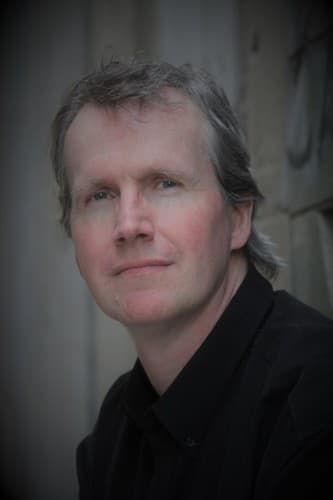
Biography coming soon.







