“The truth is a funny thing. You think you have it, then it slips through your fingers like sand.”
— Jason contemplating the elusive nature of truth as he uncovers more about his town.

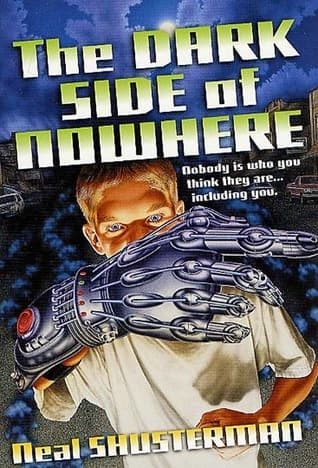
Neal Shusterman (1997)
Genre
Fantasy / Children's / Mystery / Science Fiction / Young Adult
Reading Time
150 min
Key Themes
See below
Sign in to track this book
In the seemingly idyllic town of Billington, Jason's ordinary bad day spirals into a terrifying mystery as he realizes his own identity, and everyone else's, is a meticulously constructed lie.
Jason Miller wakes up feeling 'off,' as if a part of him is missing. He notices his parents and friends, especially his best friend, Dan, are also acting strangely, showing an unusual calmness. A mysterious 'sickness' is spreading through Billington, causing people to forget things and behave out of character. Jason’s own memories start to blur; he has vague recollections of a different life, different parents, and a different name, which he struggles to reconcile with his current reality. His parents dismiss his concerns, saying he has a fever, but Jason feels an undeniable sense of wrongness, as if his life is a poorly constructed facade. He feels drawn to the woods, with a deep, inexplicable connection to them.
Driven by an instinct he cannot explain, Jason goes into the woods and discovers a hidden, dilapidated house. Inside, he finds a girl named Kim, who is equally bewildered and afraid. Kim reveals that she, too, is experiencing memory gaps and a deep feeling of displacement. She has vivid, unsettling dreams of a past that does not align with her current life. As they talk, they realize they share similar fragmented memories of a 'real' past that feels more authentic than their present. Kim shows Jason a hidden compartment in the house, containing strange, ancient-looking tools and diagrams, suggesting a deeper mystery in Billington. They decide to investigate together, united by their shared confusion and the growing certainty that something is wrong.
Kim and Jason discover that they are 'Firsts'—the original inhabitants of Billington. The 'sickness' is a process of replacement, where beings called 'Others' are slowly taking over the lives of the Firsts. The Others are advanced, symbiotic beings that merge with a host, absorbing their memories and personality, but in a muted, emotionless way. The Firsts who resist the full assimilation process experience the memory loss and disorientation Jason and Kim feel. They learn that the Others' goal is to create a peaceful, harmonious society, free from human chaos and strong emotions. This revelation is devastating, as it means their families and friends are either already replaced or in the process of being taken over.
Kim and Jason learn about 'memory seeds' – small, organic devices implanted in the brains of the Firsts. These seeds transmit the memories of the Others, gradually overwriting the Firsts' original personalities. The Firsts who are resisting the full assimilation are experiencing conflict between their own fading memories and the incoming Other memories. They also find evidence that the 'sickness' is engineered to make the Firsts compliant and less likely to resist. The dilapidated house in the woods, they realize, is a remnant of a previous attempt to resist the Others, a safe haven for Firsts who managed to escape or delay their assimilation. This discovery confirms their understanding of the danger they face and the insidious nature of the Others' plan.
As days pass, Billington becomes an unsettling place. More and more people show the calm, emotionless demeanor of the Others. Jason watches his best friend, Dan, who was initially a bit resistant, slowly succumbing to the change. Dan's personality fades, replaced by a calm, almost robotic politeness. This transformation deeply distresses Jason. He realizes that the town he knew is slowly being erased, replaced by a sterile imitation. This personal loss fuels Jason's determination to fight back and find a way to reverse the process, or at least save those who have not been fully assimilated yet.
Jason and Kim are confronted by an Elder of the Others, who explains their motivations. The Elder reveals that the Others are not malicious; they come from a dying world and seek to create a perfect, peaceful society by eliminating negative human emotions like anger, greed, and sadness. They believe they are improving humanity. The Elder offers Jason and Kim a choice: embrace the change and become an Other, living a life of peace, or continue to resist and face the consequences. This presents a moral dilemma for Jason and Kim, forcing them to question whether their 'humanity,' with all its flaws, is worth fighting for against a seemingly benevolent force.
Through their continued investigations, Jason and Kim find evidence that some Firsts retain fragments of their original personalities even after the memory seeds are activated. They learn that complete assimilation is not always instantaneous or total, especially for individuals with strong wills or unique brain patterns. This discovery sparks hope. It implies that there might be a way to reawaken the Firsts, or at least prevent others from succumbing entirely. This knowledge shifts their focus from mere survival to actively finding a way to fight back and potentially reverse the Others' influence on Billington.
Realizing the memory seeds are connected through a network, Jason and Kim create a daring plan to disrupt it. They believe that by overloading or corrupting the central hub of this network, they might be able to temporarily disable the assimilation process or even reverse it for some Firsts. Their plan involves using the ancient tools and knowledge found in the hidden house, which they now understand were left by previous generations of Firsts who attempted to resist. This plan is dangerous, as it would expose them directly to the Others' influence and potentially lead to their complete assimilation or worse. Despite the risks, they see it as their only chance to save Billington.
Jason confronts his parents, who are now fully assimilated Others, but he struggles to connect with the empty shells they have become. The Elder of the Others, along with other assimilated townspeople, try to reason with Jason and Kim, explaining that their resistance is futile and that peace is inevitable. They try to convince them to willingly accept the change, promising an end to their fear and confusion. Jason and Kim are at a crossroads, faced with the overwhelming power of the Others and the allure of a peaceful, if emotionless, existence. The tension grows as they realize they must make a choice: fight for their humanity or surrender to the Others' vision.
Jason and Kim execute their plan, managing to access and disrupt the Others' central network. The disruption causes momentary chaos throughout Billington, as the Others' collective consciousness flickers. While they succeed in creating a significant disturbance, the outcome is not a complete victory. Some Firsts are partially reawakened, experiencing a jumble of their original memories and the Others' influence, leaving them confused and fragmented. Others remain fully assimilated. Jason and Kim realize they have not reversed the process entirely, but they have opened a pathway for individual Firsts to potentially reclaim parts of themselves. They understand that the fight for true individuality and memory is a continuous, personal battle for each First, not a single, decisive victory.
In the aftermath, Billington is a town of fractured identities. Some people show signs of their old selves returning, while others remain calm and empty. Jason and Kim, though exhausted, feel a sense of accomplishment mixed with the heavy burden of what they have done and what remains. They know the Others are still present, and their influence has not been entirely eradicated. Billington's future is uncertain, a delicate balance between reclaimed humanity and lingering alien presence. Jason and Kim, now changed by their ordeal, understand they are guardians of a fragile truth, forever vigilant against the quiet invasion, and committed to helping those who can still be reached.
The Protagonist
Jason transforms from a bewildered victim into a determined leader, fighting to reclaim his identity and the humanity of his town.
The Supporting
Kim evolves from a frightened, isolated individual into a courageous and vital member of the resistance, finding strength in unity.
The Supporting
Dan undergoes a tragic arc of assimilation, losing his individuality and becoming a symbol of the Others' success.
The Antagonist
The Elder remains steadfast in their belief in the Others' mission, serving as a constant, rational counterpoint to Jason's emotional resistance.
The Supporting
Their character arc is one of transformation into emotionless Others, serving as a personal symbol of Jason's loss.
The Mentioned
Their collective arc is one of gradual, widespread assimilation, losing their individual identities.
The novel centers on Jason's struggle to define who he is when his memories and the world around him constantly change. He grapples with the unsettling feeling that he is not himself, leading him on a quest to uncover his true origins and reclaim his identity from the Others. This theme is embodied in the 'Firsts' who fight to retain their unique selves against the Others' desire for a collective, emotionless existence.
“It was like waking up in a dream, knowing it wasn't real, but not being able to find your way out.”
The book explores what it means to be human by contrasting the Firsts' emotional, sometimes chaotic existence with the Others' peaceful, emotionless harmony. The Others view human emotions as flaws that cause suffering, while Jason and Kim fight to preserve them, recognizing that joy, sadness, and anger are integral to the human experience. This theme questions whether a life without negative emotions, but also lacking true joy and individuality, is desirable or truly 'living.'
“They wanted to take away the pain, but they didn't understand that by doing so, they took away everything else too.”
Billington's transformation into a town of calm, agreeable Others represents ultimate conformity, where all unique thoughts and emotions are smoothed over for collective peace. Jason and Kim's resistance is an assertion of individuality, a refusal to be absorbed into a homogeneous whole. The book examines the dangers of sacrificing personal identity for collective harmony, even when the intentions behind that harmony are presented as benevolent. The struggle highlights the value of diverse thoughts and feelings.
“To them, we were just noisy, messy data to be cleaned up.”
Memory is a central battleground in the novel. The Others manipulate and overwrite the Firsts' memories, creating a false reality. Jason's fluctuating memories drive his suspicion and quest for truth. The book explores how memory shapes identity and how easily reality can be distorted when memories are controlled. The fight to reclaim authentic memories is the same as the fight to reclaim one's true self and history.
“If you don't remember who you are, how can you ever know what to fight for?”
Organic implants used by the Others to overwrite memories and assimilate Firsts.
The 'memory seeds' are a crucial plot device, serving as the biological mechanism through which the Others invade and assimilate the Firsts. These implants transmit the Others' collective consciousness and memories, gradually replacing the host's original personality and sense of self. Their existence explains the memory loss and personality changes experienced by Jason and others. Disrupting these seeds becomes the central goal of Jason and Kim's plan, making them both a symbol of the invasion and the key to resistance.
A euphemism for the Others' assimilation process, masking its true nature.
The 'sickness' is a narrative device used to initially mislead characters and readers, creating a sense of mystery and dread. It refers to the gradual personality changes, memory loss, and placid demeanor observed in the townspeople. By presenting the assimilation as a benign illness, the Others maintain their deception and disarm potential resistance. Uncovering the true nature of the 'sickness'—that it's a deliberate, engineered process of replacement—is a major turning point in the plot, revealing the insidious nature of the invasion.
A remnant of a past resistance, serving as a sanctuary and source of clues.
The dilapidated house in the woods functions as a symbolic and literal sanctuary for Jason and Kim, and a repository of forgotten knowledge. It represents a past generation of Firsts who also resisted the Others, providing ancient tools and diagrams that are crucial for Jason and Kim's plan. This setting emphasizes the cyclical nature of the conflict and offers a tangible link to a history of resistance, giving the protagonists hope and resources when they feel most isolated. It's a place where the 'real' past is preserved.
The shared mental network that unifies the Others and facilitates assimilation.
The Others operate as a collective consciousness, sharing thoughts, memories, and emotions (or lack thereof). This device explains their seemingly unified purpose and their ability to quickly assimilate and control individuals. It also highlights the stark contrast with human individuality. Disrupting this network is the core of Jason and Kim's plan, as it is the source of the Others' power and the means by which they control Billington. It underscores the threat of losing individual thought to a single, pervasive entity.
“The truth is a funny thing. You think you have it, then it slips through your fingers like sand.”
— Jason contemplating the elusive nature of truth as he uncovers more about his town.
“It's one thing to know you're different, it's another to know *why*.”
— Jason reflecting on his growing unease and the strange occurrences in his life.
“Sometimes the safest place is the one you've been told not to go.”
— Jason considering the forbidden 'Nowhere' as a potential source of answers.
“Fear can be a powerful motivator, but it can also blind you to the truth.”
— A character discussing the town's fear of 'Nowhere' and its impact.
“The past isn't always gone. Sometimes it's just waiting to be remembered.”
— Jason encountering fragmented memories and hints of a forgotten history.
“How can you trust what you see, when you know what you see isn't real?”
— Jason questioning the reality of his surroundings as the illusions begin to crumble.
“Every secret has a cost, and sometimes that cost is everything you thought you were.”
— The profound implications of discovering the town's central secret.
“The hardest part of growing up is realizing that not all adults have the answers, or even want to give them to you.”
— Jason's disillusionment with the adults in his life who are withholding information.
“Some walls are built to keep things out, and some are built to keep things in.”
— A metaphorical observation about the boundaries of the town and its secrets.
“You can't run from who you are, no matter how far you go.”
— Jason grappling with his true nature after a shocking revelation.
“Sometimes the biggest monsters are the ones we create ourselves.”
— A reflection on the internal and external threats faced by the characters.
“The world isn't always what it seems, and sometimes that's a good thing, and sometimes it's terrifying.”
— Jason's evolving understanding of his world as he uncovers more layers of deception.
“To truly live, you have to be willing to question everything.”
— A philosophical point about the necessity of critical thinking in a world of illusions.
“Even in the darkest places, there can be a glimmer of hope, if you're brave enough to look for it.”
— Jason's determination to find a solution despite the overwhelming odds and grim truths.
Ready to see how well you understood this book? Take our interactive quiz with 10 questions.

Biography coming soon.







