“The only difference between a madman and me is that I am not mad.”
— Thad Beaumont's internal thoughts on his relationship with George Stark.

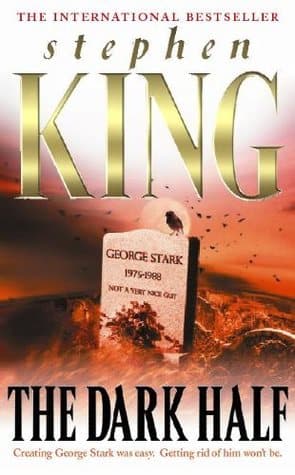
Stephen King (1989)
Genre
Thriller / Fantasy / Mystery
Reading Time
9-10 hours
Key Themes
See below
Sign in to track this book
When a novelist's violent pseudonym takes on a life of its own, Thad Beaumont must confront the terrifying reality that his dark literary creation is committing real-world murders, all while framing him with his own bloody fingerprints.
When nine-year-old Thad Beaumont suffers from severe headaches and strange visions, doctors discover a growth in his brain. During surgery, they find not a tumor, but the remains of an eye and teeth—the parasitic twin Thad absorbed before birth. Doctors remove the mass, and Thad's mother, Helga, buries it in a pet cemetery, naming the grave 'George Stark.' Thad represses this traumatic event, though it subtly affects his future.
Decades later, Thad Beaumont is a successful, acclaimed literary novelist, and also a popular author of violent thrillers under the name George Stark. After a journalist, Fred Clawson, threatens to reveal his dual identity, Thad and his agent decide to get ahead of the story. They stage a mock funeral for George Stark, complete with a New York Times obituary and a photoshoot for People magazine, where Thad poses with a prop tombstone engraved with Stark's name. This public 'death' is meant to free Thad from his pulp-fiction past.
Soon after the staged funeral, a series of brutal murders begins. The first victim is Fred Clawson, the journalist who tried to expose Thad. The scene is gruesome, and the killer leaves a message in blood: 'The sparrows are flying again.' Sheriff Alan Pangborn investigates, and fingerprints at the scene are identified as Thad Beaumont's. However, Thad has an alibi. Thad does not know that the symbolic 'death' of George Stark has somehow given the parasitic twin a physical form, bringing him to life with murderous intent.
George Stark, now a real, malicious entity, continues his killing spree. He murders Homer Gamache, Thad's literary agent, and later Rick Cowley, the photographer for People magazine, always leaving Thad's fingerprints and the 'sparrows' message. Stark is a physically imposing figure, dressed in black leather, driven by rage and a need to exist. He uses a straight razor, inflicting horrific wounds. His goal is to force Thad to write under the Stark name again and eliminate anyone who gets in his way.
As the murders increase, Thad is repeatedly questioned by Sheriff Pangborn. Despite the fingerprint evidence, Pangborn begins to suspect something stranger is happening due to Thad's genuine confusion and clear alibis. Thad starts having vivid, disturbing dreams and visions, feeling Stark's presence and hearing his thoughts. He realizes that Stark is not just an outside threat but a part of him, a dark reflection. This connection terrifies Thad, especially when Stark begins sending menacing messages to his wife, Liz, and their twin children, William and Matthew, subtly threatening their safety.
Stark, after brutally murdering pathologist Dr. Vinnie Frank and a deputy, drives toward Thad's secluded lake house in Ludlow, Maine, where Thad, Liz, and the children are staying. He plans to force Thad to resume writing as George Stark, believing his existence depends on Thad's creative work. Stark reveals his decaying physical state, which he blames on Thad's refusal to write for him. He confronts Thad, demanding cooperation and threatening his family if he refuses. Thad's psychological torment intensifies as he faces the monstrous reality of his parasitic twin.
Liz Beaumont, at first doubtful of Thad's claims about a living pseudonym, faces the terrifying truth when Stark breaks into their lake house. She tries to protect her twin sons, William and Matthew. Stark, wanting to fully replace Thad, tries to manipulate and harm the children, sensing their vulnerability and connection to Thad. Liz's desperate efforts to shield her family show the threat Stark poses, not just to Thad's life, but to his entire identity.
As the confrontation at the lake house grows, a strange event occurs: hundreds, then thousands, of sparrows gather around the property. These are not ordinary birds; they have bright, malevolent eyes and an almost supernatural intelligence. Stark reveals that these sparrows are his 'familiars,' his connection to the world, drawn to him and serving as his eyes and ears. Their presence creates a claustrophobic and menacing atmosphere, signaling the climax of Stark's terror.
Thad, armed with a gun but knowing normal weapons are useless, understands that his unique connection to Stark is both his curse and his only weapon. He confronts Stark, who is growing weaker and more desperate as his physical form deteriorates. Thad, remembering the original 'tombstone' and Stark's parasitic nature, realizes he must fully reject and re-absorb his dark side. He appeals to the sparrows, who, sensing Stark's fading power and Thad's rightful claim, turn on their 'master.' They swarm Stark, pecking and tearing at him, dismembering him.
Afterward, George Stark is gone, consumed by the sparrows. Sheriff Alan Pangborn arrives to find a traumatized Thad, Liz, and the children, and the remnants of the gruesome battle. While physical evidence of Stark's existence is almost gone, the psychological scars remain deep. Thad is left with the terrifying knowledge of what he was capable of, and the dark half that once resided within him. The family tries to rebuild their lives, forever changed by the encounter with a literal manifestation of Thad's inner demons, and the blurred line between fiction and reality.
The Protagonist
Thad transforms from a man trying to bury his past to one who must confront and ultimately re-absorb his dark half, accepting the duality of his nature.
The Antagonist
Stark moves from a symbolic 'death' to a violent rebirth, then to a gradual physical decay as Thad resists him, culminating in his complete annihilation.
The Supporting
Liz evolves from a skeptical but supportive wife to a terrified witness and active participant in the fight against Stark, facing unimaginable horror with courage.
The Supporting
Pangborn moves from a conventional murder investigation to grappling with supernatural phenomena, expanding his understanding of justice beyond the purely rational.
The Mentioned
Clawson serves as a catalyst for the plot, his role ending abruptly with his brutal murder.
The Mentioned
Frank's arc is brief, his professional expertise inadvertently drawing the wrath of Stark, leading to his demise.
The Mentioned
Gamache's arc is limited to his professional interaction with Thad and his subsequent brutal murder by Stark.
The Supporting
William, along with his brother, serves as a symbol of the innocent lives threatened by Stark, forcing Thad to confront his dark half.
The Supporting
Matthew, alongside his brother, symbolizes the purity and future Thad strives to protect from Stark's corruption.
The Mentioned
Helga's actions in the past set the foundational premise for the entire conflict.
The main theme explores the good and evil, or creative and destructive impulses, within one person. Thad Beaumont shows this duality: his literary persona is thoughtful and artistic, while George Stark represents his violent, primal side. The novel suggests that repressing one aspect of oneself can lead to its monstrous appearance. This is clear when Stark, Thad's dark half, literally comes to life after Thad tries to discard him, leading to the brutal murders committed by Stark, which are psychologically linked to Thad.
“''He's part of me, Alan. He's the dark half.'”
The novel explores the idea that imagination and creative acts can have real, even dangerous, power. Thad's creation of George Stark, and then symbolically 'killing' him, accidentally gives the parasitic twin a physical form. Stark's existence depends on Thad's willingness to write for him, showing how a writer's creations can become real. This is clear from Stark's decaying form when Thad refuses to write, and his demand for Thad to 'feed' him with new stories, highlighting the strong link between creator and creation.
“''You made me, Thad. You gave me life, and now you want to take it away. I won't let you.'”
Thad's journey involves struggling with and finally accepting his complete identity, including his darker aspects. He first tries to separate his life, keeping his George Stark persona distinct from his 'real' self. Stark's appearance forces him to face the fact that this violent, primal side is an intrinsic, though suppressed, part of him. The climax, where Thad must engage with and re-absorb Stark rather than just defeat him, signifies his acceptance of his full self, both light and dark. This is essential for his survival and eventual peace.
“''You can't get rid of me, Thad. I'm you.'”
The book explores whether evil is an outside force, an inherent part of human nature, or a result of suppression. Stark is pure, destructive evil. However, his origin as Thad's parasitic twin suggests this evil came from within Thad himself. The story questions if such evil can ever truly be removed, or if it simply changes form. The sparrows, Stark's familiars and eventually his destroyers, symbolize an ancient form of justice or nature's way of rebalancing the unnatural manifestation of evil.
“''He was the part of me that wrote about blood and guts and torture. And he was real. He was real, Alan.'”
The novel shows the lasting impact of childhood trauma and the dangers of repressing painful memories. Thad's traumatic surgery at age nine, when his parasitic twin was removed, is almost entirely repressed from his conscious mind. However, this event directly leads to the creation of George Stark as a pseudonym and eventually as a physical entity. The repressed memory appears as a real-world horror, suggesting that unresolved psychological wounds can fester and erupt destructively, demanding to be acknowledged.
“''He'd been inside me all along. Just waiting for his chance to get out.'”
A rare medical condition that becomes the literal foundation of the antagonist.
The discovery of a vestigial parasitic twin inside young Thad Beaumont's brain serves as the story's foundational plot device. This medical anomaly, named 'George Stark' by Thad's mother, provides a biological and symbolic origin for the antagonist. It grounds the supernatural horror in a grotesque reality, giving a plausible (within the story's context) reason for Stark's physical manifestation later. It also provides the inherent, unbreakable link between Thad and Stark, making their conflict deeply personal and existential.
A literary pseudonym that gains physical form and malevolent sentience.
The central plot device is the transformation of George Stark from a literary pseudonym into a living, breathing, murderous entity. This device blurs the lines between fiction and reality, suggesting that creative acts can have unforeseen and dangerous consequences. The public 'funeral' for the pseudonym acts as a catalyst, inadvertently providing the symbolic 'death' necessary for Stark's physical rebirth. This device drives the entire conflict, as Stark's existence is tied to Thad's creation and acknowledgment of him.
Supernaturally drawn birds that serve as Stark's familiars and ultimate destroyers.
The sparrows are a unique and unsettling plot device. Initially appearing as a motif in Stark's blood-written messages ('The sparrows are flying again'), they later manifest as a literal swarm of birds with malevolent intelligence. They function as Stark's 'familiars,' his eyes and ears in the world, and are drawn to his presence. Crucially, they also serve as the instrument of Stark's final destruction, turning on him when Thad asserts his rightful claim, symbolizing a natural, primal force that rectifies an unnatural imbalance. They add an element of gothic horror and cosmic justice.
The mental and emotional connection between Thad and Stark.
Thad and Stark share a profound psychic and emotional link, a direct consequence of their origin as parasitic twins. This device allows Thad to experience Stark's thoughts, visions, and even physical sensations, albeit painfully and involuntarily. It also means Stark can sense Thad's emotional state and locate him. This connection is vital for both the suspense and the resolution. It heightens Thad's torment, makes him question his sanity, and ultimately provides him with the unique insight needed to understand and defeat Stark.
“The only difference between a madman and me is that I am not mad.”
— Thad Beaumont's internal thoughts on his relationship with George Stark.
“He knew it was the sound of something tearing, something that had been whole and now was not.”
— Thad's realization of the deepening rift between his two personas.
“Sometimes dead is better. But not always.”
— A variation of a famous line, applied to the resurrection of Stark.
“The birds are flying south now, aren't they? And the sparrows are flying north.”
— A cryptic line spoken by Stark, implying a reversal of natural order.
“He was an arrow loosed from a bow, and the target was Thad Beaumont.”
— Describing George Stark's relentless pursuit of Thad.
“There are no ghosts in this house. Only me.”
— Stark's chilling declaration, emphasizing his realness and malevolence.
“He was the dark half, the secret sharer, the one who knew all the bad things.”
— Thad's understanding of Stark's role in his psyche and life.
“The pen is mightier than the sword, but sometimes the pen needs a little help from the sword.”
— Stark's violent philosophy contrasting with Thad's literary one.
“He had created a monster, and the monster was hungry.”
— Thad's growing fear and realization of Stark's independent existence.
“The words were his lifeblood, and now they were tainted.”
— Thad's struggle to write after Stark's emergence, his art corrupted.
“There was a part of him that was still a child, afraid of the dark, afraid of what might be lurking there.”
— Thad's vulnerability and deep-seated fears resurfacing.
“It was like looking into a funhouse mirror, only the reflection was more real than the original.”
— Thad's distorted perception of himself and Stark's growing dominance.
“The sparrows were watching, always watching.”
— The recurring motif of sparrows as ominous observers and agents.
“You can't get rid of me, Thad. I'm you.”
— Stark's ultimate taunt, highlighting the inseparable nature of their bond.
Ready to see how well you understood this book? Take our interactive quiz with 10 questions.
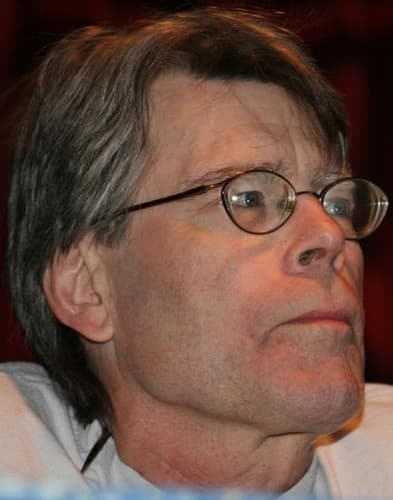
Stephen Edwin King is an American author of horror, supernatural fiction, suspense, crime, science-fiction, and fantasy novels. Described as the "King of Horror", his books have sold more than 350 million copies as of 2006, and many have been adapted into films, television series, miniseries, and comic books. King has published over 65 novels/novellas, including seven under the pen name Richard Bachman, and five non-fiction books. He has also written approximately 200 short stories, most of which have been published in book collections.







