“For always, in the end, it is the sea that calls.”
— Philip's reflection on his destiny and the irresistible pull of the sea.

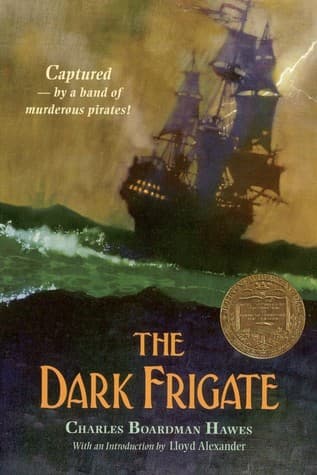
Charles Boardman Hawes (1950)
Genre
Children's / Historical Fiction / Young Adult
Reading Time
264 min
Key Themes
See below
Sign in to track this book
Fleeing for his life, young Philip Marsham escapes 17th-century London only to be swept into a perilous new existence as an unwilling pirate aboard the 'Rose of Devon,' battling treacherous seas and even more treacherous men.
The story begins in 17th-century London, introducing Philip Marsham, a young man who loves the sea, despite his father's wishes for him to pursue a different path. Philip's father, a shipmaster, dies, leaving Philip an orphan. Soon after, a tragic accident occurs during a street brawl where Philip, defending himself, accidentally causes a man's death. Panicked and fearing the harsh justice of the time, Philip knows he must flee London immediately. He seeks refuge from his pursuers, as staying in the city would mean certain arrest and likely execution for a crime he committed by accident.
Desperate to escape London, Philip uses his knowledge of the docks to find a ship. He eventually signs on as a common seaman aboard the 'Rose of Devon,' a frigate bound for Newfoundland. The ship is somewhat mysterious, with a crew that seems a mix of hardened sailors and men with questionable pasts. Philip, despite his youth, quickly proves his worth to the captain, Captain Pinch, with his natural seamanship and quick wit. He finds a measure of peace and purpose on the ship, believing he has left his troubles behind him for the voyage.
Mid-ocean, the 'Rose of Devon' encounters a derelict ship, seemingly abandoned and wrecked. Upon closer inspection, survivors are found clinging to the wreckage. Captain Pinch, upholding the maritime tradition of aiding those in distress, orders his crew to rescue the men. These survivors, however, are not what they seem. They are a well-organized group of pirates, led by Henry Champion. Their appearance of distress is a ruse to gain access to a ship and its crew, setting the stage for a violent takeover.
Once aboard the 'Rose of Devon,' the 'survivors' quickly show their true colors. They launch a brutal and swift mutiny, overwhelming Captain Pinch and his loyal crew. Many of the original crew are killed, and those who resist are put down. Philip, caught in the chaos, is spared due to his youth and skill. The pirates, under Champion's command, raise the black flag, making the 'Rose of Devon' a pirate vessel. Philip is given a grim choice: join them or face a watery grave, becoming an unwilling member of their crew.
Philip is now forced to live and work among the pirates. He sees firsthand their brutality, lawlessness, and greed. He is assigned duties, often involving his sailing expertise, and he tries to keep a low profile, hoping to survive this terrible ordeal. Despite his inner revulsion, he must participate in some of their activities to avoid suspicion and stay alive. He learns the customs and cruel hierarchy of the pirate ship, observing Champion's cold leadership and the various personalities among the crew, all while secretly longing for escape and a return to an honest life.
Under Champion's command, the 'Rose of Devon' embarks on a series of successful raids against merchant ships in the Atlantic. Philip is present for these brutal encounters, witnessing the plunder of cargo, the intimidation of crews, and sometimes, the murder of those who resist. The pirates accumulate a considerable amount of treasure, which further fuels their reckless and violent lifestyle. Philip's skills as a seaman are often used during these raids, making him an unwilling accomplice to their crimes, deepening his internal conflict and fear of the consequences should he ever be caught.
As time passes, Philip, though outwardly compliant, constantly plans for a way out. He begins to subtly assess the weaknesses within the pirate crew, the rivalries, and Champion's vulnerabilities. He befriends a few of the less hardened pirates, trying to gauge their loyalty or potential for defection. A particular incident or discussion might spark an idea, a desperate plan to either escape during a raid or even attempt to turn the tide against Champion and his most loyal men. This is a shift from passive survival to active, though cautious, resistance.
Philip's growing defiance or an ill-fated escape attempt brings him directly into conflict with Henry Champion. This confrontation is tense and dangerous, as Champion is a shrewd and merciless leader. Philip's quick thinking and resourcefulness are tested. He might try to rally a few sympathetic crew members, or he might seize a moment of chaos during a battle or a storm to make his move. This moment determines whether he remains a captive or takes a significant step towards regaining his freedom, likely involving a desperate fight for survival.
Through luck, a daring act, or a successful mutiny, Philip eventually finds himself free from the pirates and makes his way back to England. However, his return is dangerous. He is now known as an associate of pirates, and the authorities are actively hunting such individuals. He must prove his innocence and explain his forced involvement with the 'gentlemen of fortune.' The shadow of the gallows still looms, as his original crime in London is also unresolved, and his time under the black flag has complicated his situation immensely.
Philip is brought to trial, likely facing charges of piracy—a capital offense. He must recount his harrowing tale, detailing how he was forced into service and made to participate in the pirates' exploits. He relies on his integrity and the testimony of any surviving witnesses or evidence he might have gathered. The legal system of 17th-century England is harsh, but Philip's honesty and the compelling nature of his story, perhaps aided by a sympathetic judge or jury, ultimately lead to his clearing. He is cleared of the piracy charges, and likely, the accidental death in London is also resolved in his favor.
With his name cleared, Philip Marsham is finally free from the threat of the gallows and the pirate's life. He has endured unimaginable hardships, proving his resilience, courage, and moral compass. Having faced the darkest aspects of humanity and survived, he is now a seasoned and experienced seaman, though young. The sea, once a means of escape and then a prison, now calls as a path to an honest and fulfilling life. He is free to pursue his true calling, perhaps even as a shipmaster like his father, showing a hard-won independence and maturity.
The Protagonist
Philip transforms from an innocent, fleeing orphan into a hardened but honorable seaman who survives extreme adversity and clears his name.
The Antagonist
Champion remains a static character, a consistent force of evil, driven by ambition and cruelty until his inevitable downfall.
The Supporting
Captain Pinch serves as an early mentor and a symbol of the legitimate maritime world, his fate highlighting the danger Philip faces.
The Mentioned
This character is a plot device, his death serving as the catalyst for Philip's flight.
The Supporting
These characters generally remain static, embodying the different facets of pirate life and serving as obstacles or minor allies for Philip.
The novel explores justice and injustice, beginning with Philip's accidental killing of a man in London, which forces him to flee, fearing an unjust conviction. His forced life as a pirate further highlights this, as he is an unwilling participant in crimes, yet branded a pirate by society. The story questions what true justice means when one is forced into a life of crime. Philip's ultimate clearing at trial is a hard-won victory for true justice against appearances, as he must convince a court of his innocence despite his 'pirate' past.
“''Twas not by my will that I sailed under the black flag, but by the threat of a noose around my neck.”
At its core, 'The Dark Frigate' is a story of survival. Philip Marsham is thrust into life-threatening situations, from fleeing London to enduring life aboard a pirate ship. His resilience is tested constantly, both physically and morally. He must adapt to harsh conditions, navigate dangerous personalities, and maintain his inner integrity despite outward compliance. His ability to endure, witness atrocities, and still find a way to escape and clear his name shows the human will to survive against overwhelming odds, seen in his constant search for an escape route.
“A man must live, no matter how foul the company, if he means to fight another day.”
Philip Marsham begins the story as a relatively innocent young man, though with a tragic past. His accidental killing in London and his forced life as a pirate strip him of this innocence. He witnesses violence, murder, and depravity, forcing him to confront the darkest aspects of human nature. This theme is evident in how his view of the world changes from one of adventure to one of harsh reality. He learns to kill, to lie, and to navigate a world without law, forever changing his perspective, though he never fully gives in to the moral corruption of his captors.
“The sea, which I had loved as a boy, now showed me a face I never knew existed, cruel and without mercy.”
The sea itself is a powerful theme, representing both freedom and confinement, opportunity and danger. For Philip, it is initially a way to escape London and his true calling. However, it quickly becomes his prison when the 'Rose of Devon' is taken by pirates. The sea is the backdrop for adventures and brutal battles, showing its dual nature as a source of livelihood and a place of peril. The changing nature of the 'Rose of Devon' from a merchant vessel to a pirate ship under the black flag symbolizes this theme, showing how the sea can be bent to different wills.
“The salt spray on my face was a mixed blessing, for it tasted of freedom and of blood.”
Philip is wrongly accused of murder and forced into a pirate's life.
This device drives the initial conflict. Philip accidentally causes a man's death and, fearing an unjust trial in 17th-century London, flees. Later, he is forced to serve on a pirate ship, making him appear to be a willing pirate. This dual layer of false accusation and mistaken identity creates immense dramatic tension, as Philip must constantly prove his innocence, both for the initial crime and for his forced association with piracy, making his ultimate vindication a powerful resolution.
A ship that transforms from a legitimate vessel to a pirate frigate.
The ship itself acts as a significant plot device. Initially a legitimate merchant vessel, the 'Rose of Devon' is violently transformed into a pirate ship under the black flag. This physical transformation mirrors Philip's own unwilling transformation from a seaman to a 'pirate.' The ship becomes a symbol of his imprisonment and the corruption of innocent things, representing the loss of his freedom and innocence. Its eventual fate, whatever it may be, often reflects Philip's journey and moral struggle.
The pirates' cunning trick to seize the 'Rose of Devon'.
The 'deceptive rescue' of the 'survivors' from the derelict ship is a crucial plot device that allows the pirates to seize the 'Rose of Devon' without an outright naval battle. This act of treachery highlights the cunning and ruthlessness of Henry Champion and his crew. It immediately establishes the pirates as formidable and untrustworthy adversaries, raising the stakes and making Philip's situation all the more perilous, as he realizes he cannot trust appearances.
Philip is forced to participate in pirate activities to survive.
This device creates constant internal conflict for Philip. To survive, he must outwardly comply with the pirates' demands and participate in their raids, even if it means compromising his moral code. This forces him into difficult choices, where his actions do not align with his beliefs. This dilemma deepens his character, making his struggle to maintain his integrity while appearing to be one of them a central source of tension and a testament to his resilience.
“For always, in the end, it is the sea that calls.”
— Philip's reflection on his destiny and the irresistible pull of the sea.
“A man must choose his own path, even if it leads him into deep waters.”
— Philip contemplating a difficult decision aboard the frigate.
“There are some things a man cannot run from, no matter how fast his ship.”
— Philip's internal struggle with past events and his conscience.
“The wind and the waves care nothing for a man's troubles, only for his skill.”
— A crew member's practical observation during a storm.
“Loyalty, lad, is a commodity more precious than gold on the high seas.”
— Captain Roberts advising Philip on the importance of crew cohesion.
“A ship is more than wood and canvas; it is the heart of every man who sails her.”
— Philip's growing understanding of the bond between sailors and their vessel.
“Fear is a poor helmsman, but a good warning.”
— An old sailor's wisdom shared with Philip.
“The horizon always promises more than it reveals, and that is the sea's greatest trick.”
— Philip's musings on the endless possibilities and deceptions of the open ocean.
“Justice on the sea is often a swift and brutal thing, far from the courts of land.”
— Philip observing the harsh realities of maritime law and order.
“Every man has his own dark frigate, sailing within him, carrying his secrets.”
— Philip's introspective moment, reflecting on human nature and hidden burdens.
“To be truly free, one must first understand what it means to be bound.”
— A philosophical thought Philip has while considering his circumstances.
“The sea takes much, but it also gives back, often in ways unexpected.”
— Philip's realization about the cyclical nature of life at sea.
“Courage is not the absence of fear, but the will to act despite it.”
— Philip's internal monologue during a dangerous encounter.
“A good sailor knows not just the ship, but the temper of the ocean itself.”
— An experienced sailor imparting knowledge to a younger Philip.
Ready to see how well you understood this book? Take our interactive quiz with 10 questions.

Charles Boardman Hawes was an American author known for his adventure novels for young readers. His most famous work, "The Dark Frigate," published in 1923, won the Newbery Medal for excellence in American children's literature. Hawes's writing often featured historical settings and tales of the sea.

Dan Gemeinhart
4.5

Kate O'Hearn
4.4

Jeanne Birdsall
4.4

Jen Wang
4.4

Wendelin Van Draanen
4.3

John Marsden
4.3

Chris Van Allsburg
4.3
Jennifer A. Nielsen
4.2