“Each of us is a danger box. We all have secrets. We all have things we keep hidden, even from ourselves.”
— Zoom talks about the nature of secrets and identity.

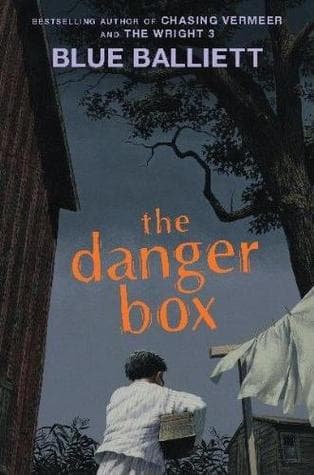
Blue Balliett (2010)
Genre
Children's / Mystery / Young Adult
Reading Time
320 min
Key Themes
See below
Sign in to track this book
In a town full of secrets, a boy who sees the world differently, a new girl, and an old notebook start a quest to solve a suspicious fire, a stranger's arrival, and a sudden death.
Zoomy, a boy who sees letters and numbers as colors, moves to Rolling Glen, Illinois, to live with his Aunt Lily. He brings a special box, his 'danger box,' filled with small, important objects. Soon after arriving, he finds a small, red leather-bound notebook in a discarded box of books. The notebook has intricate, coded drawings and strange, handwritten messages, hinting at a secret known only to its first owner. Zoomy is immediately drawn to its contents and the mystery it presents, despite his aunt's warnings about the town's isolated nature and the importance of fitting in.
Zoomy quickly meets Raven, a spirited and independent girl who seems to be an outcast in Rolling Glen. Unlike the other children, who are all perfectly dressed and behaved, Raven is often messy and openly questions the town's strict rules. Zoomy notices the unusual sameness among the residents: everyone dresses similarly, follows the same routines, and acts unnaturally calm. He also sees many cameras and constant surveillance, making him suspect something is wrong beneath Rolling Glen's perfect surface.
Through talks with Raven and his own observations, Zoomy learns about the mysterious disappearance of a local artist named Mrs. Sharpe. Mrs. Sharpe was known for her unique personality and her unsettling artwork, which showed Rolling Glen's hidden truths. Zoomy starts to connect Mrs. Sharpe's disappearance to the red notebook, believing she might have owned it. The intricate drawings and coded messages in the notebook seem to match Mrs. Sharpe's art style and her focus on the town's secrets, making Zoomy more determined to find the truth.
A fire breaks out at Mrs. Sharpe's abandoned studio, increasing Zoomy and Raven's suspicions. While investigating, they meet a strange, secretive man who seems to be watching the town closely. This man, Mr. Gold, is initially hard to pin down, but Zoomy's synesthesia helps him see Mr. Gold as someone who understands deeper perceptions. Mr. Gold's presence adds another layer of intrigue to the mystery, suggesting Rolling Glen's secrets go beyond the town.
Zoomy and Raven work together to decipher the codes and symbols in the red notebook. Zoomy's ability to see numbers and letters as colors is crucial in solving the notebook's secrets, while Raven's sharp observation skills and local knowledge provide important context. They discover the notebook contains not just drawings, but also coded messages and warnings about the town's hidden systems and the people controlling them. The messages hint at a deeper conspiracy, involving the manipulation of residents and the suppression of individuality.
As they investigate further, Zoomy and Raven uncover the full extent of Rolling Glen's sophisticated surveillance system. They realize the town is closely watched, with cameras hidden in ordinary places and a network of informants reporting any rule-breaking. The townspeople's 'perfect' behavior is not natural but enforced through constant observation and subtle psychological manipulation. This confirms their suspicions that Rolling Glen is not just an ideal community, but a controlled environment designed to maintain order and conformity.
Using the notebook's clues and their own investigations, Zoomy and Raven identify the powerful individuals, called 'The Watchers,' who control Rolling Glen. These Watchers are prominent community figures, appearing benevolent, but they manage every aspect of the townspeople's lives. They use the surveillance system and psychological tactics to ensure conformity and stop any individuality or disagreement. The children realize Mrs. Sharpe disappeared because she defied this oppressive system.
A prominent member of 'The Watchers' is found dead under mysterious circumstances, raising the stakes of Zoomy and Raven's investigation. While it first looks like an accident, the children suspect foul play, believing it is connected to the town's secrets and the growing resistance. This event creates fear among the remaining Watchers, causing their control to weaken. The death serves as a turning point, making Zoomy and Raven's quest to expose the truth more urgent before more harm comes to those who seek individuality.
Zoomy realizes his 'danger box,' filled with seemingly random objects, holds the key to exposing the Watchers. Each item, through his synesthetic perception, connects to a piece of the puzzle. He understands the Watchers are trying to create a perfect, controlled environment, like a curated museum exhibit, where individuality is stifled. With Raven's help, Zoomy plans to use the items from his danger box and Mrs. Sharpe's decoded messages to disrupt the Watchers' control and awaken the townspeople to their manipulated reality.
Zoomy and Raven carry out their plan, spreading information from Mrs. Sharpe's notebook and using Zoomy's unique way of seeing to highlight the inconsistencies and manipulations in Rolling Glen. They expose the Watchers' control methods and the true nature of their 'perfect' town. The townspeople, initially resistant, start to question their reality as evidence grows. Rolling Glen's carefully built facade crumbles, and residents slowly begin to reclaim their individuality, showing the power of truth and independent thought over forced conformity. The Watchers' hold on the town loosens, and the community begins to heal.
The Protagonist
Zoomy evolves from a shy, observant newcomer into a courageous leader who uses his unique abilities to expose a town's secrets and inspire change.
The Supporting
Raven grows from a solitary rebel to a collaborative partner, finding strength and purpose in working with Zoomy to fight for truth.
The Supporting
Aunt Lily transforms from an unwitting participant in the town's control to an awakened individual who supports Zoomy's pursuit of truth.
The Mentioned
Though absent, Mrs. Sharpe's legacy inspires the protagonists, demonstrating the lasting power of art and truth.
The Supporting
Mr. Gold remains largely enigmatic but serves as a catalyst, subtly guiding the protagonists towards their discoveries.
The Antagonist
The Watchers attempt to maintain their control but are ultimately exposed and their power diminished by the protagonists.
The Supporting
The townspeople collectively move from passive conformity to a dawning awareness and eventual reclaiming of their individuality.
This is the main theme, shown by the contrast between Zoomy and Raven's unique personalities and Rolling Glen's uniform, controlled environment. The town suppresses individual expression through surveillance and social conditioning, forcing residents into a 'perfect' mold. Zoomy's synesthesia, which lets him see the world differently, symbolizes the power of individual perception. Raven's rebellious nature shows the importance of resisting societal pressure to conform. The story suggests that true strength and beauty come from embracing one's unique self, even when it challenges the norm, as seen when the townspeople regain their identities after the Watchers are exposed.
“"The perfect town was a perfectly still lake, reflecting only what it was told to see."”
The story highlights how different ways of seeing and paying attention can reveal hidden truths. Zoomy's synesthesia literally shows this, allowing him to notice patterns and oddities others miss, like the 'colors' of people's true intentions or coded messages. Raven's sharp observation skills and skepticism also help piece together the mystery. The Watchers rely on the townspeople's lack of critical observation to maintain control. The story suggests that questioning what is presented and looking beyond the surface are key to uncovering deception and understanding reality.
“"Sometimes, the most important things are hidden in plain sight, if you just know how to look."”
Rolling Glen is an example of a society under constant surveillance and manipulation. The Watchers' careful control over every part of the townspeople's lives, from routines to expressions, shows how easily freedom can be lost in the name of 'order' or 'perfection.' Hidden cameras and subtle psychological tactics create an atmosphere of fear and conformity, stifling creativity and real human connection. The fire at Mrs. Sharpe's studio, a deliberate act to erase defiance, shows the extreme measures taken to keep this control. The story is a warning about the ethics of widespread monitoring and the importance of privacy.
“"The town was a beautiful cage, and everyone inside was a perfectly trained bird."”
Art, especially Mrs. Sharpe's work and the cryptic notebook, is a powerful tool for resistance and truth-telling. Mrs. Sharpe's art, even after she disappears, protests the Watchers' control, capturing the town's hidden darkness. The coded drawings in her notebook are not just clues but artistic expressions of disagreement, preserving truth when direct communication is impossible. Zoomy's ability to 'see' the world in colors, a form of creative perception, helps him decode these artistic messages. The story suggests that creative expression can challenge oppressive systems and inspire change, even when seemingly silenced.
“"Art isn't just pretty pictures, Zoomy. It's a way to tell the truth when no one wants to hear it."”
Zoomy's unique sensory perception that aids in solving the mystery.
Zoomy's synesthesia, where he sees letters and numbers as colors, is a crucial plot device. It not only defines his character but also serves as a unique tool for decoding information and perceiving hidden truths. For example, he can 'see' the patterns in coded messages or sense the 'colors' of people's emotions and intentions, providing him with insights unavailable to others. This ability allows him to interpret Mrs. Sharpe's notebook, identify inconsistencies in the town, and ultimately expose the Watchers, making him an indispensable detective.
A mysterious notebook containing coded messages and drawings, central to the mystery.
The red leather notebook, discovered by Zoomy, is the primary driving force of the plot. It belonged to the disappeared artist Mrs. Sharpe and contains intricate coded messages, drawings, and warnings about Rolling Glen. The process of deciphering its contents provides Zoomy and Raven with crucial clues about the Watchers' control, the town's surveillance system, and Mrs. Sharpe's fate. It acts as a posthumous voice for Mrs. Sharpe, guiding the protagonists and slowly revealing the layers of the town's deception, making it an essential MacGuffin and a symbol of suppressed truth.
Zoomy's personal box of significant objects, which provides unexpected clues.
Zoomy's 'danger box' is a personal collection of seemingly random objects that hold deep meaning for him, often linked to past experiences or anxieties. This box functions as a symbolic representation of Zoomy's inner world and his unique way of processing information. As the mystery unfolds, certain objects within the box unexpectedly provide crucial insights or connect to elements of the Rolling Glen conspiracy. It acts as a physical manifestation of Zoomy's intuition and unique perception, offering a non-linear path to understanding and ultimately helping him piece together the larger puzzle.
The constant monitoring of Rolling Glen's residents, creating an atmosphere of conformity.
The pervasive surveillance system in Rolling Glen is a key plot device that establishes the town's oppressive atmosphere and the Watchers' control. Hidden cameras, watchful neighbors, and an unspoken code of conduct ensure that every deviation from the 'norm' is noted. This constant monitoring is not just a background detail; it actively shapes the plot by forcing Zoomy and Raven to be cautious in their investigation and by explaining the townspeople's manufactured conformity. It underscores the theme of control and highlights the dangers to individuality when privacy is completely eroded.
“Each of us is a danger box. We all have secrets. We all have things we keep hidden, even from ourselves.”
— Zoom talks about the nature of secrets and identity.
“The past isn't just behind us. It's inside us, too. Shaping who we are, whether we know it or not.”
— Zoom reflects on the impact of past events and family history.
“Sometimes the biggest mysteries aren't about what happened, but why.”
— Zoom ponders the motivations behind the events he's investigating.
“A photograph can lie. Not just by what it shows, but by what it leaves out.”
— Zoom considers the deceptive nature of visual evidence.
“Being brave isn't about not being scared. It's about doing what you have to do even when you are.”
— Zoom contemplates his own fear and courage during his investigation.
“Every object has a story, if you know how to listen.”
— Zoom, a keen observer, thinks about the clues inanimate objects can hold.
“The truth is rarely simple. It's usually tangled up with other truths, and a few lies, too.”
— Zoom grapples with the complexity of the mystery he's trying to solve.
“You can't really understand someone until you've tried to see the world from their side.”
— Zoom considers empathy as a tool for understanding others' actions.
“Sometimes the things that seem like coincidences are actually connections waiting to be found.”
— Zoom reflects on seemingly random events that turn out to be linked.
“A secret shared isn't a secret anymore. It's a weight lifted, or a burden passed on.”
— Zoom considers the act of revealing secrets and its consequences.
“The world is full of puzzles, and the best ones are often hidden in plain sight.”
— Zoom's general philosophy on mysteries and observation.
“Knowing a person's weakness can be a powerful thing. But so can knowing their strength.”
— Zoom analyzes the characters involved in the mystery.
“History isn't just dates and names. It's the stories of people, and how those stories echo through time.”
— Zoom thinks about the personal side of historical events.
“The quietest people often have the loudest thoughts.”
— Zoom observes the introverted nature of some characters.
Ready to see how well you understood this book? Take our interactive quiz with 10 questions.

Blue Balliett is a critically acclaimed author of children's mystery novels. She is best known for the "Pentacle" series, which includes the award-winning "Chasing Vermeer." Her works are celebrated for their intricate puzzles and integration of art and history.
Dan Gemeinhart
4.5
Kate O'Hearn
4.4

Jeanne Birdsall
4.4

Jen Wang
4.4
Wendelin Van Draanen
4.3

John Marsden
4.3

Chris Van Allsburg
4.3
Jennifer A. Nielsen
4.2