“The only thing worse than a liar is a perjurer.”
— Sophie Neveu reflecting on Silas's confession.

Dan Brown (2009)
Genre
Thriller / Historical Fiction / Mystery
Reading Time
360 min
Key Themes
See below
Sign in to track this book
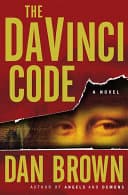
A symbologist and a cryptologist race through European landmarks, deciphering ancient codes and uncovering a conspiracy that could rewrite the foundations of Christianity.
Harvard symbologist Robert Langdon wakes in Paris to a phone call from the French police. They tell him Jacques Saunière, the Louvre Museum curator, has been murdered inside the museum. Saunière was also a Grand Master of the Priory of Sion, a secret society. Captain Bezu Fache brings Langdon to the crime scene. Fache believes Langdon is involved because of a cryptic message Saunière left on the floor next to his body: a pentacle drawn in blood on his stomach, an ambiguous alphanumeric code, and a line of text implicating Langdon. Sophie Neveu, a cryptographer from the French police and Saunière's estranged granddaughter, arrives and secretly warns Langdon that Fache thinks he is the killer and has put a GPS tracker on him.
Sophie says the alphanumeric code is a Fibonacci sequence, out of order, and the text is an anagram. Working together, they realize Saunière's last message is a series of clues. The first clue leads them to a hidden key behind a painting. Fache, meanwhile, has intercepted a message from Saunière's answering machine, which he misinterprets as Langdon threatening Saunière. Langdon and Neveu escape Fache and his officers by leaving the Louvre in an armored transport. They use the key, which has a fleur-de-lis symbol and a Paris bank address, leading them to the Depository Bank of Zurich.
At the Depository Bank of Zurich, Langdon and Neveu use Saunière's key to open his safe deposit box. Inside, they find a rosewood box containing a cryptex, an ancient cylindrical container with five alphabetical dials that must be aligned to spell a five-letter word. If not, a vial of vinegar inside breaks and destroys the hidden papyrus scroll. They realize the first clue to opening the cryptex is on the box itself: 'An ancient logic, a new path.' Silas, an albino monk working for a shadowy figure called 'The Teacher,' has been tracking Saunière's associates and also wants the cryptex. Fache, now knowing their location, closes in on the bank.
Langdon and Neveu escape the bank with the cryptex and go to Château Villette, the home of Sir Leigh Teabing, a wealthy British Royal Historian and Grail expert whom Langdon knows. Teabing, who uses a wheelchair, is excited by the cryptex and explains the history of the Priory of Sion, a secret society protecting the Holy Grail's true identity. He says the Grail is not a cup but a person: Mary Magdalene, who was Jesus' wife and had his child. The Priory's mission is to protect her bloodline and documents proving this lineage, which the Catholic Church has suppressed for centuries. Teabing believes the cryptex contains the location of these documents, which he calls the 'keystone'.
Silas, following 'The Teacher's' instructions, breaks into Teabing's chateau, thinking the cryptex is there. A struggle happens, and Silas is captured. Teabing, Langdon, Neveu, and Teabing's butler, Remy, escape in Teabing's private jet to London, taking Silas. On the plane, they try to solve the first cryptex, with the clue 'An ancient logic, a new path.' Teabing suggests 'S-O-P-H-I-A' (wisdom). They almost open it, but Langdon realizes the clue points to a pentacle, a feminine symbol. In London, Remy, secretly working for 'The Teacher,' helps Silas escape and abducts Neveu, taking the cryptex. Remy then poisons Silas, fearing he might say too much.
Langdon and Teabing follow a clue Remy left, leading them to Temple Church. They find a message from 'The Teacher' demanding the cryptex. Langdon eventually figures out the word to open the first cryptex: 'A-P-P-L-E,' referring to the apple of knowledge and the fallen feminine. Inside, they find a smaller cryptex and a new riddle. Fache, now in London and convinced of Langdon's innocence after a tip from an anonymous source, tracks them to Temple Church. He realizes Teabing is 'The Teacher' when he sees Teabing's subtle actions and hears his fanatical speeches about the Grail. Teabing is arrested.
With Teabing exposed as 'The Teacher,' Langdon and Neveu realize they are still in danger. The clue from the second cryptex leads them to Westminster Abbey, specifically to Isaac Newton's tomb, one of the Priory's Grand Masters. They open the second cryptex using the word 'G-R-A-I-L,' expecting to find Mary Magdalene's tomb location. However, they find only a final riddle. Langdon solves it, realizing the true location is not in Westminster Abbey but in nearby Rosslyn Chapel. He also understands the final clue, which involves an inverted pentagram and a 'blade and chalice' symbol.
Langdon and Neveu travel to Rosslyn Chapel in Scotland, a place long connected with the Knights Templar and the Grail legend. Inside, they meet Marie Chauvel Saint-Clair, Sophie's long-lost grandmother, and her brother, who say they are members of the Priory of Sion. Marie explains that Sophie is the last living descendant of Mary Magdalene and Jesus Christ. Saunière, Sophie's grandfather, had protected her and prepared her for this revelation. The 'Holy Grail' is not an object, but the sacred feminine lineage of Christ, represented by Sophie. The documents proving this are hidden within the chapel.
Marie explains that the Priory of Sion has protected Sophie and the truth for centuries. The 'Sangreal' means 'Sang Real' or 'Royal Blood,' the bloodline of Jesus and Mary Magdalene. Mary Magdalene's sarcophagus, along with documents and evidence of her marriage to Jesus and their child, were originally buried under the inverted pyramid at the Louvre, where Saunière was murdered. The Priory's mission was to guard this secret until humanity was ready to accept it. Saunière's death was a sacrifice to keep the secret protected and, eventually, revealed to Sophie.
Langdon returns to Paris, thinking about the events. He realizes that the final clue he solved at Westminster Abbey, the 'blade and chalice' symbol, pointed not to a physical location within Rosslyn Chapel, but to a symbolic one. The blade represented the masculine, the chalice the feminine. He suddenly understands that Mary Magdalene's actual tomb and the ultimate proof of the Sangreal are hidden under the Louvre's inverted pyramid, exactly where Jacques Saunière died. The small pyramid, the 'chalice,' rests on a larger, hidden inverted pyramid, the 'blade,' symbolizing the union of male and female, and Mary Magdalene's final resting place.
The Protagonist
Langdon begins as an academic, thrust into a life-or-death chase, and ultimately comes to accept the radical historical implications of the Grail legend.
The Protagonist
Sophie starts as a rational investigator, grappling with her past, and ends by embracing her extraordinary lineage and understanding her grandfather's sacrifice.
The Supporting
Saunière's arc is completed before the book begins; his death is the catalyst, and his actions are revealed through flashbacks and deciphered clues.
The Antagonist (initially)
Fache begins as Langdon's relentless pursuer, driven by a mistaken belief in his guilt, but ultimately realizes his error and helps apprehend the true villain.
The Antagonist
Teabing initially aids the protagonists, but his true identity as 'The Teacher' is revealed, showcasing his transformation into a desperate and manipulative fanatic.
The Antagonist
Silas progresses from a tormented, obedient assassin to a disillusioned and ultimately deceased pawn, realizing his faith was exploited.
The Supporting
Aringarosa is initially a zealous leader, misled by Teabing, but ultimately recognizes his misguided actions and seeks to atone.
The Supporting
Remy transitions from a seemingly loyal servant to a treacherous accomplice, only to be eliminated by his own master.
The Supporting
Marie appears late in the story to reveal the final truths and provide Sophie with her true family history and identity.
The main theme is the conflict between accepted historical and religious stories, especially those from the Catholic Church, and an alternative history from the Priory of Sion. The book questions traditional views of Jesus Christ, Mary Magdalene, and Christianity's origins, suggesting a cover-up to suppress the sacred feminine and a royal bloodline. This appears in Teabing's strong desire to expose the truth and Langdon's effort to combine historical evidence with his academic understanding.
“History is always written by the victors. When two cultures clash, the loser is obliterated, and the winner writes the history books—books that glorify their own cause and disparage the conquered foe.”
A major theme is the suppression and re-emergence of the 'sacred feminine.' The novel says that early Christianity honored the goddess and the female principle, but the patriarchal Church systematically removed this. Mary Magdalene is presented not as a prostitute but as Jesus's wife, an apostle, and the mother of his child, representing the divine feminine. Symbols like the chalice (feminine) and the blade (masculine) are explored, showing the imbalance and the Priory's mission to restore recognition of the feminine principle.
“The Church, in its infinite wisdom, suppressed the Sacred Feminine, and for five hundred years, has been burning women at the stake for practicing paganism. The Priory of Sion, on the other hand, has been protecting the truth.”
Sophie Neveu's journey explores identity and legacy. She is initially separated from her past and unaware of her heritage. She gradually uncovers the truth that she is a direct descendant of Jesus and Mary Magdalene. This revelation makes her rethink everything she knew about herself and her family. The theme also covers the Priory of Sion's legacy, their centuries-long mission to protect a controversial truth, and how people like Saunière work to preserve their family's secret and legacy.
“Your grandfather died to protect you, Sophie. He died to protect this secret, and in doing so, he made sure it would finally be revealed to you.”
The book constantly questions faith, comparing blind following of dogma with seeking historical truth. Characters like Silas and Bishop Aringarosa show how faith can be used when combined with ignorance or desperation. Langdon and Neveu seek truth, even if it challenges deep beliefs. The novel suggests that true faith should withstand critical examination and that historical truths, even difficult ones, should not be suppressed for religion.
“Faith is a choice, not a fact. It's a journey, not a destination.”
The entire plot relies on secrecy and conspiracy. The Priory of Sion operates in the shadows, protecting a secret for centuries. Opus Dei is shown as a secretive, powerful organization within the Catholic Church. Saunière's murder and the search for the keystone are driven by secret plans and hidden motives. This theme shows the dangers and appeal of secret organizations and how far people will go to protect or expose what they believe to be the ultimate truth, often leading to violence and deception.
“The greatest deception men suffer is from their own opinions.”
Driving the plot forward through a series of puzzles.
The entire narrative of 'The Da Vinci Code' is propelled by a series of intricate cryptic clues and riddles left by Jacques Saunière. These include the Fibonacci sequence, anagrams, invisible ink, and poetic verses. Each solved riddle leads Langdon and Neveu to the next location or a new puzzle, creating a relentless pace and engaging the reader in the intellectual challenge. This device is central to the mystery genre, allowing for exposition of historical facts as the characters deduce the answers.
A physical puzzle holding crucial information and symbolizing the Grail's secrecy.
The cryptex is a fictional, ancient, portable safe-deposit box that requires a specific five-letter word to unlock, or else a vial of vinegar inside breaks and destroys the hidden message. It serves as a tangible representation of the Priory's centuries-old secrecy and the precarious nature of the truth. It's a powerful MacGuffin, driving the characters' actions and the antagonist's pursuit, while also providing a physical manifestation of the intellectual puzzles Langdon and Neveu must solve.
The ultimate object of desire that drives the plot.
The 'keystone' or 'Sangreal' (Holy Grail) acts as the primary MacGuffin in the story. Initially believed to be a physical object or document that would expose the Church's secrets, its true nature evolves throughout the narrative. It represents the ultimate goal that both the protagonists and antagonists are desperately trying to find. The revelation that the 'Grail' is not a cup but a bloodline (Sophie herself) is a significant plot twist, redefining the MacGuffin's meaning and purpose.
Misleading clues or characters designed to divert attention.
Dan Brown frequently employs red herrings to mislead both the characters and the reader. Captain Fache's initial conviction that Langdon is the killer is a prime example, built on misinterpretations and planted evidence. The initial understanding of the Holy Grail as a physical chalice is another, diverting attention from its true meaning as a bloodline. These diversions heighten suspense and make the final revelations more impactful, keeping the audience guessing about the true villain and the ultimate secret.
Using historical art and symbols as clues and thematic anchors.
The novel heavily relies on symbolism and art history, particularly the works of Leonardo da Vinci, as a core plot device. Saunière's clues are embedded in famous artworks, and Langdon's expertise in symbology is crucial for interpreting them. The symbolism of the pentacle, the inverted triangle, the chalice, and the blade are not just narrative devices but also thematic anchors, reinforcing the book's ideas about the sacred feminine, the suppression of paganism, and the hidden meanings within historical art.
“The only thing worse than a liar is a perjurer.”
— Sophie Neveu reflecting on Silas's confession.
“The Bible, as we know it today, was compiled by the pagan Roman emperor Constantine the Great.”
— Teabing explaining the history of the Bible to Sophie and Robert.
“The feminine principle has been suppressed for centuries.”
— Teabing discussing the sacred feminine and its historical persecution.
“History is always written by the victors.”
— Teabing's cynical view on how historical narratives are formed.
“The greatest deception men suffer is from their own opinions.”
— A quote attributed to Leonardo da Vinci, relevant to the characters' preconceptions.
“Every faith in the world is based on fabrication.”
— Teabing's provocative statement about the foundations of religious belief.
“What is the most powerful force in the world? Love.”
— Robert Langdon pondering the motivations behind the characters' actions.
“Seeking the truth is always a noble quest.”
— Langdon's underlying belief despite the dangerous journey.
“The truth is rarely pure and never simple.”
— A quote by Oscar Wilde, fitting the complex web of secrets.
“The Priory of Sion is a real organization.”
— A foundational claim made in the book's preface.
“You are a seeker, Robert. A man who looks for answers.”
— Sophie recognizing Langdon's academic drive.
“The human mind has a primitive need to believe in a higher power.”
— Langdon considering the psychological roots of religion.
“The Sangreal... the Holy Grail... is not a chalice. It is a person.”
— Teabing revealing the central premise of the Grail mystery.
“Symbols are a language unto themselves.”
— Langdon's perspective as a symbologist.
Ready to see how well you understood this book? Take our interactive quiz with 10 questions.
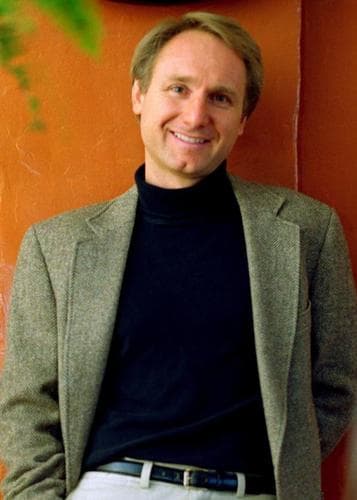
Daniel Gerhard Brown is an American author best known for his thriller novels, including the Robert Langdon novels Angels & Demons (2000), The Da Vinci Code (2003), The Lost Symbol (2009), Inferno (2013), and Origin (2017). His novels are treasure hunts that usually take place over a period of 24 hours. They feature recurring themes of cryptography, art, and conspiracy theories. His books have been translated into 57 languages and, as of 2012, have sold over 200 million copies. Three of them, Angels & Demons, The Da Vinci Code, and Inferno, have been adapted into films, while one of them, The Lost Symbol, was adapted into a television show.







