BookBrief
The Custom of the Country cover
Archivist's Choice

The Custom of the Country

Edith Wharton (1995)

Genre

Literary Fiction / Historical Fiction / Spirituality

Reading Time

12 Minutes

Key Themes

See below

Track Your Reading

Sign in to track this book

Undine Spragg's relentless social climbing in early 20th-century New York exposes the emptiness of ambition and the fleeting nature of success in a world of changing values.

Synopsis

Undine Spragg, a beautiful and ambitious young woman from the American Midwest, navigates the treacherous waters of New York and European high society at the turn of the 20th century. Driven by a relentless desire for wealth, status, and admiration, Undine employs her beauty and cunning to marry into increasingly prestigious families, only to find each new triumph swiftly followed by disillusionment. Her journey exposes the shallowness, materialism, and moral ambiguities of the Gilded Age elite, as she discards husbands and principles with equal ease in her relentless pursuit of an elusive satisfaction that forever remains just beyond her grasp. The novel satirizes the 'custom of the country'—the American penchant for easy divorce and remarriage, and the worship of new money—as Undine's insatiable appetites and lack of genuine connection leave a trail of emotional wreckage. It's a biting commentary on a society where old money struggles to maintain its values against the onslaught of new wealth, and where women like Undine, armed with beauty but little inner substance, become both products and perpetrators of a superficial culture.
Difficulty
Medium
Pacing
Moderate
Mood
Satirical, observing, critical, somewhat melancholic

Plot Summary

The Spraggs Arrive in New York

Undine Spragg, a beautiful, ambitious young woman from Apex City, arrives in New York with her parents, eager to climb the social ladder. Her father, a successful businessman, has made a fortune, but her mother is socially awkward. This leaves Undine to navigate the complex world of old New York society mostly on her own. She quickly meets the Marvell family, especially Ralph Marvell, a cultured, intellectual young man from an old New York family, and his cousin, Peter Van Degen, a wealthy, crude socialite. Undine is drawn to the glamour and sophistication of this new world. She immediately plans to marry into one of its established families, seeing marriage as her main way to advance socially and escape her small-town origins.

The Engagement to Ralph Marvell

Undine skillfully wins over Ralph Marvell, who is initially attracted to her beauty and fresh, unconventional charm. This charm contrasts sharply with the more reserved women in his social circle. Despite his family's quiet concerns about her background and lack of social polish, Ralph becomes deeply in love. Undine, while not deeply in love herself, sees Ralph as a step up in New York society. She believes his name and connections will give her the prestige she wants. Their engagement is announced, to the quiet dismay of Ralph's mother and sister, who worry about Undine's superficiality and unsuitability for their traditional, intellectual family. Undine, however, ignores their concerns, focused only on the excitement of marrying into an "old money" family.

Marriage and Disillusionment

Undine and Ralph marry. At first, Undine enjoys being Mrs. Ralph Marvell. But her excitement soon fades when she discovers that Ralph's family, while prestigious, does not have the immense wealth she desires. Ralph's intellectual pursuits and his family's understated life bore her; she wants extravagant parties, lavish clothes, and constant social activity. She finds their circle too quiet and thoughtful, which clashes with her own materialistic goals. Her unhappiness grows, fueled by her inability to understand Ralph's values or appreciate his world's cultural richness. She begins to see their marriage as a restriction rather than a success, and her attention starts to move toward richer, more exciting prospects, especially Peter Van Degen.

Affair with Peter Van Degen

Driven by her strong desire for wealth and social standing, Undine starts an affair with Peter Van Degen, Ralph's crude but extremely rich cousin. Peter, though unrefined, offers Undine the lavish life she wants: expensive gifts, grand entertainments, and endless social events. She is drawn to his power and his open disregard for social rules, which matches her own ambition. The affair becomes an open secret in their social circle, causing great pain and humiliation to Ralph, who is devoted to Undine and their young son, Paul. Undine, however, is unaffected by Ralph's suffering, focused only on the material benefits and excitement Peter provides, seeing him as her next step up the ladder.

Divorce and Move to Europe

Undine, determined to secure her future with Peter Van Degen, begins divorce proceedings against Ralph, causing a scandal in conservative New York society. Ralph, devastated by her betrayal and public humiliation, struggles. After the divorce is final, Undine moves to Europe, where she believes she can pursue Peter more freely and escape New York's social disapproval. She expects Peter to marry her immediately, but he avoids commitment, enjoying her company but unwilling to marry, especially after his own wife refuses to divorce him. Undine finds herself in a difficult spot, having sacrificed her first marriage for a promise that seems unlikely to happen, leaving her socially adrift and financially dependent on her parents.

Meeting Raymond de Chelles

While in Paris, on the edges of European high society, Undine meets Raymond de Chelles, a French count from an old, aristocratic family. Though Raymond is poor and his ancestral castle is crumbling, his title and lineage represent a new, even higher form of social prestige to Undine. She is captivated by the idea of becoming a countess, a symbol of ultimate social success that even New York could not offer. Raymond, initially charmed by Undine's exotic American beauty and energy, eventually gives in to her persistent pursuit, seeing her as a potential source of funds to restore his family's estate. They marry, and Undine believes she has finally achieved her ultimate social ambition, becoming part of the European aristocracy, a world far grander than Apex City or even New York.

Life as a Countess

Life as the Comtesse de Chelles quickly proves to be another disappointment for Undine. She discovers that the old French aristocracy values tradition, thrift, and social rigidity over the lavish displays of wealth she wants. Her husband, Raymond, is conservative and expects her to follow his family's and class's strict customs. The crumbling château, without modern conveniences, and the staid social life bore her. She struggles with the language, the unfamiliar customs, and the lack of chances for showing off wealth. Undine realizes that her title, while prestigious, does not give her the freedom or the material comforts she connects with happiness. She feels trapped and misunderstood, wanting the excitement and material abundance of American life.

Ralph's Sacrifice and Death

Back in New York, Ralph Marvell, despite his lingering bitterness, remains devoted to his son, Paul. When Undine tells him she needs a large sum of money to secure her French divorce (a legal move to marry Raymond, as her American divorce was not recognized in France), Ralph, out of duty and a desire to see Paul settled, makes a drastic financial sacrifice. He sells his family home and a valuable book collection, depleting his inheritance, to give Undine the funds. Overwhelmed by financial strain, social exclusion, and the deep sorrow of his failed marriage and separation from his son, Ralph tragically takes his own life. His death is a shock and a devastating loss for his family, but Undine remains largely unaffected, focused only on her next social conquest.

Divorce from Raymond and Marriage to Moffatt

After Ralph's death, Undine uses the funds he provided to secure her divorce from Raymond de Chelles, who is relieved to be rid of his demanding and expensive American wife. Undine then makes a surprising move: she marries Elmer Moffatt, the wealthy and powerful businessman from Apex City whom she had secretly married and divorced years ago. This was a secret she had kept from all her later husbands. Moffatt, now a business leader and immensely rich, offers Undine the ultimate material comfort and social power she has always wanted. Their reunion shows Undine's lasting ambition and Moffatt's continued fascination with her, despite her past betrayals. This marriage brings Undine full circle, returning to her origins but now with immense wealth and a strong social position.

The Price of Success

As Mrs. Elmer Moffatt, Undine finally achieves the height of material wealth and social influence she has pursued throughout her life. She commands a vast fortune, lives in opulent mansions, and travels widely, surrounded by luxury. However, despite her apparent success, Undine remains unfulfilled. She is still restless, always seeking the 'next big thing,' unable to appreciate what she has. Her son, Paul, now a young man, is a quiet disappointment; he is cultured and sensitive, much like his father, Ralph, and largely separate from his mother's materialistic world. Undine's ultimate victory is empty; she has gained everything she thought she wanted, but she has lost the ability for real connection and deep satisfaction, forever trapped by her desires and the 'custom of the country' that shaped her.


Principal Figures

Undine Spragg

The Protagonist

Undine begins as an ambitious social climber and ends as a wealthy socialite, having achieved all her materialistic goals but remaining perpetually unfulfilled and isolated.

Ralph Marvell

The Supporting

Ralph begins as a hopeful, cultured young man and ends tragically, broken by Undine's betrayal and the loss of his family's heritage.

Elmer Moffatt

The Supporting

Moffatt rises from a provincial businessman to a titan of industry, ultimately reuniting with Undine as the wealthiest and most powerful of her husbands.

Peter Van Degen

The Supporting

Van Degen remains a consistently wealthy and morally ambiguous figure, enabling Undine's social climbing but never fully committing to her.

Raymond de Chelles

The Supporting

Raymond marries Undine for her perceived wealth and a fresh perspective, only to realize their incompatibility and divorce her, returning to his traditional life.

Paul Marvell

The Supporting

Paul grows from a neglected child to a cultured young man, increasingly estranged from his mother's values and seeking his own path.

Mrs. Marvell

The Supporting

Mrs. Marvell remains a steadfast upholder of traditional values, witnessing the decline of her family's happiness due to Undine's influence.

Laura Fairford

The Supporting

Laura consistently observes Undine's destructive impact on her family, providing a moral and critical voice within the narrative.

Themes & Insights

The Custom of the Country

This central theme refers to early 20th-century American society, where divorce and remarriage became common, especially among the wealthy. It shows how marriage was often a transaction for social and financial gain, particularly for women like Undine. The 'custom' also implies a culture of constant pursuit of new things, materialism, and external approval, where old traditions and inherited wealth are always challenged by new money and changing social norms. Wharton criticizes this custom as ultimately unfulfilling and damaging to real human connection and deeper values.

The custom of the country was for women to get their way, and to get it at any cost.

Narrator

Materialism vs. Culture

The novel sharply contrasts Undine Spragg's endless materialism and the 'new rich' with the refined culture, intellectual pursuits, and inherited traditions of 'old money' families like the Marvells. Undine's inability to appreciate art, literature, or history, and her sole focus on gaining wealth and social status, drives the main conflict. Her journey shows how a society that increasingly values superficial display over real substance leads to spiritual emptiness and destroys those who hold onto older, more meaningful values. The theme explores the clash between two opposing views of the world.

Her mind was like a dry leaf, blown about by every gust of luxury.

Narrator

The Role of Women in Society

The novel explores the limited and often transactional roles available to women of a certain class in early 20th-century America. For Undine, marriage is not about love or partnership but a strategic move for social and financial advancement. She uses her beauty and charm as assets in a market where men hold the wealth and power. The theme criticizes a society that forces women into such a position, but also condemns Undine's ruthless use of this system. It highlights the double standards and social pressures that define female identity and ambition, often at the cost of personal integrity and genuine connection.

A woman's only business was to get married, or, if she wasn't married, to look as if she might be.

Narrator

The Decline of Old New York

Wharton shows the decline of 'Old New York's' established social order and moral values, represented by the Marvell family. Their world of inherited wealth, cultural refinement, and discreet traditions is vulnerable and eventually overcome by the aggressive materialism and lack of ethics embodied by Undine and the 'new rich.' The novel laments the loss of a certain kind of integrity and intellectual depth, as the old guard cannot adapt to or compete with the relentless ambition and superficiality of the emerging social scene. Ralph's tragic fate symbolizes this decline.

He belonged to a generation that had made a religion of not talking about its feelings.

Narrator (referring to Ralph)

Plot Devices & Literary Techniques

Foreshadowing

Hints at future events and character fates.

Wharton frequently employs foreshadowing to hint at the tragic consequences of Undine's actions and the eventual fates of characters like Ralph. Early descriptions of Undine's restlessness and her parents' struggles with her 'temperament' suggest her future marital instability. Ralph's initial unease about Undine's background and his family's subtle reservations foreshadow the incompatibility that will destroy their marriage. The recurring motif of Undine's insatiable desire for 'more' continually signals that no amount of wealth or status will ever truly satisfy her, hinting at her ultimate, hollow triumph. This device builds dramatic tension and underscores the inevitability of the narrative's tragic elements.

Social Satire

Critique of social customs through exaggeration and irony.

The novel is a sharp social satire, particularly aimed at the superficiality, materialism, and transactional nature of American high society in the early 20th century. Wharton uses irony and exaggeration to expose the absurdity of social climbing, the emptiness of conspicuous consumption, and the moral bankruptcy of characters like Undine and Peter Van Degen. The contrast between the 'old money' values and the 'new money' aggression is often presented satirically, highlighting the hypocrisy and shallowness of both worlds, though with a clear preference for the cultural depth of the former. This device allows Wharton to critique societal flaws without direct moralizing.

Symbolism

Objects and places represent deeper meanings.

Wharton uses various symbols to deepen the novel's themes. The Marvell's ancestral home, with its old books and quiet dignity, symbolizes the dying values of 'Old New York' and its cultural heritage. Conversely, Undine's ever-changing residences, from the provincial Apex City to lavish New York apartments, a crumbling French château, and finally opulent mansions, symbolize her restless ambition and her pursuit of external validation. Clothes and jewelry also serve as powerful symbols of Undine's social currency and her constant need for outward display. Even Undine's name, derived from a mythical water spirit, hints at her elusive, restless, and ultimately soulless nature.

Dramatic Irony

The audience knows more than the characters.

Dramatic irony is frequently used, particularly in relation to Undine's perceptions and ambitions. The reader understands Undine's true motivations and her fundamental lack of empathy, even as characters like Ralph remain devoted or try to understand her. For instance, the reader knows Undine's marriage to Ralph is a strategic move, while Ralph believes it's based on genuine affection. Similarly, the reader recognizes the hollowness of Undine's 'triumphs' even as she perceives them as ultimate successes. This device highlights Undine's self-deception and the tragic blindness of those around her, intensifying the critique of her character and the society that enables her.

Critical analysis

Notable Quotes

Quiz

Test Your Knowledge

Ready to see how well you understood this book? Take our interactive quiz with 10 questions.

10
Questions
~5
Minutes
?
Best Score

Key Questions (FAQ)

The main theme is the corrosive effect of social ambition and materialism on individuals and society. It satirizes the American obsession with wealth and status, showing how these pursuits can lead to moral compromise and personal disillusionment.

About the author

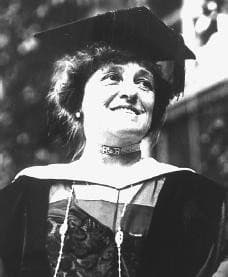
Edith Wharton

Edith Wharton was an American writer and designer. Wharton drew upon her insider's knowledge of the upper-class New York "aristocracy" to portray realistically the lives and morals of the Gilded Age. In 1921, she became the first woman to win the Pulitzer Prize in Fiction, for her novel The Age of Innocence. She was inducted into the National Women's Hall of Fame in 1996. Among her other well known works are The House of Mirth, the novella Ethan Frome, and several notable ghost stories.