“For the first time in his life he was sorry to be a child, and he knew that he would never be quite the same again.”
— Benjamin, having been born an old man, is experiencing the joys and challenges of youth in reverse.

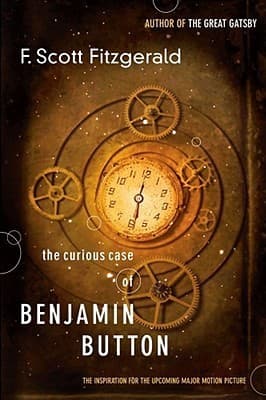
F. Scott Fitzgerald (2007)
Genre
Fantasy / Science Fiction
Reading Time
30 min
Key Themes
See below
Sign in to track this book
A man born old unravels the paradox of time, experiencing life's milestones in reverse as he journeys from the cradle's wisdom to its ultimate, innocent oblivion.
In 1860 Baltimore, Roger Button, a furniture dealer, eagerly awaits the birth of his first child. Upon arriving at the hospital, he is horrified to find that his son has been born as an old man, complete with a long white beard, failing eyesight, and the physical problems of age. The hospital staff is equally bewildered. Despite his initial disgust and attempts to disown the child, Roger is eventually convinced by his wife, who is surprisingly accepting, to take the 'baby' home. They name him Benjamin. Benjamin, though appearing elderly, has the mental capacity of an infant, crying for milk and needing care, but also speaking in a croaky, old man's voice.
Benjamin's reverse aging begins subtly. As a 'child,' he prefers the company of his grandfather, reads the encyclopedia, and smokes cigars, much to his father's chagrin. He is enrolled in kindergarten but is promptly removed due to his appearance and the discomfort he causes. He then attends Yale, where he is also rejected due to his age-defying appearance. Roger Button tries to make Benjamin conform, forcing him to play with children his 'actual' age and dyeing his beard. Despite these efforts, Benjamin continues to grow physically younger, his hair darkening and his wrinkles lessening. Society finds him an oddity, and his parents struggle to explain his condition.
By the age of eighteen (though looking fifty), Benjamin is a successful businessman, having taken over his father's hardware company. He meets and falls in love with the beautiful, lively, and somewhat vain Hildegarde Moncrief, who is initially attracted to his mature appearance and wealth. They marry, much to the surprise of their social circles. With the outbreak of the Spanish-American War, Benjamin, now appearing around forty, feels a patriotic duty. He enlists as a captain, showing his vigor and leadership, and serves well, even earning a medal. This period marks a peak in his 'youth' and societal acceptance.
During the Spanish-American War, Benjamin Button, looking approximately forty, serves as a captain and proves to be an effective and courageous leader. His physical ability and strategic mind are an asset. He is wounded in battle but recovers quickly, further showing his unusual vitality. Upon his return from the war, he is celebrated as a hero, but his appearance has noticeably changed; he looks even younger, perhaps in his late thirties. This shift begins to cause a subtle strain in his marriage with Hildegarde, who is now aging normally and finds his increasing youthfulness disconcerting and, at times, embarrassing.
As the years pass, Benjamin continues to grow younger, while Hildegarde ages normally. This creates an increasing gap between them. Benjamin, now looking like a man in his late twenties, does well in his business, expanding the Button & Company hardware firm significantly. He is energetic, innovative, and enjoys life. However, Hildegarde, now a matronly woman in her fifties, becomes increasingly resentful and withdrawn. She feels her husband is abandoning her for a younger version of himself, and their social life suffers as people find Benjamin's appearance alongside his wife's age to be scandalous or confusing. Their son, Roscoe, grows up observing this strange dynamic.
By 1910, Benjamin, now looking like a young man of twenty, decides to retire from the family business, handing it over to his son, Roscoe. He feels a yearning for a 'normal' youth and enrolls in Harvard University. There, he is a star athlete, excelling in football and other sports, and becomes popular. He fully embraces college life, attending dances, parties, and forming close friendships, experiencing the boisterousness and carefree spirit he missed in his 'youth.' His wife Hildegarde remains at home, increasingly isolated and bitter, as Benjamin lives out the youth she can no longer share.
While at Harvard, Benjamin, appearing to be in his late teens or early twenties, meets and falls in love with a much younger girl named Miss Kally. Their romance is passionate and intense, but it is met with confusion and disapproval from society, especially given his existing marriage to Hildegarde. His son, Roscoe, is mortified by his father's increasingly youthful appearance and behavior, which he sees as irresponsible and scandalous. Benjamin's unusual condition becomes a constant source of gossip and social awkwardness, showing the impossibility of his situation fitting into conventional norms.
After graduating from Harvard, Benjamin's aging process continues backward. He soon looks like a boy of twelve, then eight, then a mischievous six-year-old. His son, Roscoe, now a middle-aged man, reluctantly takes on the role of his 'father's' guardian. Benjamin's mental faculties begin to decline as his body de-ages. He attends a preparatory school, where he is a star student due to his mature mind trapped in a child's body, but this too is temporary. His memory starts to fade, and he becomes increasingly childlike in his thoughts and actions.
Benjamin's regression accelerates. He is eventually enrolled in kindergarten, where he plays with blocks and learns his ABCs alongside actual toddlers. His mind continues to devolve, losing the memories of his adult life, his wife, his son, and his accomplishments. He is cared for by a series of governesses and nurses, eventually returning to the care of Nana, the same nursemaid who looked after him as an 'old man' infant. In the final stage, Benjamin becomes a helpless, babbling infant, completely unaware of the world, his past, or even his own identity. He eventually fades into a peaceful, blissful oblivion, a baby in the arms of his nurse, unaware of the 'curious case' of his life.
The Protagonist
Benjamin goes from an old-looking infant, to a vibrant young man, to a child, and finally back to an infant, experiencing all stages of life in reverse.
The Supporting
From disgusted rejection, Roger moves to reluctant acceptance and a lifelong effort to normalize Benjamin's existence.
The Supporting
Hildegarde's initial attraction to Benjamin's maturity evolves into bitterness and resentment as he physically de-ages beyond her.
The Supporting
Roscoe transitions from a son embarrassed by his father's youth to a reluctant guardian caring for his infant 'father'.
The Supporting
Nana's role as caregiver for Benjamin remains constant, bookending his life from 'old' infant to actual infant.
The Supporting
Miss Kally provides Benjamin with a brief, passionate experience of youthful romance.
The Mentioned
The General's perception of Benjamin shifts from approval of his 'maturity' to bewilderment at his de-aging.
The Mentioned
Dr. Keene's initial bewilderment at Benjamin's birth establishes the story's fantastical premise.
The central theme revolves around the absurdity of life when conventional notions of time and aging are inverted. Benjamin Button's inverse aging shows how much of human experience, social norms, and personal relationships are tied to a linear progression of time. His life, while unique, mirrors the stages of a 'normal' life, but the reverse order exposes the arbitrary nature of these stages. Fitzgerald uses this fantastic premise to satirize societal expectations, the fleeting nature of youth, and the inevitability of decline, even if experienced backward. It questions what truly defines age and maturity.
“For the first time in his life he was happy. He was enjoying to the full the adventures of his new life. He was a freshman, and he was eighteen, and he was Benjamin Button.”
Benjamin's life is a constant struggle with identity and the desire to belong. Born an old man, he is rejected by his father and society. As he grows 'younger,' he experiences periods of acceptance (as a mature businessman, a war hero, a college student) but is always an outsider. His changing appearance constantly forces him to redefine himself and his place in the world. The inability of others, particularly his wife Hildegarde, to adapt to his shifting identity leads to isolation and loneliness. This theme explores how much our identity is shaped by our physical appearance and the societal expectations associated with age.
“He knew that he was a man and not an infant, but he was not sure that he was a man of sixty, or that he was a man of seventy.”
The story explores how love and relationships are affected by the passage of time and the physical changes it brings. Benjamin's marriage to Hildegarde is an example: their love flourishes when Benjamin appears mature, but it withers as he grows younger and she grows older. The reversal of their physical ages creates an insurmountable barrier, leading to resentment and emotional distance. This theme suggests that while love can transcend superficiality, it struggles against fundamental incompatibilities in shared life experiences and societal expectations tied to age, ultimately questioning the durability of love in the face of radical change.
“And it was an irony that he, Benjamin, was growing younger, while Hildegarde was growing older.”
From his birth, Benjamin Button is subjected to societal judgment and pressure to conform. His father, Roger Button, is obsessed with maintaining appearances and forcing Benjamin into conventional roles, whether it is making him play with children or attempting to hide his true age. Society repeatedly rejects Benjamin when his appearance does not match his perceived age or role (e.g., at Yale, at kindergarten as an 'old man'). This shows society's rigid adherence to norms and its discomfort with anything that defies easy categorization. The story critiques the superficiality of social acceptance and the harshness with which those who deviate from the norm are treated.
“He was a boy of twelve, with the brain of a man of fifty. He was a boy of sixteen, with the brain of a man of forty. He was a boy of twenty, with the brain of a man of thirty.”
Despite its fantastical premise, the story ultimately reaffirms the cyclical nature of life, albeit in a reversed manner. Benjamin's journey from an old man to an infant mirrors the natural progression from birth to death, emphasizing that all life begins and ends in a state of helplessness and dependence. His loss of memory and awareness as he regresses into infancy suggests a peaceful return to the void, an oblivion similar to that of death. The story suggests that the specific order of one's journey through life's stages may not alter the fundamental experience of growth, decline, and eventual oblivion.
“Then it was all dark, and his nurse was singing. 'Sleep, baby, sleep. Thy father's watching the sheep…'”
The central fantastical premise of Benjamin aging backward.
The most prominent plot device is Benjamin Button's inverse aging. This fantastical element drives the entire narrative, dictating the progression of Benjamin's life, his relationships, and his interactions with society. It serves as a powerful metaphor for the human condition, allowing Fitzgerald to explore themes of youth, old age, identity, and the passage of time from a uniquely altered perspective. This device creates inherent irony and dramatic tension, as Benjamin experiences life's stages out of sync with everyone around him, forcing him into roles that contradict his physical appearance.
Used to highlight societal absurdities and human folly.
Fitzgerald employs satire and irony throughout the story to critique societal norms and human behavior. The absurdity of Benjamin's birth and his subsequent attempts to fit in (e.g., being sent to kindergarten as an old man, or attending college as a 'youth') are deeply ironic. The contrast between Benjamin's physical age and his mental state, or between his internal experience and external perception, creates much of the story's humor and pathos. This device allows Fitzgerald to poke fun at the superficiality of social acceptance and the arbitrary nature of age-based expectations.
Physical appearance dictates social perception and self-identity.
Benjamin's changing physical appearance is a potent symbol throughout the story. It dictates how society perceives him, how he perceives himself, and the nature of his relationships. His white beard and wrinkles initially mark him as an outcast, while his youthful vigor allows him to thrive. As he regresses, his child-like appearance makes him dependent, regardless of his internal maturity. The constant disjunction between his outward form and his internal experience symbolizes the often-superficial judgments people make based on looks, and the struggle for an individual's true self to be recognized beyond their physical shell.
A sense of a story being recounted, giving it a fable-like quality.
While not explicitly a character-narrated frame, the story has an implied framing narrative, beginning with the curious event of Benjamin's birth and following his entire life until his ultimate regression. The detached, somewhat whimsical tone of the narrator, often offering observations on the 'curious case,' lends the story a quality of a recounted fable or a historical oddity. This narrative distance allows the reader to consider the broader philosophical implications of Benjamin's life without getting bogged down in intense emotional realism, reinforcing its nature as a 'curious case' rather than a deeply personal drama.
“For the first time in his life he was sorry to be a child, and he knew that he would never be quite the same again.”
— Benjamin, having been born an old man, is experiencing the joys and challenges of youth in reverse.
“He began to realize that he was not like other people.”
— Benjamin's unique condition sets him apart from everyone else, leading to a growing awareness of his difference.
“Life was a series of beginnings and ends, and Benjamin Button was destined to experience them in reverse.”
— A reflection on the extraordinary trajectory of Benjamin's life, moving backward through the stages of human existence.
“He was an old man when he was born, and he grew younger with each passing year.”
— The fundamental premise of Benjamin Button's condition, concisely stated.
“It was a curious case, indeed.”
— A recurring thought or observation about Benjamin's unusual existence.
“The world, it seemed, was not ready for Benjamin Button.”
— Benjamin's struggles to fit into society and be understood due to his reverse aging.
“He fell in love with a woman who was growing older as he grew younger, and for a time, they met in the middle.”
— Describing Benjamin's relationship with Hildegarde, highlighting the fleeting period of their synchronized ages.
“Youth and beauty were fleeting, but for Benjamin, they were a destination, not a starting point.”
— A poignant observation on Benjamin's unique experience of youth compared to the rest of humanity.
“He had started at the end and was working his way back to the beginning.”
— A concise summary of Benjamin's life journey.
“There was a certain sadness in his eyes, a knowledge of things that had not yet happened to him.”
— As Benjamin ages backward, he carries the memory or premonition of experiences he has yet to physically undergo.
“He was a child, but he had lived a lifetime.”
— Benjamin, as he grows younger, still retains the wisdom and experiences of his earlier, older self.
“The years flew backward like a rewind of a film.”
— A vivid metaphor describing the passage of time for Benjamin.
“He remembered the past, but the past was his future.”
— A paradoxical statement highlighting the confusing nature of Benjamin's timeline.
“It was a story that defied logic, a whimsical dance with the hands of time.”
— An overarching description of the narrative's fantastical premise.
Ready to see how well you understood this book? Take our interactive quiz with 10 questions.
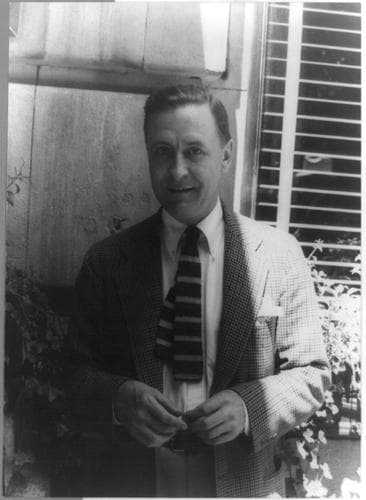
Francis Scott Key Fitzgerald was an American novelist, essayist, and short story writer. He is best known for his novels depicting the flamboyance and excess of the Jazz Age—a term he popularized in his short story collection Tales of the Jazz Age. During his lifetime, he published four novels, four story collections, and 164 short stories. Although he achieved temporary popular success and fortune in the 1920s, Fitzgerald received critical acclaim only after his death and is now widely regarded as one of the greatest American writers of the 20th century.







