“The dead could not be shamed or embarrassed, and it was a comfort to know that. They were beyond all that.”
— Strike reflecting on the finality of death and the lack of concern for worldly opinions.

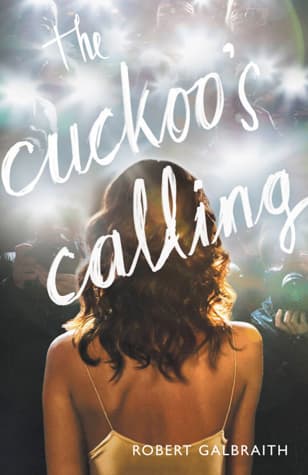
Robert Galbraith (2013)
Genre
Thriller / Mystery
Reading Time
9-10 hours
Key Themes
See below
Sign in to track this book
A war-wounded private investigator looks into the world of high fashion and rock 'n' roll to find out the truth behind a supermodel's supposed suicide.
Cormoran Strike, a private investigator with a prosthetic leg and an office above a Danish street, is introduced as his long-term relationship with Charlotte Campbell ends. On the same day, his temporary secretary, Robin Ellacott, arrives, initially mistaking him for a client. Almost immediately, John Bristow, the wealthy brother of the recently deceased supermodel Lula Landry, visits Strike's office. He does not believe the police verdict of suicide, saying Lula, despite her problems, would not have jumped from her Mayfair balcony. Bristow hires Strike to investigate, offering a large fee, which Strike needs. Robin, despite being engaged and seemingly overqualified, finds herself interested in private investigation.
Strike starts his investigation by interviewing people close to Lula. He first speaks with Tansy Bestigui, Lula's neighbor who says she heard an argument the night Lula died. Tansy, an aspiring actress married to a film producer, is dramatic and inconsistent in her story. Strike then interviews Rochelle Onifade, Lula's childhood friend and a recovering drug addict, who reveals Lula's growing interest in finding her biological family. Rochelle mentions Lula's recent efforts to connect with a homeless woman named Sarah as a possible lead. Strike also visits Lula's flat, noticing details the police seemed to miss, such as a missing jacket and a strange smell.
Strike continues his interviews, speaking with Evan Duffield, Lula's on-again, off-again rock star boyfriend, who is hostile. He then meets Guy Somé, Lula's fashion designer, who is flamboyant and seems devastated by her death, revealing Lula's recent erratic behavior. Strike also interviews Ciara Porter, a fellow model and friend, who describes Lula's increasing isolation and her attempts to get away from her controlling adoptive family. Robin helps by researching Lula's background and media coverage, quickly showing her value to Strike. The investigation shows Lula as a vulnerable woman surrounded by people who either used her, envied her, or cared for her, but often could not help.
Following Rochelle's lead, Strike investigates Lula's search for her biological mother. He finds out Lula had hired a private investigator, Matthew Cunliffe, to find her birth family. Cunliffe found Lula's biological mother, Marlene Higson, and her half-brother, Jonah. Lula had recently met with them, a fact kept secret from her adoptive family. This revelation suggests a new reason for someone to want Lula silenced, as her reconnection with her biological family could affect her inheritance and public image. Strike also learns that Lula was preparing a new will, intending to leave a large part of her fortune to Jonah, which would have greatly changed the financial situation for her adoptive family.
Rochelle Onifade is found dead from a drug overdose, similar to Lula's initial suspected cause of death. Strike, however, suspects murder, believing Rochelle was killed to stop her from revealing information. This event affects Strike and strengthens his belief that Lula's death was not suicide. He searches for Lula's missing jacket, believing it holds something important. Robin finds a hidden compartment in Lula's flat containing a draft of her new will, which confirms Lula's plan to leave a large inheritance to her biological half-brother, Jonah. This discovery provides a clear reason for someone to prevent the will from being finalized and revealed.
Strike focuses on the Bristow family, especially John Bristow and his mother, Lady Yvette Bristow. He learns that the family's wealth is not as secure as it seems, and they rely heavily on Lula's continued financial support and inheritance. He finds out that Lula had been supporting her adoptive brother, John, and her aunt, Cissey, for years. The idea of Lula disinheriting them for her biological family would have been disastrous. Strike also uncovers a family secret: John Bristow's resentment towards Lula, because she was adopted and received more attention and resources than him, despite his own financial problems and failures.
Strike confronts Tansy Bestigui again, questioning her about the inconsistencies in her story of the night Lula died. He reveals his knowledge of her husband's affair and uses this to pressure her. Tansy admits that she did not see Lula jump, but heard a commotion and saw a figure in the hallway of Lula's building. She also says she saw a jacket, similar to Lula's, being carried away by this figure. This admission weakens the police's suicide theory and points to an intruder. Tansy's fear of her husband's reaction had made her hide information, but Strike's questioning finally gets her to speak.
Strike finds Lula's missing jacket, which John Bristow had hidden. Inside the pocket, he finds a note from Lula, confirming her intention to change her will and leave her fortune to Jonah. This, with the earlier discovery of the draft will, makes the financial reason clear. Strike realizes that John Bristow, who hired him, is the main suspect. John's financial desperation, his resentment towards Lula, and his knowledge of her plans to disinherit him, all point to him as the killer. The jacket was the last piece of evidence connecting him to the crime and showing a struggle.
Strike arranges a confrontation with John Bristow in his office, carefully presenting all the evidence. He reveals that John had pushed Lula from the balcony after an argument about her new will and her biological family. He also explains that John then killed Rochelle Onifade by tampering with her drugs, to stop her from revealing Lula's new will and her meeting with her biological brother. John, trapped, breaks down and confesses to both murders. He reveals his jealousy and resentment towards Lula, feeling overshadowed and used by her fame and wealth, and fearing the loss of his financial support.
With John Bristow's confession, the case of Lula Landry's death is solved, bringing closure to her biological family and justice for Rochelle. Strike's reputation as a private investigator grows. He pays off his debts and begins to rebuild his life. Robin Ellacott, who was valuable throughout the investigation, decides to postpone her wedding plans and accepts Strike's offer of a permanent position as his assistant. Their partnership, formed through the realities of the case, is solidified, starting a new chapter for both of them and setting up future investigations.
The Protagonist
Strike begins the story at rock bottom, both personally and professionally, but successfully solving Lula's case begins his journey of professional resurgence and personal healing.
The Supporting
Robin transitions from an unfulfilled temporary secretary to a capable and committed detective's assistant, finding her true calling despite her fiancé's disapproval.
The Victim
Lula's arc is revealed posthumously, showing her journey from a celebrated but fragile celebrity to someone attempting to find her true identity and make amends, ultimately leading to her murder.
The Antagonist
Bristow begins as the grieving brother seeking justice but is slowly unmasked as the calculating, resentful murderer driven by financial desperation and envy.
The Supporting
Her arc is static, remaining a figurehead of the upper class concerned with status and control.
The Supporting
Rochelle's arc is tragically cut short when she is murdered for her knowledge, becoming a second victim in the case.
The Supporting
Tansy's arc involves her initial deception and subsequent confession under pressure, revealing a hidden truth.
The Supporting
Evan remains largely static, a representation of Lula's problematic social circle.
The Supporting
Somé's arc is limited to providing insight into Lula's life and struggles within the fashion world.
The Supporting
Ciara's role is to provide a sympathetic and relatively objective view of Lula's later life.
The novel explores identity through Lula Landry's search for her biological family. Despite her fame and wealth, Lula feels incomplete, believing her true self is tied to her origins. Her search for her birth mother and half-brother drives the plot and contributes to her end. Cormoran Strike also deals with his own identity, being the son of a rock star and trying to escape his famous family while making his own way as a private investigator.
“'Sometimes,' Strike said, 'the only way to find out what you're looking for is to go looking for something else.'”
The difference between the lives of the rich and the working class is a theme. Lula's world of Mayfair penthouses, designer clothes, and celebrity parties contrasts with Strike's humble office and financial struggles. The novel shows the entitlement and moral decay that can exist with extreme wealth, and how privilege can blind people to the problems of others. The Bristow family's concern for their reputation over truth shows the protective bubble of the upper class, while Lula's attempts to connect with her poorer biological family show the artificiality of her adopted world.
“'Money, thought Strike, was a strange, distorting lens, blurring the truth, obscuring motives, and twisting the most basic human instincts out of recognition.'”
This theme is central to the mystery, as Lula's death is initially presented as a suicide, which the police accept. Strike's investigation removes layers of deception and carefully built facades. Characters like Tansy Bestigui give false stories, while John Bristow hides his true motives behind a grieving brother persona. The glamorous world of fashion and celebrity is a realm of artifice, where public image often hides deep personal struggles. Strike's role is to go beyond these appearances to find the reality.
“'The truth, like a cat, will find its way in.'”
Jealousy and resentment are strong motivations in the story, especially in John Bristow's character. His long-standing envy of Lula's fame, wealth, and the attention she received, along with the threat of being disinherited, drives his actions. This theme explores how deep personal insecurities, combined with financial desperation, can lead to violence. The novel hints at how these emotions can grow under a facade of family affection and loyalty.
“'Envy... it's a poison, isn't it? It eats away at you until there's nothing left but bitterness.'”
The book examines the complexities of family—both biological and adoptive. Lula's search for her biological mother and brother shows the human need for connection to one's roots, even with a loving adoptive family. Conversely, her adoptive family, especially John Bristow, reveals the dark side of family relationships, where love can be overshadowed by resentment, expectation, and financial dependence. The novel questions what truly makes a family and explores the emotional and legal effects of adoption and inheritance.
“'Family… it's supposed to be the people who love you, isn't it? No matter what.'”
Strike's unique background and physical condition provide a distinct perspective.
Cormoran Strike, as a one-legged war veteran and the illegitimate son of a rock star, exists on the fringes of society, particularly the glamorous world of supermodels and millionaires he investigates. This outsider status allows him to observe the opulent and often superficial lives of the rich and famous with a detached, critical eye, unswayed by their status or charm. His physical disability also makes him underestimated, allowing him to gather information more effectively, as people often drop their guard around him. This device helps highlight the themes of class and appearance vs. reality.
The evolving professional relationship between Strike and Robin.
The dynamic between the experienced, cynical Cormoran Strike and the eager, intelligent Robin Ellacott serves as a key plot device. Robin, initially a temporary secretary, quickly proves her value through her organizational skills, research abilities, and keen observations. Her fresh perspective often complements Strike's gruff approach, and she learns the ropes of detective work on the job. This dynamic not only provides character development for both but also allows for narrative exposition as Strike explains aspects of investigation to Robin, and for emotional depth as their professional bond strengthens, setting up future collaborations.
Misleading clues and suspects designed to divert attention from the true killer.
The novel employs numerous red herrings to deepen the mystery and mislead the reader. Evan Duffield, with his volatile temper and history, is presented as a strong initial suspect. Tansy Bestigui's inconsistent testimony and peculiar behavior also create suspicion. The police's quick conclusion of suicide acts as a major red herring, preventing deeper investigation. These diversions force the reader to consider multiple possibilities and underscore the difficulty of Strike's task in sifting through false leads and unreliable witnesses to find the truth.
Lula Landry's character is built through the testimonies of others.
Lula Landry, the victim, is never directly encountered. Her character, motivations, and struggles are entirely constructed through the memories, opinions, and testimonies of the people Strike interviews. This device creates a complex and often contradictory portrait of Lula, reflecting the subjective nature of human perception and the different roles she played in various people's lives. It also emphasizes the theme of appearance versus reality, as Strike must piece together the 'real' Lula from fragmented and often biased accounts, gradually revealing her tragic journey.
“The dead could not be shamed or embarrassed, and it was a comfort to know that. They were beyond all that.”
— Strike reflecting on the finality of death and the lack of concern for worldly opinions.
“It was odd, how many people felt they had the right to comment on a stranger's body.”
— Robin observing how people react to Strike's prosthetic leg.
“Money, thought Strike, was the only thing that could make a person want to believe in a lie.”
— Strike considering motives in the case.
“The greatest trick the devil ever pulled was convincing the world he didn't exist.”
— A reference to a well-known quote, implying a hidden manipulator.
“He knew that the world was full of people who would rather believe a comforting lie than an uncomfortable truth.”
— Strike's cynical view of human nature and willingness to ignore reality.
“People always want to believe the best of the beautiful.”
— Reflecting on the public perception of the victim, Lula Landry.
“Grief, thought Strike, was a peculiar thing. It could make you do things you never thought you'd do.”
— Strike musing on the powerful and unpredictable nature of grief.
“It’s a funny old world, ain’t it? The things people do, the things they hide.”
— A casual observation about the complexities and secrets in human lives.
“Sometimes the most obvious explanation is the right one, and sometimes it's just the one people want to believe.”
— Strike's nuanced approach to solving mysteries, distinguishing between simplicity and wishful thinking.
“He had learned early on that the best way to get people to talk was to let them talk.”
— Strike's strategy for interviewing witnesses and suspects.
“The past was a foreign country; they did things differently there.”
— A classic literary reference, used to describe the difficulty of understanding past events and motivations.
“Nobody's life is perfect, and if you think it is, you're not looking closely enough.”
— A commentary on the illusion of perfection, especially in the lives of celebrities.
“He felt a familiar surge of resentment against the casual cruelty of others, the way they could so easily dismiss and judge.”
— Strike's internal reaction to the insensitivity of people around him.
“The truth was a slippery thing, hard to catch and harder to hold.”
— Strike's ongoing struggle to uncover the truth in a complex case.
Ready to see how well you understood this book? Take our interactive quiz with 10 questions.

Biography coming soon.







