“The frontier, my friend, is not a line on a map. It's a wound. And it bleeds.”
— A character reflecting on the U.S.-Mexico border.

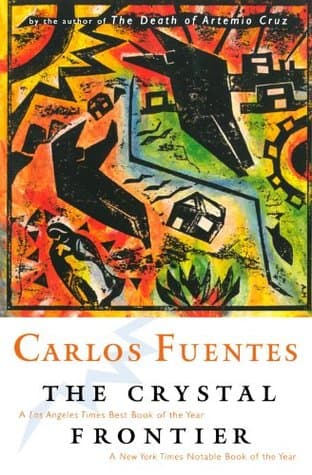
Carlos Fuentes (1997)
Genre
Historical Fiction
Reading Time
280 min
Key Themes
See below
Sign in to track this book
Carlos Fuentes's collection of nine linked stories explores the often-painful clash of Mexican and American cultures along their shared border, showing the human cost of divided identities.
The first story introduces Don Leonardo Barroso, a wealthy Mexican industrialist who represents the border's corrupting power. He arranges a meeting between his lawyer, the Mexican-American José Francisco, and 'the Old Gringo,' a disillusioned American writer. Barroso uses his wealth to control the flow of goods and people across the U.S.-Mexico border, exploiting both nations for his gain. He sees people as tools in his plans, especially in his goal to get a contract for a new industrial park, showing his ruthless practicality. His actions directly affect his employees and family, setting the stage for the linked fates explored in the collection.
José Francisco, a young lawyer, is assigned by Don Leonardo Barroso to work with the legal aspects of the U.S.-Mexico border. He struggles with his mixed background, feeling separate from both American and Mexican cultures. While working on Barroso's industrial park, he meets people whose lives are shaped by the border, including desperate migrants and cynical officials. José Francisco tries to keep his integrity amid Barroso's questionable deals, torn between wanting success and wanting justice. His internal struggle shows how hard it is to find a personal identity and moral standing within the 'crystal frontier' that divides and connects the two nations.
This part focuses on Elena, Don Leonardo Barroso's daughter, and her complex relationship with American academic Dr. Jonathan Brewster. Elena, a sophisticated woman, is a younger generation dealing with her powerful parents' legacy. She likes Brewster's intelligence but also struggles with his perceived American arrogance and his superficial understanding of Mexican culture. Their romance has many misunderstandings and cultural clashes, leading to betrayal. Elena's story explores identity, love across cultures, and the past's influence on relationships, especially under her father's manipulations and the wider tensions of the border region.
Laura, a young American woman, travels to Mexico looking for a real experience and a connection to a culture she admires. She becomes involved with Mexican intellectuals and artists, some connected to Barroso. At first charmed by Mexican life, Laura slowly becomes disappointed as she faces poverty, corruption, and the superficiality of some new acquaintances. Her journey reflects the common idea of Americans seeking exotic experiences abroad, only to find their ideal vision clashing with a more complex reality. This story shows cultural misunderstanding and how hard it is to truly bridge the gap between different national viewpoints.
This part follows a Mexican migrant worker, unnamed, as he tries to cross into the United States for work and a better life. His journey is full of danger, exploitation, and dehumanization by smugglers and border patrols. The story shows the physical and emotional cost of illegal migration, highlighting the desperation that makes people risk everything. In the 'promised land,' he finds not the opportunities he imagined, but low-wage work, discrimination, and a deep sense of being alone. This story reminds readers of the human cost of the border and the often-unmet dreams of those who cross it.
The title story focuses on a wealthy American family on vacation in Mexico. They represent Americans who see Mexico mainly as a tourist spot, often unaware of the social and economic complexities. Their interactions with Mexicans are superficial and show a sense of entitlement. Small problems and cultural misunderstandings slowly break their comfortable bubble, making them face their own biases and the clear inequalities between their world and that of the Mexicans they meet. This story makes fun of American narrow-mindedness and shows the 'crystal frontier' as a permeable but often invisible barrier of perception and privilege.
A Mexican artist, struggling to find his style, feels more and more influenced by American popular culture and the art market's commercial demands. He deals with the tension between keeping his Mexican heritage and adopting global art trends. His work shows this internal conflict, moving between traditional themes and contemporary, often American-inspired, images. This story explores the challenges artists face in a global world, especially when their cultural identity is tied to a powerful neighboring nation. It questions what it means to be an 'authentic' Mexican artist when American culture is dominant.
This section looks deeper into the Barroso family, showing the complex and often tense relationships within it. Don Leonardo's wife, children, and relatives are all affected by his ambition and wealth. The story explores inheritance, legacy, and the moral compromises made for power. Family members deal with their own identities and desires, often clashing with Don Leonardo's expectations. This part shows how the 'crystal frontier' not only divides nations but also creates divisions within families, as members have different views on their heritage and future in a binational world.
The final story brings together several characters from earlier stories, creating a picture of linked lives shaped by the U.S.-Mexico border. José Francisco, Elena, and others cross paths, their individual experiences forming a larger comment on the region. The story emphasizes the cyclical nature of the border's influence, where past choices and historical forces still affect the present. The 'crystal frontier' is a permanent, yet changing, reality that defines identities, relationships, and fates. The various storylines show that despite individual struggles, the border is an inescapable force, a source of both division and unexpected connection.
The Antagonist/Central Figure
Barroso remains largely static, a force of nature whose power and influence are consistently demonstrated, revealing the pervasive nature of his corruption.
The Supporting/Protagonist in some stories
He begins as idealistic but experiences growing disillusionment as he witnesses the corruption and exploitation inherent in Barroso's world.
The Supporting/Protagonist in some stories
Elena evolves from a position of relative privilege and detachment to a more critical awareness of her family's impact and her own cultural identity.
The Supporting
His arc is largely one of stasis, remaining a symbol of a past generation's disillusionment.
The Supporting/Protagonist in some stories
She moves from naive idealism to a more sober and somewhat disillusioned understanding of Mexico.
The Supporting
His character serves to highlight the pitfalls of cultural arrogance, with little personal growth.
The Supporting/Protagonist in some stories
His journey is a tragic arc from hope to disillusionment, reflecting the harsh realities faced by many migrants.
The U.S.-Mexico border is not just a physical line but a 'crystal frontier' – clear yet dividing. It lets goods, money, and some cultural exchange flow, but it remains a strong barrier for people seeking a better life, often leading to exploitation and suffering. Don Leonardo Barroso easily crosses and uses this border for his business ('The Old Gringo'), while the unnamed migrant worker faces great hardship and danger trying to cross illegally ('The Lost City'). This theme shows how the border works differently for the privileged versus the poor, highlighting its contradictions and unfairness.
“The border was not a wall but a pane of glass, allowing a distorted vision of what lay beyond.”
The novel explores the complexities of cultural identity for those living in or influenced by the border region. Characters like José Francisco struggle with their Mexican-American background, feeling separate from both cultures ('The Border of Glass'). Mexican artists deal with American popular culture's influence on their work ('The Other Shore'), while Americans like Laura seek a 'real' Mexican experience only to find their ideal views challenged ('The Golden Age'). This theme shows that identity in this region is often mixed, broken, and always being redefined, shaped by the interaction of two powerful nations.
“He was a man of two names, two languages, and no true home.”
A main theme is the exploitation of people and resources, especially by powerful figures like Don Leonardo Barroso. Barroso's wealth and influence come from manipulating legal systems, exploiting cheap labor, and ignoring human dignity across the border ('The Old Gringo', 'The Family'). This corruption goes beyond money, affecting politics and personal relationships. The unnamed migrant worker's struggle ('The Lost City') is a direct result of this systemic exploitation, showing how profit often comes at the cost of the most vulnerable.
“Money was the only true border, and it could be crossed by those who knew how to make it.”
The novel critiques the idea of the 'American Dream' from the Mexican perspective and the reality of pursuing it. Many Mexican characters, especially the unnamed migrant worker ('The Lost City'), make dangerous journeys to the United States hoping for economic opportunity and a better life, only to face discrimination, low-wage work, and a deep sense of being alone. For Americans like Laura ('The Golden Age'), their ideal vision of Mexico also leads to disappointment. This theme reveals the gap between the promise of prosperity and the often-harsh realities encountered by those seeking it across the border.
“They came for a dream, and found only the waking nightmare of the border.”
Despite the physical and cultural divisions, the lives of American and Mexican characters are deeply linked. Don Leonardo Barroso's actions in Mexico directly affect American businesses and people, just as American economic policies affect Mexican communities. The various stories, though separate, feature recurring characters and themes that show this connection ('The Reunion'). The novel suggests that the futures of both nations and their people are tied together by the 'crystal frontier,' making isolation impossible. Their shared history and geography mean that choices made on one side inevitably affect the other.
“Their lives, like the two nations, were bound by an invisible thread, pulled taut across the frontier.”
A collection of seemingly standalone stories that collectively form a larger narrative.
The Crystal Frontier is structured as a composite novel, a series of individual short stories that are thematically and often character-wise linked. While each story can be read independently, they cumulatively build a panoramic view of the U.S.-Mexico border, its inhabitants, and its complex dynamics. Characters from one story may appear as minor figures or be referenced in another, creating a sense of a shared universe. This structure allows Fuentes to explore diverse perspectives and facets of the border experience without being confined to a single protagonist or linear plot, ultimately contributing to a richer, more comprehensive understanding of the 'crystal frontier.'
The border as a transparent yet divisive barrier.
The titular 'crystal frontier' is a powerful metaphor for the U.S.-Mexico border. It represents a barrier that is seemingly transparent, allowing for a superficial view of the 'other side,' but ultimately impenetrable in terms of true understanding, equality, and free movement for all. It highlights the economic and cultural permeability of the border for goods and capital, contrasted with its rigid, often violent, nature for human migration. This symbolism underscores the novel's critique of the uneven power dynamics and the profound misunderstandings that persist between the two nations, despite their close proximity.
The narrative shifts between various American and Mexican viewpoints.
Fuentes employs multiple perspectives, narrating from the viewpoints of diverse characters – from powerful Mexican industrialists like Barroso to struggling migrant workers, from idealistic Mexican-American lawyers to disillusioned American academics. This device allows the author to present a multifaceted and nuanced portrayal of the U.S.-Mexico border, avoiding a monolithic interpretation. By offering insights into the hopes, fears, biases, and realities of individuals on both sides of the frontier, the novel challenges simplistic narratives and fosters a deeper understanding of the complex cultural, economic, and human issues at play.
Used to highlight cultural misunderstandings and societal critiques.
Fuentes frequently employs irony and satire to expose the absurdities, hypocrisies, and cultural misunderstandings inherent in the U.S.-Mexico relationship. This is evident in the portrayal of wealthy American tourists who visit Mexico with idealized notions, often oblivious to the true socio-economic realities (e.g., 'The Crystal Frontier' story). Similarly, the Old Gringo's cynical observations and Barroso's ruthless pragmatism are presented with a satirical edge that critiques both American ethnocentrism and Mexican corruption. This device adds depth and critical commentary, allowing the author to subtly challenge readers' preconceived notions about the border and its inhabitants.
“The frontier, my friend, is not a line on a map. It's a wound. And it bleeds.”
— A character reflecting on the U.S.-Mexico border.
“We were all strangers, even to ourselves, in that land where the sun was a constant, blinding interrogation.”
— Describing the experience of Mexican immigrants in California.
“To be Mexican is to carry a past that is always present, a future that is always uncertain.”
— A philosophical musing on Mexican identity.
“The American dream, from this side of the fence, looked like a mirage, shimmering with false promises.”
— An observation from a character looking across the border into the U.S.
“Language is not just words; it's a way of seeing, a way of being, a way of remembering.”
— A character contemplating the importance of language and culture.
“History does not repeat itself, but it rhymes. And the rhymes are often bloody.”
— A reflection on the cyclical nature of conflict and injustice.
“In the end, we are all just stories we tell ourselves to make sense of the chaos.”
— A character's existential thought about human existence.
“The desert doesn't forgive. It only remembers.”
— Describing the unforgiving nature of the border landscape.
“Every border crossed is a piece of yourself left behind, and a piece of the new world taken in.”
— A character reflecting on the transformative experience of migration.
“Justice, like beauty, is often in the eye of the beholder, and the beholders rarely agree.”
— A cynical observation on the subjective nature of justice.
“The past is a country we can never truly leave, no matter how far we travel.”
— A character grappling with the enduring influence of their origins.
“We build walls to keep things out, but sometimes, the walls end up trapping us inside.”
— A metaphor for the unintended consequences of physical and metaphorical barriers.
“Love, too, can be a frontier, requiring courage to cross and an open heart to navigate.”
— A character contemplating the challenges and rewards of romantic relationships.
“The silence of the land spoke more eloquently than any human voice.”
— Describing the profound impact of the natural environment.
Ready to see how well you understood this book? Take our interactive quiz with 10 questions.
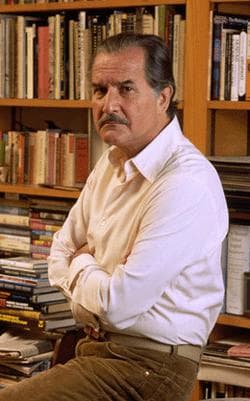
Carlos Fuentes Macías was a Mexican novelist and essayist. Among his works are The Death of Artemio Cruz (1962), Aura (1962), Terra Nostra (1975), The Old Gringo (1985) and Christopher Unborn (1987). In his obituary, The New York Times described Fuentes as "one of the most admired writers in the Spanish-speaking world" and an important influence on the Latin American Boom, the "explosion of Latin American literature in the 1960s and '70s", while The Guardian called him "Mexico's most celebrated novelist". His many literary honors include the Miguel de Cervantes Prize as well as Mexico's highest award, the Belisario Domínguez Medal of Honor (1999). He was often named as a likely candidate for the Nobel Prize in Literature, though he never won. His parents were both Mexicans.







