“There are some things that are not for mortal man to know.”
— Merlin reflecting on the limits of human understanding, particularly regarding prophecy and the divine.

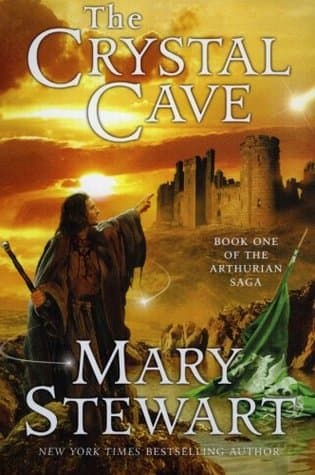
Mary Stewart (1970)
Genre
Fantasy / Historical Fiction
Reading Time
12-15 hours
Key Themes
See below
Sign in to track this book
In a fractured fifth-century Britain, the young, illegitimate Merlin navigates a land of warring kings and ancient magic, embracing his psychic Sight to forge the destiny of the legendary King Arthur.
Merlin, a young boy in fifth-century Britain, is the illegitimate son of Princess Niniane of Maridunum, a South Welsh kingdom. He grows up without knowing his father's identity, a secret his mother guards fiercely. From an early age, Merlin discovers he has a unique ability he calls 'the Sight' – visions and prophetic dreams that often come true. This gift sets him apart and causes him to be misunderstood, often labeled strange or even demon-touched. He spends his early years in the royal household, observing political workings and the constant threat of Saxon invasions, all while trying to understand his own unusual nature.
Driven by a recurring vision of a crystal-filled cave, Merlin eventually finds this hidden sanctuary, a place that amplifies his 'Sight.' Within the cave, his visions become clearer and more frequent, revealing glimpses of the past, present, and future. He begins to understand that his gift is not a curse but a powerful tool, though its implications are vast and often frightening. This discovery is a turning point, as Merlin starts to actively engage with his prophetic abilities, seeking to understand their origins and purpose, rather than merely enduring them. The cave becomes his personal refuge and a place for his developing powers.
Merlin's unusual abilities and his blunt, often unsettling pronouncements lead to him being ostracized and eventually exiled from his mother's court. Accused of being a sorcerer and a bringer of ill omens, he is forced to wander. During his exile, he meets Galapas, an old hermit who lives in a remote, abandoned Roman fort. Galapas, a wise and learned man, recognizes Merlin's unique talents and takes him in, teaching him about herbs, healing, and the natural world, as well as providing guidance on how to control and interpret his prophetic 'Sight.' This period is important for Merlin's development, giving him knowledge and a sense of belonging he previously lacked.
Through Galapas's teachings and his own visions, Merlin gradually uncovers the truth about his parentage: he is the son of Ambrosius Aurelianus, a powerful Roman-British leader fighting to restore order and establish a unified kingdom in Britain. This revelation gives Merlin a sense of purpose and a direct connection to the political fate of the land. He leaves Galapas to join Ambrosius, using his 'Sight' and growing knowledge to advise the leader. Merlin becomes an important figure in Ambrosius's court, navigating the complex alliances and betrayals among the various British kings and warlords, all vying for power in the post-Roman vacuum.
Merlin actively participates in Ambrosius's campaign against Vortigern, the tyrannical king who seized power through treachery and invited Saxon invaders into Britain. Merlin's 'Sight' is invaluable, offering strategic insights and warnings of danger. He sees firsthand the brutal realities of war and the constant struggle for power. His role extends beyond prophecy; he acts as an advisor, a messenger, and even a diplomat, helping Ambrosius to forge alliances and secure victories. The war against Vortigern is a defining period, solidifying Merlin's commitment to Ambrosius's vision of a peaceful, united Britain and honing his skills in political maneuvering.
A moment occurs when Vortigern tries to build a tower that repeatedly collapses. His advisors claim it is due to a boy with no father, leading to Merlin's apprehension. Merlin, using his 'Sight,' reveals that the tower's foundation rests on an underground pool where two dragons – symbolic of British and Saxon power struggles – are fighting. He predicts the red dragon (British) will eventually triumph over the white (Saxon). This prophecy is initially met with skepticism but is ultimately proven true, establishing Merlin's credibility as a true seer and contributing to Vortigern's downfall. This event also cements Merlin's reputation as a powerful, mysterious figure.
After Vortigern's defeat, Ambrosius is crowned High King, bringing a period of relative peace and stability to Britain. Merlin serves as his trusted advisor, helping to implement Ambrosius's vision for a just and unified kingdom. However, the peace is fragile, constantly threatened by internal jealousies and external Saxon pressures. Tragically, Ambrosius is poisoned through treachery, a death Merlin foresees but cannot prevent. This loss is painful for Merlin, as Ambrosius was not only his king but also his father, marking the end of a significant chapter in his life and leaving him to deal with the future of Britain without his guiding hand.
Following Ambrosius's death, his younger brother, Uther, inherits the throne. Merlin, despite his grief, pledges his loyalty to Uther, recognizing him as the next rightful leader in the struggle for Britain's future. Merlin uses his 'Sight' and strategic acumen to help Uther consolidate power, navigate the turbulent political landscape, and secure his position as High King. A significant act is Merlin's design of the 'Dragon Banner' for Uther, a symbol inspired by the 'dragons' of his earlier prophecy, which becomes a powerful emblem of Uther's authority and a rallying point for the British forces against the Saxons, linking Uther directly to the legacy of Ambrosius and the future of the kingdom.
Merlin is tasked by Uther with moving the ancient 'Giant's Dance' (Stonehenge) from Ireland to Britain, as a memorial to Ambrosius and the fallen warriors. Using his knowledge of engineering, leverage, and perhaps a touch of his innate magic, Merlin orchestrates the seemingly impossible feat. This act demonstrates his capacity to bridge the gap between the mundane and the miraculous, creating a lasting monument that embodies both the scientific prowess of the ancients and the mystical power he wields. The completion of the Giant's Dance further solidifies Merlin's reputation as a figure of immense power and wisdom.
As Uther's reign continues, Merlin's 'Sight' reveals the need for a new, greater king to unite Britain permanently. He sees the coming of Arthur. Merlin orchestrates the circumstances of Arthur's conception, famously helping Uther disguise himself as Gorlois, the Duke of Cornwall, to lie with Igraine, Gorlois's wife. This act, while morally ambiguous, is driven by Merlin's vision for a unified Britain under a divinely appointed leader. The book concludes with the birth of Arthur, Merlin's acceptance of his role as the child's guardian and mentor, and a sense of destiny about to unfold, signaling the true beginning of the Arthurian legend.
The Protagonist
Merlin evolves from a bewildered, ostracized boy into a powerful, self-aware seer and advisor, embracing his destiny to guide the future of Britain.
The Supporting
She remains largely static in her guarded nature, her inability to fully accept Merlin's gift ultimately leading to their estrangement.
The Supporting
Galapas serves as a catalyst for Merlin's development, his wisdom and teaching fundamentally shaping Merlin's understanding of his powers and purpose.
The Supporting
Ambrosius rises as a unifying king but ultimately falls to treachery, leaving his legacy to be continued by Uther and eventually Arthur.
The Antagonist
Vortigern's reign of tyranny leads to his eventual downfall and defeat at the hands of Ambrosius, cementing his role as a destructive force.
The Supporting
Uther ascends to kingship, guided by Merlin, and fathers Arthur, fulfilling his role in the grander scheme of Britain's future.
The Supporting
Igraine's arc is less about personal development and more about fulfilling her fated role as Arthur's mother.
The Supporting
Gorlois's resistance and eventual death serve as a tragic stepping stone in the larger narrative of Arthur's birth.
The novel explores prophecy, not as a mystical, unchangeable force, but as a complex interplay of foresight, interpretation, and human action. Merlin's 'Sight' is often vague or symbolic, requiring him to actively work to understand and fulfill the visions. This theme is central to the 'dragon' prophecy under Vortigern's tower, where Merlin interprets the battling serpents as the struggle between Britons and Saxons, a vision that directly impacts the war. Similarly, his orchestration of Arthur's birth demonstrates that destiny is not merely observed but actively shaped by those with foresight, hinting at free will within a preordained framework.
““I saw, and knew, and the knowing was a burden.””
Merlin's journey is a quest for self-discovery. As an illegitimate child, he lacks a clear sense of lineage, and his unusual 'Sight' isolates him. His exile from his mother's court and subsequent apprenticeship with Galapas are steps in this search. He finds a sense of belonging first with Galapas, who accepts and guides his gift, and then with Ambrosius, his true father, whose vision for Britain Merlin adopts. His eventual acceptance of his role as the architect of Arthur's coming signifies the culmination of this search, as he embraces his unique identity and purpose.
““I was a boy with no father, a boy with a strange gift, and no one to tell me why.””
The fifth-century setting is defined by the chaotic aftermath of Roman withdrawal and the constant threat of Saxon invasion. The novel portrays the struggle to preserve the remnants of Roman order and learning against barbarian incursions and internal divisions. Ambrosius embodies the Roman ideal of law and unity, while Vortigern represents destructive, self-serving forces. Merlin, with his blend of ancient British mysticism and Roman education (through Galapas), becomes a bridge between these worlds. The eventual birth of Arthur, orchestrated by Merlin, symbolizes the hope for a new era that will synthesize these disparate elements into a unified British kingdom, moving beyond the fragmented past.
““Britain lay broken, a mosaic of kingdoms, each fighting for its own small patch of earth.””
The book explores various forms of leadership, from Vortigern's tyrannical rule to Ambrosius's just and unifying kingship, and Uther's more flawed but still noble reign. Merlin, though not a king, wields power through his 'Sight' and intellect, often manipulating events for the greater good. The morality of his actions, particularly in orchestrating Arthur's conception, is complex, highlighting the sacrifices and difficult choices required of those who guide destiny. The theme questions whether the ends justify the means when the fate of a nation is at stake, and how true leadership balances ambition with wisdom and a vision for the future.
““There are times when a man must do what is unpalatable, for the sake of what is necessary.””
Merlin's prophetic ability to see visions of the past, present, and future.
The Sight is Merlin's primary magical ability and a central plot device. It drives his personal journey, forcing him to understand his unique nature. Narratively, it functions as a source of foreshadowing, revealing future events or hidden truths that guide Merlin's actions and decisions, such as his discovery of the crystal cave or his interpretation of the 'dragons' beneath Vortigern's tower. It also serves as a means for exposition, allowing the reader to access historical context and character motivations through Merlin's visions, making him an active participant in shaping, rather than merely observing, destiny.
A hidden cave that amplifies Merlin's prophetic abilities and serves as a sanctuary.
The Crystal Cave is a significant symbolic and practical plot device. It is a physical manifestation of Merlin's growing connection to his 'Sight' and the ancient, mystical forces of Britain. As a physical location, it provides Merlin with a secluded space for introspection and the development of his powers. Symbolically, it represents a place of clarity and revelation, where his visions become sharper and more profound. The cave acts as a catalyst for his self-discovery, allowing him to embrace his gift and understand his destiny, moving him from a passive recipient of visions to an active agent of change.
Merlin's birth status and unknown father, driving his search for identity and purpose.
Merlin's illegitimacy and his mother's refusal to reveal his father's identity serve as a core motivational plot device for his early life. This mystery fuels his personal quest for identity and belonging, setting him apart from others and making him an outcast. Narratively, it creates suspense and provides a powerful reveal when he discovers his father is Ambrosius Aurelianus. This revelation not only grounds him in a lineage but also connects him directly to the political fate of Britain, giving his 'Sight' a clear purpose within the larger historical narrative.
A powerful symbol of leadership, inspired by Merlin's prophecy, uniting Britain.
The Dragon Banner, designed by Merlin for Uther Pendragon, is a powerful symbolic plot device. It originates from Merlin's 'dragon' prophecy under Vortigern's tower, where the red dragon represented Britain. By creating the banner, Merlin connects Uther's reign directly to this prophecy, imbuing it with a sense of destiny and ancient power. It serves as a unifying symbol for the British forces, inspiring loyalty and hope in a fractured land. The banner also reinforces Merlin's role as a manipulator of symbols and beliefs, subtly guiding the course of history through powerful imagery.
“There are some things that are not for mortal man to know.”
— Merlin reflecting on the limits of human understanding, particularly regarding prophecy and the divine.
“A man's true strength is not in his sword arm, but in his mind and his heart.”
— Merlin's uncle, Ambrosius, imparting wisdom to a young Merlin about the nature of power.
“The future is not fixed, but woven, and we are all part of the loom.”
— Merlin contemplating the fluid nature of fate and the impact of individual choices.
“Power is a dangerous gift, and those who seek it for its own sake are always its victims.”
— Merlin observing the ambitions of various kings and warlords.
“The land remembers. The stones remember. And if you listen, they will tell you their stories.”
— Merlin, attuned to the ancient magic of Britain, feeling the history embedded in the landscape.
“Fear is a poor counsellor, and a worse master.”
— Merlin advising a hesitant Uther Pendragon on making a difficult decision.
“There is a tide in the affairs of men, which taken at the flood, leads on to fortune.”
— Merlin, recognizing a pivotal moment in the political landscape of Britain, echoing Shakespeare.
“To see is not always to understand. To understand is not always to accept.”
— Merlin grappling with the complexities of human perception and belief, especially when dealing with his own unique abilities.
“The greatest magic is not in spells or incantations, but in the heart of man.”
— Merlin reflecting on the true source of power and influence.
“Sometimes the wisest course is to do nothing, but to wait and watch.”
— Merlin exercising patience and strategic observation in a tumultuous political climate.
“He who seeks to control others will always be a slave to his own desires.”
— Merlin's internal thoughts on the nature of tyranny and ambition.
“Truth is a stubborn thing, and will out in the end, no matter how deeply buried.”
— Merlin's belief in the eventual revelation of facts, despite attempts to conceal them.
“The world is full of wonders, if only one has the eyes to see them.”
— Merlin's appreciation for the natural and magical beauty of the world around him.
“A king may rule a kingdom, but a true leader rules the hearts of his people.”
— Merlin's thoughts on the qualities of effective and beloved leadership.
Ready to see how well you understood this book? Take our interactive quiz with 10 questions.
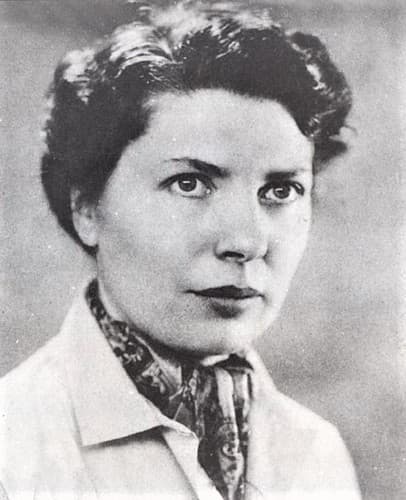
Biography coming soon.







