“She had dedicated her equanimity to the void.”
— Describing Oedipa's emotional state early in the novel.

Thomas Pynchon (1965)
Genre
Literary Fiction / Mystery
Reading Time
240 min
Key Themes
See below
Sign in to track this book
Tasked with executing her ex-lover's will, Oedipa Maas spirals into a hallucinatory quest through 1960s California, uncovering a vast, secret postal conspiracy that may or may not exist.
Oedipa Maas, a housewife in Kinneret, California, with her psychiatrist husband, Mucho, receives a letter. It says she is executrix of the estate of Pierce Inverarity, a wealthy real estate mogul and her former lover. This news immediately disrupts her mundane life. She decides to travel to San Narciso, a fictional Southern California city, to fulfill her duties. Upon arrival, she checks into a motel and begins to adapt to the strange new environment and the task ahead. This initial step pulls her from her domestic complacency into a world of unexpected complexities and ambiguous signals, setting the stage for her subsequent investigation.
In San Narciso, Oedipa meets Metzger, a young, ambitious lawyer also involved with Inverarity's estate. Their first encounter leads to a brief sexual liaison. While at Metzger's apartment, Oedipa sees a movie on TV, 'Cashiered,' which features a character played by Ronald Reagan. More significantly, she encounters the Nefastis Machine, a device invented by John Nefastis. It supposedly operates on Maxwell's Demon principle, requiring a sentient being to observe it to decrease entropy. This machine introduces concepts of information theory and observation's role, themes that will echo throughout her journey.
While out with Metzger, Oedipa sees a bathroom wall with the symbol 'WASTE' followed by a muted post horn. Later, she finds the same post horn symbol in a men's restroom, written as 'Trystero.' This is her first direct encounter with what appears to be a secret, alternative postal system, or perhaps a complex prank. The symbol's appearance is unsettling, suggesting a hidden layer of communication operating beneath everyday life. This discovery sparks her curiosity and initial suspicion that something larger is at play than just random graffiti.
Oedipa visits Yoyodyne, a large defense contractor owned by Inverarity, to investigate its assets. During her tour, she meets Mike Fallopian, a member of the right-wing John Birch Society. Fallopian mentions the Tristero and its historical roots, claiming it was an underground postal service opposed to the Thurn and Taxis monopoly. He also hints at the organization's violent past and its continued, hidden existence. This encounter deepens Oedipa's understanding of the Tristero, providing historical context and suggesting its potential for widespread influence, further fueling her growing obsession.
Oedipa attends a meeting of Inamorati Anonymous, a support group for people who have fallen in love with their therapists. Here, she overhears a man named Stanley Koteks discussing a coded message on a toilet wall, which he identifies as a 'Trystero' communication. The message, seemingly innocuous, refers to a secret postal system. This incident reinforces the idea that the Tristero is not isolated but has infiltrated various aspects of society, even seemingly unrelated support groups. It further blurs the line between random coincidence and deliberate, organized communication, intensifying Oedipa's paranoia.
Driven by her growing obsession, Oedipa visits Zapf's Used Books, seeking more information about the Tristero. She meets Emory Bortz, a professor researching a Jacobean revenge play, 'The Courier's Tragedy,' which contains references to the Trystero. Bortz explains the historical rivalry between the Trystero and the Thurn and Taxis postal system, detailing the Trystero's origins as a group of oppressed mail couriers. This visit provides Oedipa with significant historical and literary context, suggesting the Tristero's existence spans centuries and is embedded in cultural narratives, not just modern graffiti.
Back in Kinneret, Oedipa finds her husband, Mucho Maas, increasingly detached and changed by his experiments with LSD. He describes experiencing a complete dissolution of his ego and a profound, almost mystical, connection to all things. His professional life as a disc jockey is affected, and he becomes entirely absorbed in his altered state of consciousness. Mucho's transformation represents a different kind of escape from reality, one driven by drugs rather than conspiracy, and it leaves Oedipa feeling increasingly isolated and alone, as her primary support system disintegrates.
As Oedipa continues her investigation, she meets increasingly bizarre and shadowy figures who seem connected to the Tristero. These include a group of old men suffering from DTs, a Dr. Hilarius, and a number of seemingly ordinary individuals who use the secret postal system. Each encounter offers fragments of information, but no clear answers, leaving Oedipa to piece together a puzzle with missing pieces. The ambiguity of these interactions further blurs the line between reality and hallucination, making her question the true nature of the conspiracy.
Oedipa continues to find more evidence of the Tristero's widespread influence, from coded messages in trash cans to secret drop boxes. She learns of a 'dead letter' system and various forms of clandestine communication. However, as her understanding of the potential conspiracy grows, her personal connections diminish. Metzger disappears, Mucho is lost to drugs, and even Dr. Hilarius goes mad. Oedipa finds herself increasingly alone, with no one to confirm or deny her suspicions. The world around her seems to dissolve into a network of symbols and unanswered questions, leaving her on the brink of either a profound revelation or a complete breakdown.
After gathering many clues, Oedipa learns that Pierce Inverarity's stamp collection, which might contain rare Tristero stamps, is to be auctioned as 'Lot 49.' She believes this auction will finally provide her with a definitive answer: either the Tristero is real, and the stamps will confirm its existence, or it is all an elaborate hoax, or perhaps a symptom of her own paranoia. The novel concludes with Oedipa sitting in the auction room, the lights dimming, awaiting the 'crying' of Lot 49. The ending is ambiguous, with no clear resolution, leaving the reader to ponder the reality of the Tristero and Oedipa's sanity.
The Protagonist
Oedipa transforms from a passive observer of her life to an active, albeit bewildered, seeker of truth, ultimately finding herself isolated on the precipice of an ambiguous revelation.
The Catalyst/Mentioned
As a deceased character, Pierce's 'arc' is retrospective, revealing his complex, elusive nature through Oedipa's discoveries about his past and influence.
The Supporting
Mucho devolves from a concerned husband to a detached, drug-addled mystic, losing his grasp on conventional reality.
The Supporting
Metzger serves as an initial confidant and lover for Oedipa, before his abrupt disappearance leaves her further isolated.
The Supporting
Dr. Hilarius descends into paranoia and madness, reflecting Oedipa's own fears about her sanity and the nature of conspiracy.
The Supporting
Fallopian introduces Oedipa to the historical context of the Tristero, serving as an early, if unreliable, guide into the conspiracy.
The Mentioned
As an unseen inventor, Nefastis's 'arc' is primarily thematic, introducing the concept of observation's power.
The Supporting
Bortz provides historical and literary depth to the Tristero, grounding the conspiracy in a complex past.
The Mentioned
Koteks's brief appearance serves to corroborate Oedipa's burgeoning theories about the Tristero's widespread presence.
The novel constantly blurs the line between objective reality, hallucination, and elaborate hoax. Oedipa is never certain if the Tristero is a genuine, centuries-old conspiracy, a modern prank by Pierce Inverarity, or a delusion of her own increasingly paranoid mind. This ambiguity is central to the narrative, forcing both Oedipa and the reader to question what constitutes truth. Scenes like Oedipa's encounters with various eccentric characters, each offering fragmented and often contradictory information about the Tristero, exemplify this theme. So does her husband Mucho's drug-induced detachment from conventional reality.
“She had heard of similar things, of course, in the literature of paranoia, but it was just that, literature.”
Information, its transmission, and its distortion are core to the novel. The Tristero itself is an alternative postal system, highlighting the human need for communication outside official channels. However, the messages Oedipa encounters are often ambiguous, coded, or incomplete, leading to misinterpretation rather than clarity. The Nefastis Machine, which requires an observer to function, symbolizes the subjective nature of information. The many symbols, acronyms (like WASTE), and hidden messages underscore the search for meaning in a world oversaturated with data, yet lacking genuine connection. The novel suggests that while communication abounds, true understanding remains elusive.
“Behind the hieroglyphic streets there would either be a transcendent meaning, or only the earth. She couldn't choose.”
Pynchon integrates scientific concepts, particularly entropy and information theory, to explore the novel's themes. The Nefastis Machine, based on Maxwell's Demon, directly introduces the idea of decreasing entropy through observation. It suggests that meaning (information) can be created or discerned from chaos (entropy) by an active consciousness. Conversely, the vast, seemingly random collection of clues and coincidences Oedipa encounters can be seen as increasing entropy, a descent into disorder. Oedipa's struggle to find a coherent pattern in the Tristero's signals is her attempt to reduce this entropy, to impose order and meaning on a chaotic world, or risk being overwhelmed by its meaninglessness.
“Either you're a member of the Tristero, or you're not. And if you're not, then you're a member of the other side.”
As Oedipa investigates the Tristero mystery, she becomes increasingly isolated from conventional society and her personal relationships. Her husband, Mucho, retreats into drug-induced bliss, and her brief lover, Metzger, disappears. The more she seeks connection and understanding of the hidden world, the more she finds herself alone, unable to share her revelations or confirm her suspicions with anyone. This isolation amplifies her paranoia and self-doubt, as she grapples with the possibility that she is either discovering a profound truth or simply going mad. The ending, with Oedipa alone awaiting the auction, perfectly encapsulates this theme.
“She was to have all the help she needed, but by now she was sure she was to have none.”
The novel offers a satiric critique of the American Dream and the widespread nature of consumerism and corporate influence. Pierce Inverarity, a wealthy real estate mogul, embodies the excesses of American capitalism. He amassed his fortune through various, sometimes dubious, ventures that touch every aspect of life in San Narciso. The landscape is dominated by corporate entities like Yoyodyne, and even the Tristero, if real, operates as an alternative economy. The critique extends to the shallowness of suburban life (Oedipa's initial existence) and the emptiness beneath the glossy surface of material prosperity, suggesting a deeper, hidden reality or spiritual void.
“She was meant to be an executrix, not a detective. But she could not stop.”
An ambiguous, elusive secret society that drives the plot.
The Tristero (or W.A.S.T.E.) serves as the central MacGuffin of the novel. It is the mysterious, potentially centuries-old, underground postal system that Oedipa is constantly trying to confirm or deny. Its exact nature, purpose, and even its very existence remain elusive throughout the narrative. The Tristero drives Oedipa's investigation and shapes her perceptions, providing a focal point for her paranoia and search for meaning. However, whether it is a grand conspiracy, an elaborate hoax by Pierce Inverarity, or a manifestation of Oedipa's own psychological state is never definitively answered, making it a perfect Pynchonian MacGuffin that raises more questions than it answers.
References to historical events, literature, and popular culture.
Pynchon extensively uses intertextuality and allusion, weaving in references to historical events (like the Thurn and Taxis postal monopoly), literary works ('The Courier's Tragedy'), and popular culture (Ronald Reagan's movie). These allusions enrich the narrative by providing layers of historical and cultural context, suggesting the Tristero's deep roots in human history and consciousness. They also serve to blur the lines between fiction and reality, making Oedipa (and the reader) question the authenticity of the information she uncovers. This device creates a dense, multi-layered text that mirrors the complexity and ambiguity of the conspiracy itself.
The narrative concludes without a clear resolution, leaving the central mystery unsolved.
The novel famously ends without a definitive resolution to the Tristero mystery. Oedipa is left awaiting the 'crying' of Lot 49, hoping for a final revelation, but the reader is never privy to what that revelation might be, or if it even occurs. This ambiguous ending is a powerful plot device that reinforces the novel's central themes of paranoia, the subjective nature of reality, and the elusiveness of truth. It forces the reader to confront the same uncertainty as Oedipa, prompting them to question whether the conspiracy is real, a product of her mind, or an elaborate prank, thereby extending the novel's intellectual challenge beyond its final page.
Oedipa's perspective is increasingly clouded by paranoia and doubt.
While not a first-person narrative, the story is largely filtered through Oedipa's increasingly subjective and paranoid perspective. As she delves deeper into the Tristero, her mental state becomes more unstable, making her an unreliable lens through which to view the events. Her perceptions are colored by her growing isolation, the influence of drugs (through Mucho), and the sheer overwhelming nature of the clues she uncovers. This device constantly forces the reader to question the veracity of what Oedipa experiences, leaving open the possibility that the entire conspiracy is a product of her own psyche or an elaborate delusion, rather than an objective reality.
“She had dedicated her equanimity to the void.”
— Describing Oedipa's emotional state early in the novel.
“Either Oedipa had to be crazy, or a Tristero existed.”
— Oedipa's internal struggle with the growing evidence of a secret organization.
“Behind the hieroglyphic streets there would either be a transcendent meaning, or only the earth.”
— Oedipa contemplates the two extreme possibilities of her quest.
“The only way to break the circuit was to set up a counter-force, a new circuit.”
— Oedipa's understanding of how systems and power operate.
“She was meant to be alone, to learn.”
— Oedipa's growing sense of isolation and her role as an investigator.
“For there either was some Tristero beyond the appearance of the Tristero, or there was just her.”
— Another iteration of Oedipa's central dilemma, emphasizing her personal stake.
“It was as if she had been appointed to gather these parts of America and make of them a whole.”
— Oedipa's emerging sense of purpose in connecting disparate clues.
“The Paranoids were right. She was being watched.”
— Oedipa's growing suspicion that she is under surveillance.
“She might have found the Tristero, or she might have been made to think she had.”
— The ambiguity of Oedipa's discoveries and the possibility of manipulation.
“Such a coincidence, an anomaly, a secret whispering out of the institutional walls.”
— Describing the initial hints of the Tristero's existence.
“There was a moment's pause, a silence that became a kind of vacuum, or a void.”
— A description of a tense or significant moment, often preceding a revelation.
“The world was not a solid, but a liquid. And she was drowning.”
— Oedipa's feeling of being overwhelmed by the fluidity and instability of reality.
“She could not yet accept that the world was just something to be manipulated.”
— Oedipa's struggle with the idea of a world without inherent meaning, only power plays.
“Behind the name of the Tristero, there might be nothing. Or there might be everything.”
— The ultimate binary choice Oedipa faces at the novel's climax.
Ready to see how well you understood this book? Take our interactive quiz with 10 questions.
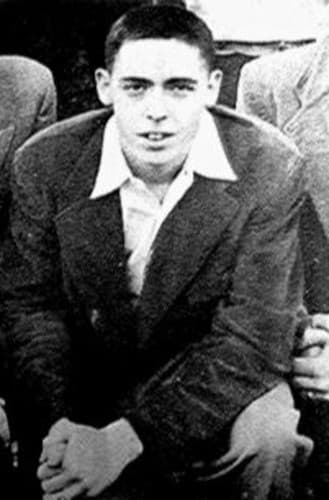
Thomas Ruggles Pynchon Jr. is an American novelist noted for his dense and complex novels. His fiction and non-fiction writings encompass a vast array of subject matter, genres and themes, including history, music, science, and mathematics. For Gravity's Rainbow, Pynchon won the 1973 U.S. National Book Award for Fiction.







