BookBrief
The Crucible cover
Archivist's Choice

The Crucible

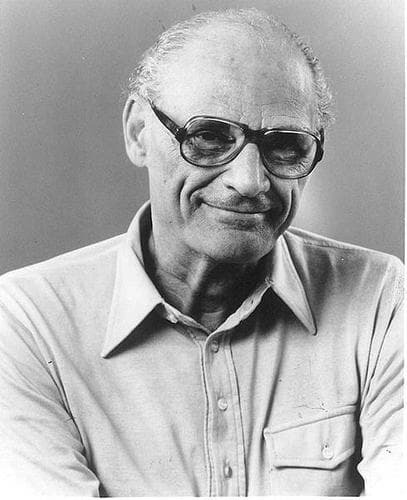
Arthur Miller (2003)

Genre

Historical Fiction

Reading Time

180 min

Key Themes

See below

Track Your Reading

Sign in to track this book

In 17th-century Salem, a young girl's accusation starts a witch-hunt, showing how mass hysteria and self-righteousness can destroy a community and condemn innocent people.

Synopsis

In Salem, Massachusetts, a strict religious community, a group of young girls are found dancing in the woods. This leads to a mysterious illness in Reverend Parris's daughter, Betty. To avoid punishment, Abigail Williams, Parris's niece and the group's leader, starts accusing townspeople of witchcraft. Her first accusations, driven by her desire for John Proctor, with whom she had an affair, involve Tituba, Parris's slave. Tituba, under pressure, confesses and names others. The accusations grow, turning Salem into a place of fear. John Proctor, a respected farmer burdened by guilt over his affair with Abigail, tries to expose her as a liar when his wife, Elizabeth, is accused. Despite his efforts, and Reverend Hale's growing doubts, the court, led by Deputy Governor Danforth, refuses to change course. It values its authority more than the truth. Mary Warren, a servant in the Proctor home, first tries to confess the girls' deception but is scared by Abigail and turns on John. John, desperate to save Elizabeth and expose Abigail, confesses his affair. But Elizabeth, not knowing he confessed and trying to protect his name, lies about it, sealing his fate. John Proctor chooses to be hanged rather than falsely confess to witchcraft, keeping his good name and speaking out against the court's unfairness. His end, and the end of others like Giles Corey who refuse to give in, shows the terrible results of mass hysteria and power misused.
Reading time
180 min
Difficulty
Medium
Pacing
Moderate
Mood
Dark, Suspenseful, Thought-provoking, Tragic
✓ Read this if...
You're fascinated by historical events, the psychology of groupthink, and stories that explore moral dilemmas and the cost of integrity during times of societal madness.
✗ Skip this if...
You prefer lighthearted stories or are uncomfortable with themes of injustice, betrayal, and the tragic consequences of religious extremism.

Plot Summary

A Secret Dance and a Mysterious Illness

In the strict Puritan town of Salem, Massachusetts, Reverend Parris finds his niece, Abigail Williams, his daughter, Betty Parris, and several other girls dancing in the forest with his slave, Tituba. The girls run away, but Betty falls into a coma, increasing the town's existing fears about the Devil. Rumors of witchcraft quickly spread. Reverend Parris worries about his reputation and his job, fearing that any link to witchcraft will ruin him. He confronts Abigail, who says they were just dancing. However, the town, including the powerful Putnam family, already believes dark forces are at work.

Abigail's Manipulation and Tituba's Confession

Reverend Hale, a respected expert on witchcraft, is called to Salem to investigate Betty's condition. As Hale questions Betty and Abigail, it becomes clear that Abigail strongly influences the other girls. Under great pressure and fear of being whipped, Tituba is forced to confess that she spoke with the Devil and saw Goody Good and Goody Osburn with him. This confession, caused by Hale's leading questions and Parris's threats, is the first 'evidence' of witchcraft in Salem. Abigail, seeing a chance to avoid suspicion and gain power, then dramatically claims to have seen other townspeople with the Devil, starting many accusations against innocent citizens.

Tension in the Proctor Household

Three weeks later, the witch trials are ongoing, and many people have been arrested. John Proctor and his wife, Elizabeth, live in a tense household. John had an affair with Abigail Williams seven months earlier, and Elizabeth has not fully forgiven him, which causes distance between them. Mary Warren, their servant, has become a court official, which John dislikes. She returns from court that evening and gives Elizabeth a rag doll, or 'poppet,' she made. Mary also says that Elizabeth's name was mentioned in court, but she defended her. This news worries Elizabeth, who thinks Abigail is trying to get rid of her to be with John.

Elizabeth's Arrest and John's Desperation

Reverend Hale visits the Proctors to check their Christian faith, as Elizabeth's name has been mentioned in court. While he is there, Giles Corey and Francis Nurse arrive, saying their wives, Martha Corey and Rebecca Nurse, have been arrested. Suddenly, Ezekiel Cheever and Herrick, the marshal, arrive with a warrant for Elizabeth's arrest. They find the poppet Mary Warren gave Elizabeth and see a needle stuck in it, just like Abigail claimed Elizabeth's spirit stabbed her. Despite John's strong protests and Mary's confession that she made the doll and put the needle in it, Elizabeth is taken away. John then decides to expose Abigail's deception.

The Court Proceedings and Abigail's Power

John Proctor brings Mary Warren to court, hoping she will confess that the girls' accusations are false. Judge Danforth, Deputy Governor of Massachusetts, leads the proceedings, sure of his mission to find witchcraft. Giles Corey, fearing for his life and others, tries to present evidence but is arrested for contempt of court. Mary Warren first confesses that she and the other girls were faking. But Abigail, seeing her power weaken, creates a dramatic scene, claiming Mary's spirit is attacking her. The other girls join in, copying Mary and increasing the hysteria, making it impossible for the court to believe Mary's truth.

John's Confession and Mary's Betrayal

In a desperate move to discredit Abigail and save his wife, John Proctor publicly confesses his affair with Abigail Williams. He hopes to show she is a liar driven by jealousy and revenge. He says, 'I have known her, sir. I have known her.' Danforth, surprised, calls for Elizabeth Proctor to confirm John's confession. But Elizabeth, not knowing John confessed and trying to protect his name, denies the affair. This denial, ironically, hurts John's credibility. Abigail and the girls then increase their fake attacks, claiming Mary Warren is sending her spirit upon them. Overwhelmed and scared, Mary Warren breaks down and accuses John Proctor of forcing her to lie and being the Devil's man.

Hale's Disillusionment and the Escalation of Executions

With Mary Warren's betrayal, John Proctor is arrested for witchcraft. Reverend Hale, who has lost faith in the court's fairness and the widespread injustice, sees the truth in John's desperate confession and the girls' clear manipulation. In a strong act of conscience, Hale speaks against the court and its actions, saying, 'I denounce these proceedings, I quit this court!' He leaves, abandoning the trials. Despite Hale's protest and the growing doubts among some townspeople, Judge Danforth, driven by his strong belief in his authority and the court's importance, allows the trials to continue, leading to more arrests and death sentences.

Giles Corey's Courageous Silence

As the trials continue, Giles Corey, a spirited and honorable old man, is brought before the court. He refuses to say if he is guilty or not guilty of witchcraft. Doing so would mean his land would be taken by the state, leaving his sons with nothing. When asked to name his source that Thomas Putnam is using the trials to get land, Giles refuses to betray his informant. For his defiance, he is tortured by 'pressing,' where stones are put on his chest. His last words are 'More weight,' as he dies honorably, refusing to give up his honesty or harm another.

Hale's Plea for Confessions

Months later, many people have been hanged, and the town is in chaos. Cows roam the roads, crops rot, and fear paralyzes Salem. Reverend Hale, now filled with guilt and trying to make up for his part in the injustice, returns to Salem. He visits the remaining prisoners, including John Proctor and Rebecca Nurse, in their cells, urging them to falsely confess to witchcraft. He believes that lying to save their lives is a lesser sin than dying for a principle that the corrupt court will not uphold. Hale tries to convince Elizabeth Proctor to persuade John to confess, believing it is the only way to save him.

John's Internal Struggle and Final Decision

John Proctor is brought to Elizabeth, who is now pregnant, for a final talk. She tells him that Giles Corey died honorably and that many others have confessed. John, torn between wanting to live and needing to keep his good name and honesty, debates whether to confess. He first agrees to confess, signing a document that would be posted publicly. However, he cannot bear to have his name, the only thing he has left, stained by a lie. He refuses to let Danforth take his signed confession, tearing it up, saying, 'I have given you my soul; leave me my name!' He chooses to die as an honest man.

The Tragic End

Despite Elizabeth's quiet understanding and support for his choice, John Proctor, along with Rebecca Nurse and Martha Corey, is led to the gallows. Reverend Parris desperately tries to plead with Elizabeth to change John's mind, but she refuses, seeing his deep moral courage. As dawn breaks, the play ends with the sound of a drumroll as the condemned are hanged. The sad end of the Salem witch trials shows the terrible results of mass hysteria, extreme religion, and power misused. It leaves a lasting impact on the remaining community and the audience.


Principal Figures

John Proctor

The Protagonist

From a man burdened by guilt and seeking to protect his reputation, John transforms into a martyr who chooses death over a false confession, upholding his integrity.

Abigail Williams

The Antagonist

Abigail rises from a scorned lover to the most powerful figure in Salem, ultimately fleeing when her lies begin to unravel.

Elizabeth Proctor

The Supporting

Elizabeth moves from a resentful wife to a woman who fully understands and supports her husband's moral stand, finding forgiveness and strength.

Reverend John Hale

The Supporting

Hale transforms from a confident, dogmatic witch-hunter to a guilt-ridden advocate for justice, rejecting the court's authority.

Judge Danforth

The Antagonist

Danforth remains steadfast in his conviction, never wavering from his belief in the court's righteousness, despite overwhelming evidence of injustice.

Reverend Samuel Parris

The Supporting

Parris's paranoia and self-interest drive him to support the trials, but he eventually fears for his own life as the town turns against him.

Tituba

The Supporting

Tituba is a victim of the initial hysteria, forced to confess to save her life and subsequently imprisoned, highlighting the vulnerability of the powerless.

Giles Corey

The Supporting

Giles transitions from a cantankerous old man to a heroic figure who dies a martyr's death to protect his family's inheritance and his principles.

Rebecca Nurse

The Supporting

Rebecca Nurse remains unwavering in her faith and innocence, becoming a martyr for truth and integrity.

Mary Warren

The Supporting

Mary struggles between her conscience and her fear, ultimately succumbing to the hysteria and betraying John Proctor to save herself.

Themes & Insights

Mass Hysteria and its Consequences

The play shows how fear, superstition, and social pressure can lead to widespread irrationality and terrible results. The first rumors of witchcraft, caused by Betty Parris's illness and the Puritan community's fears about the Devil, quickly turn into a full witch hunt. Abigail Williams's accusations, along with the court's quick acceptance of spectral evidence, create a situation where logic is lost. This theme is central as innocent people are condemned based on weak evidence, showing how group delusion can destroy a community.

''We burn a hot fire here; it melts all concealment.'

Judge Danforth

Reputation and Integrity

A person's 'name' and reputation are strong forces for many characters. Reverend Parris wants to keep his good name and fears any scandal that might hurt his position. John Proctor, despite his past sin, chooses to die rather than sign a false confession, believing his honesty and 'name' are all he has left. Elizabeth Proctor's lie about John's affair was an attempt to protect his reputation, which ironically seals his fate. The play explores the hard choices characters make when their reputation and moral honesty are against survival.

'I have given you my soul; leave me my name!'

John Proctor

Abuse of Power and Authority

The play criticizes the dangers of power without limits, especially in a strict religious system. Judge Danforth, representing state and religious authority, becomes a firm force, unwilling to admit mistakes or question the girls' accusations. Doing so would hurt his own legitimacy. Reverend Parris also misuses his authority by using the trials to silence critics and keep his job. The court's power allows for the persecution of innocent people and the silencing of disagreement, showing how authority, without accountability or kindness, can become oppressive.

'A person is either with this court or he must be counted against it, there be no road between.'

Judge Danforth

Guilt and Conscience

Many characters struggle with their conscience and guilt. John Proctor is troubled by his affair with Abigail, and this guilt first stops him from speaking out. Reverend Hale feels guilty about his part in condemning innocent people and tries to fix the damage by urging confessions. The play looks at the psychological cost of guilt, both for those who do wrong and for those who see injustice. Ultimately, the struggle of conscience leads some characters to take strong moral stands, while others give in to fear and self-preservation.

'I came into this village like a bridegroom to his beloved, bearing gifts of high religion; the very crowns of holy law I brought, and what I touched with my bright confidence, it died; and where I turned the eye of God, great sin erupted, and I have no shred of goodness in me.'

Reverend Hale

Revenge and Jealousy

Underneath many accusations is a strong current of personal revenge and jealousy. Abigail Williams's main reason for accusing Elizabeth Proctor is her desire for revenge and her jealous longing for John. Thomas Putnam encourages accusations against his neighbors to get their land. The trials offer a convenient and socially approved way for people to settle old scores, air complaints, and gain advantages over their enemies. This theme shows how personal dislikes can be hidden by moral righteousness during times of social unrest, causing widespread suffering.

'She thinks to take my place, John.'

Elizabeth Proctor

Plot Devices & Literary Techniques

Allegory

The entire play serves as an allegory for the McCarthy-era Red Scare.

Arthur Miller explicitly crafted 'The Crucible' as an allegory for the anti-Communist hysteria and 'witch hunts' led by Senator Joseph McCarthy in the 1950s. The Salem witch trials, with their baseless accusations, coerced confessions, and destruction of reputations, mirror the tactics and consequences of McCarthyism. Characters like John Proctor, who refuses to name others, parallel individuals blacklisted for refusing to testify before the House Un-American Activities Committee. This device allows Miller to critique contemporary political events by setting them in a historical context, making the criticism both powerful and widely understood.

Dramatic Irony

The audience is often aware of truths that characters in the play are not, creating tension and tragedy.

Dramatic irony is prevalent throughout the play, heightening the tragedy. A prime example is when Elizabeth Proctor, trying to protect her husband's good name, lies in court and denies his affair with Abigail, unaware that John has just confessed to it. The audience knows the truth, and this moment of protective deception tragically undermines John's desperate attempt to expose Abigail. Similarly, the audience knows Abigail and the girls are faking, while the court remains convinced of their truthfulness, creating a sense of helplessness and outrage at the unfolding injustice.

Foil Characters

Characters whose contrasting traits highlight each other's qualities.

Several characters serve as foils to one another. Reverend Parris, with his insecurity and concern for reputation, contrasts sharply with the morally upright and principled Rebecca Nurse or John Proctor. Reverend Hale's initial dogmatism and later moral awakening make him a foil to Judge Danforth's unwavering and rigid adherence to the law, highlighting the difference between blind authority and evolving conscience. Abigail Williams's manipulative nature is a stark contrast to Elizabeth Proctor's honesty and integrity, emphasizing the moral divide between them.

Symbolism of the Poppet

The doll symbolizes the manipulation and fabricated evidence used in the trials.

The poppet, or rag doll, that Mary Warren gives to Elizabeth Proctor serves as a crucial symbol. What seems like an innocent gift is manipulated by Abigail Williams to serve as 'proof' of Elizabeth's witchcraft. Abigail stabs herself with a needle and then claims Elizabeth's spirit did it, pointing to the needle in the poppet as spectral evidence. This object directly symbolizes how innocent items and actions can be twisted into damning evidence through manipulation and the power of suggestion, leading to the unjust condemnation of the accused. It represents the fabricated nature of the charges.

Critical analysis

Notable Quotes

Because it is my name! Because I cannot have another in my life! Because I lie and sign myself to lies! Because I am not worth the dust on the feet of them that hang! How may I live without my name? I have given you my soul; leave me my name!

John Proctor refuses to sign a false confession to witchcraft, choosing death over dishonor.

I speak my own sins; I cannot judge another. I have no tongue for it.

John Proctor responds to being asked to accuse others of witchcraft.

We are what we always were in Salem, but now the little crazy children are jangling the keys of the kingdom, and common vengeance writes the law!

Reverend Hale criticizes the witch trials as driven by personal vendettas.

A fire, a fire is burning! I hear the boot of Lucifer, I see his filthy face! And it is my face, and yours, Danforth!

John Proctor accuses Judge Danforth of being complicit in the evil of the trials.

I have given you my soul; leave me my name!

John Proctor's plea to preserve his reputation after confessing to adultery.

The Devil is precise; the marks of his presence are definite as stone.

Reverend Hale early in the trials, expressing certainty about detecting witchcraft.

I cannot mount the gibbet like a saint. It is a fraud. I am not that man.

John Proctor struggles with the idea of dying as a martyr.

Life, woman, life is God's most precious gift; no principle, however glorious, may justify the taking of it.

Reverend Hale urges Elizabeth Proctor to convince John to confess falsely to save his life.

I have seen too many frightful proofs in court—the Devil is alive in Salem, and we dare not quail to follow wherever the accusing finger points!

Judge Danforth defends the trials despite growing doubts.

I never knew until tonight that the world is gone daft with this nonsense.

Rebecca Nurse expresses disbelief at the accusations of witchcraft.

I look for John Proctor that took me from my sleep and put knowledge in my heart!

Abigail Williams declares her love for John Proctor, revealing their past affair.

I have been near to murdered every day because I done my duty pointing out the Devil's people—and this is my reward? To be mistrusted, denied, questioned like a—

Abigail Williams complains about not being believed, showing her manipulative nature.

It is a providence, and no great change; we are only what we always were, but naked now.

John Proctor reflects on how the trials have stripped away pretense, revealing true character.

I cannot sleep for dreamin'; I cannot dream but I wake and walk about the house as though I'd find you comin' through some door.

Abigail Williams confesses her obsessive love for John Proctor.

Quiz

Test Your Knowledge

Ready to see how well you understood this book? Take our interactive quiz with 10 questions.

10
Questions
~5
Minutes
?
Best Score

Key Questions (FAQ)

'The Crucible' dramatizes the 1692 Salem witch trials in Massachusetts, where a group of young girls led by Abigail Williams accuses townspeople of witchcraft. The play follows farmer John Proctor as he confronts the hysteria after his wife Elizabeth is accused, exposing how fear, vengeance, and religious extremism destroy the community through false testimonies and unjust trials.

About the author

Arthur Miller

Arthur Asher Miller was an American playwright, essayist and screenwriter in the 20th-century American theater. Among his most popular plays are All My Sons (1947), Death of a Salesman (1949), The Crucible (1953), and A View from the Bridge (1955). He wrote several screenplays and was most noted for his work on The Misfits (1961). The drama Death of a Salesman is considered one of the best American plays of the 20th century.