“The past is like a foreign country; they do things differently there.”
— A general observation about history and the differences between eras.

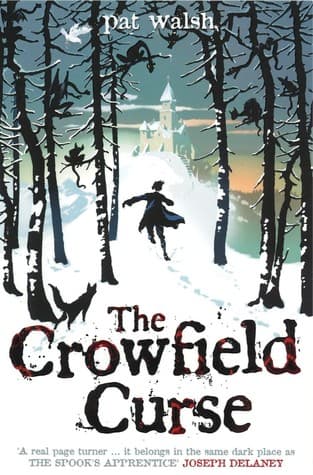
Pat Walsh (2010)
Genre
Fantasy / Children's / Historical Fiction / Mystery / Young Adult
Reading Time
240 min
Key Themes
See below
Sign in to track this book
In 1347, an orphan apprentice monk uncovers a buried angel, a talking goblin, and a dangerous world of Old Magic, all while two cloaked strangers hunt for answers within the abbey walls.
It is the harsh winter of 1347. Thirteen-year-old orphan Will, an apprentice to the monks of Crowfield Abbey, is sent into the deep, snow-covered woods for firewood. The task is hard, and Will struggles through the snow. While looking for deadwood, he finds a small, fox-like creature caught in a snare. To his surprise, the creature speaks, asking for help. This is Grub, a goblin-like 'fay.' Grub reveals a secret: an angel is buried in the snow behind the abbey. Grub, hurt and desperate, asks Will to free him, promising to tell him more about the angel and the old magic around Crowfield.
Will is afraid, but his kindness wins out. He frees Grub from the snare and tends to its injured leg. Grub now trusts Will and leads him to a hidden spot in the snow behind the abbey. There, Will sees a faint glow and feels a huge, cold presence under the earth. Grub explains that the 'angel' is not dead but sleeping and decaying, trapped by old magic. He warns Will that the angel's presence is harming the land and the abbey. He also says that powerful, dangerous beings are looking for it, drawn by its power. Will feels uneasy and curious about this impossible secret.
Soon after Will meets Grub, two strangers arrive at Crowfield Abbey: the dark-clad Master Fenwick and his younger companion, Maewyn. They say they are scholars interested in the abbey's old texts and history. But their questions quickly become unsettling. They ask about the abbey's hidden places, its founders, and strange events. Will watches them with suspicion, sensing their interest goes beyond academics. He overhears parts of their talks, which hint at a darker purpose related to the 'Old Magic' Grub mentioned. This makes Will even more wary.
Will tells Brother Sylvanus, the kind infirmarian, about the strange events and his meetings with Grub. Brother Sylvanus, who knows much about old things, reveals that Crowfield Abbey was not always a holy place. It was built on a powerful center of 'Old Magic.' He explains that the monks' real purpose, passed down for generations, is to guard against this magic and its misuse. Sylvanus confirms that the 'angel' is a powerful, old being that fell to earth and was contained by the abbey's founders. He warns Will about the dangers of interfering with such forces and the chaos if the angel's power is fully released or falls into the wrong hands, especially Master Fenwick's.
Grub, seeking Will's continued help, takes him deeper into the magical part of the forest. He introduces Will to other Fay: the wise Old Woman, the playful Puck, and other wood-spirits and goblins. Will learns that these creatures have lived alongside humans, often unseen, for centuries, bound by old agreements. They reveal that the angel's presence is not only corrupting the land but also weakening the barriers between their world and the human world, putting them all at risk. They see Will as a link, a human who can interact with both worlds and potentially help restore balance.
Through listening and Grub's warnings, Will slowly uncovers Master Fenwick's true, dark plan. Fenwick is not a scholar but a powerful sorcerer, a 'warlock,' who wants to fully awaken the sleeping angel. He believes that by controlling its huge, old power, he can become immortal and change the world as he wishes. Maewyn, his apprentice, at first seems a unwilling helper, but her true loyalty is unclear. Fenwick begins to do dark rituals in the abbey, trying to use the angel's energy. This causes strange things to happen and a growing sense of dread in Crowfield. The Fay grow more alarmed, seeing the increasing danger.
Master Fenwick's dark rituals grow stronger, ending in a powerful attempt to fully awaken the angel. The ground shakes, the air crackles with energy, and a bright light comes from the burial site. The angel begins to stir, its power spreading, causing distress to both humans and Fay. During this moment, Maewyn, who has been troubled by Fenwick's cruelty and his ambition, finally chooses a side. Seeing the raw, dangerous power released and the potential for wide destruction, she turns against her master. She realizes the horror of his plan. Her action, though short, creates a crucial distraction.
With the angel partly awake and Fenwick's power strong, Will, guided by Brother Sylvanus's old knowledge and the Fay's magic, forms a desperate alliance. Maewyn, now set on stopping Fenwick, joins them, using her knowledge of Fenwick's magic against him. The Fay, led by Grub and Old Woman, use their magic to create diversions and weaken Fenwick's control. The monks, though unaware of the full magical battle, also help with their prayers and the abbey's protective wards. They confront Fenwick in a fierce magical struggle. Their goal is to re-seal the angel and stop its full awakening.
The climax is a dramatic magical fight within the abbey grounds. Fenwick, angry at Maewyn's betrayal and the interference of Will and the Fay, uses his full dark power. Will, with Grub's guidance and the Fay's combined strength, bravely confronts Fenwick. Maewyn uses a counter-spell to break Fenwick's control over the angel, while Brother Sylvanus activates the abbey's old protective wards. These combined efforts weaken Fenwick. In a final, powerful surge of Old Magic, the angel's awakening is reversed. Fenwick is defeated, his power broken, and he is banished or destroyed. The angel is re-sealed, its old power again contained beneath Crowfield Abbey, though a trace of its presence remains.
With Fenwick defeated and the angel re-contained, a fragile peace returns to Crowfield. The Fay begin to heal, and the balance of Old Magic is restored, though everyone remains aware of its power. Maewyn, now free from Fenwick's influence, decides to stay near Crowfield, using her knowledge for good. Will, no longer just an orphan apprentice, has found his true path. He has earned the trust of both humans and Fay. Brother Sylvanus begins to train him further in the abbey's old knowledge and its protective role. Will understands his life is now connected to the hidden world of Old Magic, and he accepts his role as a guardian of Crowfield's secrets.
The Protagonist
Will transforms from a quiet, ordinary orphan into a courageous guardian of ancient secrets, embracing his role as a bridge between the human and magical worlds.
The Supporting
Grub, initially a trapped creature, becomes a trusted companion and instrumental ally, revealing the depth of the magical world to Will.
The Supporting
Sylvanus, a quiet guardian of knowledge, passes on his ancient wisdom to Will, ensuring the continuation of Crowfield's protective legacy.
The Antagonist
Fenwick's ambition leads to his ultimate downfall and the destruction of his dark power.
The Supporting
Maewyn transitions from a reluctant accomplice to a crucial ally, choosing good over evil and finding her own path.
The Supporting
The Old Woman, a steadfast guardian, helps Will understand his role and the importance of protecting the balance of magic.
The Supporting
Puck, initially a playful trickster, matures slightly through the conflict, contributing his unique skills to the greater cause.
The Supporting
The Abbot's perspective remains largely unchanged, symbolizing the enduring separation between the mundane and magical worlds.
The novel shows the delicate balance and often unseen life between the human world and a hidden world of old magic and mythical creatures. Will, an ordinary orphan, bridges this gap. He finds that his familiar abbey is built on a center of powerful Old Magic and that 'fay' creatures live in the surrounding forest. This theme is clear when Grub first speaks to Will, changing his view of reality, and further by Brother Sylvanus's revelations about the abbey's true purpose as a guardian of old forces. The tension between these worlds drives much of the story, as the awakening angel threatens to break the fragile barriers.
“There are more things in heaven and earth, Horatio, than are dreamt of in your philosophy.”
This theme is central to Master Fenwick's character and the danger of the buried angel. Fenwick's strong desire to control the angel's huge, old power for his own gain shows how ambition can corrupt. His search for immortality and world-changing influence leads him to destructive magic. This threatens Crowfield and the balance of existence. The angel itself, while not evil, is a force of great power. If misused or not contained properly, it brings decay and chaos, as seen in the subtle harm to the land around its burial site. The story is a warning about the dangers of seeking ultimate power.
“Power, like a sword, can cut both ways. It can build or it can destroy, depending on the hand that wields it.”
The idea of guardianship, both of old secrets and of nature, is a repeated theme. The monks of Crowfield Abbey, especially Brother Sylvanus, represent a long line of guardians. They are trusted with containing the Old Magic and protecting the buried angel. Will, through his actions, unknowingly steps into this role. He learns that knowledge comes with great responsibility. The Fay, like Grub and Old Woman, also guard their forest home and the balance of nature. This theme suggests that true power is not in control, but in wise care and protection, especially of forces beyond human understanding.
“Some secrets are not meant to be uncovered, Will. They are meant to be guarded, to protect us from what lies beneath.”
The novel explores the complex nature of good and evil, especially through characters like Maewyn and the 'angel.' Fenwick clearly embodies evil with his destructive ambition. But Maewyn's struggle between loyalty to her dark master and her growing conscience highlights the ability to choose and find redemption. The 'angel' is shown not as good or evil, but as a powerful, old force that is dangerous if disturbed or misused. This challenges simple definitions. The story suggests that true good often lies in protection and balance, while evil comes from selfish desire and reckless disregard for consequences. Will's journey shows that even in a world of magic, moral choices are most important.
“Even the brightest light can cast the darkest shadow, if it falls upon the wrong path.”
A powerful, dormant ancient being whose presence drives the central conflict.
The buried 'angel' is the primary MacGuffin and catalyst for the entire plot. It is a mysterious, ancient, and immensely powerful entity, neither truly alive nor dead, contained by Old Magic beneath Crowfield Abbey. Its existence draws the protagonist, Will, into the magical world and attracts the antagonist, Master Fenwick, who seeks to harness its power. The angel's dormant state and the threat of its awakening create suspense and urgency, as its full release would have catastrophic consequences for both the human and fay worlds. Its nature remains somewhat ambiguous, symbolizing raw, untamed power.
The ancient, inherent magical forces of the land and its creatures.
Old Magic represents the foundational magical system of the novel, distinct from the more structured, learned magic practiced by Fenwick and Maewyn. It is the inherent, elemental power of the earth, the forest, and the fay creatures. Brother Sylvanus reveals that Crowfield Abbey was built over a nexus of this magic, making it a place of both spiritual and magical significance. This device establishes the rules and limitations of the magical world, providing a backdrop for the conflict and explaining the abilities of the fay. It also implies a deep, ancient history preceding human civilization.
The hidden history and true purpose of Crowfield Abbey.
Crowfield Abbey, initially appearing as a typical medieval monastery, is revealed to have a profound secret history connected to the Old Magic and the buried angel. This plot device transforms the setting from a mundane backdrop into a place of mystical significance and danger. The abbey's ancient wards and the monks' hidden duty as guardians provide the means to both contain the angel and, eventually, to combat Fenwick. The uncovering of these secrets by Will and Brother Sylvanus is crucial for understanding the stakes and finding a solution to the crisis, making the abbey a character in itself.
“The past is like a foreign country; they do things differently there.”
— A general observation about history and the differences between eras.
“Books, William, are not just paper and ink. They are living things, full of voices waiting to be heard.”
— Brother Peter explaining the magic and importance of books to William.
“Sometimes the greatest mysteries are hidden in plain sight.”
— A recurring theme as William uncovers secrets within the abbey.
“Fear is a powerful master, but courage is a stronger servant.”
— A lesson learned by William when facing dangers and unknown entities.
“The world is full of wonders, William, if only you know where to look.”
— Brother Peter encouraging William to be observant and open-minded.
“Every story has a beginning, a middle, and an end, but not always in that order.”
— A discussion about narrative structure and the unfolding of events.
“Even the smallest light can banish the deepest darkness.”
— A metaphorical statement about hope and good triumphing over evil.
“Truth, like a river, will always find its way to the sea.”
— Implies that secrets cannot be kept forever and truth will eventually emerge.
“The old ways are not always the best ways, but they hold wisdom we should not forget.”
— Reflecting on the balance between tradition and progress.
“Curiosity is a dangerous companion, but a necessary one for discovery.”
— William's inquisitive nature often leads him into trouble, but also to answers.
“A promise made in earnest is a bond stronger than any chain.”
— Highlights the importance of integrity and keeping one's word.
“Sometimes, what you seek is not what you find, but what you find is exactly what you needed.”
— William's journey often leads to unexpected but ultimately beneficial outcomes.
“Silence can speak volumes, if you only learn to listen.”
— Emphasizes the importance of paying attention to non-verbal cues and subtle details.
“The world is full of things that defy explanation, and that is where its true magic lies.”
— A reflection on the mystical elements and unexplained phenomena within the story.
Ready to see how well you understood this book? Take our interactive quiz with 10 questions.







