“It was the day my grandmother exploded.”
— Opening line of the novel, introducing the protagonist Prentice McHoan and the surreal, darkly humorous tone.

Iain Banks (2008)
Genre
Literary Fiction / Thriller / Mystery
Reading Time
10-12 hours
Key Themes
See below
Sign in to track this book
After his grandmother's sudden death, Prentice McHoan returns to his Scottish family, questioning death, desire, and his family's hidden past while uncovering many secrets.
The novel starts with Prentice McHoan at his grandmother's funeral, where he says, 'It was the day my grandmother exploded.' This draws him back to Gallanach, the family estate in Argyll, Scotland, a place he has mixed feelings about. Prentice, a philosophy student, thinks a lot about death, sex, and his unusual family's mysteries. His Uncle Hamish, a historian focused on the McHoan family history, is there, as are other family members. Prentice is particularly bothered by his Uncle Rory's disappearance eight years earlier, and his Aunt Janice's equally mysterious vanishing decades ago. These unsolved mysteries weigh heavily on the family gathering and Prentice's thoughts.
When he returns, Prentice sees his cousin Verity again, with whom he has a complicated, almost romantic history, and his brother Lewis, who is successful but distant. He also meets Ashley, Rory's second wife, now a widow, and her daughter, Chloe. Prentice's father, Kenneth, a cynical and intellectual writer, contrasts with Prentice's youthful worries. As Prentice settles back into Gallanach, the family's past is often mentioned in conversations, old letters, and Uncle Hamish's historical talks. The questions about Rory's and Janice's disappearances are always on people's minds, creating tension and unresolved sadness in the family.
Prentice's personal life involves many romantic pursuits and school problems. He is dating Judith, a fellow student, but his feelings for Verity are returning. He also has a short, awkward meeting with Ashley. His philosophy studies, especially his interest in reality and death, often connect with his thoughts on his family's past. He spends time in Glasgow and Edinburgh, trying to focus on his thesis, but his mind always goes back to Gallanach and the family secrets. These distractions, both academic and romantic, show his youthful indecision and how he tries to escape or understand his life and heritage.
During a talk, Verity tells Prentice that Rory had an affair with a local woman named Fiona and had a child with her. This adds more to Rory's mysterious character and suggests a reason for his disappearance or for him to have gone into hiding. Verity also mentions Rory's unfinished manuscript, which he was working on before he vanished, suggesting it might have clues to his fate. This information makes Prentice more determined to find the truth, changing his focus from just thinking to actively investigating.
Prentice, now pushed by Verity's information, starts a more focused search for Rory's manuscript. He asks his Uncle Hamish, who, despite being unusual, knows a lot about the McHoan family and its history, including the layout of Gallanach. Hamish's research, especially his family trees and notes on local stories, gives Prentice hints about possible hiding places. Their talks often become philosophical, adding to the story's look at knowledge and discovery. Prentice searches through different parts of the old house, believing Rory intentionally hid the manuscript as a key to his disappearance.
Prentice eventually finds Rory's manuscript hidden in the house. The manuscript is not a travelogue, as expected, but a personal and troubling confession. In it, Rory describes the murder of his first wife, Janice, decades ago. The manuscript reveals that Janice, who had mental health issues, was accidentally killed by Kenneth, Prentice's father, during an argument. Rory, out of misguided loyalty and love for his brother, helped Kenneth get rid of Janice's body and cover up the crime. This discovery shatters Prentice's view of his father and his family, turning the long-standing mystery into a horrifying truth.
The manuscript continues to tell the whole story. Rory, troubled by his part in Janice's death and the cover-up, could no longer live with the secret. He carefully planned his own disappearance, intending to eventually reveal the truth about Janice's fate and Kenneth's involvement. His goal was to confess, not to avoid justice, but to finally relieve himself and expose the dark secret that had affected his family for so long. The manuscript is his confession after death, showing his guilt and his eventual wish for the truth to come out, even at a great personal cost.
With Rory's manuscript, Prentice confronts his father, Kenneth. The confrontation is emotional, with Kenneth first denying, then slowly admitting, his role in Janice's accidental death. He describes the argument, the struggle, and the panic that made him think she was dead, and his decision to dispose of the body with Rory's help. Kenneth expresses his deep regret and the guilt that has bothered him for decades. This confession fills in the missing details, confirming the manuscript's truth and bringing the long-unsolved mystery to a painful, but clear, end for Prentice.
The revelation of Janice's murder and Kenneth's and Rory's involvement shocks the McHoan family. While some members are devastated, others, like Hamish, find their long-held suspicions confirmed. The family must now deal with the truth and what it means for their legacy and relationships. Prentice, having revealed the truth, is left to process the impact of these discoveries on his understanding of his family and himself. The novel shows how each character reacts to the long-hidden secret finally coming out, showing different levels of denial, acceptance, and grief.
After the confessions and revelations, Prentice finds some peace. The weight of the family's secrets, which had always affected him, starts to lift. He makes up with Verity, and their relationship grows stronger as they deal with the shared trauma and understanding. The novel ends with Prentice accepting the complexities of his family and his own life, facing the future with new maturity. He continues his studies, but with a different outlook, having faced the darkness in his own history. His journey finishes with hope and the promise of a future with Verity, showing his change from a troubled youth to a man ready to live fully, despite the 'crow road' of death and loss.
The Protagonist
Prentice evolves from a brooding, uncertain youth haunted by family secrets to a more mature individual who accepts the complexities of life and finds a path forward.
The Supporting/Antagonist
Initially presented as an enigmatic and somewhat distant father, Kenneth is revealed to be a man tormented by a secret, ultimately confessing his role and finding a measure of release.
The Supporting/Mystery Figure
Though absent, Rory's character arc is revealed through his posthumous manuscript, showing his journey from complicity to profound guilt and a final, desperate act of confession.
The Supporting/Love Interest
Verity's arc involves coming to terms with her own family's secrets and strengthening her bond with Prentice, moving towards a stable future.
The Supporting
Hamish largely remains consistent, serving as a repository of family history and a quirky source of wisdom, his long-held suspicions about the family's past ultimately validated.
The Supporting
Lewis remains a relatively stable, though somewhat distant, family member throughout the narrative, observing the unfolding drama.
The Supporting
Ashley's arc involves her dealing with the loss of Rory, eventually having to confront the painful truth about his past and his involvement in Janice's death.
The Mentioned/Catalyst
Janice's 'arc' is revealed posthumously, from her struggles with mental health to her accidental death and the subsequent cover-up, which shaped the family's destiny.
Prentice's journey is about understanding who he is in relation to his family's complex and often dark past. He deals with his own worries about death, sex, and purpose, while finding the hidden truths that define his family line. The revelations about Kenneth and Rory make him rethink how he sees himself and his place in the world, leading to a more mature understanding of identity as something shaped by both personal choices and inherited past. His philosophical thoughts are an attempt to build a clear self amid the chaos.
“It was the day my grandmother exploded. I sat in the crematorium, listening to my Uncle Hamish quietly snoring in harmony to Bach's Mass in B Minor, and I reflected that it always seemed to be death that drew me back to Gallanach.”
The novel shows that the past is never truly forgotten, especially in a family. Rory's and Janice's disappearances cast a long shadow over the McHoan family, creating unspoken tension and many half-truths. The secrets kept by Kenneth and Rory deeply affect generations, shaping relationships and individual minds. Prentice's search for these secrets is an attempt to break free from their heavy influence, showing how unresolved family traumas can continue to bother the living until they are revealed.
“The past, after all, is a foreign country. You can't live there, though it's always there inside you.”
From the first line about his grandmother's explosion, death is always present in Prentice's thoughts and the story. He often thinks about mortality, existence, and how people cope with loss. The novel looks at different kinds of grief – the shock of a funeral, the long pain of an unexplained disappearance, and the decades-long suffering of hidden guilt. The 'crow road' itself is a term for death, representing the journey we all take. These explorations are both philosophical and personal, reflecting the human experience.
“The crow road. The road to death. We all go down the crow road. Some sooner than others.”
A main theme is the unclear line between truth and illusion, and how hard it is to know reality, especially in a family full of secrets and unusual people. Prentice first creates his own ideas about Rory and Janice, which are far from the shocking truth. The manuscript itself, while a confession, is a carefully made story. The novel questions how much we truly know about those closest to us and how easily we accept comforting stories over uncomfortable truths. It explores the psychological effect of living with a lie and the eventual, often painful, need to face reality.
“Lies, like secrets, were things that could come back to haunt you. And sometimes, they brought others with them.”
The complex mix of love, loyalty, and betrayal is clear in the McHoan family. Rory's loyalty to Kenneth, from brotherly love, leads him to betray Janice's memory and the truth. Prentice's love for Verity and his family drives his search for answers, even when those answers are painful. The novel looks at the moral compromises made for love and loyalty, and the bad results of such betrayals. It shows how these strong emotions can lead people to both good and terrible acts, shaping an entire family's future.
“Sometimes love just wasn't enough. Sometimes it was the cause of all the trouble.”
Prentice's subjective and often speculative narration shapes the reader's understanding.
Prentice McHoan serves as the primary narrator, and his youthful perspective, philosophical musings, and emotional biases subtly influence the reader's perception of events and characters. His early theories about Rory's disappearance are proven false, highlighting the subjective nature of his narration. The reader experiences the mystery alongside Prentice, piecing together clues through his eyes, which adds to the suspense and surprise when the truth is finally revealed. His internal monologues, filled with humor and angst, color the narrative significantly.
Rory's hidden confession drives the plot and reveals the central mystery.
Rory's hidden manuscript functions as a crucial plot device. It is a 'found document' that directly reveals the long-buried truth about Janice's death and Rory's and Kenneth's complicity. The search for this manuscript creates the primary investigative thrust of the novel, and its discovery marks the turning point in the plot. It allows Rory, a character who has been absent for years, to speak directly to the reader and to Prentice, providing a powerful and intimate confession that unravels all the preceding mysteries.
The story jumps between Prentice's present and past events, revealing history gradually.
The narrative frequently shifts in time, moving between Prentice's present-day investigations and flashbacks to earlier periods, particularly those involving Rory and Janice. This non-linear structure gradually reveals layers of family history and character motivations, building suspense and allowing the reader to connect the dots alongside Prentice. The past is not simply recounted but actively re-experienced through memory and revelation, mirroring how Prentice himself pieces together the fragmented story of his family.
A recurring symbol representing death and the journey towards it.
The 'crow road' is a central metaphor, explicitly defined as the road to death. This phrase appears throughout the novel, serving as a constant reminder of mortality and the inevitability of loss. It encapsulates Prentice's preoccupation with death and acts as a symbolic thread connecting the various deaths and disappearances within the McHoan family. The metaphor grounds the philosophical musings in a tangible, if symbolic, image, and gives the novel its title, emphasizing its core thematic concerns.
The quirky McHoan clan provides both comic relief and a rich backdrop for dark secrets.
The McHoan family itself functions as a significant plot device and a narrative engine. Their collective eccentricities, intellectualism, and long-standing feuds provide a vibrant and often humorous backdrop against which the darker secrets unfold. Each family member, from Hamish's historical obsession to Kenneth's cynical wit, contributes to the unique atmosphere and provides different pieces of the puzzle. The family's dynamic creates a microcosm of human nature, where love, loyalty, and betrayal are magnified within a tightly knit, yet deeply flawed, unit.
“It was the day my grandmother exploded.”
— Opening line of the novel, introducing the protagonist Prentice McHoan and the surreal, darkly humorous tone.
“The past is a foreign country; they do things differently there.”
— Prentice reflects on history and memory, echoing L.P. Hartley's famous line to explore generational gaps.
“I was not a little in love with her, but then I was a little in love with everybody.”
— Prentice describes his feelings for his cousin Verity, highlighting his youthful romanticism and confusion.
“The only way to deal with an unfree world is to become so absolutely free that your very existence is an act of rebellion.”
— A philosophical musing on freedom and resistance, often attributed to the character Uncle Rory.
“We are all ghosts, we are all haunted.”
— Prentice contemplates the lingering influence of the past and deceased family members on the present.
“The truth is rarely pure and never simple.”
— A reflection on the complexity of reality and the mysteries Prentice uncovers, echoing Oscar Wilde.
“Life is a series of collisions with the future; it is not the sum of what we have been, but what we yearn to be.”
— Prentice's thoughts on ambition and the forward momentum of existence amidst personal struggles.
“You can't go home again, but you can try to understand why you left.”
— Prentice grapples with his return to Scotland and the unresolved family tensions.
“The dead are never really gone; they live on in the stories we tell about them.”
— A theme in the novel as Prentice investigates the disappearance of his uncle Rory.
“Love is not a victory march, it's a cold and it's a broken hallelujah.”
— Prentice reflects on the painful, imperfect nature of love, referencing Leonard Cohen's lyrics.
“We are all just walking each other home.”
— A gentle observation on human connection and support through life's journey.
“The mystery of life isn't a problem to solve, but a reality to experience.”
— Prentice's realization as he uncovers family secrets and accepts uncertainty.
“In the end, we are all just stories in the end.”
— A concluding thought on how lives are remembered and the power of narrative.
Ready to see how well you understood this book? Take our interactive quiz with 10 questions.
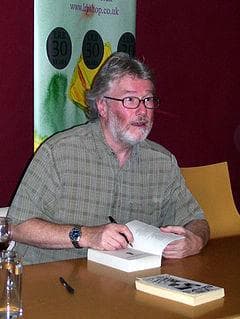
Iain Banks was a Scottish author, writing mainstream fiction as Iain Banks and science fiction as Iain M. Banks, adding the initial of his adopted middle name Menzies. After the success of The Wasp Factory (1984), he began to write full time. His first science fiction book, Consider Phlebas, appeared in 1987, marking the start of the Culture series. His books have been adapted for theatre, radio, and television. In 2008, The Times named Banks in their list of "The 50 greatest British writers since 1945".







