“The past is never dead. It's not even past.”
— Ruth reflects on the ancient bog bodies and their connection to present-day crimes.

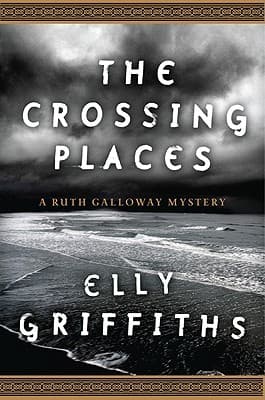
Elly Griffiths (2009)
Genre
Thriller / Mystery
Reading Time
360 min
Key Themes
See below
Sign in to track this book
A solitary forensic archaeologist, who likes ancient bones and two cats, is drawn into a modern mystery when child remains on a desolate beach link to a decade-old disappearance, a taunting killer, and her Iron Age home.
Dr. Ruth Galloway, a forensic archaeologist at the University of North Norfolk, lives alone with her cats in a remote cottage on the saltmarshes. Her routine changes when DCI Harry Nelson contacts her. Child's bones have been found on Blakeney Point, and Nelson thinks they might be those of Lucy Downey, a five-year-old girl who disappeared ten years ago. The case has bothered Nelson, especially as he still gets cryptic, taunting letters from the presumed abductor, with references to pagan rituals, Shakespeare, and the Bible. Ruth's help is needed to tell the age and origin of the bones, which could be ancient or modern, possibly helping the cold case.
Ruth examines the bones and first decides they are Iron Age, likely from a ritual sacrifice, a common practice in the area's past. This finding seems to rule out their connection to Lucy Downey. However, the killer's letters to Nelson specifically mention 'the crossing places' and 'children of the earth,' phrases that match Ruth's knowledge of the local landscape's pagan history and its link to ritualistic child sacrifice. This coincidence makes Ruth reconsider. It suggests the killer might be copying ancient practices or getting ideas from them, mixing ancient history with current crime.
Just as the investigation into Lucy Downey's disappearance seems stuck, a second five-year-old girl, Emily Hennessey, vanishes from her home in North Norfolk. The similarity to Lucy's case is clear. Soon after Emily's disappearance, Nelson gets another taunting letter, like those he received about Lucy Downey. This new letter confirms Nelson's fears: the killer is the same person or a precise copycat. The new threat makes the police act, and Ruth becomes more involved in the investigation. Her knowledge of the local landscape and its history becomes more important.
Ruth starts to research the history of the 'crossing places' – areas between land and sea, often linked to ancient pagan rituals and sacrifices. She works more closely with Nelson, visiting important sites and discussing ideas. Their investigation leads them to interview various people connected to Lucy and Emily, including Lucy's parents, the Downey family, and Emily's parents, the Hennesseys. Ruth also meets Cathbad, a local druid and academic colleague, who offers a different, more spiritual view of the ancient sites and their possible modern meanings. These talks show strained relationships and hidden tensions in the community.
Ruth's academic background is helpful. She researches the work of Professor Erik Anderssen, an archaeologist who wrote about the ritual importance of the Norfolk saltmarshes and the 'crossing places,' especially child sacrifices. She also talks with Cathbad, who, despite his quirks, knows a lot about local folklore and pagan beliefs. Cathbad suggests the killer might be following a specific ancient ritual, perhaps thinking they are pleasing an ancient god or fulfilling a prophecy. His interpretations, though unusual, offer a framework for understanding the killer's motives and methods, connecting the current crimes directly to the area's ancient past.
A local man, Peter Haddon, a reclusive and troubled individual, confesses to Lucy Downey's murder. His confession gives details that seem to support the crime, making Nelson think they have their man. However, Emily Hennessey's disappearance and a new, identical letter make Haddon's confession questionable for Emily's case. If Haddon killed Lucy, who abducted Emily? This makes Nelson and Ruth consider that there might be a copycat killer, or that Haddon's confession was forced or incomplete, leaving the real person who abducted Emily still free and the mystery of Lucy's fate unsolved.
Following her archaeological instincts and the killer's references to 'crossing places,' Ruth goes back to the saltmarshes, an area she knows well. Following subtle clues in the landscape and the letters, she finds Lucy Downey's body, buried in a shallow grave, near her own cottage. The body shows signs of ritualistic burial, confirming the killer's interest in ancient practices. This discovery confirms Lucy's death and makes finding Emily more urgent. It also puts Ruth dangerously close to the killer, showing the personal risk she is taking.
With archaeological insight, letter analysis, and police work, Ruth and Nelson solve the puzzle. The killer is Robert Hennessey, Emily's father. Robert had been having an affair with Lucy Downey's mother, Annie. Lucy saw something, leading Robert to abduct and kill her to keep her quiet. He then abducted his own daughter, Emily, planning to make her death look like a ritual sacrifice, like the previous crime, to divert suspicion from himself and blame Peter Haddon, who he knew had confessed to Lucy's murder. Robert's knowledge of local history and his manipulative nature allowed him to create the elaborate taunts.
Ruth, realizing Robert Hennessey is the killer, confronts him on the saltmarshes, where he plans to complete his ritualistic sacrifice of Emily. The confrontation is tense and dangerous. Ruth uses her knowledge of the terrain and her quick thinking to avoid Robert and try to protect Emily. Nelson and his team arrive, following Ruth's lead, leading to a chase across the darkening, unpredictable landscape. Robert is cornered, and a struggle happens as they try to rescue Emily before it's too late. Ruth's bravery and Nelson's arrival save the second girl's life.
Emily Hennessey is rescued, traumatized but alive. Robert Hennessey is arrested, ending his terror. The community is left shocked by the killer's identity and the truth about Lucy Downey's fate. Ruth and Nelson think about the case; their professional relationship becomes more complex and personal. The immediate danger is gone, but the experience has changed Ruth, creating a powerful, though complicated, bond with DCI Nelson. She is left with a greater awareness of the dark things that can exist in peaceful communities.
The Protagonist
Ruth transitions from an academic observer to an active participant in a dangerous investigation, finding unexpected courage and forming significant personal bonds.
The Protagonist
Nelson grapples with the emotional toll of a decade-old cold case and finds renewed hope and a new perspective through his collaboration with Ruth.
The Supporting
Cathbad remains largely consistent, serving as a source of information and spiritual context for Ruth.
The Supporting
Michelle's character highlights the personal sacrifices made by those connected to the police investigation.
The Antagonist
Robert's character undergoes a dramatic reveal, transforming from a grieving father into a cold-blooded killer.
The Supporting
Annie's character reveals the long-term impact of a missing child on a family and the secrets people keep.
The Supporting
Peter's character is a red herring, demonstrating how easily a vulnerable person can be implicated in a crime.
The Mentioned
As a deceased character, Anderssen's influence is primarily through his academic legacy, which shapes the narrative.
The Supporting
Emily's character serves as the immediate threat and catalyst for the climax, her rescue bringing the case to a close.
The novel connects ancient history and current crime. The killer's methods and taunts relate to pagan rituals and archaeological theories about the Norfolk saltmarshes, especially 'crossing places' and child sacrifice. Ruth's knowledge of Iron Age history is key to understanding the killer's thoughts and actions. The discovery of ancient bones with modern ones, and the killer's copying of historical practices, blurs the lines, suggesting the past always influences the present.
“This was the crossing place, the land between land and sea, between life and death. The ancients had known its power.”
Ruth Galloway's personal journey is a main part of this theme. She is an outsider, preferring bones to people, living in a remote cottage. Her appearance makes her self-conscious, and she thinks about her own identity. The investigation forces her to interact with people and enter a dangerous world, changing how she sees herself. The 'crossing places' themselves represent this theme – spaces that are neither one thing nor another, like Ruth's position between academic work and active involvement, and her growing connection with Nelson, a man from a different world.
“She was a woman of the marshes, a creature of the in-between places, just like the bones she studied.”
The novel explores how a missing child affects a family and community, especially the Downey family. Lucy Downey's disappearance ten years ago has left her parents, Annie and Phil, with lasting grief and guilt. Annie's secret affair with Robert Hennessey, and Lucy's murder to cover it up, shows how personal failings and hidden lives can cause terrible results. The killer's ability to operate within the community, using its trust and secrets, shows how guilt and hidden truths can grow and lead to violence, affecting many families and people.
“Ten years. A decade of silence, of unanswered questions, of a grief that had become a part of the landscape.”
The novel looks at the nature of evil, how it can be in ordinary people. Robert Hennessey, a father and respected community member, is a cold, calculating killer who uses his intelligence and local history knowledge to plan and do his crimes. His ability to manipulate others, including Peter Haddon, and to create elaborate, ritualistic taunts, shows a lack of empathy. The story explores how evil can be ancient in its ideas (pagan sacrifices) and modern in how it is done, showing the ordinariness and sneakiness of human badness.
“He didn't look like a monster. He looked like a man, a father, a neighbor. And that was the most terrifying thing of all.”
A symbolic and literal setting for ancient rituals and modern crimes.
The 'crossing places' refer to the Norfolk saltmarshes – the liminal, often treacherous land between the solid earth and the sea. This serves as a potent symbolic and literal plot device. Historically, these areas were significant for Iron Age rituals, including child sacrifice, a fact that the killer exploits. The landscape itself becomes a character, its shifting sands and hidden channels mirroring the elusive nature of the killer and the secrets buried within the community. Ruth's intimate knowledge of these places, both archaeologically and geographically, is crucial to her understanding of the killer's motives and ultimately, to finding Lucy's body and confronting the killer.
Taunting messages from the killer, filled with literary and historical allusions.
The killer's taunting letters sent to DCI Nelson are a key plot device. They are filled with references to Shakespeare, the Bible, and pagan rituals, specifically mentioning 'the crossing places' and 'children of the earth.' These letters serve multiple purposes: they keep the cold case alive, taunt Nelson personally, and provide crucial, albeit veiled, clues to the killer's mindset and methods. Their specific content draws Ruth into the investigation, as her historical expertise is needed to decipher their meaning, making them a direct link between the ancient past and the present-day crimes.
Specialized knowledge used to interpret ancient bones and modern crime scenes.
Ruth Galloway's profession as a forensic archaeologist is more than just a character detail; it's a central plot device. Her ability to date bones, interpret burial practices, and understand the historical significance of the landscape provides unique insights that traditional police methods cannot. Her initial assessment of the bones found on Blakeney Point, and her later re-evaluation based on the letters, directly steers the investigation. Her knowledge of ancient rituals allows her to understand the killer's 'signature' and motivations, making her indispensable to Nelson and ultimately leading to the discovery of Lucy's body and the identification of the killer.
A false confession that misdirects the investigation.
Peter Haddon's false confession to Lucy Downey's murder serves as a significant red herring. This device temporarily diverts the police investigation, leading Nelson down a false path and creating a sense of resolution that is quickly shattered by Emily Hennessey's disappearance and the arrival of a new letter. The confession highlights the killer's cunning, as he likely manipulated Haddon or exploited his vulnerability to cast suspicion away from himself. It also raises the stakes, demonstrating how easily justice can be derailed and increasing the urgency for Ruth and Nelson to uncover the true perpetrator.
“The past is never dead. It's not even past.”
— Ruth reflects on the ancient bog bodies and their connection to present-day crimes.
“Archaeology is not about the dead. It's about the living.”
— Ruth explains her profession to Detective Nelson.
“The saltmarsh is a place between places, neither land nor sea.”
— Description of the Norfolk setting where the story unfolds.
“Sometimes the dead are easier to understand than the living.”
— Ruth muses on her comfort with bones over people.
“Every dig is a leap of faith.”
— Ruth discusses the uncertainty in archaeological work.
“The truth is often buried, but it never stays hidden forever.”
— Nelson reflects on the investigation of missing children.
“Bones tell stories, if you know how to listen.”
— Ruth examines skeletal remains to uncover clues.
“Fear is a more powerful weapon than any knife.”
— Nelson considers the psychological impact of the crimes.
“In the marsh, time moves differently.”
— Description of the eerie, timeless quality of the landscape.
“We are all just passing through, leaving traces behind.”
— Ruth contemplates human existence and legacy.
“The line between victim and villain can be very thin.”
— Nelson grapples with the complexities of the case.
“Silence can be the loudest sound of all.”
— Ruth experiences the oppressive quiet of the saltmarsh.
“Some secrets are meant to stay buried.”
— A character warns about digging too deep into the past.
“Justice is not always found in a courtroom.”
— Nelson acknowledges the limitations of legal systems.
Ready to see how well you understood this book? Take our interactive quiz with 10 questions.
Biography coming soon.







