“The noblest pleasure is the joy of understanding.”
— A reflection on the value of knowledge and intellect.

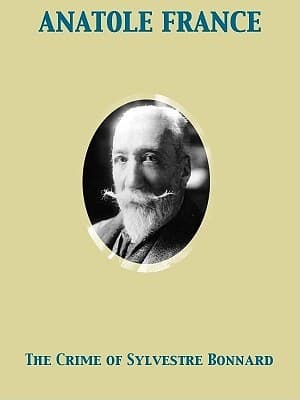
Anatole France (1909)
Genre
Historical Fiction / Mystery
Reading Time
360 min
Key Themes
See below
Sign in to track this book
An aging, reclusive scholar of medieval manuscripts finds his quiet world upended by a perplexing mystery and an unexpected connection to a young woman's past, forcing him to unravel a historical enigma to ensure her future.
Sylvestre Bonnard, an elderly, reclusive philologist and book collector in Paris, introduces himself as a man whose life revolves around his books. He describes his study, filled with ancient texts, and his daily routines, largely undisturbed by the outside world. He recounts a recurring dream where he discovers a priceless manuscript, only for it to slip through his fingers. This dream symbolizes his lifelong pursuit of knowledge and his occasional frustrations. He also introduces his loyal but eccentric housekeeper, Thérèse, who cares for him with devotion and exasperation. Bonnard's narrative style establishes his gentle, contemplative, and slightly melancholic nature, setting the tone for the memoirs that follow.
Bonnard becomes obsessed with finding a specific manuscript of 'The Golden Legend,' a medieval collection of hagiographies, which he believes holds unique value. His search leads him to a book auction in Paris, where he meets a rival collector, Monsieur Coccoz, a shrewd and unsympathetic bookseller. During the auction, Bonnard is outbid by Coccoz for the manuscript he desires. Dejected but not defeated, Bonnard continues his pursuit, learning that Coccoz intends to sell the manuscript to a wealthy Russian count, Prince Trépov. This initial setback fuels Bonnard's determination and highlights the competitive nature of the rare book world.
Following a lead, Bonnard travels to Sicily, believing the rare manuscript might be found there, or at least further information about its whereabouts. While in Palermo, he visits a local library and meets a young, impoverished woman named Jeanne Alexandre. Jeanne is the daughter of a deceased friend of Bonnard's, Monsieur Alexandre, a once-respected but unfortunate scholar. Jeanne struggles to survive, making a meager living by mending books. Bonnard is moved by her plight and quiet dignity, feeling a paternal sympathy for her. This encounter plants the seeds for a significant shift in Bonnard's focus from purely scholarly pursuits to personal involvement.
Through fortunate circumstances and some gentle manipulation, Bonnard acquires the coveted manuscript of 'The Golden Legend.' However, his triumph is short-lived. He discovers that the manuscript originally belonged to Monsieur Alexandre, Jeanne's father, and was stolen from him. This revelation presents Bonnard with a moral dilemma: keep the valuable manuscript he so ardently desired, or return it to its rightful heir, Jeanne, who is in dire need. This moment forces Bonnard to confront the ethical implications of his passion for collecting and his growing affection for Jeanne, pushing him beyond his usual scholarly detachment.
Bonnard, after much thought, decides to do the right thing. He returns the manuscript of 'The Golden Legend' to Jeanne, effectively giving her a valuable inheritance. This act of generosity brings him a profound sense of peace and satisfaction, far exceeding the joy he would have derived from merely owning the book. His focus shifts from the abstract pursuit of knowledge to a concrete act of kindness and justice. He begins to take a more active interest in Jeanne's well-being, feeling a growing responsibility toward her. This marks a turning point, as Bonnard's solitary existence begins to open up to human connection.
Following the events in Sicily, Bonnard brings Jeanne to Paris and takes her under his wing. He arranges for her education, ensuring she receives proper schooling and cultural enrichment. He supervises her studies, providing her with the intellectual stimulation she lacked. Their relationship becomes a tender, paternal bond. Bonnard finds immense joy and purpose in nurturing Jeanne's mind and spirit, discovering a form of love and fulfillment he had never experienced in his academic pursuits. Thérèse, initially wary, also grows fond of Jeanne, creating a small, unconventional family unit in Bonnard's quiet household.
As Jeanne grows into a young woman, a new character, Monsieur Gélis, enters their lives. Gélis is a distant relative of Jeanne's and a somewhat opportunistic and morally dubious individual. He expresses an interest in Jeanne, ostensibly to help her, but Bonnard senses an ulterior motive. Gélis's presence introduces tension and suspicion into Bonnard's otherwise peaceful existence. Bonnard, protective of Jeanne, views Gélis with a wary eye, fearing he might exploit her or interfere with her happiness. This interaction foreshadows potential conflict and challenges to Bonnard's newfound tranquility.
Bonnard uncovers Gélis's sinister plan: Gélis intends to marry Jeanne, not out of love, but to gain control of her inheritance and potentially exploit her. Gélis attempts to manipulate legal loopholes and social conventions to force Jeanne into a marriage she does not desire. Bonnard is outraged and determined to protect Jeanne from this predatory scheme. He realizes that his scholarly detachment is no longer an option; he must actively intervene to safeguard the young woman he has come to cherish. This revelation marks a dramatic shift, transforming Bonnard from a passive observer into an active protector.
In a daring and unconventional move, Bonnard, with the help of his loyal housekeeper Thérèse and a sympathetic friend, 'abducts' Jeanne from Gélis's custody, or rather, from the path of the forced marriage. Their plan is to take her to a place of safety where she can marry a man of her own choosing – a young, deserving suitor she has come to love. This act, while morally justified in Bonnard's eyes, is legally dubious and leads to him being accused of kidnapping. Bonnard, despite his age and scholarly nature, embraces the role of a defiant hero, willing to break the law to protect innocence.
Bonnard is brought before the courts to answer for his 'abduction' of Jeanne. During the trial, he calmly and eloquently explains his motivations, detailing Gélis's manipulative intentions and his own desire to protect Jeanne from a life of misery. He presents himself not as a criminal, but as a man of conscience acting on behalf of a vulnerable young woman. His sincerity and the obvious purity of his intentions resonate with the court and the public. This public defense allows Bonnard to articulate his transformation from a solitary scholar to a man deeply invested in human justice and compassion.
To the relief of many, Bonnard is acquitted of the charges, his actions understood as a sign of his good character and noble intentions. Following the trial, Jeanne is free to marry the young man she loves, a worthy and kind individual. The wedding takes place, bringing immense joy to Bonnard, who sees his paternal duties fulfilled and Jeanne's happiness secured. He reflects on how this journey, which began with a search for a rare book, ultimately led him to a deeper understanding of human connection and the satisfaction of selfless love. His life, once confined to books, has expanded to embrace the richness of human experience.
In the concluding section, Sylvestre Bonnard reflects on the changes in his life. He acknowledges that while his love for books remains, his priorities have shifted. He finds more meaning in Jeanne's happiness and the warmth of human relationships than in the most valuable manuscripts. His study, once a sanctuary from the world, now feels more connected to it through the memories of Jeanne and the impact he had on her life. He has found a different, more fulfilling kind of wisdom, one that transcends academic knowledge and embraces the complexities and joys of human connection. He is a contented old man, having discovered that true treasures lie not just on dusty shelves, but in the human heart.
The Protagonist
Bonnard transforms from a solitary, book-obsessed scholar into a paternal figure who finds deeper meaning and purpose in human connection and selfless action.
The Supporting
Jeanne evolves from a helpless orphan into an educated, independent young woman who finds love and happiness thanks to Bonnard's intervention.
The Supporting
Thérèse's character remains largely consistent in her loyalty but broadens her protective instincts to include Jeanne, solidifying her role as part of Bonnard's unconventional family.
The Antagonist
Gélis remains a static character, representing persistent malevolence that is ultimately thwarted by Bonnard's moral courage.
The Supporting
Coccoz serves as a minor obstacle and character foil, his role largely confined to the initial book-hunting phase of the story.
The Mentioned
As a deceased character, Alexandre's arc is complete, but his past misfortunes drive a significant portion of the plot's development regarding Jeanne and the manuscript.
The novel explores how Bonnard's understanding of love and life's purpose evolves from a solitary passion for books to a deep connection with another person. Initially, his love is intellectual and abstract, focused on ancient texts. However, his encounter with Jeanne and his decision to protect and nurture her shifts his focus. He finds a richer, more fulfilling purpose in paternal love and selfless action, showing that human connection offers a deeper happiness than purely scholarly pursuits. This is clear when he finds more joy in giving Jeanne the manuscript than in owning it, and later, in ensuring her happiness and freedom from Gélis.
“I had found a happiness unknown to me till then, a happiness which was not derived from books, but which sprang from the heart and was warm with human kindness.”
The theme of justice is central, especially in the conflict between strict legal adherence and moral compassion. Bonnard's 'abduction' of Jeanne, though technically illegal, is morally justified as it saves her from a manipulative and forced marriage. The novel questions whether the letter of the law always serves true justice, suggesting that sometimes, acts of human kindness require stepping outside conventional legal boundaries. Bonnard's acquittal in court ultimately supports his compassionate actions, showing that society can recognize and value moral righteousness over strict legalism.
“What is the law, if it does not serve to protect the innocent from the wicked?”
Initially, Bonnard's life is defined by his isolation and his relationship with books. The novel highlights the emptiness that can exist even amidst intellectual richness when human connection is lacking. His encounter with Jeanne and the bond they form gradually fills this void, bringing warmth, purpose, and joy into his life. The novel suggests that while intellectual pursuits are valuable, true fulfillment comes from meaningful relationships with others, emphasizing the importance of family, friendship, and mentorship. Bonnard's ultimate happiness is tied directly to Jeanne's well-being and his role in her life, rather than any academic achievement.
“I had lived too long among the dead; it was time I should give some thought to the living.”
Bonnard initially embodies a certain idealism, living in a world of historical texts and scholarly pursuits, often detached from the harsh realities of life. His journey forces him to confront the less ideal aspects of the world – poverty, manipulation, and legal complexities. He learns that his intellectual ideals must sometimes be set aside, or actively defended, in the face of real-world problems. His transformation is marked by his willingness to engage with these realities, moving from a contemplative idealist to an active participant in the messy, yet rewarding, human drama.
“My books had taught me much, but they had not taught me to live among men.”
A desired object that drives the initial plot, but its true significance shifts.
The rare manuscript of 'The Golden Legend' serves as a classic MacGuffin. Initially, it is the primary object of Bonnard's desire and the catalyst for his journey to Sicily and his encounter with Jeanne. Its value and rarity drive the first half of the plot, creating a sense of quest and competition. However, its ultimate purpose in the story is not its intrinsic value to Bonnard, but rather its role in connecting him to Jeanne and forcing his moral choice. Once he returns it to Jeanne, its plot-driving function recedes, replaced by the human drama it initiated.
Bonnard's repeated acts of kindness and protection that alter the course of others' lives.
This device highlights Bonnard's inherent goodness and his evolving sense of responsibility. From his initial compassion for Jeanne in Sicily, leading to him returning the manuscript, to his later, more dramatic 'abduction' to save her from Gélis, Bonnard consistently acts as a benevolent force. His interventions are pivotal in shaping Jeanne's destiny and, in turn, his own. This device underscores the theme of human connection and the profound impact one person can have on another's life, especially when driven by selfless motives.
Bonnard's subjective lens shapes the reader's perception of events and characters.
While not overtly deceptive, Bonnard's narration is inherently subjective, filtered through his gentle, scholarly, and somewhat naive perspective. His initial focus on books and his occasional awkwardness in social situations color his observations. The reader experiences events through his emotional and intellectual framework, which emphasizes certain details and downplays others. This device allows for a deeper exploration of Bonnard's character development, as his changing perspective on life gradually alters the tone and focus of his narration.
The creation of an unconventional family unit through shared experience and affection.
This device illustrates the novel's core theme of human connection. Bonnard, initially a solitary figure, gradually forms a 'found family' with Jeanne and his housekeeper, Thérèse. They are not related by blood (though Jeanne has a distant connection), but by shared experience, mutual affection, and Bonnard's paternal care. This family unit provides emotional support, purpose, and a sense of belonging that Bonnard lacked in his earlier, purely academic life. It emphasizes that family can be forged through love and commitment, not just biological ties.
“The noblest pleasure is the joy of understanding.”
— A reflection on the value of knowledge and intellect.
“Happy are those who can detect God in small things.”
— Bonnard's observation about finding meaning and beauty in the mundane.
“Books are the best of things, well used; abused, among the worst.”
— Bonnard's perspective on the power and potential misuse of literature.
“The most dangerous lies are the lies we tell ourselves.”
— A general philosophical insight into self-deception.
“To understand is to forgive.”
— A statement reflecting Bonnard's compassionate and empathetic nature.
“Old age is not a malady, but a state of rest.”
— Bonnard's positive and serene view of his later years.
“There are no good books or bad books. There are only books, which are good or bad for us.”
— Bonnard's nuanced view on the subjective impact of literature.
“It is not enough to be good; one must be good for something.”
— A practical and purposeful approach to virtue.
“The best way to escape from a problem is to solve it.”
— A straightforward and logical approach to difficulties.
“Life is a dream, and we are but shadows in it.”
— A melancholic yet poetic reflection on existence.
“The universe is a library, and I am its librarian.”
— Bonnard's profound love for knowledge and his role as a scholar.
“Imagination is the eye of the soul.”
— A poetic description of the power of imagination.
“One must be a little mad to undertake great things.”
— A recognition of the unconventional spirit required for significant achievements.
“The greatest pleasure is to give pleasure to others.”
— A statement on the joy of altruism and generosity.
Ready to see how well you understood this book? Take our interactive quiz with 10 questions.
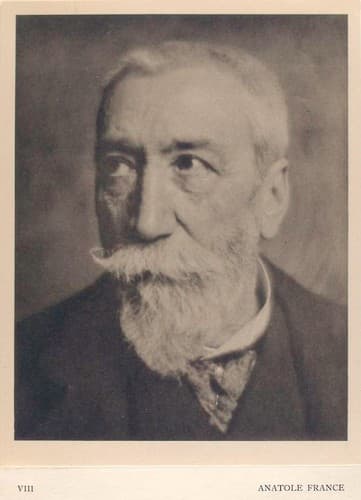
Anatole France was a French poet, journalist, and novelist with several best-sellers. Ironic and skeptical, he was considered in his day the ideal French man of letters. He was a member of the Académie Française, and won the 1921 Nobel Prize in Literature "in recognition of his brilliant literary achievements, characterized as they are by a nobility of style, a profound human sympathy, grace, and a true Gallic temperament".







