“Perhaps all human suffering is caused by the same thing: the inability to forgive.”
— Professor Yang reflects on human nature and suffering.

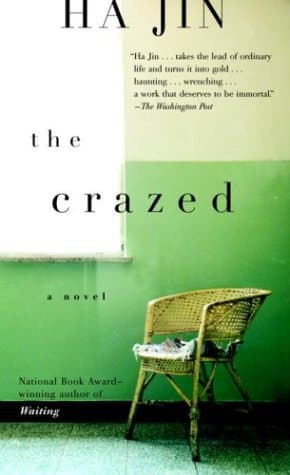
Ha Jin (2002)
Genre
Literary Fiction / Politics / Historical Fiction
Reading Time
336 min
Key Themes
See below
Sign in to track this book
As Tiananmen Square erupts, a fiancé grapples with the unsettling possibility that his stroke-afflicted mentor's delirious accusations are dangerous truths, exposing the perilous tightrope walked by those who speak or hear the truth in a volatile China.
The novel opens with Professor Yang, a literature scholar at Beijing University, suffering a severe stroke. His student and future son-in-law, Jian Wan, is tasked with his care. Jian is engaged to Meimei, Professor Yang's only daughter, and feels a strong sense of duty to his mentor. The professor is initially lucid but physically incapacitated, able to communicate only through limited gestures and sounds. Jian moves into the Yang household to provide constant supervision, helping with basic needs and trying to understand the professor's attempts at communication. This period shows the family's initial shock and the logistical challenges of caring for a stroke victim in their small Beijing apartment, highlighting the early strain on Jian and Meimei's relationship.
As Professor Yang's physical health stabilizes slightly, his mental state worsens. He begins to experience periods of intense delirium, during which he raves incoherently, often shouting about invisible tormentors and making strange, disjointed accusations. These outbursts distress Jian, Meimei, and Mrs. Yang, who initially dismiss them as symptoms of his illness. However, the content of his ravings becomes specific, hinting at past betrayals, political struggles, and personal grievances that disturb Jian, who has always revered the professor. The family struggles to manage these episodes, often resorting to sedatives, but the words linger in Jian's mind.
During his delirious episodes, Professor Yang starts to articulate more coherent accusations, primarily directed at his wife, Mrs. Yang, and other colleagues. He speaks of past political struggles, particularly during the Cultural Revolution, and how he was forced to denounce friends and compromise his academic integrity to survive. He accuses Mrs. Yang of being complicit in some of these betrayals or of not supporting him. These revelations shock Jian, who had always seen the professor as an upright figure. Jian starts to record some of these statements, feeling an unease about the true nature of his mentor's past and the family's history.
Disturbed by the professor's specific accusations, Jian subtly investigates their veracity. He confronts Mrs. Yang and Meimei, who deny the accusations, attributing them solely to the professor's illness. They insist on maintaining a facade of normalcy and respectability. However, Jian's conversations with other university colleagues and old friends of the professor, though often evasive, confirm elements of Professor Yang's delirious tales. Jian is caught between his loyalty to Meimei and the unsettling possibility that his revered mentor's public image was built on a foundation of compromise and hidden suffering, leading to a crisis of faith in what he believes.
As Professor Yang's ravings become scandalous and potentially damaging to the family's reputation, Mrs. Yang and Meimei become desperate to control the situation. They try to prevent Jian from listening too closely or from discussing the professor's words with outsiders. Mrs. Yang often dismisses the accusations as the ramblings of a sick man and tries to paint Jian as overly sensitive or disloyal for considering them. They fear the social and political repercussions of these revelations, especially within the academic community of Beijing University. This creates tension and conflict within the household, driving a wedge between Jian and Meimei.
Amidst the personal turmoil within the Yang household, the political climate in Beijing intensifies. Student protests demanding democracy and freedom begin to erupt in Tiananmen Square, drawing in many of Jian's peers and colleagues. The outside world's upheaval mirrors the internal chaos of the Yang family. Jian is torn between his duties to Professor Yang and his growing awareness of the political awakening happening around him. The protests provide a backdrop of societal unrest that amplifies the themes of truth, deception, and the costs of speaking out, making the professor's 'crazed' pronouncements seem less like isolated madness and more like a symptom of a troubled society.
As Jian continues to piece together the fragments of Professor Yang's past from his ravings and his own inquiries, he becomes disillusioned. He learns of the professor's forced self-criticisms, his denouncement of a close friend, and the intellectual compromises he made to survive various political campaigns. He also sees Meimei and Mrs. Yang's unwavering commitment to protecting their family's image, even at the cost of confronting painful truths. This disillusionment extends beyond the family to the broader societal context, as Jian begins to recognize the pervasive nature of self-preservation and the suppression of truth in Chinese society, mirroring the larger political events unfolding.
Meimei's concern remains the well-being and reputation of her family, particularly her ailing father. She views Jian's questioning as a betrayal and an attack on her parents. Despite the mounting evidence, she refuses to acknowledge the validity of her father's accusations, choosing instead to believe they are products of his illness. Her loyalty to her family is absolute, even if it means sacrificing her relationship with Jian. This unwavering stance creates a widening chasm between them, as Jian finds her inability or unwillingness to confront the truth increasingly difficult to reconcile with his own search for it. Their engagement grows strained under the pressure.
The political tension culminates in the brutal crackdown on the Tiananmen Square protests. Jian witnesses the violence and suppression, which profoundly affects his worldview. This event is a stark external validation of the internal truths he has been uncovering through Professor Yang's ravings – the pervasive nature of deceit, control, and the silencing of dissenting voices in China. The state's violent suppression of truth and freedom of expression mirrors the family's attempts to suppress Professor Yang's uncomfortable revelations, solidifying Jian's understanding of the deep-seated issues at play in his society.
Towards the end of his life, Professor Yang experiences a brief period of lucidity. During this time, he communicates more clearly, confirming some of the painful truths he had uttered in his delirium. He expresses his regret and shame over the compromises he made, the friends he betrayed, and the intellectual integrity he sacrificed to survive the political purges. This moment of clarity, though fleeting, validates Jian, confirming that the 'crazed' words were indeed a repository of truth. Soon after this, Professor Yang's condition deteriorates further, and he eventually passes away, leaving behind a complex legacy.
Following Professor Yang's death and the tragic events of Tiananmen Square, Jian grapples with the full weight of the truths he has uncovered. He realizes that his relationship with Meimei cannot continue, as their fundamental views on truth, loyalty, and the past are irreconcilable. He understands that Meimei, like her mother, will always prioritize the family's idealized image over confronting uncomfortable realities. Jian decides to break off their engagement and distance himself from the Yang family, choosing a path of intellectual integrity and a search for genuine truth, even if it means personal loss and isolation. He leaves Beijing, seeking a new direction for his life.
The Protagonist
Jian transforms from a loyal, somewhat naive student into a disillusioned but morally resolute individual who prioritizes truth over comfort and familial obligation.
The Central Figure (indirect antagonist/catalyst)
Though physically incapacitated, his 'crazed' state allows him to indirectly reveal his true, compromised past, culminating in a brief moment of lucidity and eventual peace.
The Supporting Character
Meimei remains steadfast in her loyalty to her family's idealized image, ultimately leading to the dissolution of her engagement and a static personal development in terms of confronting truth.
The Supporting Character
Mrs. Yang remains a static character, consistently prioritizing social conformity and the suppression of inconvenient truths over genuine introspection or honesty.
The Supporting/Mentioned
Provides limited, indirect insights into the past, remaining largely unchanged and serving as a mirror for the pervasive fear of speaking truth.
The novel explores the nature of truth, particularly in a society where political pressures often necessitate deception and self-preservation. Professor Yang's 'crazed' ravings reveal suppressed truths about his past compromises and betrayals, challenging the idealized image held by Jian and the public. The family's attempts to dismiss these revelations highlight how truth can be inconvenient and actively suppressed for reputation and survival. The Tiananmen Square protests further amplify this theme, showing how state-level deception and suppression of truth can have devastating consequences, mirroring the personal struggles within the Yang household. Jian's journey is a quest to discern genuine truth from constructed facades.
““Truth was like a broken mirror. Each piece reflected a different angle, and no one could see the whole picture.””
This theme explores the difficult choices individuals make to survive in oppressive political regimes. Professor Yang's past, as revealed through his delirium, illustrates the personal and moral costs of compromise during periods like the Cultural Revolution. He was forced to denounce friends and sacrifice his intellectual integrity to protect himself and his family. The novel shows how these compromises, though necessary for survival, leave lasting scars and guilt. The family's subsequent efforts to bury these truths reflect the societal pressure to conform and the fear of past mistakes being exposed, highlighting the long-term impact of such periods on individuals and generations.
““He had survived, but at what price? His soul was riddled with holes, like a sieve.””
The novel contrasts the experiences and values of different generations in China. Professor Yang and Mrs. Yang represent an older generation that endured severe political turmoil, learning to prioritize survival and conformity, often at the cost of personal truth. Their actions and secrets are a product of that era. Jian, representing a younger generation, is more idealistic and driven by a desire for open truth and intellectual integrity. The conflict between Jian and Meimei, who clings to her parents' narrative, shows this divide. The 'crazed' revelations force the younger generation to confront the complex, often painful, legacy of the previous one, highlighting the difficulty of reconciling a nation's past with its future aspirations for transparency and freedom.
““The past was a heavy burden, but the younger generation had to carry it, whether they understood it or not.””
This theme explores the tension between an individual's conscience and the demands of a conformist society. Professor Yang's inner torment, manifesting in his 'crazed' state, is a direct result of the pressures exerted by a society that valued political loyalty over personal integrity. Jian's struggle to uncover the truth, despite the family's resistance and the broader societal climate of suppression (culminating in Tiananmen), highlights the courage required to challenge accepted narratives. The novel suggests that a society that stifles individual expression and truth-telling ultimately inflicts deep psychological wounds on its citizens, forcing them into a collective madness where genuine feelings and experiences are denied.
““To speak the truth was to invite disaster; to remain silent was to be complicit.””
Professor Yang's incoherent speech as a vessel for suppressed truths.
Professor Yang's stroke-induced delirium serves as the primary plot device for revealing the novel's central truths. His 'crazed' ravings, initially dismissed as symptoms of illness, gradually become a fragmented narrative of his past compromises, betrayals, and political struggles. This device allows the author to expose uncomfortable historical realities and character flaws without a direct, reliable narrator, creating suspense and forcing Jian (and the reader) to piece together the truth from unreliable, unsettling statements. It highlights the idea that suppressed truths can resurface in unexpected and uncontrollable ways, especially when the conscious mind is compromised, making the 'madness' a form of involuntary honesty.
External political upheaval mirroring the internal familial crisis.
The escalating student protests in Tiananmen Square function as a powerful parallel plot device. The external political drama, with its themes of truth, freedom, and state suppression, directly mirrors the internal family conflict surrounding Professor Yang's revelations. The crackdown on the protests validates Jian's growing disillusionment with societal deception and the cost of speaking out, making the professor's personal compromises seem less isolated and more symptomatic of a broader national condition. This device provides a crucial historical context, amplifying the novel's themes of truth and the individual's struggle against oppressive forces, demonstrating that personal and political truths are deeply intertwined.
The protagonist's intimate proximity to the professor as a catalyst for discovery.
Jian Wan's role as Professor Yang's primary caregiver is a crucial plot device. His constant, intimate presence allows him to be the sole witness to the professor's most vulnerable and revealing moments. This proximity grants him access to the 'crazed' ravings that others dismiss or try to suppress. Without his dedicated care, these truths would likely remain buried, and the central conflict of the novel would not unfold. His position creates both a physical and emotional bond that makes his subsequent disillusionment more profound, as he discovers the dark underside of someone he deeply revered through this enforced intimacy.
“Perhaps all human suffering is caused by the same thing: the inability to forgive.”
— Professor Yang reflects on human nature and suffering.
“We Chinese are good at enduring, but not so good at speaking up.”
— Jian wonders about the Chinese people's passive nature.
“In this country, even the air you breathe is political.”
— A character comments on the pervasive political atmosphere in China.
“A man without a country is like a fish without water.”
— Professor Yang's lament about his exile and loss of homeland.
“Truth is a luxury that few can afford, especially in our society.”
— Jian reflects on the suppression of truth in their political system.
“Memory is a burden, but forgetting is a betrayal.”
— Professor Yang grapples with the weight of historical memory.
“To live in fear is to live half a life.”
— A character's realization about the impact of constant fear.
“The past is a foreign country; they do things differently there.”
— A character's musing on the disconnect between present and past, especially in a changing political landscape.
“When a nation loses its soul, it becomes a mere shell.”
— Professor Yang's critical assessment of China's political and spiritual state.
“Silence can be a form of protest, or a form of surrender.”
— Jian ponders the dual nature of silence in a repressive regime.
“Hope is a dangerous thing, but despair is a deadlier one.”
— A character weighs the risks and consequences of hope versus despair.
“The greatest prison is not made of bars, but of the mind.”
— Professor Yang's observation on mental oppression.
“We are all prisoners of our circumstances, but some cages are larger than others.”
— Jian's reflection on individual agency within a restrictive society.
“To be educated in this country means to learn what not to say.”
— A cynical observation about the nature of education under political control.
Ready to see how well you understood this book? Take our interactive quiz with 10 questions.

Biography coming soon.







