“Love isn't a thing. It's a quality. It's a way of looking at the world, a way of being in it.”
— Kumiko reflecting on the nature of love.

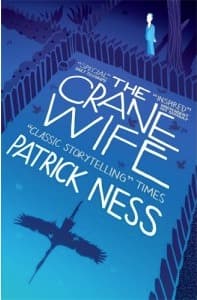
Patrick Ness (2013)
Genre
Fantasy / Romance
Reading Time
6 hours 30 minutes
Key Themes
See below
Sign in to track this book
A lonely man's life changes when he heals a fallen crane and then meets a mysterious woman, who brings ancient magic and the power of love into his world.
George Duncan, a middle-aged man living a quiet life running a printing shop in London, wakes one night to noise in his garden. He finds a large white crane, shot with an arrow, struggling on the ground. Despite his shock, George feels compassion. He carefully removes the arrow, cleans the wound, and bandages the bird's wing. He brings the crane inside to recover, giving it water and a safe place. This act of kindness starts a series of changes in George's ordered life, bringing a sense of wonder he had not felt in years.
The day after the crane incident, a beautiful and mysterious woman named Kumiko appears at George's printing shop. She speaks English with a slight accent and has a quiet determination. Kumiko says she is looking for work and, despite no obvious printing qualifications, seems skilled at understanding the craft. George, still affected by his encounter with the crane, is drawn to her unusual presence and hires her. Kumiko’s arrival feels connected to the previous night's events, though George cannot say why. Her quiet efficiency and the subtle magic she seems to carry begin to blend into his everyday life, hinting at deeper connections.
As Kumiko works at the printing shop, a deep, unspoken connection forms between her and George. They often communicate through glances, subtle gestures, and an intuitive understanding. Kumiko shows extraordinary sensitivity to the paper, ink, and printing process, almost as if she feels the stories in the pages. George is increasingly captivated by her quiet strength and the serene beauty she brings to his once drab workplace. Their relationship grows into a tender companionship, built on mutual respect and a growing sense of wonder, even as Kumiko remains private about her past, her presence a constant, gentle mystery.
One evening, as George and Kumiko share a quiet moment, Kumiko tells him the ancient Japanese folk tale of 'The Crane Wife.' She tells the story of a man who saves a wounded crane, which later transforms into a beautiful woman and marries him. This woman weaves exquisite cloth from her own feathers but warns her husband never to watch her. Driven by curiosity, he eventually spies on her, discovers her true nature, and she must return to her crane form and fly away. As Kumiko tells the story, George feels an intense familiarity and a deep connection to the narrative, seeing parallels to his recent experience with the wounded crane. The tale is both a beautiful myth and a subtle, poignant warning, hinting at the fragile nature of their growing relationship.
Under Kumiko's gentle influence and the lingering magic of the crane incident, George changes. His previously rigid, cynical outlook softens, replaced by a new openness to wonder and vulnerability. He starts to notice the beauty in everyday things, appreciating the subtle textures of paper, the light, and the quiet rhythms of life he had long ignored. His interactions with others, including his brusque landlady, Mrs. Hemmings, and his close friend, George's son, Julian, become more genuine. George learns to trust his instincts and embrace the unpredictable, finding joy in the present moment and allowing himself to feel deeply, shedding the emotional armor he had worn for years. This change is a direct result of his encounter with the miraculous.
Julian, George's adult son, sees his father's change with both hope and growing unease. While initially pleased to see George happier, he becomes suspicious of Kumiko. Julian, a pragmatic person, finds Kumiko's mysterious nature and lack of a clear past unsettling. He questions her motives and worries his father is being taken advantage of or is falling for a delusion. Julian's concerns, though out of love for his father, create a rift between them. He tries to subtly investigate Kumiko, seeking logical explanations for her presence and the strange events around George, unknowingly threatening the delicate magic that has taken root in George's life.
While Julian remains skeptical, other characters react to Kumiko in different, often more intuitive ways. Mrs. Hemmings, George's elderly landlady, a woman with a sharp tongue and a keen eye, seems to sense something extraordinary about Kumiko. Though she keeps her usual gruff manner, her interactions with Kumiko show a peculiar respect and understanding, as if she recognizes a kindred spirit or an ancient presence. Other acquaintances and customers at the shop also respond to Kumiko's quiet aura, some finding her captivating, others subtly unnerved. These varied reactions highlight Kumiko's unique, almost otherworldly quality, reinforcing that she is not an ordinary woman and that her presence affects those around her.
As their bond grows, Kumiko shows increasingly unusual skills in the printing shop. She starts to produce a type of paper unlike anything George has seen—delicate, almost luminous, impossibly thin yet incredibly strong. It seems to shimmer with an inner light and has a texture that subtly evokes feathers. George is mesmerized by her artistry, though he does not question the impossibility of her technique. He notices that Kumiko often works late, her movements precise and almost ritualistic, and that she appears increasingly weary, as if her creative process demands a personal cost. This extraordinary paper is a tangible sign of her unique, magical essence, hinting at the true source of her abilities and the sacrifices she is making.
Driven by concern for Kumiko's fading energy and a subconscious wish to understand her secrets, George, like the husband in the folk tale, accidentally observes Kumiko working late one night. He sees her engaged in a strange, arduous process, not just making paper but seemingly pulling threads of light and essence from her own being, from her very skin, to create the feather-like material. In a moment of shock, he sees glimpses of her true form—a magnificent white crane, its feathers shimmering, its movements graceful yet strained. This accidental witnessing breaks the delicate illusion between them, confirming the impossible truth of the Crane Wife story. George's discovery, though not malicious, invokes the ancient warning, foreshadowing the inevitable consequence of his intrusion.
With her secret exposed, Kumiko's energy fades further, and the unspoken magic that sustained their relationship begins to disappear. She knows she cannot remain with George now that he has seen her true form. A deep sadness settles over them, a quiet acknowledgment of their lost future. Kumiko prepares for her departure, her movements filled with poignant grace. George is heartbroken, filled with regret and a desperate wish to fix things, but he understands that some boundaries, once crossed, cannot be uncrossed. The ancient tale has played out in their modern lives, showing the lasting power of its themes of trust, sacrifice, and the fragility of magical love. He knows he must let her go, even though it breaks his heart.
Before her final departure, Kumiko gives George a lasting gift: not just the memory of their extraordinary love, but a renewed sense of wonder and a deeper understanding of the world's hidden magic. She has opened his eyes to possibilities he never imagined, showing him that the extraordinary can happen in everyday life. She has also left behind the exquisite, feather-like paper, a tangible reminder of their time together and the beauty she brought into his life. Though heartbroken by her absence, George is not empty. He is changed, carrying the imprint of her love and the lessons of her story. He has learned to appreciate the delicate balance between the mundane and the magical, and to live with an open heart, forever changed by his encounter with the Crane Wife.
After Kumiko's departure, George's life resumes, but it is altered. He continues to run his printing shop, but his work is now infused with the quiet magic Kumiko gave him. He handles paper with new reverence, seeing the stories and possibilities within each sheet. His relationship with Julian slowly mends, as Julian comes to understand Kumiko's impact on his father, even if he does not fully grasp the magical elements. George lives with a bittersweet acceptance, cherishing the memories of Kumiko and their shared love. He embodies the lesson that while some magical encounters are fleeting, their transformative power can endure, leaving a permanent mark on the heart and soul, allowing one to see the extraordinary in the ordinary world.
The Protagonist
George transforms from a jaded, solitary man into someone open to love, wonder, and vulnerability, ultimately finding a deeper appreciation for life's hidden magic despite heartbreak.
The Love Interest / Magical Catalyst
Kumiko fulfills her ancient role, offering love and transformation to George, and ultimately returning to her true nature, leaving behind a legacy of wonder and love.
The Supporting
Julian moves from skepticism and distrust to a grudging acceptance of his father's profound, if unusual, happiness, learning to respect experiences beyond his logical understanding.
The Supporting
Mrs. Hemmings remains a constant, observant presence, offering a unique perspective that bridges the mundane and the magical, and subtly affirming the extraordinary events.
The central theme explores how love, especially love from an extraordinary encounter, can transform a person's life. George's cynical, predictable existence is broken and rebuilt by his kindness to the crane and his relationship with Kumiko. Love forces him to face his emotional barriers, embrace vulnerability, and rediscover wonder. Even after Kumiko leaves, their love leaves him changed and enriched, showing its lasting impact on his soul and how he sees the world. His initial act of compassion (saving the crane) starts this journey.
“He knew, with a certainty that reached into his bones, that he had lived a different life before her, and that this new life, though tinged with loss, was infinitely richer.”
The novel blurs the lines between ancient folklore and contemporary life. The Japanese tale of 'The Crane Wife' is not just a story Kumiko tells; it becomes George's lived reality. This theme suggests that myths are not just fables but reflections of lasting truths and patterns that can appear unexpectedly. The impossible presence of the crane, Kumiko's mysterious nature, and her feather-like paper all connect the ancient myth to a modern London setting, inviting the reader to consider the magic hidden in the mundane world and the cyclical nature of storytelling and destiny.
“Some stories, he thought, were not just stories. They were maps to places you didn't know you needed to go.”
Based on the traditional 'Crane Wife' story, this theme highlights the delicate balance needed in relationships, especially those involving the extraordinary. Kumiko's love for George depends on his acceptance of her mystery and his trust in her unspoken truth. George's accidental witnessing of her true form, from concern and a human wish to understand, mirrors the husband's fatal curiosity in the folk tale. This act, though not malicious, breaks the sacred boundary and leads to her inevitable departure, showing how even well-meaning curiosity can destroy fragile magic and the deep trust it requires.
“He had looked, and in looking, had broken something that could not be mended.”
George's journey is one of personal transformation and self-discovery. His encounter with the crane and Kumiko forces him to shed the cynicism and routine he had built around himself. He learns to open his heart, embrace vulnerability, and rediscover a capacity for wonder and joy he thought lost. This transformation is not just about finding love; it is about finding a truer version of himself, one able to see and appreciate the extraordinary in everyday life. Even after Kumiko leaves, the changed George remains, showing the lasting power of his self-discovery.
“He was not the man he had been, and he knew, with a quiet certainty, that he never would be again.”
A literal manifestation of an ancient myth that acts as a catalyst for George's transformation.
The discovery of the wounded crane in George's garden serves as the inciting incident and a direct, tangible link to the 'Crane Wife' myth. It is an impossible event that shatters George's mundane reality, forcing him to act with compassion and opening him up to the extraordinary. This device immediately establishes the magical realism of the story and foreshadows Kumiko's arrival, subtly preparing both George and the reader for the unfolding of a legendary tale in a modern setting. It represents the intrusion of the mythical into the everyday, disrupting routine and initiating profound change.
An embedded narrative that functions as both foreshadowing and a structural blueprint for the plot.
The ancient Japanese folk tale of 'The Crane Wife' is not merely referenced; it is recounted within the story by Kumiko herself. This serves as a powerful plot device, acting as both explicit foreshadowing and a structural framework for George and Kumiko's relationship. It clearly lays out the parameters of their love, the warnings, and the inevitable consequences of breaking trust. By presenting the myth directly, the novel invites the reader to anticipate and recognize the parallels as they unfold, deepening the emotional impact when the tragic elements of the folk tale are realized in George's modern life.
A tangible manifestation of Kumiko's magic, sacrifice, and the beauty of their love.
The exquisite, feather-like paper Kumiko creates in George's shop is a central symbolic and plot device. It is a physical manifestation of her true nature, her sacrifice (as it's implied she draws from herself to create it), and the unique magic she brings into George's life. The paper's impossible delicacy and beauty represent the ephemeral nature of their love and the magic that sustains it. It also serves as the 'proof' of her extraordinary abilities and ultimately, the catalyst for George's accidental discovery of her true form, leading to the story's tragic climax. After her departure, it becomes a lasting memento of their time together.
A setting that symbolizes George's character and becomes a crucible for transformation.
George's printing shop, with its focus on paper, stories, and the meticulous craft of creating, functions as more than just a setting. Initially, it reflects George's ordered, somewhat sterile life. However, with Kumiko's arrival, it transforms into a space where the mundane meets the magical. The act of printing, which involves transforming blank paper into something meaningful, mirrors George's own transformation. It's within these walls that their love blossoms, Kumiko's magic manifests through her paper, and the ancient story is re-enacted, making the shop a crucible for profound personal and supernatural events.
“Love isn't a thing. It's a quality. It's a way of looking at the world, a way of being in it.”
— Kumiko reflecting on the nature of love.
“The world is full of things we don't understand, and most of them are beautiful.”
— Jay contemplating the magic and mystery around him.
“There are always two stories. Always. The one you tell, and the one that is true.”
— A recurring theme about perception versus reality.
“Sometimes you have to break things to make them new.”
— Relating to the transformative power of destruction and creation.
“He knew, with a certainty that chilled him, that he had just seen something impossible.”
— Jay's initial encounter with the magical.
“The hardest part of loving someone is knowing when to let them go.”
— Exploring the pain and necessity of release in love.
“Every secret has a weight. Every hidden thing pulls you down.”
— Discussing the burden of keeping secrets.
“He wanted to believe in the impossible. He just didn't know how.”
— Jay's struggle with faith in the magical.
“The wind carries stories. If you listen closely, you can hear them.”
— A poetic description of the world's hidden narratives.
“To truly love someone, you have to see them, really see them, even the parts they try to hide.”
— The depth of understanding required for true love.
“Grief is a landscape you have to walk through, not a door you can close.”
— A poignant metaphor for the process of grieving.
“Sometimes the greatest kindness is to be honest, even if it hurts.”
— The difficult balance between truth and compassion.
“The world doesn't care about your plans. It has its own.”
— Highlighting the unpredictable nature of life.
“He found himself wondering how many other miracles he had simply walked past, oblivious.”
— Jay's growing awareness of the magic in the mundane.
Ready to see how well you understood this book? Take our interactive quiz with 10 questions.

Biography coming soon.







