“All human wisdom is contained in these two words: Wait and Hope.”
— Edmond Dantès' final advice to Maximilien Morrel.

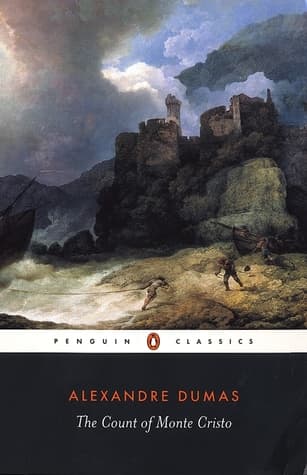
Alexandre Dumas (1944)
Genre
Historical Fiction / Romance
Reading Time
2100 min
Key Themes
See below
Sign in to track this book
Imprisoned for a betrayal he didn't commit, a naive sailor transforms into the enigmatic Count of Monte Cristo, meticulously orchestrating a grand, decades-long scheme of vengeance against those who stole his life and love.
In 1815, young Edmond Dantès, first mate of the merchant ship Pharaon, arrives in Marseille, ready to become captain and marry his beloved Mercédès. However, his quick rise causes jealousy. Fernand Mondego, Mercédès's rejected cousin, and Danglars, the ship's supercargo who wants Dantès's position, conspire to frame him. Danglars writes an anonymous letter accusing Dantès of being a Bonapartist agent, delivering a letter from Napoleon in exile. Caderousse, Dantès's envious neighbor, is there but too scared to do anything. On his wedding day, Dantès is arrested by Villefort, the ambitious public prosecutor. Villefort, realizing the letter implicates his own father, a Bonapartist, decides to silence Dantès by sending him to the Château d'If without trial.
Dantès is imprisoned in the formidable island fortress of the Château d'If. Initially, he is full of despair and thinks about suicide. After fourteen years, he hears scratching from an adjacent cell. This leads to his meeting with an old Italian abbé, Faria, a brilliant scholar and former political prisoner. Faria helps Dantès figure out who his betrayers are and why they acted as they did. He also teaches Dantès many subjects, transforming him from an uneducated sailor into a sophisticated intellectual. Faria becomes a mentor to Dantès during their shared captivity.
As Abbé Faria's health declines, he tells Dantès about a large treasure hidden on the uninhabited island of Monte Cristo, a fortune belonging to the Spada family for whom Faria once worked. He gives Dantès the map and instructions, believing him worthy of the inheritance. Faria eventually dies. Seizing a desperate chance, Dantès switches places with Faria's corpse, sewn into a burial sack. He is then thrown into the sea, escaping the Château d'If after fourteen years of wrongful imprisonment. He is rescued by a passing smuggling ship, whose crew he befriends and eventually joins, waiting for his moment.
After several months working with the smugglers, Dantès arranges to be left on Monte Cristo alone. He follows Abbé Faria's instructions and unearths the immense treasure of gold, jewels, and precious artifacts. Now very wealthy, Dantès is reborn. He uses several aliases, most notably the Count of Monte Cristo, and begins to carefully plan his retribution against those who wronged him: Fernand, Danglars, and Villefort. His immediate goal is to understand the current lives of his enemies and their families, and to reward those who showed him kindness, such as the Morrel family, who had tried to save him.
Ten years after his escape, the Count of Monte Cristo arrives in Paris, a figure of great wealth, sophistication, and mystery. He quickly enters the highest levels of society, buying a grand mansion and a country house. He creates an aura of mysterious power, impressing everyone with his intelligence, charm, and seemingly endless resources. Through his various disguises and agents, such as Bertuccio, the Abbé Busoni, and Lord Wilmore, he gathers information on Fernand, now General de Morcerf; Danglars, now a wealthy baron and banker; and Villefort, now the King's Attorney. He learns of their successes, their families, and their weaknesses, patiently preparing for his plan.
The Count begins to systematically ruin Fernand Mondego's reputation. He manipulates events to expose Fernand's betrayal of Ali Pasha in Greece, showing how Fernand got rich by selling out his benefactor and his family. The details are brought to light through a newspaper article planted by the Count and later investigated by Albert de Morcerf, Fernand's son, at the Count's subtle suggestion. The scandal leads to a public trial where Fernand is disgraced and loses his titles and wealth. Mercédès, recognizing the Count as Dantès, confronts him, begging him to spare her son, Albert, who challenges the Count to a duel, but Mercédès intervenes, telling Albert the truth.
Monte Cristo targets Danglars through financial manipulation. Knowing Danglars's greed, the Count subtly guides him into a series of disastrous investments and speculations. He uses his vast credit and influence to create false market trends, causing Danglars to lose millions. He also introduces Danglars to criminals, like Andrea Cavalcanti (Benedetto), further harming his integrity. Danglars's fortune quickly shrinks, and his reputation as a shrewd banker collapses. His wife, Madame Danglars, also suffers financially due to her own risky investments and affairs, adding to the family's ruin. Eventually, Danglars flees Paris, bankrupt and disgraced.
Villefort's downfall is the most personal and psychologically damaging. The Count, aware of Villefort's past and his secret illegitimate son with Madame Danglars, orchestrates a series of revelations. Through his agent Bertuccio, he exposes the buried infant, Benedetto, who is revealed to be Andrea Cavalcanti, a criminal. This revelation, along with the poisoning spree within Villefort's own household by his second wife, Heloïse, who is trying to secure her son's inheritance, drives Villefort to the edge. The Count, as Abbé Busoni, confronts Villefort directly about his crimes, ending in Villefort's public breakdown and descent into madness after Andrea Cavalcanti's trial and the death of his family.
Having achieved his revenge, the Count finds himself unexpectedly empty. He witnesses the destruction of his enemies, but also the damage to those he once loved, particularly Mercédès and Albert. He saves Albert from a duel, and later provides financial support to Mercédès. He also visits Caderousse, who, despite being given a chance at redemption, succumbs to his greed and is ultimately killed by Benedetto. The Count begins to question the morality of his vengeance. He finds comfort in the love of Haydée, the daughter of Ali Pasha, whom he rescued from slavery. He also helps Maximilien Morrel, the son of his former benefactor, recognizing his genuine love for Valentine Villefort.
The Count, having saved Valentine Villefort from her stepmother's poison, arranges her apparent death and subsequent resurrection to allow her to marry Maximilien Morrel, the man she truly loves. He uses his knowledge of poisons and his hidden grotto on the Isle of Monte Cristo to help them reunite and ensure their future happiness. Seeing their genuine love and the pure happiness he has brought them, the Count experiences a deep change. He thinks about justice, mercy, and divine providence. He leaves a letter for Maximilien and Valentine, with his final wisdom and a portion of his remaining fortune, before sailing away from Europe with Haydée, embracing a future based on love and hope rather than vengeance.
The Protagonist
From naive innocence to vengeful mastermind, and finally to a figure seeking solace and love beyond retribution.
The Supporting
From hopeful fiancée to despairing wife, then to a heartbroken mother burdened by guilt and loss.
The Antagonist
From envious supercargo to powerful baron, then to financial ruin and ultimate degradation.
The Antagonist
From jealous suitor to decorated general, then to public disgrace and self-destruction.
The Antagonist
From ruthless prosecutor to King's Attorney, his life of secrets unravels, leading to madness.
The Supporting
From a man of vast knowledge imprisoned for his beliefs, he imparts his wisdom and wealth to Dantès before his death.
The Supporting
From a loyal son and devoted lover, he endures heartbreak but ultimately finds happiness and a future thanks to the Count.
The Supporting
From a traumatized slave seeking justice for her father, she finds love and a new life with the Count.
The Supporting
From an influential politician to a paralyzed observer, he champions justice for his granddaughter.
The Supporting
From a privileged, naive youth to a man of honor who sacrifices his name for integrity.
The central theme explores the line between righteous justice and destructive revenge. Dantès, as the Count, carefully plans the downfall of his betrayers, believing he is an instrument of divine justice. However, the story increasingly questions the morality of his actions as innocent people, like Mercédès and Albert, suffer. The Count's internal struggle and eventual realization that true happiness is beyond vengeance lead him to abandon his quest for a path of mercy and love, especially with Maximilien and Valentine.
““Live, then, and be happy, beloved children of my heart, and never forget that, until the day when God shall deign to reveal the future to man, all human wisdom is contained in these two words,—'Wait and hope.'””
Edmond Dantès undergoes a deep transformation, both physically and intellectually, while imprisoned in the Château d'If. He enters as an uneducated, naive sailor and emerges as the sophisticated, all-knowing Count of Monte Cristo, a man reborn with a new identity, great wealth, and a single purpose. This theme is mirrored in his various aliases (Abbé Busoni, Lord Wilmore, Sinbad the Sailor), each representing a part of his new persona. The transformation is not just external but also internal, as he deals with the moral implications of his power and vengeance, ultimately seeking a spiritual rebirth.
““I am not the man I was. I am the Count of Monte Cristo.””
The novel often alludes to fate and divine intervention. Dantès often sees himself as an agent of God's will, delivering justice to the wicked. The miraculous escape from prison, the discovery of the treasure, and the almost supernatural precision of his plans suggest a guiding hand beyond mere coincidence. However, the Count's eventual disillusionment with pure vengeance implies that humans should not entirely take over the role of divine judgment, and that true happiness comes from accepting life's changes and offering mercy.
““There is neither happiness nor unhappiness in this world; there is only the comparison of one state with another, nothing more. He who has felt the deepest grief is best able to experience supreme happiness.””
The antagonists—Danglars, Fernand, and Villefort—are all driven by ambition, greed, and a desire for power. Danglars's greed leads him to financial ruin, Fernand's envy and opportunism lead to betrayal and disgrace, and Villefort's ruthless ambition to protect his reputation leads him to commit terrible acts and ultimately madness. The novel shows how these vices corrupt the soul and lead to self-destruction, demonstrating that material wealth and social status gained through immoral means are ultimately empty and temporary.
““How is it that there is no punishment for a man who is a coward, for a man who is a traitor?””
Betrayal starts the entire story, with Dantès's unjust imprisonment stemming from the treachery of his envious acquaintances. Conversely, the loyalty shown by characters like Monsieur Morrel, who tried to save Dantès and supported his father, is richly rewarded by the Count. The steady love of Mercédès, despite her marriage to Fernand, and the unwavering devotion of Maximilien Morrel to Valentine, contrast with the pervasive treachery. The novel highlights the lasting power of true loyalty and the devastating consequences of betrayal.
““To one who has been for twenty years in a dungeon, liberty is a goddess, and when she appears, one can but fall down and worship her.””
The transformation of Dantès into the Count through intellectual mentorship
Dantès's fourteen years in the Château d'If, particularly his mentorship by Abbé Faria, is a crucial plot device. This period serves as a crucible, transforming the uneducated sailor into a sophisticated, multilingual, and strategically brilliant individual. Without Faria's vast knowledge, his understanding of human nature, and his revelation of the Monte Cristo treasure, Dantès's elaborate revenge would be impossible. It justifies the Count's seemingly omniscient abilities and allows him to blend seamlessly into aristocratic society, making his vengeance plausible and impactful.
The Count's use of multiple aliases to manipulate and observe
The Count of Monte Cristo employs numerous aliases—Abbé Busoni (an Italian priest), Lord Wilmore (an English nobleman), Sinbad the Sailor (a mysterious benefactor)—to interact with his enemies and allies without revealing his true identity. This device allows him to gather information, test loyalties, and subtly influence events from different angles. It heightens the mystery surrounding his character and emphasizes his calculated, theatrical approach to revenge, enabling him to penetrate various social circles and exploit the weaknesses of his targets.
The immense wealth that funds the Count's elaborate revenge
The vast treasure hidden on the Isle of Monte Cristo, revealed by Abbé Faria, is the financial engine of Dantès's revenge. This immense wealth provides him with the resources to purchase influence, buy properties, travel extensively, and hire agents, all necessary for his intricate plans. It transforms him from a powerless prisoner into a figure of immense power and mystery, allowing him to manipulate markets, stage elaborate events, and even save lives. Without the treasure, his grand scheme of retribution would be impossible to execute.
The audience's awareness of the Count's true identity and motives, unknown to other characters
Dramatic irony is a pervasive device in the novel. The reader is aware from the outset that the mysterious, wealthy Count of Monte Cristo is, in fact, the wronged Edmond Dantès. This creates tension and suspense as the Count interacts with his unsuspecting enemies, whose fates he holds in his hands. It allows the reader to appreciate the intricate layers of his plans and the subtle ways he torments his betrayers, making their eventual recognition of him (or their downfall) all the more impactful. The audience is privy to the Count's inner thoughts and intentions, which are hidden from the characters in the story.
The use of letters and documents to drive the plot and reveal information
Letters and documents play a critical role in advancing the plot. The anonymous denunciation letter against Dantès is the catalyst for his imprisonment. Abbé Faria's map and instructions for the Monte Cristo treasure are crucial for Dantès's escape and subsequent wealth. Later, various letters, newspaper articles, and legal documents are used by the Count to expose his enemies' pasts and orchestrate their downfalls, such as the newspaper report exposing Fernand's betrayal of Ali Pasha. These elements serve as tangible evidence and instruments of manipulation.
“All human wisdom is contained in these two words: Wait and Hope.”
— Edmond Dantès' final advice to Maximilien Morrel.
“Life is a storm, my young friend. You will bask in the sunlight one moment, be shattered on the rocks the next. What makes you a man is what you do when that storm comes.”
— Edmond Dantès reflecting on his experiences to Albert de Morcerf.
“I am not proud, but I am happy; and happiness blinds, I think, more than pride.”
— Edmond Dantès speaking about his contentment before his imprisonment.
“There is neither happiness nor misery in the world; there is only the comparison of one state with another, nothing more.”
— Edmond Dantès contemplating the nature of human emotions.
“Hatred is blind; rage carries you away; and he who pours out vengeance runs the risk of tasting a bitter draught.”
— Edmond Dantès warning about the dangers of revenge.
“The difference between treason and patriotism is only a matter of dates.”
— Edmond Dantès commenting on political shifts and loyalty.
“Moral wounds have this peculiarity - they may be hidden, but they never close; always painful, always ready to bleed when touched, they remain fresh and open in the heart.”
— Edmond Dantès describing the lasting pain of emotional injuries.
“Until the day when God shall deign to reveal the future to man, all human wisdom is summed up in these two words: Wait and hope.”
— Edmond Dantès' closing words in the novel.
“I have always had more dread of a pen, a bottle of ink, and a sheet of paper, than of a sword or pistol.”
— Edmond Dantès expressing fear of written words over violence.
“It is necessary to have wished for death in order to know how good it is to live.”
— Edmond Dantès reflecting on his time in prison.
“The friends we have lost do not repose under the ground... they are buried deep in our hearts.”
— Edmond Dantès consoling Maximilien Morrel about loss.
“How did I escape? With difficulty. How did I plan this moment? With pleasure.”
— Edmond Dantès revealing his identity to his enemies.
“There is something in this world which makes men forget their own interests, their own safety, their own lives, to secure the happiness and welfare of those they love.”
— Edmond Dantès observing selfless love in others.
“I am not a man, but an avenging angel.”
— Edmond Dantès describing his transformed identity.
Ready to see how well you understood this book? Take our interactive quiz with 10 questions.
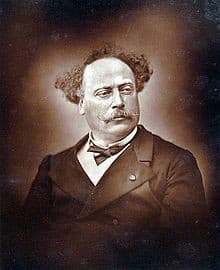
Alexandre Dumas, also known as Alexandre Dumas père, was a French novelist and playwright.







