“Callum was a chaos-ridden mess, but he was their chaos-ridden mess, and they were stuck with him.”
— Aaron and Tamara's acceptance of Call's true nature.

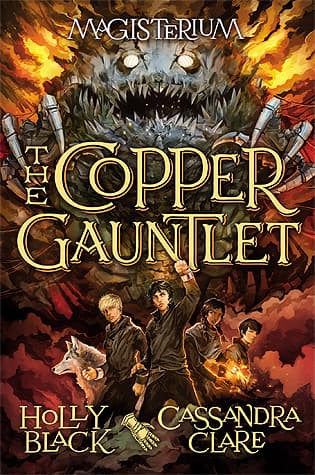
Holly Black (2015)
Genre
Fantasy / Children's / Young Adult
Reading Time
260 min
Key Themes
See below
Sign in to track this book
With his Chaos-ridden wolf as his only ally, Callum Hunt returns to the Magisterium, where he gets caught up in the theft of a magic-severing gauntlet and pursued by enemies who suspect his true, dark power.
Callum Hunt spends a difficult summer at home with his father, Alastair. His only comfort is his Chaos-ridden wolf, Havoc. One day, while looking for Havoc, Call goes into the basement and finds a hidden workshop. Inside, he discovers a diagram for a copper gauntlet, a powerful magical item, and a note from his father detailing a plan to use it on Call and Havoc. Alastair believes Call is secretly the Enemy of Death and plans to remove his magic, which could kill him. Terrified and hurt by his father's betrayal, Call knows he must escape and warn his friends at the Magisterium.
Realizing he is in immediate danger, Call and Havoc make a desperate escape from his father's house. Call uses his limited magic to create a distraction, allowing them to slip away. He knows the only place he might find safety and understanding is with his friends, Aaron and Tamara, at the Magisterium. The journey is risky, but Call's resolve to protect Havoc and himself, along with his growing distrust of his father, pushes him forward. He arrives at the Magisterium, tired but relieved to be among people who might believe him.
Upon returning to the Magisterium, Call, Aaron, and Tamara are quickly involved in a new mystery. Master Rufus announces that the Alkahest, a legendary copper gauntlet that can cut off a mage's connection to magic, has been stolen from its secure vault. The news causes fear throughout the school, as the Alkahest is a dangerous weapon in the wrong hands. The Masters suspect a powerful and evil mage is behind the theft, and students are warned to be careful. This theft immediately makes Call think of his father's plans.
As the investigation into the Alkahest theft continues, suspicion falls on Alastair Hunt. Evidence, including a note similar to the one Call found in his basement, points to him as a possible culprit. This deeply upsets Call, who is already struggling with his father's earlier betrayal. While Call wants to believe his father is innocent, the growing evidence, combined with Alastair's previous attempts to harm him, makes it difficult. The situation puts Call in an impossible position, torn between loyalty and fear.
Driven by a wish to clear his father's name, or at least understand the truth, Call, along with Aaron and Tamara, decides to investigate the Alkahest's disappearance themselves. They begin by putting together clues, using their knowledge of the Magisterium and its secrets. Their search leads them to forbidden parts of the school and old texts, suggesting a larger conspiracy than first thought. Their independent investigation puts them at odds with the Masters, who prefer to handle the matter themselves.
Following a lead, Call, Aaron, and Tamara decide to visit the Hunt family estate, believing more clues might be hidden there. They discover a secret room under the house, confirming Alastair's involvement in magical research related to the Alkahest. While there, they are attacked by a deadly assassin, a Chaos-ridden creature sent to get or destroy the Alkahest. The encounter is terrifying and dangerous, forcing the friends to use their combined magical abilities to defend themselves. They manage to escape, but the attack makes them realize the serious danger they are in.
As their investigation continues, Call, Aaron, and Tamara begin to suspect that not all the Masters at the Magisterium are trustworthy. They uncover inconsistencies in the official investigation and realize that some high-ranking mages might be involved in the Alkahest's theft or the wider conspiracy. This makes their situation even more risky, as they can no longer fully trust their mentors. They must proceed with extreme caution, knowing that an enemy within the Magisterium could be watching their every move.
Through clues, old prophecies, and a confrontation with a powerful mage, Call finally uncovers the truth: he is the Enemy of Death. Call's soul was transferred into his body after the original Call died. The original Callum Hunt died as an infant and was replaced by the soul of Constantine Madden, the infamous Enemy of Death, during the chaos of the Magisterium attack. This revelation shatters Call's understanding of himself and his identity, explaining his father's fear and actions. He struggles with the terrifying implications of being the most feared mage in history.
Alastair Hunt, captured and imprisoned by the Magisterium, manages to confront Call. He tearfully confesses his actions were an attempt to save Call from his true nature as Constantine Madden, believing he could separate the Enemy of Death's soul from Call's body without harming his son. He expresses deep love for Call, despite his fears. When the Magisterium leaders decide to use the Alkahest on Call, Alastair, in a desperate act of paternal love, sacrifices himself, taking the full force of the Alkahest's power. He is severely injured, possibly dying, showing his strong devotion to his son.
After Alastair's sacrifice and the revelation of Call's true identity, the Magisterium is in chaos. Call is left to deal with the devastating truth that he is Constantine Madden, the Enemy of Death. Many now view him with suspicion and fear, including some of his former mentors. While Aaron and Tamara remain loyal, their friendship is tested by this shocking news. Call knows he must now navigate a world where his very existence is a threat, and he must decide what kind of mage he will be—a hero or the villain he was prophesied to be. The future is uncertain and dangerous.
The Protagonist
Call transforms from a reluctant, self-deprecating student to someone who accepts his complex identity, wrestling with the ethical implications of his power and lineage.
The Supporting
Aaron grows more confident in his Makar abilities and his role as a leader, while maintaining his unwavering loyalty to his friends.
The Supporting
Tamara learns to trust her own judgment and the unconventional paths of her friends, becoming more adaptable and resourceful.
The Supporting/Antagonist
Alastair evolves from a secretive and seemingly betraying father to one who sacrifices himself out of love for his son.
The Supporting
Master Rufus's trust in institutional authority is challenged, leading him to a deeper understanding of his students' unique circumstances.
The Supporting
Havoc remains a steadfast and loyal companion, his bond with Call strengthening as they face increasing danger.
The Mentioned/Antagonist
Not a traditional arc, as his soul is within Call, but his past actions and motivations are gradually uncovered, shaping Call's identity crisis.
This theme explores whether a person is defined by their birth, their past, or their choices. Call struggles intensely with the revelation that he is the reincarnation of Constantine Madden, the Enemy of Death. He constantly fears becoming the villain he's meant to be, despite his own good intentions and actions. His inner conflict, seen when he questions if his Chaos magic makes him inherently evil, highlights the struggle between the person he believes himself to be and the terrifying legacy forced upon him. This is further emphasized by his father's attempts to 'cure' him, believing his destiny is fixed.
““It didn’t matter what you were born. It mattered what you chose to be.””
The book explores the unclear line between good and evil, questioning whether intentions or outcomes define a person. Alastair Hunt's actions, which first seem villainous as he tries to remove Call's magic, are ultimately revealed to come from a desperate, though misguided, love and a desire to protect his son. This challenges the simple view of characters as purely good or evil. Similarly, Call, despite being the 'Enemy of Death,' consistently tries to do good and protect his friends, suggesting that even a prophesied villain can choose a different path. The Magisterium's fear-driven judgment of Call also highlights how perception can shape what is considered 'evil.'
““Good people could do bad things. Bad people could do good things. It was a messy world.””
Trust is a fragile thing in 'The Copper Gauntlet,' with betrayal around every corner. Call's discovery of his father's plot to use the Alkahest on him destroys his trust in his only remaining family member. This betrayal forces him to flee and seek safety, but even within the supposed security of the Magisterium, he and his friends uncover evidence of deceit among the Masters. The constant questioning of who can be trusted—from family to mentors—creates a strong feeling of suspicion and danger, forcing the main characters to rely almost entirely on each other.
““Sometimes, the people you trusted most were the ones who hurt you the worst.””
The theme of family, both biological and chosen, is central, especially regarding sacrifice. Alastair Hunt's actions, though extreme, are ultimately driven by a father's love and a desperate desire to protect his son, ending with his deep sacrifice to save Call from the Alkahest. This act makes up for his earlier betrayals and shows the lengths parents will go to for their children. Similarly, the bond between Call, Aaron, and Tamara forms a chosen family, where they consistently put each other's safety and well-being first, showing loyalty and selflessness when facing great difficulties.
““Love wasn’t always soft and gentle. Sometimes, it was brutal. Sometimes, it broke you.””
A magical copper gauntlet capable of severing a mage's connection to magic.
The Alkahest is the central MacGuffin and a significant plot device. Its theft propels much of the narrative, driving Call and his friends' investigation. More importantly, it serves as a symbol of Alastair's fear and desperation, as he intends to use it on Call. The gauntlet's power to sever magic is a constant threat hanging over Call, as it represents the potential destruction of his identity and life. Its role in the climax, where Alastair sacrifices himself, demonstrates its immense power and the ultimate stakes of the story.
A long-standing prophecy foretelling the rise of a powerful, destructive mage.
The prophecy of the Enemy of Death is a major device that creates suspense and foreshadowing throughout the series. In 'The Copper Gauntlet,' it comes to the forefront with the revelation that Call is Constantine Madden. This device creates an internal conflict for Call, as he grapples with the terrifying implications of his identity. It also drives the fear and actions of other characters, particularly Alastair and the Magisterium, who are desperate to prevent the prophecy's fulfillment. The prophecy raises questions about free will versus destiny.
Animals and beings corrupted and empowered by untamed Chaos magic.
Chaos-ridden creatures, like Havoc and the assassin encountered at the Hunt estate, serve multiple functions. They introduce an element of unpredictable danger and wild magic into the structured world of the Magisterium. Havoc, in particular, acts as a foil and a symbol for Call's own connection to Chaos magic, highlighting his unique and feared abilities. These creatures also provide opportunities for action sequences and demonstrate the raw power that exists outside of controlled elemental magic, often serving as a direct threat or a means of discovery for the protagonists.
“Callum was a chaos-ridden mess, but he was their chaos-ridden mess, and they were stuck with him.”
— Aaron and Tamara's acceptance of Call's true nature.
“The world was full of monsters, and you had to decide which ones were worth fighting.”
— A reflection on the difficult choices Call faces.
“Some secrets are better left buried. Some people are better left unknown.”
— Call's internal struggle with his past and parentage.
“You can't outrun what you are. Eventually, it catches up to you.”
— Callum coming to terms with being Constantine Madden.
“Magic was dangerous. It was beautiful and terrible, and it didn't care about your good intentions.”
— A general observation about the nature of magic in their world.
“Sometimes the right thing to do was also the hardest thing to do.”
— Call making a difficult decision that impacts his friends.
“Being a hero wasn't about being perfect. It was about trying, even when you were terrified.”
— Call's evolving understanding of heroism.
“The truth was a complicated thing, tangled up with lies and half-truths until it was almost impossible to pick apart.”
— Call's realization about the deception surrounding him.
“Even the strongest chains could be broken, given enough time and enough pressure.”
— A metaphor for overcoming seemingly insurmountable obstacles.
“He didn't want to be a villain. He just wanted to be free.”
— Call's internal conflict regarding his identity and desires.
“Friendship wasn't about never disagreeing. It was about disagreeing and still being there for each other.”
— Call, Aaron, and Tamara's dynamic.
“Some things, once broken, could never truly be put back together again.”
— Call's reflections on trust and relationships.
“The past wasn't just behind you; sometimes, it was right in front of you, waiting to strike.”
— Call's constant struggle with Constantine's legacy.
“Sometimes, the only way to save someone was to let them go.”
— A difficult realization about protecting loved ones.
Ready to see how well you understood this book? Take our interactive quiz with 10 questions.

Biography coming soon.







