“I am Catalina, Infanta of Spain, Princess of Wales, daughter of the greatest monarchs the world has ever known. I will not be put aside.”
— Catherine's defiant declaration as her marriage to Henry VIII is questioned.

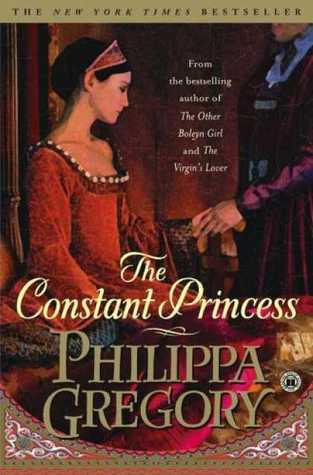
Philippa Gregory (2005)
Genre
Historical Fiction / Romance
Reading Time
390 min (approx. 6.5 hours)
Key Themes
See below
Sign in to track this book
From the sun-drenched courts of Spain to the cold, calculating heart of Tudor England, Catalina of Aragon fights to fulfill her destiny as queen, even if it means weaving a powerful lie that will shape history.
Catalina, the youngest surviving child of Queen Isabella of Castile and King Ferdinand of Aragon, is a highly intelligent and devout princess. From a young age, she knows her destiny is to marry Arthur, Prince of Wales, and become Queen of England, uniting Spain and England against France. Her education is rigorous, focusing on Latin, theology, and statecraft, all preparing her for her future role. Her mother, Isabella, gives her a strong sense of duty, faith, and a deep understanding of political maneuvering. Catalina views her betrothal not as a personal choice but as a divine mission, a part of God's plan for her and for the future of her beloved Spain.
After years of preparation, Catalina begins her journey to England. The voyage across the Bay of Biscay is stormy, showing the physical hardships she endures. Upon her arrival, she receives a cold reception from King Henry VII, who initially refuses to meet her and then tries to renegotiate her dowry. Her future husband, Arthur, is a sickly and awkward young man, far from the heroic figure she imagined. The English court is a stark contrast to the bright, sun-drenched courts of Spain, and Catalina struggles with the language, the food, and the unfamiliar customs, feeling isolated and underestimated by her new family.
Catalina marries Arthur in a grand ceremony, but their union lacks immediate passion. Arthur, though kind and intelligent, is frail and burdened by his royal responsibilities. They move to Ludlow Castle, where they are expected to consummate their marriage and begin their life together. Catalina finds comfort in their shared intellectual pursuits and her growing affection for Arthur, who, despite his physical weakness, has a gentle spirit. She quickly adapts to her role as Princess of Wales, learning English and engaging with the local populace, determined to prove her worth and establish her place in England. She believes their marriage was consummated, a key detail for her future.
Tragedy strikes when both Arthur and his closest companion, Sir Richard Pole, fall ill with the sweating sickness. Despite Catalina's devoted care, Arthur dies, leaving her a widow after only a few months of marriage. This devastating loss shatters Catalina's world and puts her future in immediate danger. Her position in England becomes uncertain, as her dowry is not fully paid, and King Henry VII is reluctant to release her or return her dowry. Her dream of becoming Queen of England seems dashed, and she faces returning to Spain in disgrace, or worse, being confined to a convent.
Facing an uncertain and bleak future, Catalina, guided by her deep faith and unwavering ambition, makes a momentous decision: she declares that her marriage to Arthur was never consummated. This lie, which she comes to believe as truth through fervent prayer and conviction, is her only path to potentially marrying Arthur's younger brother, Prince Henry, and thus still becoming Queen of England. She understands the immense theological and political implications of this assertion, as it would require a papal dispensation. Her mother, Queen Isabella, supports her, recognizing it as the only way for Catalina to fulfill her destiny and protect Spain's interests.
Following Arthur's death and her declaration, Catalina enters a prolonged period of uncertainty and hardship. King Henry VII, ever-conscious of financial gain, keeps her in England, neither sending her home nor allowing her to marry Prince Henry, whose age and the political climate make the match difficult. Catalina lives in relative poverty, her Spanish household gradually diminished, and she is often denied access to her dowry funds. She maintains her dignity and her claim, continually writing to her parents for support and asserting her right to marry Henry. During these years, she grows closer to the young Prince Henry, who expresses his desire to marry her.
Catalina faces further emotional trials with the death of her beloved mother, Queen Isabella. This leaves her feeling even more isolated but also strengthens her resolve. Her father, Ferdinand, proves less reliable in his support, often prioritizing his own political plans over his daughter's welfare. Years later, King Henry VII also dies, finally removing the primary obstacle to Catalina's marriage to Prince Henry. The new king, Henry VIII, is young, handsome, and determined to marry Catalina, asserting that his father's previous objections and the papal dispensation are now irrelevant. Catalina's long wait appears to be over.
With the death of Henry VII, the young King Henry VIII immediately moves to marry Catalina. Despite lingering doubts and the need for the papal dispensation (which Catalina insists is valid due to her non-consummated first marriage), the wedding proceeds. Catalina finally achieves her lifelong ambition, becoming Queen of England. She is deeply in love with Henry and genuinely happy, believing her long struggle and her 'lie' have been divinely sanctioned. She embraces her role with grace and determination, ready to rule alongside her passionate young husband and provide an heir for the Tudor dynasty, fulfilling the destiny she was born for.
As Queen, Catalina is a capable and popular ruler, actively participating in governance and diplomacy. However, the shadow of her past, particularly the question of her first marriage's consummation, continues to subtly haunt her. The primary challenge is her inability to produce a living male heir. She endures multiple miscarriages and the loss of infant sons, leaving only a healthy daughter, Mary. This series of tragedies creates anxieties about the stability of the Tudor succession and leads to growing whispers within the court about the legitimacy of her marriage, subtly questioning if it is cursed due to her union with her deceased husband's brother.
As the years pass and no male heir appears, King Henry VIII's initial passion for Catalina begins to cool. He grows increasingly frustrated and superstitious, convinced that their marriage is not blessed by God because she was supposedly his brother's wife, citing Leviticus. He begins to seek counsel from his advisors, particularly Cardinal Wolsey, about the validity of their marriage. At the same time, his eyes are drawn to younger women at court, most notably Anne Boleyn. Catalina, though still deeply in love with Henry and fiercely loyal, senses the shifting dynamics and the looming threat to her position and her daughter's legitimacy.
The Protagonist
From an idealistic young princess, she transforms into a resilient and politically astute queen, whose unwavering faith and determination guide her through profound personal and political challenges.
The Supporting
His brief arc sees him transform from an awkward groom to a loving and intellectually compatible husband before his untimely death.
The Supporting/Antagonist
Begins as a loving and devoted husband, but evolves into a demanding and increasingly self-serving king, driven by dynastic ambition and personal desire.
The Supporting
Her arc is largely static, serving as a powerful role model and unwavering source of support for Catalina.
The Antagonist/Supporting
Maintains a consistent character as a calculating and financially driven king, an obstacle to Catalina's immediate goals.
The Supporting
Remains a steadfast and loyal friend, her personal loyalty deepening over time.
The Supporting
Remains a consistently loyal and devoted servant and friend to Catalina throughout her life.
The Mentioned
His influence is growing throughout the story, setting the stage for future conflicts.
The novel explores the conflict between a predetermined destiny and the choices individuals make. Catalina is raised believing her path to the English throne is divinely ordained, a conviction that fuels her relentless pursuit of queenship. However, her decision to declare her first marriage unconsummated—a deliberate act of will and deception—directly challenges the notion of a fixed destiny, showing her active role in shaping her future. This theme is central to her character, as she constantly grapples with the idea that her personal desires and actions are aligning with, or diverging from, God's greater plan. The consequences of her 'lie' ultimately dictate the trajectory of her life and reign.
““I was born to be Queen of England. I have been raised to it, I have been taught it, I have been promised it. God has destined it.””
The novel hinges on the central deception: Catalina's assertion that her marriage to Arthur was never consummated. This 'lie,' which Catalina herself comes to believe as truth through fervent prayer and conviction, is a recurring motif. It highlights the malleable nature of 'truth' in political and personal contexts, especially when survival and ambition are at stake. The narrative details the psychological process by which Catalina convinces herself and others of this vital falsehood, and the immense pressure she lives under to maintain it. This deception, born of necessity, ultimately defines her reign and becomes the fulcrum upon which her later struggles with Henry VIII pivot.
““I told the greatest lie, and held to it.””
Catalina's unwavering Catholic faith is a cornerstone of her character and a constant source of strength and justification. She genuinely believes that God has a plan for her and that her actions, even her central deception, are divinely sanctioned. Her faith provides solace during her years of isolation and hardship, and it empowers her to make difficult decisions. The novel explores how deeply held religious convictions can shape an individual's perception of right and wrong, and how they can be used to rationalize actions that serve personal ambition. Her conviction in her own righteousness, stemming from her faith, is what allows her to endure and ultimately achieve her goal.
““God has called me to this work. He will not abandon me now.””
Throughout her journey, Catalina experiences profound isolation, first as a foreign princess in a strange land, then as a widowed royal pawn, and finally as a queen under immense pressure. She is often physically separated from her family and culturally distanced from the English court. Even with loyal companions, the ultimate burden of her decisions and her destiny rests solely on her shoulders. The novel portrays her loneliness, particularly during her years in limbo, and the emotional toll of maintaining her composure and her 'lie' in the face of constant scrutiny. This theme underscores the personal cost of royal ambition and duty.
““I was a princess, a queen to be, and utterly alone.””
A central assertion that dictates Catalina's entire future.
This is the primary plot device driving the entire narrative. Catalina's declaration that her marriage to Arthur was never consummated allows her to seek a papal dispensation and marry his younger brother, Henry. The ambiguity of this claim—whether it is a genuine truth or a strategic lie—creates constant tension and foreshadows future conflicts. It is the foundation of her claim to the English throne and, ironically, becomes the very argument later used against her by Henry VIII, making it a powerful example of dramatic irony and a self-fulfilling prophecy.
A recurring financial and political obstacle for Catalina.
The payment of Catalina's dowry from Spain to England serves as a persistent financial and political leverage point for King Henry VII. Its incomplete payment is a constant source of tension, keeping Catalina in limbo after Arthur's death and preventing her immediate return to Spain or her marriage to Henry. It highlights the transactional nature of royal marriages and the financial pressures on monarchs, reinforcing Catalina's precarious position and the calculating nature of the English court. The dowry's unresolved status underscores her vulnerability and dependence on the Tudors.
The primary means of communication and a source of both hope and frustration.
Given the historical period, letters and messengers are the crucial link between Catalina and her family in Spain. These communications are a lifeline, bringing news, instructions, and often, much-needed support or frustrating delays. They highlight the vast distances and slow pace of diplomatic negotiations. For Catalina, letters represent hope for intervention, but also the agonizing wait for responses that often fall short of her expectations, emphasizing her isolation and the limitations of her control over her own destiny from afar.
A historical plague that acts as a sudden and devastating plot catalyst.
The sudden outbreak of the sweating sickness is a historical event used as a powerful plot device to abruptly change the course of Catalina's life. It causes the unexpected death of Arthur, Prince of Wales, shattering Catalina's immediate future and forcing her into a desperate situation. This plague serves as an external, uncontrollable force that introduces a major turning point, propelling the narrative into its central conflict and setting in motion Catalina's pivotal decision regarding her first marriage's consummation.
“I am Catalina, Infanta of Spain, Princess of Wales, daughter of the greatest monarchs the world has ever known. I will not be put aside.”
— Catherine's defiant declaration as her marriage to Henry VIII is questioned.
“It is a poor king who takes his wife for love.”
— Catherine's mother, Isabella, imparts a pragmatic view of royal marriage.
“I have been promised to England since I was three years old. My destiny is to be Queen of England.”
— Catherine reflecting on her lifelong commitment to her arranged marriage.
“There are no friends at court, only allies.”
— Catherine's early realization about the treacherous nature of royal life.
“God's will is always done. We just have to be patient.”
— Catherine's enduring faith through hardship and waiting.
“I am a queen, and I will behave as a queen, even if I am treated as a serving girl.”
— Catherine's determination to maintain her dignity despite her reduced circumstances.
“A woman's power is in her womb and in her ability to bear a son.”
— The societal pressure on royal women to produce male heirs.
“Love is a dangerous thing for a princess.”
— Catherine's understanding of the conflict between personal desire and royal duty.
“I will not give up my crown for any man, not even the King of England.”
— Catherine's unwavering refusal to accept the annulment of her marriage.
“My father warned me: 'Never trust a man who smiles too much.'”
— Catherine recalling her father's shrewd advice about discerning character.
“The greatest strength is to endure.”
— Catherine's philosophy on how to survive the trials of her life.
“I was born to be queen, not a pawn in a game.”
— Catherine asserting her agency and rejecting manipulation.
“To be a queen is to be constantly watched, constantly judged, and constantly at risk.”
— Catherine's somber reflection on the burdens of royalty.
“My heart is English now, even if my blood is Spanish.”
— Catherine expressing her deep connection and loyalty to her adopted country.
Ready to see how well you understood this book? Take our interactive quiz with 10 questions.

Biography coming soon.







