“The only thing that matters is to be like everyone else.”
— Marcello's internal justification for his conformity and desire to blend in.

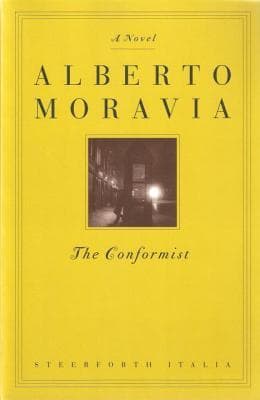
Alberto Moravia (1970)
Genre
Literary Fiction
Reading Time
450 min
Key Themes
See below
Sign in to track this book
A man obsessed with appearing normal and with the appeal of fascism finds his carefully built life, and the corrupt core of the regime, exposed when he's ordered to kill his former professor and falls for a woman.
The novel begins with Marcello Clerici getting ready to kill his former philosophy professor, Luca Quadri, in Paris. Flashbacks show Marcello's childhood. We learn about his troubled aristocratic family: a mother with mental health issues, a pleasure-seeking father, and general neglect. A key event happens when, as a boy, Marcello shoots a chauffeur, Lino, who had tried to molest him. This event, with his hidden homosexuality and a strong feeling of being 'different,' makes Marcello want to conform and appear 'normal.' He thinks that by following social rules and joining a strong institution, he can escape his past and his perceived abnormalities.
As a young man, Marcello gets engaged to Giulia, a woman he sees as a typical Italian woman. He does not love her deeply but sees their marriage as a step towards a 'normal' middle-class life. Giulia is attractive, somewhat naive, and from a respectable family, all things that fit Marcello's wish for an outwardly perfect life. He carefully plans their future, imagining a usual home and family, believing that these outer signs will give him the acceptance and normalcy he wants, hiding his inner trouble and past events.
Marcello's wish to belong and have a clear social identity leads him to join the Fascist secret police (OVRA). He sees the Fascist Party as the best institution for conformity, offering order, belonging, and clear rules. His work for the government makes him feel part of something bigger and lets out his hidden aggression, all while looking respectable. He gets his first important mission: to go to Paris as if on a honeymoon and kill his former anti-Fascist philosophy professor, Luca Quadri, showing his full loyalty to the state.
Marcello and Giulia go on their honeymoon to Paris. Marcello's main goal is to meet Professor Quadri, who lives in exile with his wife, Anna. Marcello struggles with the two-faced nature of his mission, acting like a newlywed tourist while quietly gathering information on Quadri. He meets Quadri, and their talks bring up old intellectual debates and hidden memories in Marcello. Quadri, though anti-Fascist, has some fondness for his former student, not knowing Marcello's real plans or the dark mission he is doing for the government.
While with the Quadris, Marcello becomes very interested in Anna, Professor Quadri's beautiful and mysterious wife. Her charm and unusual appeal upset Marcello's carefully built conformist image. He feels drawn to her in a way he never was to Giulia, feeling a strong, almost uncontrolled desire that challenges his commitment to 'normalcy' and his mission. This unexpected attraction adds a big emotional problem, threatening to ruin his plans and show his inner conflicts.
To Marcello's surprise, Anna and Giulia become friends. Anna, sensing Giulia's innocence and perhaps her husband's underlying issues, likes her. Giulia, in turn, is charmed by Anna's worldly sophistication. This growing friendship between the two women creates an unexpected problem for Marcello. He has to deal with the increasingly complex social situation, trying to keep his cover and advance his mission while also managing his wife's innocent affection for his target's wife and his own conflicted feelings for Anna.
In a tense meeting, Anna tries to attract Marcello. She openly says she likes him, recognizing his hidden complexities and perhaps his hidden homosexuality. This direct challenge to her desire, and his own hidden desires for her (and perhaps for men), causes Marcello deep inner conflict. He is torn between his mission, his carefully built conformist identity, and the raw emotions Anna brings out. Her bold offer makes him face parts of himself he has tried to hide, making him question the basis of his 'normal' life.
Despite his growing emotional involvement and the unsettling things Anna revealed, Marcello decides to go ahead with the assassination. His deep need for conformity and his loyalty to the Fascist government are stronger than his personal feelings or moral doubts. He tells himself that this act of violence is needed to secure his place in the 'normal' world he so desperately wants. He tells his Fascist contacts about the Quadris' travel plans, setting up the attack.
As the Quadris drive through the French countryside, their car is attacked by Fascist agents. Professor Quadri is killed. Anna, whom Marcello was attracted to, is also killed in the attack, even though Marcello's orders were only for Quadri. Marcello sees the violent aftermath, a scene that disturbs him deeply. The reality of his actions, and Anna's unexpected death, break his calm emotional state, leaving him with a feeling of emptiness and moral unease, despite finishing his mission.
Marcello returns to Rome with Giulia, having completed his mission. He expects to feel a sense of success and belonging, but instead, he feels only emptiness. His 'normal' life with Giulia, the usual job, and his position in the Fascist Party now feel empty. The assassination, far from bringing him peace, has only made his inner void deeper. He is haunted by the violence and the faces of those he betrayed, especially Anna, and his conformist image starts to break under his unaddressed psychological problems.
Years later, as World War II ends, the Fascist government falls. Marcello is walking through Rome with his wife and child when he meets a former Fascist acquaintance. This meeting, during the public celebration of freedom, leads to an unexpected revelation. Marcello publicly speaks against the Fascist Party and, while drunk, admits to being involved in the murder of Lino, the chauffeur, as a boy. This public revealing takes away his last bits of conformity, showing the raw, unaddressed traumas and moral compromises that have defined his life.
The last scene shows Marcello alone, without his Fascist identity and his carefully built image. The fall of the government that gave him purpose, with his public confession, leaves him exposed and weak. He is no longer the 'conformist' he tried to be; the idea of normalcy has shattered. The novel ends with Marcello facing the deep emptiness of a life built on hiding things and false appearances. His search for belonging has led him to be completely disillusioned and alone.
The Protagonist
Marcello's arc is one of tragic self-deception, as his relentless pursuit of conformity ultimately leads to the destruction of his inner self and a hollow existence, culminating in his public unmasking and disillusionment.
The Supporting
Giulia remains largely static, serving as a mirror for Marcello's aspirations for normalcy, though she experiences brief moments of awakening through her interactions with Anna.
The Supporting
Quadri's arc is tragic and linear, serving as a moral compass and victim whose principles lead to his demise.
The Supporting
Anna's arc is brief but impactful, serving as a catalyst for Marcello's internal conflict and her death is a profound emotional blow to him.
The Supporting
Manganiello's character remains consistent, embodying the unthinking brutality of the Fascist regime.
The Mentioned
Lino's 'arc' is entirely in flashback, as his actions are the catalyst for Marcello's lifelong quest for normalcy.
The Supporting
The Colonel remains a static, authoritarian figure, representing the power structure Marcello seeks to belong to.
The Mentioned
Her character is primarily a background influence, contributing to Marcello's formative experiences.
This is the main theme of the novel, shown through Marcello Clerici's strong wish to appear 'normal.' Because of his past events and hidden desires (especially his hidden homosexuality), Marcello believes that by strictly following social rules, marrying a conventional woman like Giulia, and joining a powerful, authoritarian institution like the Fascist Party, he can erase his 'difference.' However, his attempts to conform only hide his true self, leading to an empty life and inner trouble, especially when he meets Anna Quadri's unusual appeal. The novel argues that true individuality cannot be hidden without big psychological cost.
“What he wanted was to be like everyone else, to be 'normal,' to have a 'normal' life.”
The novel looks at the psychological effects of childhood events and hiding feelings. Marcello's shooting of the chauffeur, Lino, after an attempted molestation, is the main event that shapes his whole life. This event, with his troubled family and hidden homosexuality, makes him build a complex image of conformity. He hides his true feelings, desires, and memories, believing that only by doing so can he be accepted. However, these hidden parts constantly come out, especially when he talks to Anna, showing that hiding feelings is a weak and eventually harmful way to cope.
“He sought in the Fascist Party not so much an ideology as a cure, a remedy for his own abnormality.”
Moravia connects the rise of Italian Fascism to the psychological needs of people like Marcello. For Marcello, Fascism is not mainly an idea but a strong institution that offers order, belonging, and a clear identity, a 'cure' for his personal feeling of being abnormal. The government's focus on conformity, obedience, and stopping disagreement matches Marcello's own inner struggles. The novel suggests that Fascism grows by appealing to a shared desire to belong and by letting out hidden aggression, allowing people to do bad things under the guise of loyalty and normalcy.
“Fascism was for him, above all, the possibility of being like everyone else.”
This theme is central to Marcello's character and the wider comment on Fascist Italy. Marcello builds an elaborate appearance of normalcy – a conventional marriage, a respectable job, outward adherence to social rules – to hide his inner trouble, hidden desires, and past events. The Fascist government itself also relies heavily on appearances, showing an image of order and strength while often doing brutal and corrupt things behind the scenes. The novel always shows the difference between what characters (and the state) show to the world and their true, often darker, realities, ending with these illusions breaking.
“He had always lived in a kind of double life, one external and visible, the other internal and hidden.”
Marcello's hidden homosexuality and his conflicting desires are an important underlying element throughout the novel. His attempted molestation by Lino as a child, and his violent reaction, deeply harms him, making him fear and hide his own sexual identity. His marriage to Giulia is a clear effort to establish a 'normal' heterosexual life. However, his strong, unsettling attraction to Anna Quadri, and Anna's own understanding of his hidden desires, make him face the complexities of his sexuality, challenging the strict limits he has placed on himself.
“He found Anna alluring, but with an allure that was a threat to his carefully constructed 'normality.'”
Used to reveal Marcello's traumatic past and psychological motivations.
The novel frequently employs non-linear flashbacks, particularly to Marcello's childhood, to illuminate the origins of his psychological issues and his obsession with conformity. These flashbacks, such as the incident with Lino the chauffeur, are crucial for understanding Marcello's present actions and his deep-seated need to escape his past. They provide context for his choices, his repression, and his attraction to the Fascist regime, showing how early trauma shapes his adult identity and decisions.
Characters and institutions represent Marcello's desire for normalcy and belonging.
Giulia, Marcello's conventional wife, symbolizes the 'normal' bourgeois life he desperately craves, devoid of the complexities and perceived abnormalities of his own nature. Similarly, the Fascist Party itself functions as a potent symbol of conformity, order, and belonging for Marcello. He views it not just as a political ideology but as a rigid structure that can provide him with a definitive identity and erase his sense of 'difference.' These symbols highlight the external constructs Marcello uses to escape his internal turmoil.
The reader is aware of Marcello's true intentions while other characters are not.
Dramatic irony is used effectively, particularly during Marcello's interactions with Professor Quadri and Anna. The reader is privy to Marcello's secret mission to assassinate Quadri, while Quadri himself treats Marcello as a former student and friend. This creates a tense and unsettling dynamic, highlighting Marcello's duplicity and the moral compromises he makes. It also underscores the tragedy of Quadri's unsuspecting nature and Anna's unwitting entanglement in Marcello's plot, intensifying the emotional impact of their eventual demise.
Provides direct access to Marcello's conflicted thoughts and repressed emotions.
Much of the novel is conveyed through Marcello's interior monologue, allowing the reader direct access to his complex and often contradictory thoughts, anxieties, and repressed desires. This narrative technique reveals the constant battle within him between his intellectual understanding and his emotional repression. It exposes his rationalizations, his justifications for his actions, and the profound psychological toll his quest for conformity takes on him, making his internal conflict palpable and central to the narrative.
“The only thing that matters is to be like everyone else.”
— Marcello's internal justification for his conformity and desire to blend in.
“I want to be normal, to have a normal life, a normal wife, normal children.”
— Marcello expressing his longing for an ordinary existence to escape his past.
“The world is divided into two categories: those who command and those who obey.”
— Marcello reflecting on power dynamics in fascist Italy.
“To be different is to be guilty.”
— Marcello's belief under the oppressive regime he serves.
“I have always been afraid of being myself.”
— Marcello confessing his deep-seated fear of authenticity.
“The conformist is the true revolutionary of our time.”
— A paradoxical observation on conformity as a form of rebellion.
“We are all actors in a play written by others.”
— Marcello's view on the lack of personal agency in society.
“To love is to possess, and to possess is to destroy.”
— Reflecting on Marcello's troubled relationship with his wife Giulia.
“The past is a prison from which there is no escape.”
— Marcello grappling with the trauma of his childhood.
“In a world of lies, the truth becomes a crime.”
— Commentary on the moral decay under fascism.
“I have sold my soul for a little peace.”
— Marcello acknowledging the cost of his conformity.
“The crowd is the only reality; the individual is an illusion.”
— Marcello's justification for merging with the masses.
“To be free is to be alone, and to be alone is to be afraid.”
— Marcello's fear of isolation driving his need to conform.
“We kill what we do not understand, and we call it justice.”
— Reflecting on the violence and irrationality of the regime.
Ready to see how well you understood this book? Take our interactive quiz with 10 questions.
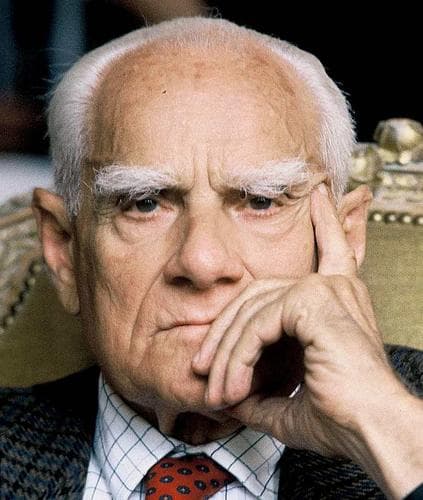
Alberto Moravia was an Italian novelist and journalist. His novels explored matters of modern sexuality, social alienation and existentialism. Moravia is best known for his debut novel Gli indifferenti and for the anti-fascist novel Il Conformista, the basis for the film The Conformist (1970) directed by Bernardo Bertolucci. Other novels of his adapted for the cinema are Agostino, filmed with the same title by Mauro Bolognini in 1962; Il disprezzo, filmed by Jean-Luc Godard as Le Mépris ; La Noia (Boredom), filmed with that title by Damiano Damiani in 1963 and released in the US as The Empty Canvas in 1964 and La ciociara, filmed by Vittorio De Sica as Two Women (1960). Cédric Kahn's L'Ennui (1998) is another version of La Noia.







