“It was not a good place for a child, the castle, but then, what place was good for a child in those days?”
— Reflecting on the harsh realities of childhood in the medieval period.

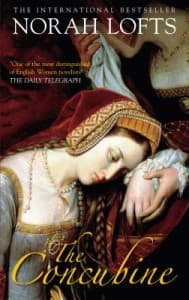
Norah Lofts (1963)
Genre
Historical Fiction / Romance
Reading Time
500 min
Key Themes
See below
Sign in to track this book
Anne Boleyn defies King Henry VIII's desire, turning a forced seduction into a dangerous fight for power and affection that reshapes England's future.
Anne Boleyn, the younger daughter of Sir Thomas Boleyn and Lady Elizabeth Howard, grows up at Hever Castle. She is bright and clever, though not conventionally beautiful. She is especially close to her brother, George. Unlike her quieter sister, Mary, Anne has a sharp mind and a strong will. At a young age, she is sent to the Netherlands to serve Margaret of Austria, Regent of the Low Countries. There, she receives an excellent education in court manners, languages, and the arts. This time shapes her character, giving her a sophisticated understanding of court politics and a desire for influence, which sets her apart from other English ladies.
When she returns to England, Anne joins King Henry VIII's court, where her sister Mary is already the King's mistress. Anne, with her French sophistication and lively wit, quickly draws attention. She falls deeply in love with Henry Percy, the son of the Earl of Northumberland, and they become secretly engaged. Cardinal Wolsey discovers their growing romance. Acting on King Henry VIII's unspoken wishes, he intervenes forcefully. Wolsey, seeing the King's interest in Anne, brutally separates the young lovers, forcing Percy to marry another woman. This event leaves Anne heartbroken and resentful of the King and Wolsey, solidifying her ambition for power and security.
King Henry VIII, initially drawn to Anne's energy and intelligence, begins to pursue her. Anne, cautious after her experience with Percy and seeing her sister Mary's discarded status as a royal mistress, resists the King's attempts to make her his concubine. She understands that to secure her future and maintain her dignity, she must insist on marriage. Her refusal only increases Henry's desire, turning his infatuation into an obsession. He begins to see her not just as a mistress but as a possible queen, believing she can give him the male heir that Catherine of Aragon has not produced. This marks a major shift in Henry's plans and in English history.
Driven by his desire for Anne and his urgent need for a male heir, King Henry VIII questions the legitimacy of his marriage to Catherine of Aragon. He cites Leviticus, claiming their union was incestuous because she had been married to his deceased brother, Arthur. This starts the 'King's Great Matter,' a long and complex legal and religious fight for an annulment. Anne has a key, though often passive, role in this process, as Henry's determination to marry her fuels his defiance against the Pope and the Catholic Church. The long divorce proceedings cause great frustration for both Henry and Anne, and significant political unrest.
As the annulment proceedings continue, Anne Boleyn's influence over King Henry VIII becomes clear. She uses her position, subtly encouraging the King's impatience with Cardinal Wolsey. Wolsey, despite his efforts, cannot get the Pope's approval for the annulment. Anne and her supporters at court actively work to undermine Wolsey, portraying him as an obstacle to the King's desires and the stability of the succession. Eventually, Wolsey loses power, stripped of his offices and wealth, a direct result of his failure to deliver the annulment and Anne's rise. His fall opens the way for new advisors, more agreeable to Henry's will and Anne's ambition.
Unable to wait longer, and with Anne pregnant, King Henry VIII secretly marries her in January 1533. This private union is followed by a break with the Pope and the Catholic Church, establishing the Church of England with Henry as its Supreme Head. In June 1533, Anne Boleyn is publicly crowned Queen of England in a grand ceremony at Westminster Abbey. This shows Henry's firm resolve and Anne's success. Her coronation is a revolutionary moment in English history, changing the nation's religious and political situation and securing her position, though precariously, as Henry's second queen.
Despite the grand celebrations, Anne's reign as Queen begins with a disappointment: she gives birth to a daughter, Elizabeth, in September 1533, instead of the desired male heir. While Henry initially shows some affection for his new daughter, his need for a son remains paramount. This failure to produce a male heir immediately pressures Anne and starts to damage her standing with the King. The court, always watching the King's affections, notices his growing impatience and subtle shifts in his attention, hinting at the instability of Anne's position and the constant threat of his changing desires.
After Elizabeth's birth, Anne has several miscarriages, including a particularly difficult one in January 1536 of a male fetus. Each miscarriage further reduces Henry VIII's hopes for a legitimate male heir through Anne and increases his disappointment. The King, growing convinced that Anne cannot give him a son, begins to look elsewhere. Court factions, including Thomas Cromwell, who had supported Anne, start to turn against her. They sense the King's cooling affection and see a chance to advance their own goals. Anne's once secure position becomes more vulnerable as her failure to secure the succession weighs heavily on her.
In April and May 1536, a plot, mostly arranged by Thomas Cromwell, quickly unfolds against Queen Anne. She is accused of multiple counts of adultery, incest with her brother George Boleyn, and treason against the King. Several men, including Sir Henry Norris, Mark Smeaton, Sir Francis Weston, William Brereton, and her brother George, are arrested for having illegal relations with the Queen. These accusations, likely invented or exaggerated, are meant to give Henry grounds for an annulment and to get rid of Anne. Anne is arrested and imprisoned in the Tower of London, a dramatic and terrifying turn in her fate.
Anne Boleyn and the men accused with her face quick and biased trials. Despite a lack of solid evidence and the defendants' denials, especially George Boleyn's defense, the verdicts are decided beforehand. Anne is tried by a jury of her peers, including her uncle the Duke of Norfolk, who oversees the proceedings. She is found guilty of all charges, including treason, incest, and adultery. The court, pressured by the King's will, condemns her to death. The condemnation confirms the King's absolute power and his ruthlessness in removing any obstacle to his desires, even his queen.
On May 19, 1536, Anne Boleyn is executed on Tower Green, within the Tower of London. She maintains her innocence to the end, giving a dignified speech from the scaffold. She acknowledges the King's goodness while subtly hinting at the unfairness of her fate. A skilled French swordsman beheads her, a final, grim courtesy from Henry VIII. Her death marks the end of her difficult reign as Queen and a major turning point in English history. It confirms the King's break with Rome and sets a chilling precedent for the fate of queens who failed to provide a male heir. Her daughter, Elizabeth, is declared illegitimate, though she would later become queen.
The Protagonist
Anne transforms from a spirited young woman in love with Henry Percy to a powerful, calculating queen who ultimately falls victim to the very ambition and ruthless court politics she mastered.
The Antagonist
Henry's character solidifies from a charming, if willful, monarch into a despotic ruler willing to destroy lives to achieve his personal and dynastic goals.
The Supporting
Wolsey rises to the pinnacle of power only to be cast down and destroyed by his failure to satisfy the King's will and the machinations of Anne's faction.
The Supporting
George rises in influence and power alongside his sister, only to share her tragic fate, falsely accused and executed.
The Supporting
Catherine endures the public humiliation of her marriage being declared invalid, maintaining her dignity and conviction until her death.
The Supporting
Mary moves from being a royal mistress to finding a more contented life outside the court's dangerous machinations.
The Supporting
Cromwell rises to power by serving the King's will, even if it means orchestrating the downfall of those he once supported, showcasing his ruthless pragmatism.
The Mentioned
Percy is a victim of royal interference, his personal happiness sacrificed to the King's nascent desires.
The novel shows how seeking and using power corrupts people and systems. King Henry VIII's absolute power allows him to dismantle religious institutions, execute queens, and ignore personal loyalties, all to satisfy his desires. Anne Boleyn, at first driven by a need for security and dignity, becomes more ruthless in her ambition. She contributes to Wolsey's downfall and alienates potential allies. The court itself is full of schemes and betrayal, where people like Thomas Cromwell rise by manipulating power. This shows that integrity often gives way to the demands of political survival. The constant search for a male heir drives much of this corruption, proving that even personal desires can be twisted by the pressures of dynastic succession.
“''The King's will was God's will, or so the King had decided it must be.'”
The story explores how women, no matter their intelligence or status, are mainly valued for their ability to produce male heirs in a society ruled by men. Anne Boleyn, despite her wit and charm, is ultimately judged by her fertility. Her failure to deliver a surviving son seals her fate, reducing her from a queen to a disposable vessel. Her sister Mary's experience as a discarded mistress further highlights this theme, showing how fleeting a woman's value is once her 'purpose' is served. The King's constant pursuit of a male heir drives the entire story, showing how women's bodies and reproductive capabilities are central to political and dynastic stability, often at the cost of their lives and dignity.
“'A queen's first duty was to give the King a son; all other virtues were but ornaments.'”
The novel takes place during one of the most important periods of religious and political change in English history: the English Reformation. King Henry VIII's desire for an annulment from Catherine of Aragon, fueled by his infatuation with Anne Boleyn, directly leads to England's break from the Catholic Church and the creation of the Church of England. This dramatic shift has major consequences, changing the nation's spiritual landscape and consolidating the King's power. The story details how religious doctrine becomes a tool for political maneuvering, with figures like Cardinal Wolsey and Thomas Cromwell navigating the complex issues of papal authority versus royal supremacy, ultimately reshaping the kingdom's identity.
“'The King had not merely divorced a wife; he had divorced a kingdom from its ancient faith.'”
The book examines the complex interaction of love, desire, and obsession, especially in King Henry VIII's relationship with Anne Boleyn. Anne first experiences a real, youthful love with Henry Percy, which is cruelly destroyed. Henry VIII's desire for Anne begins as infatuation but quickly becomes an all-consuming obsession. This drives him to defy the Pope and change history. Anne, in turn, strategically uses Henry's desire to achieve her goals, turning it into a tool for power. However, as her ability to fulfill his ultimate desire (a male heir) lessens, his obsession turns cold, showing how destructive unchecked desire can be and how quickly love can turn into ruthless expediency.
“'His desire for her was a fire that consumed all else, even reason, even God.'”
Hints and clues about future tragic events, particularly Anne's downfall.
Foreshadowing is used throughout the novel to build suspense and underscore the tragic inevitability of Anne's fate. Early in the story, Mary Boleyn's experience as a discarded mistress serves as a stark warning to Anne about the King's fickle nature. Cardinal Wolsey's fall from grace, orchestrated in part by Anne, foreshadows her own demise, demonstrating how quickly those in power can be brought down. The King's increasing impatience with Catherine of Aragon, and his ruthless determination to achieve his will, also subtly hints at the severity of his actions when Anne fails to provide him with a male heir, creating a sense of impending doom for the protagonist.
The reader's awareness of Anne's historical fate, contrasting with her initial triumphs.
Dramatic irony is a powerful device, as most readers are aware of Anne Boleyn's historical end. This knowledge creates a constant undercurrent of tension, especially during moments of Anne's triumph – her coronation, the birth of Elizabeth – knowing that these successes are merely steps on her path to the scaffold. When Anne strategizes or celebrates, the reader is privy to the tragic outcome, making her victories bittersweet and her struggles more poignant. This device heightens the emotional impact of the narrative, transforming her ambition and eventual downfall into a more impactful and historically resonant tragedy.
The historical and political crisis surrounding Henry VIII's divorce, serving as the central conflict.
The 'King's Great Matter' – Henry VIII's pursuit of an annulment from Catherine of Aragon – is not just a plot point but the central engine of the entire narrative. It drives all major developments, from Anne's initial resistance to Henry's advances, to the downfall of Cardinal Wolsey, the break with Rome, and ultimately Anne's marriage and coronation. This historical event serves as the primary conflict, shaping character motivations, political alliances, and the very structure of English society. It is the catalyst for the radical changes that define the era and directly dictate Anne Boleyn's rise and fall, making it a pivotal device for both historical accuracy and dramatic tension.
The male heir as a symbol of power, legitimacy, and survival.
The elusive male heir functions as a powerful symbol throughout the novel, representing not just dynastic continuation but also the ultimate source of power, legitimacy, and survival for both the King and his queens. For Henry, a male heir symbolizes the stability of his reign and his legacy. For Anne, it represents her security, her triumph over Catherine, and her continued hold on the King's affection. The failure to produce this heir becomes the ultimate symbol of her downfall, demonstrating how deeply a woman's worth and fate were tied to her reproductive capabilities in this patriarchal society. The absence of a male heir becomes a void that consumes all other considerations.
“It was not a good place for a child, the castle, but then, what place was good for a child in those days?”
— Reflecting on the harsh realities of childhood in the medieval period.
“Love was a luxury, and she had never been taught to expect luxuries.”
— Eleanor's pragmatic view on love and her station in life.
“A woman's beauty was her most potent weapon, and her most dangerous.”
— Contemplating the power and peril of female beauty in society.
“The King was a man, and men were fickle, especially kings.”
— Eleanor's cynical observation about male loyalty, particularly that of a monarch.
“She had learned that to survive, one must sometimes bend, even if it meant breaking a little inside.”
— Eleanor's philosophy on survival and adaptation in difficult circumstances.
“Ambition was a fire that could warm you or consume you.”
— A reflection on the dual nature of ambition.
“There were many ways to be a prisoner, and not all of them involved chains.”
— Eleanor's understanding of different forms of captivity, including social and emotional.
“A queen might rule a kingdom, but a concubine ruled a king's heart, for a time.”
— Highlighting the distinct forms of power held by a queen versus a concubine.
“Grief was a heavy cloak, and sometimes she felt she would be crushed beneath its weight.”
— Describing the overwhelming feeling of grief.
“The past was a shadow that followed you, no matter how fast you ran.”
— A poignant thought on the inescapable nature of one's past.
“To be forgotten was a death worse than any other.”
— Eleanor's fear of insignificance and being erased from memory.
“Hope was a dangerous thing, but a necessary one.”
— A paradoxical view on the nature of hope.
“Children were anchors, binding you to the world, for good or ill.”
— Eleanor's perspective on the profound impact children have on a parent's life.
“Sometimes the greatest strength lay in enduring, not in fighting.”
— A reflection on the different forms of strength and resilience.
Ready to see how well you understood this book? Take our interactive quiz with 10 questions.
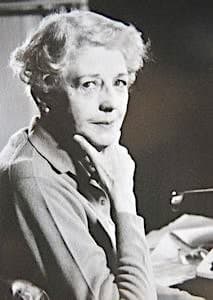
Biography coming soon.







