“Being prepared for anything is the best way to survive, no matter what happens.”
— Eli's father's core philosophy for their survival in the compound.

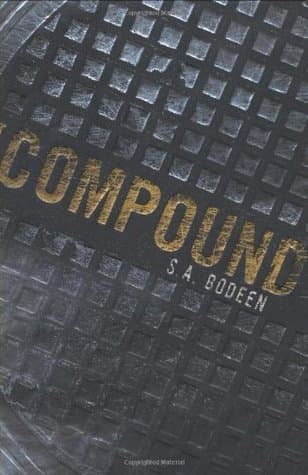
S.A. Bodeen (2008)
Genre
Thriller / Mystery / Science Fiction / Young Adult
Reading Time
240 min
Key Themes
See below
Sign in to track this book
Trapped in an underground bunker built by his paranoid father, a restless teenager begins to question the true dangers of the outside world versus the suffocating secrets lurking within his family's 'safe' haven.
Eli, his parents, and his younger sisters, Eddy and Terese, have lived in a lavish underground compound for six years. They believe a nuclear attack devastated the outside world. His father, Rex, a wealthy businessman, built the compound as a safe place. Despite the advanced technology, gourmet food, and many amenities, Eli's life is a boring routine of homeschooling, exercise, and family meals. He often feels restless and questions the strict rules and his father's constant control. His mother, Clea, struggles with depression, while Eddy and Terese seem more used to their confined life. Eli often thinks about his older brother, Lucas, and twin sister, Cara, who were left behind during the hurried rush to enter the compound. This memory bothers him and his parents.
While exploring a rarely used part of the compound, Eli finds a hidden room behind a false wall. Inside, he finds clothes, toys, and other personal items that clearly belonged to young children. However, there are no other children living in the compound besides Eddy and Terese. This discovery deeply upsets Eli, as it contradicts his father's story that only their immediate family made it to the compound. He confronts his father, who says the items are emergency supplies or things left by construction workers. Eli is not convinced, and the incident makes him more suspicious that his father is hiding something important about their past and why they are confined.
The compound's carefully planned food supply starts to run very low, much earlier than expected. Rex introduces highly nutritious, but unappetizing, protein blocks as their main food source, saying they are necessary for survival. The family's diet relies more and more on these blocks, and Eli notices his younger sisters, Eddy and Terese, becoming slow and strangely obedient. His mother's depression gets worse, and she often refuses to eat. Eli continues to question the sudden food shortage and the mysterious origin of the protein blocks. He senses a deeper, unsettling truth behind his father's explanations and the quick decline in the family's health and mood.
Driven by curiosity and a growing sense of dread, Eli secretly analyzes a sample of the protein blocks using the compound's advanced laboratory equipment. The results are horrifying: the blocks contain human protein and DNA. A deeper investigation using old family photos and genetic markers confirms his worst fears: the protein blocks are made from the remains of his older brother, Lucas, and twin sister, Cara, who were supposedly left behind. Eli realizes his father did not just leave them; he murdered them to make sure the compound's food supply would last longer for the remaining family members. This discovery shatters Eli's world and shows his father as a monstrous figure.
Eli confronts his father with the evidence, accusing him of the unthinkable. At first, Rex denies everything, but with Eli's persistent questioning and the clear scientific proof, he finally breaks down. Rex confesses to the horrific act, explaining that he faced an impossible choice when the compound's food supply was miscalculated and was not enough for all six of them for the planned time. He believed that sacrificing Lucas and Cara was the only way to ensure the survival of the rest of the family, framing it as a desperate act of love and protection. His confession is chillingly rational, without real remorse, further solidifying Eli's horror and disgust.
Eli also learns his mother, Clea, knew about Rex's monstrous act. She had helped keep the secret, her depression a direct result of the guilt and horror. She tells Eli that Rex gave her a sedative, and when she woke up, Lucas and Cara were gone, and Rex explained his 'solution.' Clea also shares an important piece of information: she heard Rex talking on an old, shortwave radio with someone on the 'outside' several years ago. This suggests the nuclear attack might have been a lie, or at least that the outside world is not as devastated as Rex led them to believe. This gives Eli a flicker of hope and a desire to escape.
Wanting justice and freedom, Eli starts to plan an escape. He tries to get his mother and Terese to join him, but his mother is too sad, and Terese is too young and obedient due to the protein blocks. He tries to tell Eddy, hoping she will join him. However, Eddy, seemingly brainwashed by her father and the continuous eating of the protein blocks, remains fiercely loyal to Rex. She sees her father as a hero who protected them and views Eli's accusations as a betrayal. Eddy's strong support for Rex makes it hard for Eli to escape, making her an unwitting helper in her father's deception.
As Eli puts together the pieces of truth, he realizes the 'nuclear attack' was fake. His father, Rex, a brilliant but power-obsessed scientist, had planned the entire scenario. The compound was not built as a safe place from a devastated world but as a controlled environment for Rex's twisted experiment in human survival and family loyalty, a display of his own genius and power. He had isolated his family, manipulated them with lies, and committed awful acts, all to maintain his absolute authority and prove his ideas about human nature under pressure. The outside world is likely perfectly normal, making their six years of confinement a cruel, elaborate prison.
Eli starts a final, desperate confrontation with Rex, planning to disable the compound's systems and open the blast doors. A violent fight happens between father and son. Rex, still believing he is acting for his family's good, fights hard to keep control. During the fight, Eli manages to get to the compound's central computer. He starts a sequence that begins to disable the security systems and open the compound to the outside world. The tension grows as the compound's alarms blare, and the family falls into chaos, with Eddy still trying to protect her father and Clea paralyzed by fear and despair.
As the blast doors finally start to open, Eli, grabbing a weakened Terese, runs for the exit. His mother, Clea, stays behind, unable to overcome her sadness and years of conditioning, or perhaps choosing to stay with Rex, who is incapacitated or trapped. Eddy, loyal until the end, stays with her father. Eli and Terese emerge into the sunlight, finding a world that is vibrant and alive, not the wasteland Rex had described. They are free, but traumatized and alone, facing the hard task of explaining their six-year disappearance and the horrific truth of their confinement to a world that believes they vanished in the supposed nuclear catastrophe. Their future is uncertain, but they are finally free from Rex's compound.
The Protagonist
Eli transforms from a restless, questioning teenager into a determined truth-seeker who ultimately liberates himself and his sister from his father's psychological prison.
The Antagonist
Rex remains steadfast in his delusional conviction that his actions were righteous, even as his lies unravel and his family turns against him, never truly acknowledging his monstrosity.
The Supporting
Clea's arc is one of sustained despair and emotional paralysis; she is unable to overcome her trauma and complicity to escape.
The Supporting
Eddy remains steadfastly loyal to her father, unable to see through his deception, ultimately choosing to stay with him.
The Supporting
Terese remains a vulnerable, passive character throughout the story, her survival dependent on Eli's actions.
The Mentioned
Lucas's arc is entirely in the past, serving as a tragic catalyst for Eli's discoveries and motivations.
The Mentioned
Cara's arc is entirely in the past, serving as a tragic catalyst for Eli's discoveries and motivations.
The book's entire premise relies on Rex's elaborate deception—creating a fake nuclear apocalypse and imprisoning his family. He manipulates their view of reality, their access to information, and even their food with the protein blocks. This theme explores how easily people can be controlled when isolated and given a carefully built story. It also shows the psychological toll on victims, especially Clea's depression and Eddy's strong loyalty to her father. Eli's journey is mainly about uncovering these lies.
“He knew it for sure now. His father was a monster. And his mother had been complicit.”
This theme is key to Rex's reason for his terrible actions. He argues that killing Lucas and Cara was necessary for the survival of the remaining family members, presenting it as an impossible choice. The book makes the reader consider the ethical limits of survival: at what point do acts done for survival become unforgivable crimes? Eli's disgust and his mother's guilt show that for some, the cost of 'survival' can be too high, sacrificing humanity and morals in the process.
“I had to make a choice, Eli. It was them or us. And I chose us.”
Eli and his sisters spent their childhood in an artificial reality built by their father. Eli constantly questions this reality, trying to understand who he is in relation to the 'outside' world he barely remembers. Finding the protein blocks and the truth about the 'nuclear attack' shatters his perceived identity and the reality he has known. The book explores how a fabricated environment deeply affects a developing sense of self and the struggle to regain one's true identity when the basic truths of one's life are revealed as lies.
“Six years. Six years of lies. Six years of thinking the world was dead, when it was just me that was dead inside.”
The story shows a twisted and terrifying view of family. Rex's actions redefine paternal protection, turning it into absolute control and murder. While Eli's love for his younger sisters, Terese and even Eddy, drives his actions, the family unit is broken by secrets, fear, and betrayal. The book questions if a family can truly exist when built on such horrible foundations, exploring the breaking point of family ties under extreme psychological pressure and the tragic split between those who accept the lies and those who seek the truth.
“He was supposed to protect us. Not feed us to each other.”
The physical confinement within the compound contrasts sharply with the psychological desire for freedom. While the compound offers luxurious amenities, it is a prison. Eli's increasing restlessness and his eventual escape plan come from a deep longing for physical and intellectual liberty. The theme explores the idea that true freedom is not just the absence of walls, but the ability to know the truth, make one's own choices, and connect with a genuine reality, even if that reality is dangerous or uncertain. Emerging into the 'outside' world symbolizes this hard-won freedom.
“He looked up at the sky, a vast, open blue that stretched forever. It was real. It was all real.”
A luxurious underground bunker that serves as both sanctuary and prison.
The compound is more than just a setting; it's a central plot device. Initially presented as a safe haven from a devastated world, it gradually reveals itself to be a meticulously controlled prison designed by Rex. Its advanced technology and self-sufficiency enable Rex's elaborate deception, while its isolation fosters the family's psychological deterioration. The compound's hidden rooms and systems become crucial to Eli's investigations and eventual escape, symbolizing Rex's absolute control over every aspect of his family's life and perceived reality.
A mysterious food source that becomes the horrifying key to Rex's secret.
The protein blocks serve as a powerful symbol and a critical plot device. Initially introduced as a necessary, if unappetizing, survival food, they become the tangible evidence of Rex's most heinous act. Eli's scientific analysis of the blocks directly leads to the revelation of Lucas and Cara's murder, making them the ultimate proof of his father's depravity. They also represent Rex's complete control over his family's bodies and minds, as the blocks contribute to the children's lethargy and compliance, further highlighting the insidious nature of his manipulation.
The central lie that justifies the family's confinement.
This is the foundational deception upon which the entire plot is built. Rex's lie about a nuclear attack not only explains their need for the compound but also isolates them from any outside information that could expose his truth. It creates a powerful initial premise that is slowly unraveled by Eli's discoveries, revealing the extent of Rex's megalomania. The eventual revelation that the outside world is normal completely recontextualizes the entire story, transforming it from a post-apocalyptic survival tale into a psychological thriller about a deranged patriarch.
A secret space containing objects that spark Eli's suspicions.
The hidden room, containing children's items that don't belong to Eddy or Terese, acts as a classic mystery device. It's the initial clue that pushes Eli beyond mere restlessness into active investigation. This discovery directly contradicts Rex's narrative and fuels Eli's growing suspicion, setting him on the path to uncover the deeper, more disturbing truths about his family's past and present. It represents the cracks in Rex's carefully constructed facade, allowing Eli to glimpse the reality beneath the deception.
“Being prepared for anything is the best way to survive, no matter what happens.”
— Eli's father's core philosophy for their survival in the compound.
“The world outside was dead. That's what Dad said. A nuclear holocaust. Everyone gone. Only us.”
— Eli's initial understanding of the world outside the compound.
“I was born in the Compound. My whole life was here. I didn't know anything else.”
— Eli reflecting on his limited experience of the world.
“Sometimes, the truth is harder to live with than a lie.”
— A realization Eli has as the secrets of the compound unravel.
“We were supposed to be safe. Protected. But from what? And who was doing the protecting?”
— Eli questioning the true nature of their 'safety' within the compound.
“The greatest prison isn't made of steel and concrete, but of the mind.”
— An implicit theme throughout Eli's struggle for understanding and freedom.
“Family. It's supposed to mean something. More than just blood.”
— Eli grappling with his family's actions and the meaning of loyalty.
“There were too many secrets. Too many things that didn't add up.”
— Eli's growing suspicion about his father's story and their situation.
“Hope is a dangerous thing. It can keep you alive, or it can destroy you.”
— A reflection on the double-edged nature of hope in dire circumstances.
“What if everything I believed was a lie? What then?”
— Eli's internal struggle as he begins to doubt his entire reality.
“Sometimes, the only way out is to face what you've been running from.”
— Eli's eventual decision to confront the truth about the compound.
“The silence was the loudest sound in the compound. It screamed of secrets.”
— The oppressive atmosphere of the compound, hinting at hidden truths.
“You can't save someone who doesn't want to be saved, or who doesn't know they need saving.”
— Eli's frustration with his family's acceptance of their situation.
“Survival isn't just about staying alive. It's about what you live for.”
— Eli's deeper understanding of survival beyond mere physical existence.
Ready to see how well you understood this book? Take our interactive quiz with 10 questions.

Biography coming soon.







