“All that we see or seem / Is but a dream within a dream.”
— From the poem 'A Dream Within a Dream,' reflecting on the nature of reality.

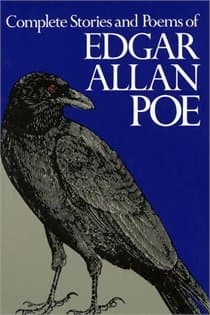
Edgar Allan Poe (1949)
Genre
Fantasy / Mystery
Reading Time
1642 min
Key Themes
See below
Sign in to track this book
This collection of Poe's tales and poems explores the darker side of human thought and imagination.
The narrator receives an urgent letter from his childhood friend, Roderick Usher, asking him to visit the remote House of Usher. Roderick suffers from a mysterious illness. When the narrator arrives, he is struck by the decaying mansion and Roderick's pale appearance. Roderick, a sensitive artist, is troubled by extreme nervousness, heightened senses, and a belief that the house itself is alive and making him sicker. His twin sister, Madeline, also has a wasting disease, making her seem almost dead. The narrator tries to cheer Roderick with art and books, but the sadness only grows.
Madeline Usher dies from her illness. Roderick fears her body might be dug up for scientific study because of her unusual disease, so he decides to bury her temporarily in a vault under the house instead of the family graveyard. The narrator helps Roderick carry Madeline's coffin. During this, the narrator notices how much the twins look alike and a slight blush on Madeline's cheeks, which he dismisses as a post-mortem change. Burying Madeline makes Roderick's fragile mind even worse; he becomes more agitated, convinced his sister's spirit is still in the house.
One night, a fierce storm hits the Usher estate. Roderick, very agitated, tells the narrator he believes he heard Madeline moving in her coffin. To calm him, the narrator reads from 'The Mad Trist' by Sir Launcelot Canning. As he reads, strange sounds from the house seem to match the story's events: a cracking, a shriek, and a clang. Roderick, in terror, confesses he has known for days that Madeline was alive and heard her struggling. The chamber door bursts open, revealing Madeline, bloody, standing in the doorway. She collapses onto Roderick, pulling him to the floor, where he dies of terror. The narrator flees as the house cracks apart and sinks into the pond.
The narrator, who claims to be sane, describes his desire to murder an old man he lives with. He acts not for money, but because of the old man's pale blue 'vulture eye,' which frightens him. The narrator insists he is sane, despite his careful planning of the murder. For seven nights, he creeps into the old man's room, shining a single light beam from a lantern onto the eye, but the eye is always closed. On the eighth night, the old man wakes and cries out. The narrator, despite the old man's fear, stays still for an hour, listening to the old man's heartbeat, which he thinks grows louder. Finally, he opens the lantern, lighting up the 'vulture eye,' and the old man screams once.
After the old man's scream, the narrator pulls him to the floor and suffocates him with the heavy bed. He then dismembers the body in the bathtub, carefully collecting all blood, and hides the remains under the floorboards of the old man's room. At 4 AM, three police officers arrive, called by a neighbor who heard the scream. The narrator, confident in his crime, invites them in, acts cheerful, and even places his chair directly over the hidden body. As they talk, the narrator hears a faint, rhythmic thumping, which grows louder until he believes it is the old man's beating heart, driving him to confess.
A scholar, deep in grief over his lost love Lenore, sits alone in his room late one December night, reading to distract himself. He hears a tapping at his door, which he thinks is a visitor. He opens the door but finds no one. The tapping then comes from his window. He opens it, and a raven flies in, landing on a bust of Pallas Athena above his door. Amused by the bird's serious look, the scholar asks its name. To his surprise, the raven replies, 'Nevermore.' Intrigued and disturbed, the scholar asks more questions about Lenore, his future, and comfort, always getting the same reply.
The narrator, a condemned prisoner of the Spanish Inquisition, wakes in total darkness after a harsh trial. He fears being buried alive and tries to explore his cell by walking its edge, finding a large, circular dungeon. He almost falls into a deep pit in the center, which he first finds by tripping, then by dropping a piece of his robe. He is given drugged water and food, causing him to sleep deeply. Waking, he finds himself tied to a wooden frame, facing up, with a sharp pendulum slowly swinging down from the ceiling, set to cut through him. Rats, attracted by nearby food, torment him.
As the pendulum descends, the narrator plans to escape. He rubs the meat he was given over his ropes, attracting rats. The rats gnaw through the ropes, freeing him just as the pendulum is about to reach his chest. He escapes the pendulum only to face a new horror: the iron walls of his cell heat up and slowly close in, pushing him toward the central pit. The walls have terrifying paintings of demons. Overwhelmed, he is about to be forced into the abyss when, at the last moment, the walls pull back, a trumpet sounds, and he is caught by a rescuing arm. General Lasalle has captured Toledo, and the Inquisition has fallen.
In a crowded Parisian street, Rue Morgue, the bodies of Madame L'Espanaye and her daughter, Mademoiselle Camille L'Espanaye, are found brutally murdered in their fourth-story apartment. The doors and windows are locked from the inside, making entry and exit seem impossible. Madame L'Espanaye's throat is cut, and she is found in the courtyard below, thrown from a window. Camille is found crammed up the chimney. Witnesses heard two voices: one harsh and guttural, the other shrill and French. The police are baffled by the lack of motive, the extreme violence, and the secure crime scene. The narrator and his friend, C. Auguste Dupin, are interested in the case.
C. Auguste Dupin, using his strong reasoning, examines the Rue Morgue crime scene. He ignores the police's focus on the locked doors, instead noting the unusual strength needed for the murders and the non-human hair found. Dupin concludes that the 'shrill' voice was not French but an unknown foreign language, and the 'guttural' voice was not human. He finds a tuft of orangutan hair and realizes the killer must have been an escaped orangutan. Dupin places an advertisement for a lost orangutan, expecting its owner to come forward, revealing the killer and the strange circumstances.
A Maltese sailor responds to Dupin's advertisement. Dupin confronts the sailor, who admits he owns a large, fierce orangutan from Borneo. The sailor explains that the orangutan, after watching him shave, escaped with a razor and copied his actions on the two women, leading to the murders. In a panic, the ape threw Madame L'Espanaye out the window and stuffed Camille up the chimney to hide her. The sailor, having seen parts of the horror from outside, was terrified and ran. Dupin explains that the orangutan's strength and agility allowed it to enter and exit through a disguised window latch the police missed, solving the baffling locked-room mystery.
When the 'Red Death' plague spreads through his land, Prince Prospero, a rich ruler, decides to escape it by retreating to a fortified abbey. He invites a thousand favored nobles to join him, sealing the gates to prevent anyone from entering or leaving. Inside, Prospero holds lavish parties, providing music, jesters, and feasts. He believes that by isolating themselves, they can avoid the plague and live in endless celebration, untouched by the suffering outside. The outside world suffers, but inside, the masquerade continues.
Prince Prospero hosts a grand masked ball in his abbey, held in seven distinct chambers, each decorated and lit in a single, bright color: blue, purple, green, orange, white, violet, and finally, black. The last chamber, draped in black velvet and lit by a blood-red light through stained-glass windows, is unsettling, and few dare to enter. A large ebony clock in this room strikes each hour with a deep chime that silences everyone, causing a brief, uneasy pause before the party resumes. This black and red room and the clock serve as a subtle reminder of death amidst the forced celebration.
As the masked ball peaks, the revelers gasp in horror. A new, uninvited guest appears, whose costume is so grotesque it outdoes all others. The figure is tall and thin, shrouded in grave-clothes, with a mask like a dead face. Most terrifying, the costume is splattered with the scarlet stains of the Red Death. Prince Prospero, angry at this macabre intrusion, demands to know the intruder's identity. He orders his courtiers to seize the figure, but they are too scared to obey, letting the spectral guest slowly move through the colored chambers.
Angry at his courtiers, Prince Prospero, dagger in hand, rushes toward the mysterious figure as it enters the black and red chamber. As he reaches the figure, it turns to face him. Prospero cries out and falls dead. The terrified courtiers then rush forward and grab the masked figure, only to find, to their horror, that there is no body under the grave-shroud and mask. The Red Death itself has entered their refuge. One by one, the revelers die from the plague in the very rooms where they tried to escape it. The ebony clock stops, and the lamps go out, plunging the abbey into darkness as the Red Death takes 'illimitable dominion over all'.
The Protagonist
Roderick's mental and physical deterioration accelerates throughout the story, culminating in his death from terror at his sister's return.
The Supporting
Madeline appears to die, is entombed, and then horrifically returns to fulfill the Usher family's tragic end.
The Protagonist
The narrator's initial rationality is gradually eroded by the escalating horror, culminating in his terrified escape from the collapsing house.
The Protagonist
The narrator's meticulous planning of a perfect crime is undone by his own escalating paranoia and guilt, leading to a public confession.
The Supporting
The Old Man's presence and especially his eye trigger the narrator's murderous compulsion, leading to his demise.
The Protagonist
The scholar's initial grief is intensified by the raven's 'Nevermore', pushing him further into despair and a state of permanent sorrow.
The Protagonist
Dupin consistently uses his superior intellect to solve crimes that stump professional authorities, demonstrating the power of pure reason.
The Protagonist
Prospero attempts to escape death through isolation and revelry, only to be directly confronted and ultimately consumed by it.
The Antagonist
The Red Death initially ravages the land, then infiltrates Prospero's sanctuary, ultimately claiming every life within.
Poe often shows how easily the human mind can fall into madness, obsession, and fear. In 'The Fall of the House of Usher', Roderick's sensitivity and belief in the house's life drive him mad, and the narrator's own sanity begins to unravel. The narrator of 'The Tell-Tale Heart' claims sanity just before his mind creates sounds and he confesses. Similarly, the scholar in 'The Raven' is pushed to despair by grief and the bird's 'Nevermore,' unable to find peace.
“I heard all things in the heaven and in the earth. I heard many things in hell. How, then, am I mad?”
Death is a constant and often personified presence in Poe's work, often linked with physical and spiritual decay. 'The Fall of the House of Usher' shows this with the crumbling mansion and the decaying Usher family line, reflecting a shared, fatal illness. Madeline's seeming death and return highlight the horror of dying and the line between life and death. In 'The Masque of the Red Death', the plague itself appears, claiming Prince Prospero and his courtiers, showing that no wealth or isolation can escape death. The 'blood-red' marks of the Red Death are a clear reminder of life's short nature.
“And Darkness and Decay and the Red Death held illimitable dominion over all.”
Poe often explores how inner guilt, rather than external justice, causes his characters' downfall. In 'The Tell-Tale Heart', the meticulous murderer is not caught by police but driven to confess by his own imagined conscience, heard as the old man's heart. This inner torment is stronger than any outside threat. Similarly, Roderick Usher's deep anxiety and fears in 'The Fall of the House of Usher' can be seen as guilt or dread over his part in Madeline's early burial, which contributes to his death by terror when she returns. The psychological weight of wrong actions is a powerful, destructive force.
“I felt that I must scream or die!—and now—again!—hark! louder! louder! louder! louder!”
Poe often blurs the lines between mental breakdown and real supernatural events, making the reader question what is true. In 'The Fall of the House of Usher', the house's life and Madeline's return could be supernatural or the result of Roderick's and the narrator's troubled minds. 'The Raven' features a talking bird that answers questions with one word, which could be a supernatural being or a symbol of the scholar's grief. Even 'The Murders in the Rue Morgue', which has a logical explanation, initially feels inexplicable, challenging understanding until Dupin's deductions.
“And the Raven, never flitting, still is sitting, still is sitting / On the pallid bust of Pallas just above my chamber door.”
Many of Poe's stories contrast cold logic with strong emotion, instinct, or irrationality. C. Auguste Dupin in 'The Murders in the Rue Morgue' represents reason, using 'ratiocination' to solve crimes that confuse the emotional police. His methodical approach differs sharply from the primal violence of the orangutan. Conversely, characters like the narrator in 'The Tell-Tale Heart' are driven by irrational impulses (the 'vulture eye') that defy logic, leading to their ruin. Even in 'The Pit and the Pendulum', the narrator's survival relies on desperate, animalistic cunning to escape the pendulum, not pure intellect.
“It is by no means an axiom that the more profound the truth, the more difficult it is of apprehension.”
A narrator whose credibility is compromised, often due to madness, obsession, or a skewed perspective.
Poe frequently employs unreliable narrators to heighten suspense and psychological horror. The most prominent example is the narrator of 'The Tell-Tale Heart', who repeatedly insists on his sanity while detailing his meticulous, irrational murder and subsequent auditory hallucinations. This forces the reader to question the narrative and delve deeper into the character's disturbed mind. The narrator in 'The Fall of the House of Usher', while initially rational, becomes increasingly affected by the oppressive atmosphere, making his account of the supernatural events potentially colored by his own psychological distress, leaving ambiguity about what is real and what is imagined.
The use of decaying, isolated, and oppressive environments to create a mood of dread and foreboding.
Poe masterfully uses Gothic settings to establish a pervasive sense of gloom and impending doom. The House of Usher, with its crumbling façade, dark tarn, and oppressive interior, is almost a character itself, reflecting and influencing the decay of its inhabitants. The dungeon in 'The Pit and the Pendulum', with its absolute darkness, rats, and torturous devices, creates an atmosphere of claustrophobic terror. These settings are not just backdrops but integral to the psychological impact of the stories, mirroring the internal states of the characters and contributing to their ultimate downfall or torment. The atmosphere often becomes a tangible force of evil.
The use of objects, characters, or events to represent deeper meanings and abstract ideas.
Symbolism is central to Poe's narratives. In 'The Fall of the House of Usher', the decaying house symbolizes the Usher family's decline and ultimate destruction, while the fissure in its façade foreshadows its collapse. The 'vulture eye' in 'The Tell-Tale Heart' symbolizes the narrator's irrational fear and obsession, representing perceived evil that he feels compelled to eradicate. The ebony clock in 'The Masque of the Red Death' symbolizes the relentless march of time and the inevitability of death, its chimes serving as a constant reminder of mortality amidst the revelry. The Red Death itself is a potent symbol of inescapable mortality.
Stories told from the perspective of a character within the narrative, often revealing their subjective experiences.
Poe primarily utilizes first-person narration, which immerses the reader directly into the character's subjective experience and psychological state. This technique is crucial for building suspense and exploring the depths of human madness and fear. In 'The Tell-Tale Heart', the reader is privy to the murderer's warped logic and escalating paranoia. In 'The Pit and the Pendulum', the terror of the Inquisition is experienced directly through the prisoner's sensory perceptions and thoughts. This intimate perspective allows Poe to delve into the psychological nuances of his characters, making their fears and obsessions feel intensely personal and immediate to the reader.
Hints or clues about future events, building suspense and a sense of impending doom.
Poe frequently employs foreshadowing to create an atmosphere of dread and to prepare the reader for shocking developments. In 'The Fall of the House of Usher', the narrator's initial description of the 'fissure' in the house's façade subtly hints at its eventual collapse. Roderick's premonitions and his conviction that the house possesses sentience foreshadow the supernatural events and his own demise. In 'The Masque of the Red Death', the presence of the ebony clock and the unsettling black and red chamber implicitly warn of the inevitable arrival of death, despite Prospero's attempts to defy it. These subtle clues heighten the tension and make the eventual outcomes feel both shocking and predestined.
“All that we see or seem / Is but a dream within a dream.”
— From the poem 'A Dream Within a Dream,' reflecting on the nature of reality.
“Deep into that darkness peering, long I stood there wondering, fearing, / Doubting, dreaming dreams no mortal ever dared to dream before.”
— The narrator of 'The Raven' contemplating his lost Lenore, peering into the darkness of his chamber.
“Once upon a midnight dreary, while I pondered, weak and weary, / Over many a quaint and curious volume of forgotten lore—”
— The opening lines of 'The Raven,' setting the scene for the narrator's encounter with the bird.
“I was a child, and she was a child, / In this kingdom by the sea, / But we loved with a love that was more than love— / I and my Annabel Lee;”
— From the poem 'Annabel Lee,' describing the pure, youthful love between the narrator and Annabel Lee.
“The boundaries which divide Life and Death are at best shadowy and vague. Who shall say where the one ends, and where the other begins?”
— From the short story 'The Premature Burial,' contemplating the uncertain line between life and death.
“I had walled the monster up in the tomb!”
— The chilling realization of the narrator in 'The Cask of Amontillado' after successfully entombing Fortunato.
“I became insane, with long intervals of horrible sanity.”
— From the short story 'Berenice,' describing the narrator's deteriorating mental state and obsession.
“The true genius often comes to light in the most unexpected places.”
— A general observation on intellect and discovery, often reflected in his detective stories like 'The Murders in the Rue Morgue.'
“I felt my heart stop—then it beat again with a convulsive throb.”
— A moment of intense fear and physical reaction, common in his suspenseful tales, such as 'The Tell-Tale Heart.'
“From childhood's hour I have not been / As others were—I have not seen / As others saw—I could not bring / My passions from a common spring.”
— From the poem 'Alone,' reflecting on the narrator's sense of being different and isolated from others.
“The thousand injuries of Fortunato I had borne as I best could, but when he ventured upon insult I vowed revenge.”
— The opening lines of 'The Cask of Amontillado,' explaining the narrator Montresor's motive for revenge.
“I heard all things in the heaven and in the earth. I heard many things in hell. How, then, am I mad?”
— The narrator of 'The Tell-Tale Heart' attempting to justify his sanity despite his horrific actions.
“There are chords in the hearts of the most reckless which cannot be touched without emotion.”
— From 'The Masque of the Red Death,' suggesting that even the most carefree individuals have hidden vulnerabilities.
“The greatest astonishment of all is the astonishment at the absence of astonishment.”
— A philosophical observation, often found implicitly or explicitly in his works, highlighting human paradoxes.
Ready to see how well you understood this book? Take our interactive quiz with 10 questions.
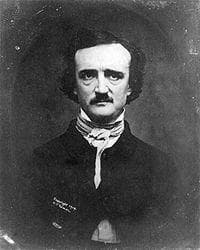
Edgar Allan Poe was an American writer, poet, editor, and literary critic who is best known for his poetry and short stories, particularly his tales of mystery and the macabre. He is widely regarded as a central figure of Romanticism in the United States, and of American literature. He was one of the country's earliest practitioners of the short story, and is considered the inventor of the detective fiction genre, as well as a significant contributor to the emerging genre of science fiction. He is the first well-known American writer to earn a living through writing alone, resulting in a financially difficult life and career.







