“It's been my experience that you can nearly always enjoy things if you make up your mind firmly that you will.”
— Anne reflecting on her new life at Green Gables.

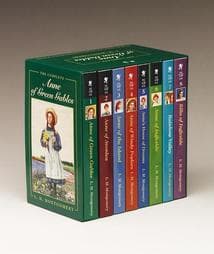
L.M. Montgomery (1908)
Genre
Children's / Historical Fiction / Young Adult / Romance
Reading Time
2000 min (approx. 33 hours)
Key Themes
See below
Sign in to track this book
Follow Anne Shirley, a spirited orphan, as her vivid imagination and loving heart transform Green Gables and the people of Prince Edward Island, from her arrival to building her own family.
Matthew Cuthbert, a shy farmer from Green Gables in Avonlea, Prince Edward Island, goes to Bright River station to pick up an orphan boy he and his sister, Marilla, decided to adopt. He finds a talkative, red-haired, and imaginative eleven-year-old girl named Anne Shirley. Matthew is immediately charmed by Anne's imagination and her descriptions of the scenery. When they arrive at Green Gables, Marilla is surprised, having asked for a boy to help with farm chores. She initially insists Anne must be sent back, seeing her as impractical and overly emotional. Matthew quietly protests, and Anne pleads to stay, revealing her lonely past in various orphanages and foster homes.
Despite Marilla's initial reluctance, Anne's unique personality slowly wins her over. Anne's imagination often leads to comical problems, such as accidentally dyeing her hair green, getting Diana Barry drunk on what she thought was raspberry cordial, and breaking her slate over Gilbert Blythe's head for calling her 'carrots.' Her passionate spirit and tendency to speak her mind also get her into trouble with strict figures like Mrs. Rachel Lynde. Through these incidents, Anne learns lessons about responsibility, truth, and the results of her imagination, all while forming a deep, though sometimes difficult, bond with Marilla.
Anne quickly forms a close friendship with Diana Barry, a neighbor, which becomes a core part of her life in Avonlea. Their bond is tested but strengthened by various adventures and misunderstandings. At the same time, Anne develops a strong academic rivalry with Gilbert Blythe, the smartest boy in her class. After he teases her about her red hair, Anne refuses to speak to him for years, despite his attempts to apologize and befriend her. This rivalry drives both their academic successes, as they constantly try to outperform each other. It culminates in their joint success in the Queen's Academy entrance examinations.
Anne and Gilbert both do well at Queen's Academy, competing for scholarships. Anne wins the Avery Scholarship, securing her path to Redmond College. However, tragedy strikes when Matthew Cuthbert dies of heart failure after learning of the loss of his and Marilla's savings in a bank failure. Faced with Marilla's failing eyesight and the possible loss of Green Gables, Anne selflessly gives up her scholarship and her dream of attending Redmond to stay and help Marilla. She accepts a teaching position at the Avonlea school, allowing them to keep their home. This sacrifice marks a significant step in Anne's maturity.
As a teacher at Avonlea School, Anne uses her imaginative methods, earning the affection of most of her students, though she faces challenges with some, like the mischievous Pye children. She continues to live at Green Gables with Marilla, who eventually adopts twins, Davy and Dora Keith, after their mother dies. Gilbert Blythe, now also a teacher, continues to seek Anne's friendship. He eventually offers her his teaching position in Avonlea so she can stay near Marilla, while he takes a less desirable post. This gesture finally softens Anne's long-held resentment, and they become close friends, setting the stage for a deeper relationship.
Anne finally attends Redmond College in Kingsport, Nova Scotia, accompanied by Gilbert, Diana Barry's sister Jane Andrews, and her old schoolmate Priscilla Grant. They rent a charming house called Patty's Place. Anne thrives academically and socially, forming new friendships, especially with Philippa Gordon. She receives two marriage proposals: one from the wealthy, handsome Royal Gardner, and another from the more mature and intellectual Mr. J.A. Harrison. Anne struggles with her feelings, at first believing she loves Royal, but she ultimately realizes she does not, turning down both proposals as she considers her true desires and her evolving relationship with Gilbert.
After graduating from Redmond, Anne returns to Green Gables. Gilbert Blythe falls seriously ill with typhoid fever. During this time, Anne is consumed with worry and finally recognizes the depth of her feelings for him, realizing she truly loves him and cannot imagine life without him. When Gilbert recovers, he proposes to Anne, and she joyfully accepts. Their engagement is the culmination of their long friendship and rivalry, solidifying their shared future and fulfilling the hopes of many who had observed their bond.
Anne and Gilbert marry and move to their first home, a small, charming house by the sea in Glen St. Mary, Four Winds Harbor, which Anne names 'The House of Dreams.' Here, Anne befriends their neighbors: Captain Jim, the lighthouse keeper and a teller of sea tales; Miss Cornelia Bryant, a sharp-tongued but kind spinster; and Leslie Moore, a beautiful, tragic young woman trapped in a marriage to a man who suffered a brain injury. Anne's compassion and friendship help Leslie find happiness and independence. Anne herself experiences the joys and sorrows of early married life, including the birth of her first child, Joyce, who tragically dies shortly after birth.
Anne and Gilbert eventually move to Ingleside, a larger house in Glen St. Mary, to accommodate their growing family. They have six children: Jem, Walter, Nan, Di, Shirley, and Rilla. Anne embraces motherhood, navigating the joys, challenges, and humor of raising a large, spirited family. The house is filled with the children's antics, imaginative games, and occasional sibling squabbles. Anne's life at Ingleside shows her lasting love for her family and her ability to create a warm, nurturing home, even as she sometimes longs for moments of quiet reflection amid the chaos.
The Blythe children, especially Jem, Walter, Nan, and Di, befriend the lonely children of the new Presbyterian minister, John Meredith, a kind but absent-minded widower. The Meredith children — Jerry, Faith, Una, and Carl — find comfort and adventure in the Blythes' company, playing in the secluded 'Rainbow Valley.' This period of childhood innocence and joy is overshadowed by the growing threat of World War I. Walter Blythe, a sensitive and poetic young man, grapples with the morality of war and the expectation to enlist, hinting at the profound impact the conflict will have on the next generation.
The final book focuses on Anne's youngest daughter, Marilla 'Rilla' Blythe, as she changes from a frivolous teenager to a mature young woman during World War I. Rilla, initially concerned with dances and social events, is deeply changed by the war. Her brothers, Jem and Walter, and her beloved Jims, enlist. Rilla takes on the responsibility of caring for a war orphan, Jims, a baby left on their doorstep, which matures her significantly. The novel shows the home front's anxieties, sacrifices, and ultimate grief, ending with the tragic death of Walter Blythe, and Rilla's quiet strength and lasting hope amid the devastation.
The Protagonist
Anne transforms from a lonely, imaginative orphan into a beloved wife, mother, and respected member of her community, learning to temper her impulsiveness with wisdom and responsibility.
The Supporting
Marilla learns to open her heart and express affection, softened by Anne's presence and finding joy in motherhood and family.
The Supporting
Matthew remains a constant source of quiet love and support, his impact felt most deeply in his unwavering acceptance of Anne.
The Supporting/Love Interest
Gilbert matures from a teasing schoolboy into a respected doctor and loving husband and father, his unwavering devotion to Anne eventually rewarded.
The Supporting
Diana remains a loyal and supportive friend to Anne, embracing a traditional married life and motherhood.
The Supporting
Mrs. Lynde softens over time, becoming a cherished friend and source of wisdom, her critical nature tempered by affection.
The Supporting
Davy grows from a rambunctious boy into a more responsible young man, always retaining his lively spirit.
The Supporting
Walter transforms from a gentle poet into a reluctant but brave soldier, ultimately sacrificing his life in World War I, embodying the profound cost of war.
The Supporting
Rilla evolves from a self-absorbed teenager into a strong, compassionate woman through the crucible of war and the responsibility of caring for an orphan.
Anne's imagination is a central theme throughout the series. It allows her to turn ordinary realities into beautiful 'realms of fancy,' offering comfort during her lonely childhood and enriching her adult life. From naming places like the 'White Way of Delight' and 'Lake of Shining Waters' to envisioning her future, Anne's imagination is her most defining trait. It causes some of her early troubles (like dyeing her hair green) but is also her greatest strength, helping her connect with others, find beauty in everyday life, and shape her own destiny. This theme suggests that an imaginative spirit is essential for a rich and meaningful life.
“Isn't it splendid to think of all the things there are to find out about? It just makes me feel glad to be alive--it's such an interesting world. It wouldn't be half so interesting if we knew all about everything, would it? There'd be no scope for imagination then, would there?”
Having spent her early life as an unwanted orphan, Anne's deepest longing is for a true home and a sense of belonging. Green Gables, initially a mistake, becomes the anchor of her existence. The series shows how Anne creates this sense of home, not just as a physical place, but as a haven of love, family, and shared history. From her initial struggle to be accepted by Marilla to building her own family at Ingleside, the narrative consistently emphasizes the human need for a place where one is truly loved and accepted, and the effort required to create such a sanctuary.
“I've always heard that it's better to be an old maid than a new one, and I'm sure I'm glad I'm not a new one. I think it's splendid to be an old maid, with a home of your own and nothing to worry about.”
The entire series follows Anne's journey from a temperamental, impulsive child to a wise, compassionate woman and mother. Each book marks a new stage in her development, from learning social graces and responsibility in Avonlea, to intellectual growth in college, to embracing love and motherhood. Anne learns to balance her fiery spirit with patience, to understand complex relationships, and to navigate personal loss and societal challenges, such as war. Her story shows the transformative power of experience, education, and love in shaping a person's character and understanding of the world.
“It's been my experience that you can nearly always enjoy things if you make up your mind firmly that you will.”
Relationships are at the heart of the Anne of Green Gables series. Anne's close friendship with Diana Barry is a bond of unwavering loyalty and affection, setting a pattern for her other deep connections. Her complex relationship with Gilbert Blythe, changing from academic rivalry to lasting love, is a central romantic arc, showing the slow growth of true affection built on mutual respect and shared experiences. The series also explores the family love Anne finds with Matthew and Marilla, and later, the deep love she shares with her own children. These relationships show how love, in its various forms, sustains, challenges, and enriches life.
“It's not what the world holds for you, it's what you bring to it.”
Prince Edward Island is more than just a setting; it is a character itself, deeply tied to Anne's identity and imagination. Montgomery's lyrical descriptions of the island's landscapes – the 'Lake of Shining Waters,' the 'White Way of Delight,' the 'Dryad's Bubble' – reflect Anne's perception of beauty and her deep connection to nature. The changing seasons mirror Anne's own growth and the cycles of life and death. This theme emphasizes the restorative and inspiring power of the natural world, and how a deep appreciation for one's environment can shape one's inner world and sense of belonging.
“Dear old world,' she murmured, 'you are very lovely, and I am glad to be alive in you.'”
Anne's unique term for a soulmate-like connection based on shared imagination and understanding.
This device highlights Anne's longing for deep connection and underscores the importance of emotional and intellectual compatibility in her relationships. It's how she identifies Diana Barry and, eventually, Gilbert Blythe. It serves to emphasize Anne's imaginative nature and her need for others who can appreciate her unique perspective. The search for a kindred spirit drives much of Anne's early interactions and defines her most cherished bonds, contrasting with more superficial acquaintances.
Situations where the audience knows more than the characters, or characters misinterpret events.
This device often provides comedic relief and drives plot forward, especially in Anne's early years. Examples include Anne accidentally getting Diana drunk on currant wine, thinking it's raspberry cordial, or Marilla's constant misinterpretations of Anne's imaginative stories as deliberate lies. It highlights Anne's innocence and vivid imagination, and Marilla's practical, literal mind. These misunderstandings also create tension and opportunities for characters to learn about each other, ultimately deepening their bonds as they navigate and resolve the confusion.
The inclusion of letters and journal entries, particularly in later books, to advance plot or reveal inner thoughts.
While not a primary narrative mode, letters and journal entries, especially in 'Anne of Windy Poplars' and 'Anne's House of Dreams,' serve to bridge gaps in the narrative, allowing Anne to share her experiences and reflections with Gilbert or her friends while they are apart. This device provides intimate insight into Anne's thoughts and feelings, her observations of new characters, and her personal growth without requiring direct dialogue or third-person narration for every event. It also adds a layer of authenticity and personal reflection to the story.
The narrative structure following a protagonist's journey from childhood to adulthood.
The entire series is a classic example of a coming-of-age story, or *Bildungsroman*. It meticulously traces Anne's physical, emotional, and intellectual development from an eleven-year-old orphan to a mature woman, wife, and mother. This device allows for exploration of themes like identity formation, social integration, first love, career choices, and the responsibilities of adulthood. Each book often marks a distinct phase of this journey, with specific challenges and milestones that contribute to Anne's evolving character and understanding of the world.
“It's been my experience that you can nearly always enjoy things if you make up your mind firmly that you will.”
— Anne reflecting on her new life at Green Gables.
“Kindred spirits are not so scarce as I used to think. It's simply a question of knowing where to find them.”
— Anne realizing her connection with Diana Barry.
“Because when you are imagining, you might as well imagine something worthwhile.”
— Anne explaining her preference for elaborate daydreams.
“True love isn't about perfection; it's about two people who are willing to work for it.”
— A general theme subtly woven throughout Anne and Gilbert's relationship.
“I'm so glad I live in a world where there are Octobers.”
— Anne expressing her love for the autumn season.
“It's not what the world holds for you, it's what you bring to it.”
— Marilla's more practical wisdom contrasting with Anne's idealism.
“Oh, it's delightful to have ambitions. I'm so glad I have such a lot. And there never is an end to them, that's the best of it. Just when you attain one, you see another one shining higher up still. It makes life so interesting.”
— Anne discussing her dreams and aspirations for the future.
“There's a good deal of comfort in a good deal of sorrow.”
— Anne reflecting on the bittersweet nature of life and loss.
“The world is full of delightful things. If you don't find them, you're not looking.”
— Anne's inherent optimism and ability to find joy.
“I don't know what lies around the bend, but I'm going to believe that the best does.”
— Anne facing an uncertain future with hope.
“It is not work that kills men, it is worry. Work is healthy; worry is rust upon the blade.”
— A piece of wisdom shared, reflecting practical life philosophy.
“To be 16 and a girl and in love with the world is a wonderful thing.”
— Anne's youthful exuberance and romantic view of life.
“I read in a book once that a rose by any other name would smell as sweet, but I've never been able to believe it. I don't believe a rose *would* be as nice if it was called a thistle or a skunk cabbage.”
— Anne's strong belief in the importance of names and aesthetics.
“Isn't it nice to think that tomorrow is a new day with no mistakes in it yet?”
— Anne's hopeful outlook on fresh beginnings.
Ready to see how well you understood this book? Take our interactive quiz with 10 questions.
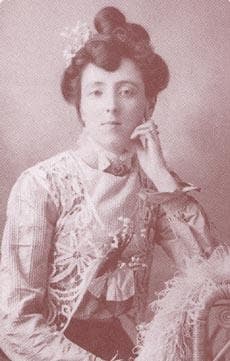
Biography coming soon.

Dan Gemeinhart
4.5

Kate O'Hearn
4.4

Jeanne Birdsall
4.4

Jen Wang
4.4

Wendelin Van Draanen
4.3

John Marsden
4.3

Chris Van Allsburg
4.3
Jennifer A. Nielsen
4.2