“It was not that she heard voices, but that she felt she was being dictated to.”
— Caroline Rose's initial experience of the novel's dictation.

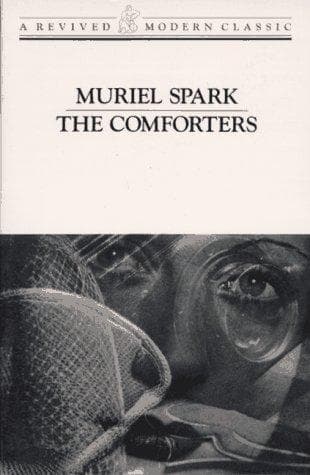
Muriel Spark (1957)
Genre
Literary Fiction
Reading Time
240 min
Key Themes
See below
Sign in to track this book
A woman's quiet life unravels into a meta-fictional nightmare as she becomes horrifyingly aware she's a character in a novel, complete with a detached narrator dissecting her every thought and the bizarre antics of her fellow literary creations.
Caroline Rose, a former Protestant who recently converted to Catholicism, attends a spiritual retreat at a convent in the New Forest. During her stay, she hears a persistent tapping sound, like a typewriter, and a narrative voice describing her actions and thoughts. This voice is detached and all-knowing, detailing everything from her inner thoughts to her physical movements. She tries to explain it as stress or imagination, but the narration's specific and accurate nature makes it impossible to ignore. She tells no one, fearing she might be thought mad, but the phenomenon grows, making her question her reality.
While Caroline deals with her crisis, her former lover, Laurence Manders, finds something strange. Laurence lives with his eccentric and seemingly senile grandmother, Louisa, who bakes her own bread. One day, Laurence finds a small packet of valuable diamonds baked into a loaf. He is confused, as Louisa is not known for wealth or crime. He suspects she might be involved in smuggling, perhaps unknowingly, or that she is not as senile as she seems. This discovery upsets his life, and he begins to investigate his grandmother's habits and acquaintances, wondering if she has a secret life.
Meanwhile, Baron Stock, a bookseller and Caroline's acquaintance, becomes convinced that a Satanic cult is operating in England. He sees various seemingly harmless events and coincidences as clues to a vast, hidden network of devil-worshippers. Baron Stock begins to record his observations and theories, sure he is about to expose a major criminal group. His obsession grows, taking over his thoughts and actions, and he starts to see signs of the cult everywhere, even in daily life. He often discusses his theories with Caroline, who finds his fervor both amusing and slightly unsettling amid her own struggles.
The persistent tapping and narrative voice lead Caroline to realize she is a character in a novel. She deduces that the tapping is a typewriter, and the voice is an author creating her story. This understanding brings terror and fascination. She tries to use her free will, to act against the narrative, but finds herself forced to follow the author's plot points. This realization is both freeing and terrifying, as it explains her strange experiences but also takes away her true control. She begins to actively listen to the narrative, trying to predict and even subtly influence the story, but ultimately feels trapped by her fictional existence.
Laurence's diamond investigation takes him deeper into his grandmother Louisa's social circle, which includes many strange people. He focuses on Mrs. Hogg, a seemingly harmless but strong woman who often visits Louisa. Laurence suspects Mrs. Hogg might be involved in the diamond smuggling, or at least knows more than she lets on. He watches their interactions, trying to find clues, and even tries to subtly question Mrs. Hogg. His efforts are met with evasiveness and veiled remarks, making him more certain that a hidden network is at play, possibly involving the elderly women in a surprisingly illicit business.
Baron Stock's hunt for the Satanic cult grows. He begins to see connections between the cult and various people in his and Caroline's social circle, including some of Louisa's acquaintances. He develops elaborate charts and theories, convinced that seemingly innocent people are secretly involved in dark rituals. His statements become more frequent and dramatic, often delivered with self-importance. While Caroline finds his theories increasingly wild, she also sees how his belief system gives him purpose and structure, even if based on delusion. His conviction, however, starts to make others around him uncomfortable.
Caroline, frustrated by her lack of control, tries to rebel against the author's narrative by making choices that seem illogical or out of character. This leads to humorous and often frustrating internal conflicts as she struggles against the invisible hand guiding her. At the same time, Louisa Manders dies under suspicious circumstances. While it first seems a natural death, details emerge suggesting foul play. Mrs. Hogg is implicated, as she was present at the time and had a history of odd behavior. Laurence's suspicions about the diamonds and Mrs. Hogg's involvement seem confirmed, leading to a police investigation.
The police begin a full investigation into Louisa Manders' death, focusing on Mrs. Hogg as the main suspect. During questioning, Mrs. Hogg, under pressure, confesses to many crimes, including a long history of petty theft, fraud, and even orchestrating the diamond smuggling, which Louisa was involved in, though sometimes unknowingly. Her confession reveals a cunning and manipulative personality hidden beneath her seemingly kind exterior. The police are surprised by the extent of her criminal activities, which had gone undetected for years, showing her ability to blend in and deceive.
Baron Stock, at first excited that the police investigation might prove his theories about a vast criminal network, is ultimately disappointed. The police dismiss his elaborate Satanist theories as unfounded, focusing only on Mrs. Hogg's confessed crimes. While his specific claims about devil-worship are debunked, the exposure of Mrs. Hogg's criminal activities does give him a sense of justification, proving that there was indeed a hidden layer of illicit activity. He then finds new avenues for his conspiratorial thinking, perhaps even starting to write his own 'exposé' of the criminal underworld.
Caroline, seeing the various plotlines resolve, accepts her fictional existence. The tapping and the narrative voice continue, but she no longer fights them with the same intensity. She understands that her story, and the stories of those around her, are being written, and she is a participant. The novel ends with the narrative voice describing Caroline's continued thoughts on her situation, suggesting that while the immediate plot points are resolved, her existential problem remains. The final lines reinforce the meta-fictional nature of the story, leaving Caroline, and the reader, to ponder the lines between fiction and reality.
The Protagonist
From confusion and rebellion against her author, Caroline moves to a state of acceptance and even collaboration with her fictional reality.
The Supporting
Laurence evolves from a somewhat passive observer of his grandmother's eccentricities to an active investigator, uncovering a hidden criminal enterprise.
The Supporting
Louisa remains largely static in terms of character, but her hidden criminal life is revealed posthumously, altering perceptions of her.
The Supporting
Baron Stock's specific Satanist theories are disproven, but his underlying need to uncover hidden truths remains, leading him to new obsessions.
The Antagonist
Mrs. Hogg's true criminal nature is slowly revealed, culminating in her confession and the exposure of her long history of illicit activities.
The Mentioned
The Author's presence is consistent, but Caroline's understanding and relationship with it evolve from fear to a form of reluctant understanding.
The Supporting
Mavis's character remains static, serving primarily as a foil to Caroline's evolving understanding of her reality.
The Supporting
Ernie's arc is tied to the unfolding of the criminal investigation, moving from curiosity to reporting on the full story.
The most prominent theme, shown through Caroline realizing she is a character in a novel. The novel constantly reminds the reader of its artificiality, blurring the lines between the created world and the 'real' world. Caroline's struggle to use free will against the narrative voice, and her eventual acceptance, makes her and the reader question reality, authorship, and agency. This theme is central to scenes where Caroline hears the tapping and narration, and when she tries to defy the author by, for instance, attempting to walk in a different direction than described, only to find herself unable to.
“She was a character in a novel. It was a terrible thought.”
Caroline's recent conversion to Catholicism provides a background for her existential crisis. Her search for spiritual truth and order is challenged by the discovery of her fictional status. The novel explores how faith (in God, in reality, in free will) can be both a comfort and a target for deep doubt. The retreat setting at the beginning, meant for spiritual reflection, ironically triggers her crisis of reality. Her Catholic faith offers a way to understand existence, but her meta-fictional dilemma pushes those boundaries, forcing her to reconcile her spiritual beliefs with her new, unsettling understanding of her own being.
“The problem was not God, but the Author.”
This theme appears in various ways: Louisa Manders's seeming senility hiding her involvement in crime, Mrs. Hogg's harmless exterior hiding a cunning criminal, and Baron Stock's elaborate theories about Satanists existing under the surface of polite society. Each character's view of reality is challenged by hidden truths. Laurence's discovery of diamonds in bread is a literal example of something unexpected hidden within the mundane. The novel suggests that under the surface of everyday life, there are often deeper, more complex, and sometimes sinister realities, mirroring Caroline's discovery of her own hidden 'author.'
“Things were seldom what they seemed, and often more complicated.”
Central to Caroline's struggle is whether she has free will or if her actions are entirely dictated by the author. Her attempts to rebel against the narrative are often useless, showing the limits of her agency. This theme is also subtly present in Laurence's efforts to control his grandmother's situation, and Baron Stock's desire to uncover and expose a hidden, controlling cult. The novel explores the human desire for autonomy and the discomfort of realizing one might be a pawn in someone else's story. It asks what freedom truly means when one's existence is predetermined.
“She tried to think a thought not her own, but it was always her own.”
An auditory and textual manifestation of the author's presence.
This is the primary meta-fictional device. The persistent 'tapping' of a typewriter and the omniscient, third-person narrative voice that Caroline hears are direct representations of the author writing the novel. This device makes the act of creation explicit within the story, directly involving the protagonist in her own making. It serves to constantly remind the reader of the novel's artificiality and Caroline's fictional status, driving her existential crisis and shaping her understanding of her reality. It's a constant, intrusive reminder of the lack of true autonomy within a created world.
Multiple, seemingly disparate storylines that reflect the central themes.
The novel employs several parallel plotlines: Caroline's meta-fictional crisis, Laurence's investigation into the diamonds, and Baron Stock's hunt for a Satanic cult. While distinct, these plots subtly echo and reinforce the novel's central themes of appearance vs. reality, hidden truths, and control. Laurence's and Baron Stock's quests, though grounded in more traditional narrative tropes, provide a counterpoint to Caroline's more abstract dilemma, showing different ways characters grapple with discovering what lies beneath the surface of their perceived reality. They demonstrate how different characters interpret and react to the 'hidden forces' in their lives.
The narrative voice that both creates and comments on the story within the story.
While the overall novel has a seemingly omniscient narrator, the specific 'narrative voice' that Caroline hears functions as a meta-narrator. This voice is not unreliable in the traditional sense of lying, but rather in its detached, almost clinical description of Caroline's thoughts and actions, often preempting them. It's 'unreliable' in that it constantly reminds Caroline (and the reader) that her reality is constructed, thus questioning the very concept of a stable, objective narrative within the fictional world. This device forces Caroline to confront the artificiality of her existence.
An object that drives the plot forward, particularly for Laurence.
The diamonds found in Louisa's bread function as a classic MacGuffin. While valuable and the catalyst for Laurence's entire investigation, their specific nature is less important than the intrigue and revelations they provoke. They serve to kickstart a more traditional crime plotline, drawing Laurence into a world of hidden criminal activity and deception. The diamonds are the tangible 'mystery' that grounds one aspect of the narrative in a more conventional genre, contrasting with Caroline's more abstract, philosophical mystery of authorship.
“It was not that she heard voices, but that she felt she was being dictated to.”
— Caroline Rose's initial experience of the novel's dictation.
“She was not suffering from a hallucination, she was participating in a novel.”
— Caroline's realization about the nature of her experience.
“The characters were not free agents, they were bound by their creator.”
— Caroline's understanding of her own lack of free will within the narrative.
“The devil, as they say, is in the details. But sometimes, the devil is the details.”
— A reflection on the nature of evil and its manifestation in everyday life.
“Every character in a novel is a figment of imagination, even if they claim to be real.”
— A meta-commentary on the nature of fictional characters.
“Life is a story, and we are all characters in it, whether we like it or not.”
— A general philosophical observation within the novel.
“The only way to escape the plot is to die, and even then, you're just a finished chapter.”
— A bleak reflection on the inevitability of narrative.
“She found the world a terribly interesting place, but also terribly difficult to believe in.”
— Caroline's conflicted view of reality and its strangeness.
“There was a distinct feeling that someone was writing her life down, word by word.”
— Caroline's persistent sensation of being a character.
“The novel was not just a story, it was an act of creation, and she was part of the created.”
— Caroline's acceptance of her role within the unfolding narrative.
“One could not simply opt out of a narrative, especially not one's own.”
— A character's realization about the inescapable nature of their personal story.
“The comforters, she thought, were those who believed they knew the plot, but were themselves merely pawns.”
— Caroline's cynical view of those who presume to understand life's mysteries.
“To be a character in a novel is to be eternally present, even when absent from the page.”
— A reflection on the enduring nature of fictional existence.
“The most disturbing thing was not the dictation itself, but the knowledge that it was leading somewhere specific.”
— Caroline's anxiety about the predetermined nature of her narrative.
Ready to see how well you understood this book? Take our interactive quiz with 10 questions.

Dame Muriel Sarah Spark was a Scottish novelist, short story writer, poet and essayist.







