“Sometimes the biggest mysteries are hidden in plain sight.”
— Jack, Marco, and Cassian begin to realize the true nature of their quest and the secrets surrounding their families.

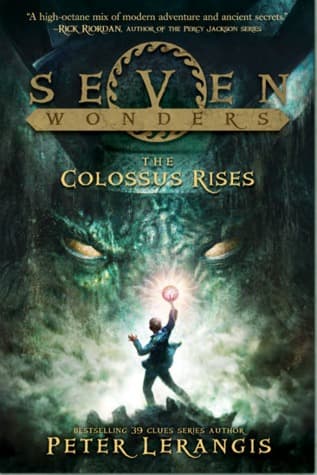
Peter Lerangis (2013)
Genre
Fantasy / Children's / Mystery / Young Adult
Reading Time
240 min
Key Themes
See below
Sign in to track this book
A dying boy named Jack must race against time to find seven ancient magical artifacts hidden within the Seven Wonders of the Ancient World to save his life.
Jack McKinley, a seemingly ordinary twelve-year-old, is diagnosed with a rare and fatal genetic disease, a fast-moving form of mitochondrial disease. His parents are devastated, and Jack is terrified. Soon after this news, a mysterious woman named Dr. Helvetia offers him a place at a unique hospital called the Karai Institute. Desperate for hope, Jack's parents agree, and he goes to the institute, which at first looks like a modern medical facility. There, he meets three other children with similar illnesses brought there for unknown reasons: Aly Black, who loves books; Cass Williams, an athlete; and Marco Ramos, who is quiet and observant.
After initial medical exams and introductions, Dr. Helvetia gathers Jack, Aly, Cass, and Marco. She reveals that the Karai Institute is not a typical hospital but an ancient organization protecting the world's wonders. She explains their diseases are not random but linked to a rare genetic marker, making them the only ones who can use powerful ancient artifacts called 'loculi.' Helvetia tells them their only chance to live is to find seven lost loculi, which, when combined, can cure them. These loculi are hidden within the Seven Wonders of the Ancient World, starting their dangerous quest.
Their first stop is the Great Pyramid of Giza in Egypt. Guided by Dr. Helvetia and an explorer named Bhegad, the children travel to the ancient site. Inside the pyramid, they find many traps and puzzles guarding the loculus. Jack's quick thinking and Aly's history knowledge help them navigate the dangerous chambers. They find the first loculus, a small, complex device, in a hidden room. However, shadowy figures known as the 'Corpus,' also seeking the loculi, attack them.
After getting the first loculus, the children and their guides must make a difficult escape from the Great Pyramid, pursued by the Corpus. They avoid capture thanks to Bhegad's skills and the children's quick thinking. During their escape, they learn the Corpus is a rival group that also knows about the loculi's power but wants them for bad reasons. The children realize how serious their situation is: they are not just on a treasure hunt but in a dangerous race against a powerful enemy who will stop at nothing to get the artifacts. The stakes for their lives and possibly the world are higher than they imagined.
Their second mission takes them to the ruins of the Hanging Gardens of Babylon. Using historical clues and Aly's research, they find a likely spot for the second loculus. The gardens, though empty, present their own challenges. They find a hidden room under the ancient terraces, but inside, a giant, monstrous serpent, a guardian of the loculus, confronts them. Cass's athletic ability and Jack's courage help distract and defeat the beast, allowing them to get the second loculus. The encounter leaves them shaken but more determined, confirming the dangers of their quest.
As the quest continues, Jack feels uneasy about Dr. Helvetia's true goals and the lack of information about their disease beyond the 'loculi cure.' He notices inconsistencies and evasiveness in her answers. Meanwhile, he experiences strange side effects from the loculi, including vivid dreams and an unusual connection to the artifacts, almost as if he can feel their presence. During a tense moment, Jack accidentally shows a strange ability — a brief, intense burst of energy or light from his hands — suggesting the loculi are not just objects but are waking up hidden powers in him and perhaps the other children.
The team travels to the ruins of the Temple of Artemis at Ephesus. As they search for the third loculus, the Corpus launches a surprise, coordinated attack, more aggressive than before. During the chaos, Bhegad, who was a trusted guide, reveals he is a double agent working for the Corpus. This betrayal breaks the children's trust and leaves them vulnerable. They fight for their lives, barely escaping with the third loculus, but the betrayal hurts them deeply, making them question everyone and strengthening their resolve to find the full truth.
Still dealing with Bhegad's betrayal, the children and Dr. Helvetia go to the site of the Mausoleum at Halicarnassus. The mood is tense, with suspicion in the air. As they move through the ancient ruins, it becomes clear that the Corpus expected them and set a trap. They are ambushed, and Marco, often quiet but observant, uses his sharp mind to find a hidden weakness in the Corpus's plan. The children must work together, using their strengths, to escape the immediate danger, get the fourth loculus, and avoid capture, realizing the Corpus is always one step ahead.
Back at a temporary safe house, Jack and Aly, increasingly suspicious, start putting together scattered information. Aly's research skills combine with Jack's growing intuition. They discover that their genetic disease is not just a random illness but a hidden trait, activated by something linked to the loculi and possibly ancient bloodlines. They also find evidence suggesting Dr. Helvetia has a much deeper, more personal connection to the loculi and the ancient groups than she has revealed, possibly having sought the loculi herself in the past for similar reasons, hinting at a cycle of this disease and quest.
Their next goal is the Colossus of Rhodes, or its underwater remains. This mission is the most dangerous yet, requiring them to dive into the sea to reach submerged ruins. They face complex underwater puzzles and strong currents. As they finally find the fifth loculus, the Corpus launches a massive attack, overpowering their defenses. In a final fight, the children are separated from Dr. Helvetia. Despite their best efforts and new abilities, Jack, Aly, Cass, and Marco are captured by the Corpus. The book ends with a dramatic cliffhanger, with the children held hostage, and the fate of the remaining loculi and their lives uncertain.
The Protagonist
Jack transforms from a scared, ordinary boy into a courageous leader, discovering hidden strengths and a mysterious connection to the ancient loculi.
The Supporting
Aly grows from a purely academic individual into an active participant in dangerous adventures, finding courage beyond books.
The Supporting
Cass learns to temper her impulsiveness with strategic thinking while remaining a formidable physical presence and loyal friend.
The Supporting
Marco slowly opens up to his friends, using his keen observational skills to contribute significantly to the team's survival and understanding.
The Supporting/Antagonist (ambiguous)
Helvetia's true motives and past are slowly revealed, shifting her role from a benevolent mentor to a figure of ambiguous morality and potential antagonist.
The Antagonist
Bhegad's initial role as a trusted ally dramatically shifts to that of a cunning betrayer, serving as a major plot twist.
The Antagonist
The Corpus remains a constant, escalating threat, their power and reach growing with each encounter.
This theme is central to the story, showing how the different skills and personalities of Jack, Aly, Cass, and Marco help each other. Jack's courage, Aly's intelligence, Cass's athleticism, and Marco's observation skills are all needed to overcome challenges. For example, in the Great Pyramid, Aly's history knowledge helps them solve puzzles, while Jack's quick thinking gets them out of trouble. Their shared illness creates a strong bond, showing how unity and support are vital for survival against overwhelming odds.
“Together, they were more than four sick kids; they were a force, each flaw and strength weaving into a tapestry of unexpected power.”
The children's terminal illnesses drive their quest. This theme explores how facing death can create a strong sense of purpose and courage. Jack, at first terrified by his illness, finds the strength to confront ancient guardians and ruthless enemies, not just for himself but for his friends. Their desperate situation forces them to overcome fears and limits, turning them from ordinary children into brave adventurers. This theme shows that even when facing the greatest fear, the will to live and protect others can lead to extraordinary acts of bravery.
“He was dying. But if he was going to die, he wasn't going to do it quietly, or alone. He was going to fight.”
The loculi are a powerful, ancient force that can both heal and destroy. The story looks at the ethics of seeking and using such power. While the children desperately need the loculi to live, the artifacts also awaken strange abilities in Jack and attract the evil Corpus, who want them for bad reasons. This theme questions if such great power can ever truly be controlled or if it always corrupts, showing the thin line between a cure and a curse. The mystery around the loculi's origin and full abilities highlights their danger.
“The loculi were not just artifacts; they were echoes of a forgotten world, humming with a power that could save or utterly destroy.”
The theme of trust and betrayal appears throughout the story, especially with Dr. Helvetia and the shocking truth about Bhegad. The children must trust adults they barely know with their lives, creating constant suspicion. Bhegad's betrayal at the Temple of Artemis breaks their early trust in their guides and forces them to become more independent and careful. This theme explores the vulnerability of trusting others, especially when risks are high, and the devastating impact when that trust is broken, making the children question everyone's motives.
“The hardest part wasn't the monsters or the traps. It was realizing that sometimes, the greatest danger came from those you thought were on your side.”
Seven ancient artifacts that drive the entire plot.
The seven loculi serve as the primary MacGuffin of the story. These mysterious ancient artifacts are the objects of desire for both the protagonists, who need them for a cure, and the antagonists (the Corpus), who seek them for unknown, potentially destructive purposes. Their existence and the need to collect all seven propel the children on their journey across the Seven Wonders of the Ancient World, providing a clear objective and structure for the plot. The individual properties of each loculus, and their combined power, remain largely unknown, adding to their allure and mystery.
The children's rapidly progressing disease creates a sense of urgency.
The children's fatal genetic disease acts as a powerful ticking clock. Dr. Helvetia emphasizes that their condition is rapidly deteriorating, giving them only a few months to live if the loculi are not found. This constant threat of impending death creates immense urgency and pressure for the protagonists, justifying their dangerous quest and preventing them from delaying or giving up. It heightens the stakes of every challenge and failure, making the search for the loculi a desperate race against time and their own mortality.
Children with a specific genetic marker are uniquely suited for the quest.
The story employs a variation of the chosen one trope. Jack, Aly, Cass, and Marco are not chosen by prophecy or destiny in the traditional sense, but by a unique genetic marker linked to their disease. This marker makes them the only ones who can interact with the loculi without harm, and potentially even awaken latent abilities. This device provides a compelling reason why these specific children, despite their youth and illness, are indispensable to the quest, setting them apart from ordinary individuals and giving their personal struggle a larger, world-saving significance.
The Seven Wonders of the Ancient World serve as primary locations and puzzle elements.
The Seven Wonders of the Ancient World are not merely backdrops but integral plot devices. Each wonder (or its ruins) houses a loculus and presents unique environmental challenges, historical puzzles, and guardians that the children must overcome. For example, the Great Pyramid requires navigation through traps, while the Hanging Gardens involve a mythical beast. This device grounds the fantastical quest in real-world historical sites, adding an educational element and a sense of grandeur, while leveraging the inherent mystery and legend associated with these iconic locations to enhance the adventure.
“Sometimes the biggest mysteries are hidden in plain sight.”
— Jack, Marco, and Cassian begin to realize the true nature of their quest and the secrets surrounding their families.
“The past isn't just history; it's a map to the future.”
— The children learn about the ancient history of the seven wonders and how it directly impacts their mission.
“Fear can be a powerful motivator, if you let it push you forward instead of hold you back.”
— One of the children struggles with their own anxieties but ultimately finds courage.
“Family isn't always about blood. Sometimes it's about who you choose to stand with.”
— The three protagonists, initially strangers, form a strong bond of friendship and loyalty.
“Every legend has a grain of truth, and sometimes, that grain can grow into an avalanche.”
— The children uncover the reality behind the myths of the Seven Wonders.
“The greatest treasures aren't always gold and jewels. Sometimes they're knowledge, or a friend.”
— As they face numerous challenges, the children value their discoveries and their companionship more than material wealth.
“Even the smallest actions can have the biggest consequences.”
— A seemingly minor decision by one of the characters leads to a significant turning point in their adventure.
“Trust is earned, not given. And once broken, it's hard to mend.”
— The children encounter characters whose loyalties are questionable, leading to moments of doubt and betrayal.
“What you seek may be closer than you think, if only you open your eyes.”
— The characters often overlook crucial clues or solutions that are right in front of them.
“The world is full of wonders, both ancient and new, if you know where to look.”
— The children embark on a global adventure, discovering the magic and history hidden across different continents.
“Sometimes, the only way forward is to face what scares you most.”
— The protagonists confront their deepest fears and the dangerous adversaries pursuing them.
“Every puzzle has a solution, but you might need to look at it from a different angle.”
— The children frequently encounter riddles and complex problems that require creative thinking to solve.
“The greatest power isn't in what you can destroy, but in what you can create and protect.”
— The children learn that their true strength lies in their ability to work together and safeguard ancient artifacts, rather than wielding destructive force.
“Even heroes need help sometimes.”
— The main characters, despite their unique abilities, frequently rely on each other and unexpected allies to overcome obstacles.
Ready to see how well you understood this book? Take our interactive quiz with 10 questions.
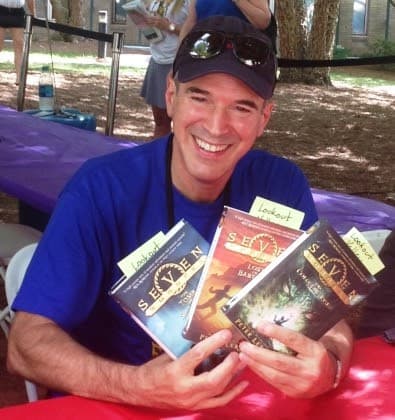
Biography coming soon.







